< Engagement Rings & Weddings / Engagement Ring Guide
Why the Single Cut Diamond Is Having a Renaissance
Understanding the difference between single cut and full cut diamonds reveals how the smallest stones shape the sparkle, character, and personality of fine jewelry.
Published: February 27, 2026
Written by: Grant Mobley

Walk into any fine jewelry store, and you will likely see rows of diamond pavé glittering across beautiful pieces. Most people focus on the center stone, but the smaller diamonds surrounding it often tell their own story. In the jewelry trade, we call these small diamonds melee, typically round diamonds weighing less than 0.10 carats. Within melee diamonds, there are two primary styles of cutting that dramatically influence how a piece of jewelry looks: single cut diamonds and full cut diamonds.
Understanding the difference between single cut vs full cut diamonds helps you appreciate both vintage jewelry and modern design. It also explains why some pieces sparkle with sharp brilliance while others glow with a softer, more romantic light. Today, most jewelry uses full cut melee, but a renewed interest in historic craftsmanship has brought single cut diamonds back into the conversation.
Meet the Expert

- Grant Mobley is the Jewelry & Watch Editor of Only Natural Diamonds.
- He is a GIA Diamonds Graduate.
- He has over 17 years of jewelry industry experience, starting with growing up in his family’s retail jewelry stores.
Ahead, discover what sets single cut and full cut diamonds apart, and why this Old World faceting style is quietly shaping modern jewelry once again.
What Are Single Cut Diamonds?

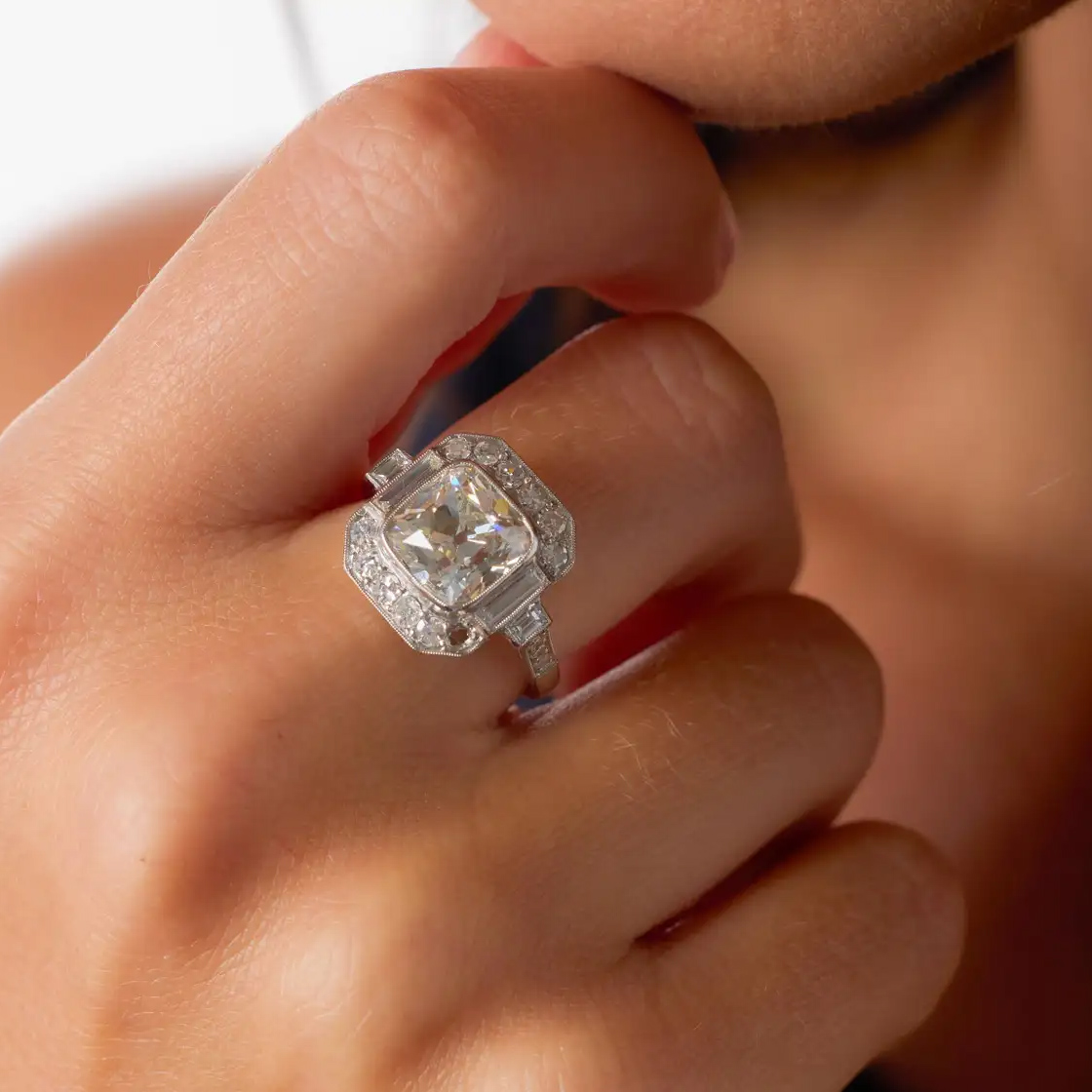
Single-cut diamonds represent the earliest form of round melee diamonds. A traditional single-cut diamond contains 17 facets in total: eight facets on the crown (the top half), eight facets on the pavilion (the bottom half), and one table facet (the flat top). Jewelers often refer to this arrangement as 8/8 faceting, or by the French trade term “huit huit,” pronounced weet weet, meaning “eight and eight.”
These simplified cuts appeared primarily in the 19th and the first half of the 20th centuries. As the round brilliant diamond became the dominant shape for larger stones, cutters needed smaller versions to complement them in jewelry. At the time, however, technology made it nearly impossible to cut very small diamonds with the full 57 facets of a modern round brilliant. Instead, cutters adapted the simpler old single cut, itself derived from an even earlier style known as the table cut.
Single cut diamonds became the standard for accent stones in antique and early modern jewelry. You will find them in Art Deco engagement rings, vintage eternity bands, and early pavé settings, where their gentle sparkle complements the design without overpowering it.
How Full Cut Diamonds Compare to Single Cut Diamonds
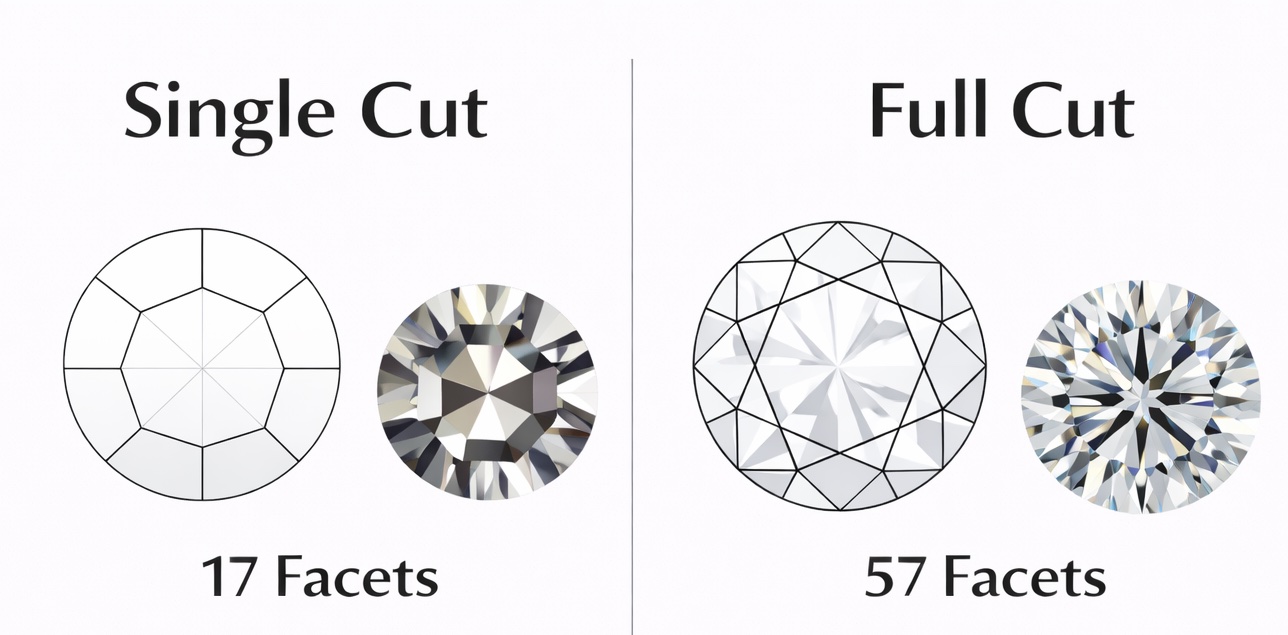
A full cut diamond uses the same faceting pattern as a modern round brilliant diamond. These diamonds have 57 or 58 facets, depending on whether the culet is present. Full cut melee delivers the crisp brilliance and lively scintillation that people associate with modern diamond jewelry.
Advances in cutting technology during the late 20th century allowed manufacturers to reproduce round brilliant faceting in extremely small stones. By the 1980s, cutters could reliably produce full cut melee as small as 0.6 millimeters, or roughly one-fifth of a point. This technological leap transformed the jewelry industry.
Today, full cut diamonds dominate melee production, offering consistent quality across a wide range of sizes and grades. Designers rely on them for pavé work, halo settings, and micro pavé surfaces where maximum sparkle matters.
How Single Cut Diamonds Evolved Into Full Cut Diamonds
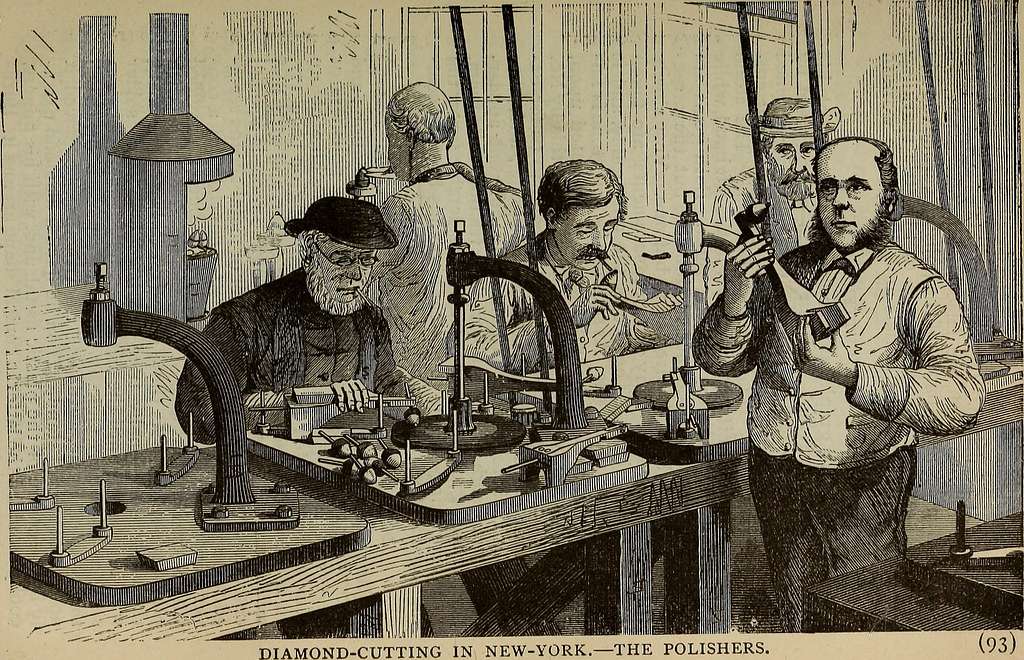
The evolution from single cut to full cut diamonds did not happen overnight. During the 1970s and 1980s, Antwerp cutters introduced an intermediate style known as the 16/16 cut, which doubled the number of facets compared to traditional single cuts.
These stones offered improved brilliance but never achieved long-term popularity. Within roughly two decades, cutting technology advanced enough to make true full cut melee practical. As a result, the industry transitioned almost entirely to full cuts by the late 1980s.
This shift became so complete that many modern jewelers rarely encounter single cut diamonds and sometimes remain unaware that they exist at all.
Visual Differences Between Single Cut and Full Cut Diamonds
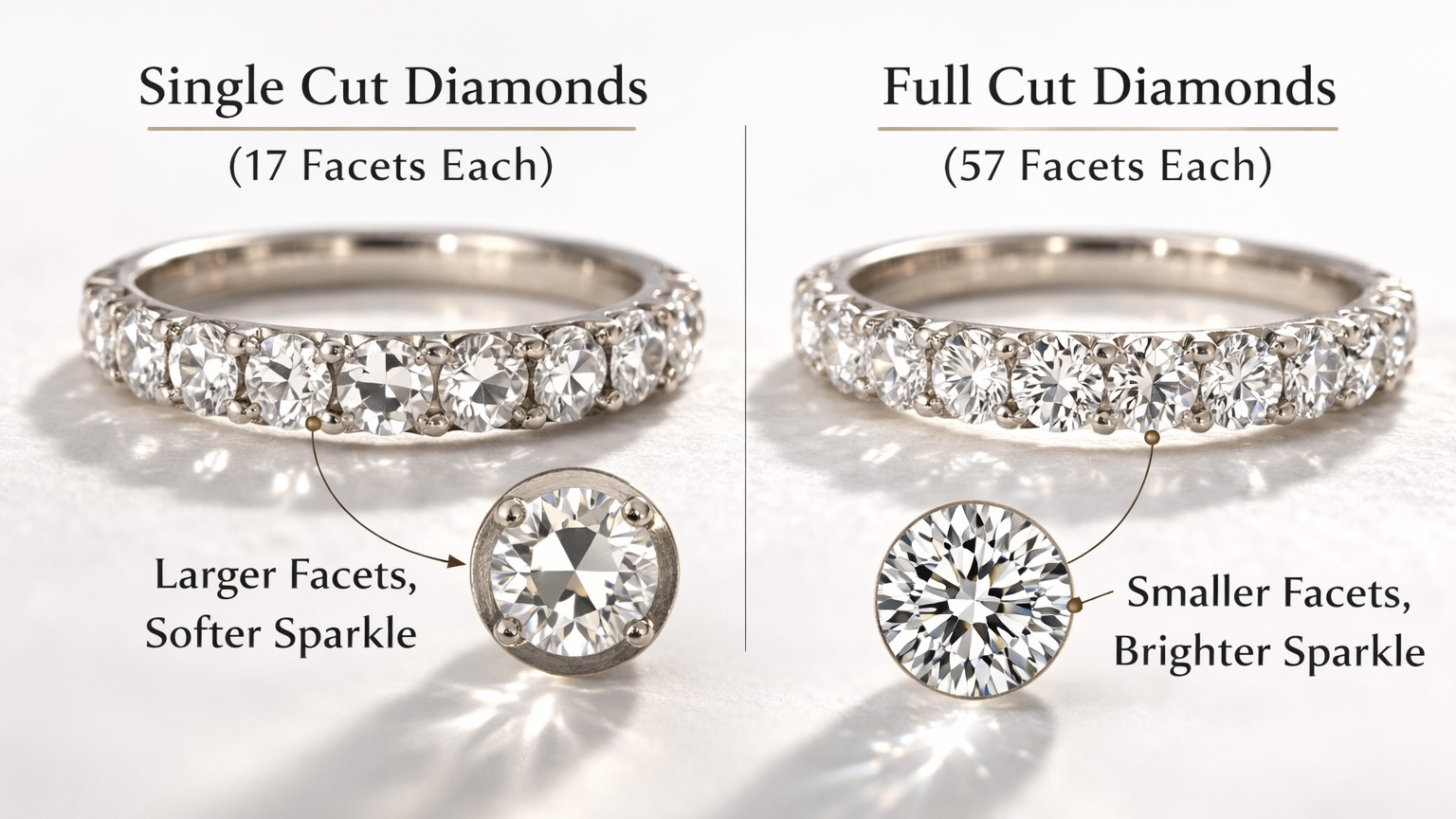
At first glance, the difference between single cut and full cut melee diamonds can appear subtle because the stones are so small. Most modern pavé diamonds measure 1.5 millimeters or less, which limits how clearly you can see facet patterns. Even at these sizes, however, the distinction side by side is immediately noticeable.
Single cut diamonds produce larger, broader flashes of light because their facets are fewer and larger. The sparkle appears softer and more subdued, often described as romantic or candlelit. This type of light reflection suits antique-inspired jewelry and pieces that emphasize texture rather than brilliance.
Full cut diamonds create finer flashes and more continuous scintillation because of their 57 facets. The result looks brighter and more energetic, which complements modern jewelry design and micro pavé techniques.
How Single Cut Diamonds Are Used in Jewelry
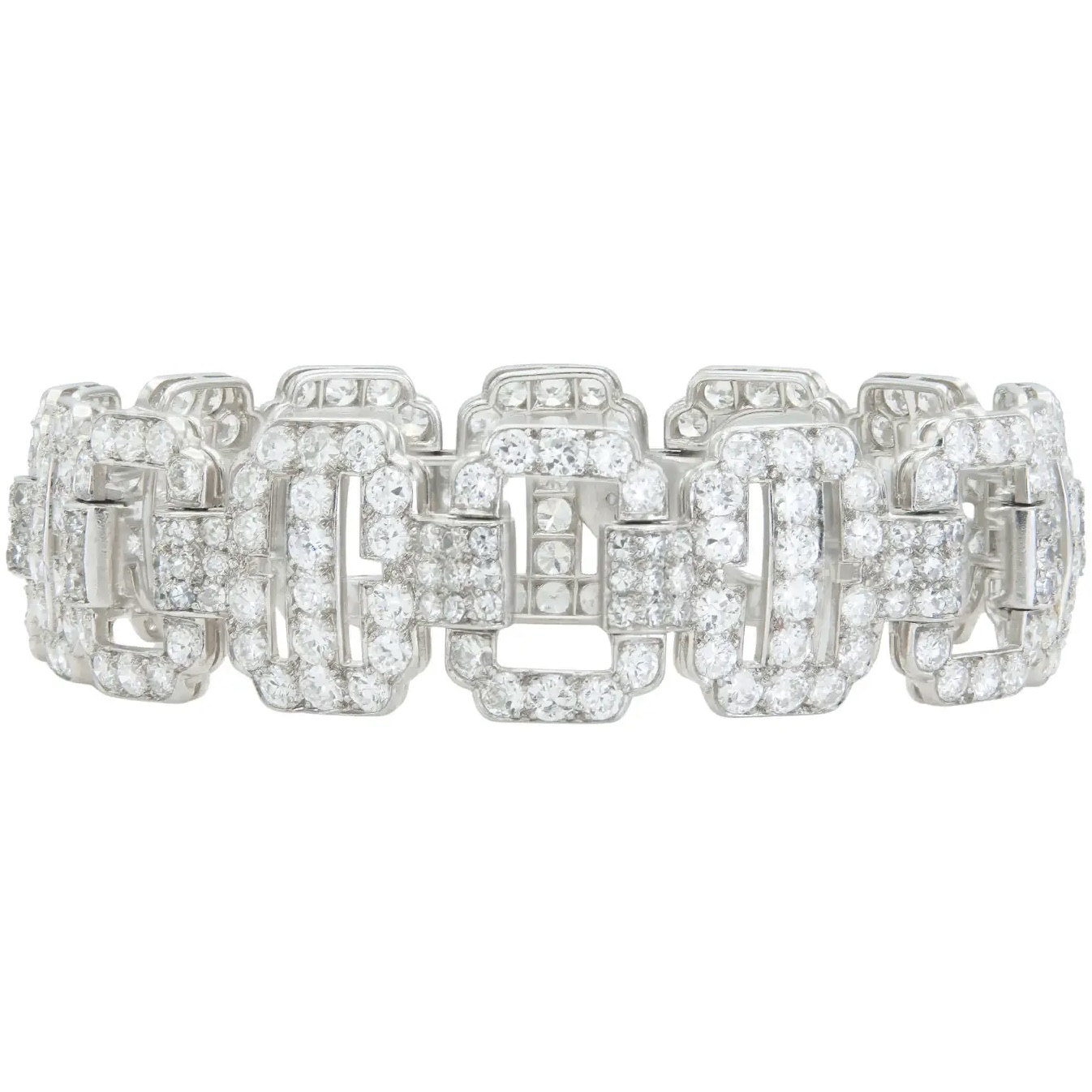
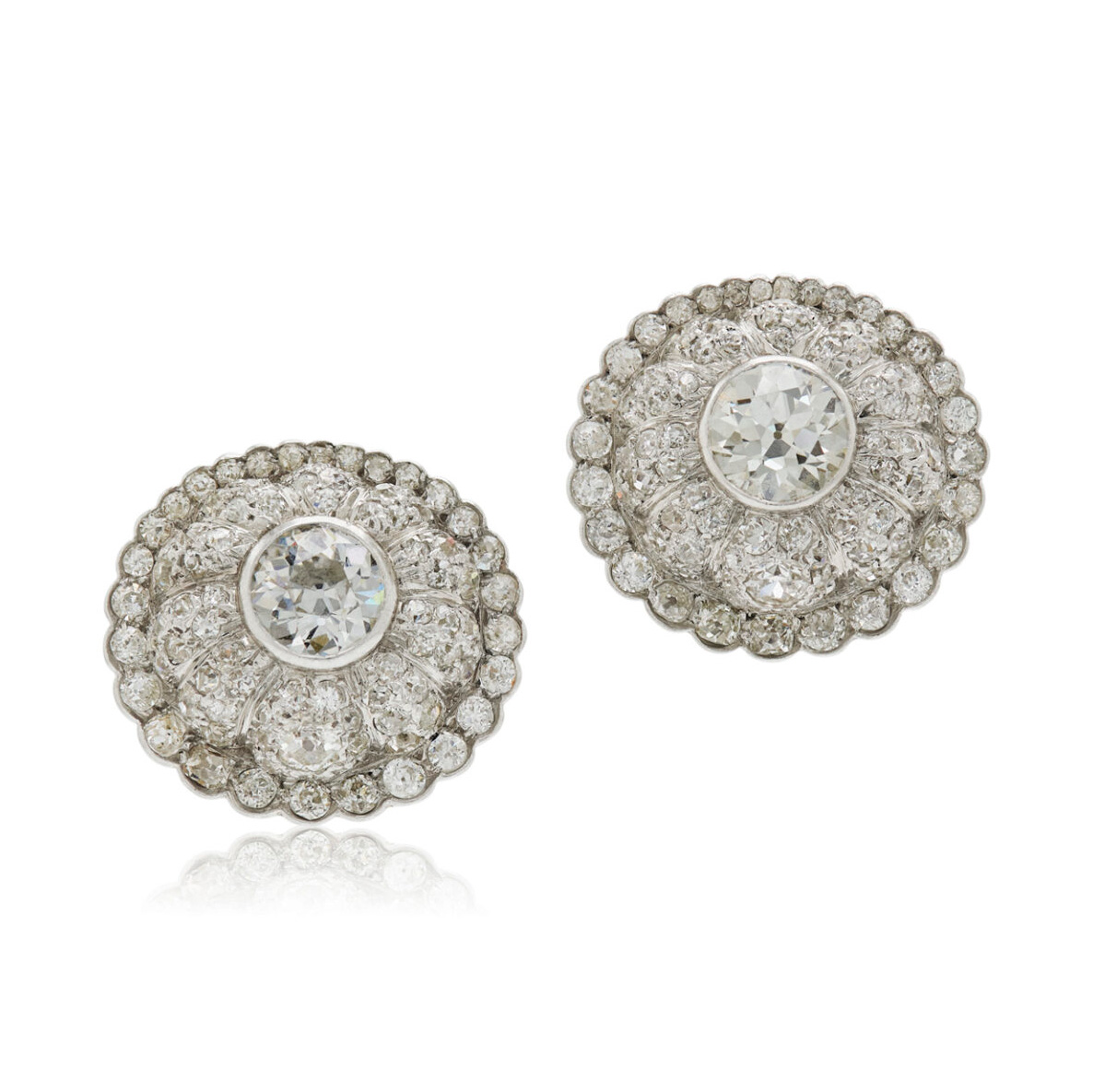
Although full cut melee dominate the market, single cut diamonds have begun to reappear in recent years. Designers who appreciate vintage aesthetics value the distinctive glow that single cuts provide. Their specific type of sparkle offers contrast to brilliant-cut diamonds and allows jewelers to achieve a more nuanced look. The strong brilliance of full cut makes them ideal for designs that depend on sparkle and light performance.
Designers sometimes combine both styles in a single piece. Sprinkling single cuts among full cut melee introduces subtle variation in sparkle, creating dimension and visual interest that a uniform surface cannot achieve.
Why Single Cut Diamonds Are Coming Back
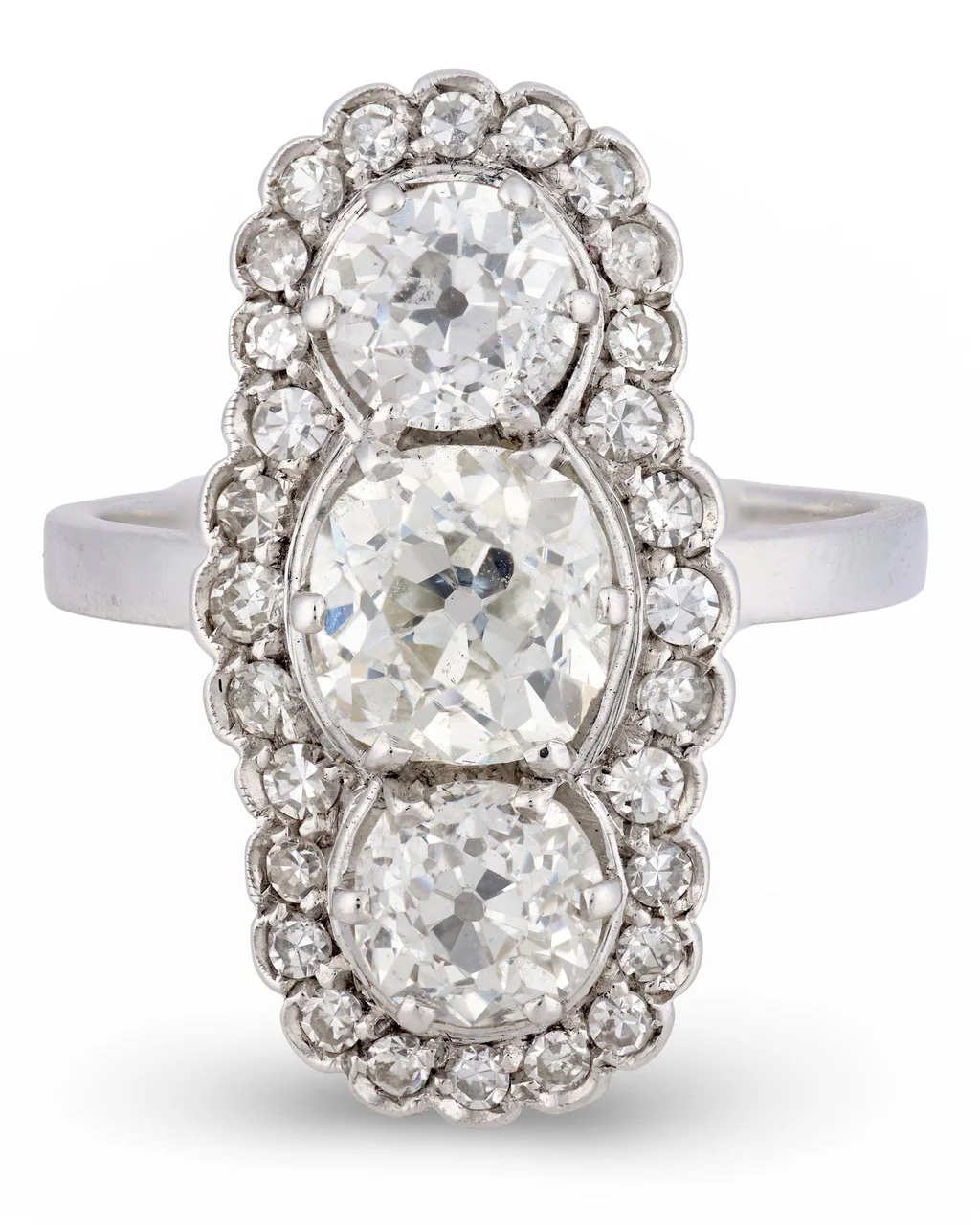
For decades, these antique diamonds nearly disappeared from production. Recently, however, designers have rediscovered their charm. Small-scale cutting of single cuts has resumed to meet demand from jewelers who want a distinctive alternative to standard melee.
Single cut diamonds remind us that diamond cutting does not always aim for maximum brilliance. Sometimes the goal involves creating character, contrast, and individuality. Looking at both cutting styles shows how even the smallest diamonds shape the personality of fine jewelry.