< Engagement Rings & Weddings / Style
Why Vintage Lovers Are Falling for Navette Diamond Rings
You don’t have to be entangled with Heathcliff or languishing on the moors to appreciate the beauty of this boat-shaped style.
Published: February 10, 2026
Written by: Anouare Abdou
If the anticipation surrounding Emerald Fennell’s take on “Wuthering Heights“, along with the enduring fandom for Bridgerton, teaches us anything, it’s that our fascination with the romance and drama of bygone eras is here to stay. That same longing for history, emotion, and individuality is shaping today’s jewelry trends as well—after all, few things are as enduring or historic as a natural diamond.
Enter the antique navette diamond ring: an elongated, boat-shaped silhouette rooted in the late 19th and early 20th centuries, designed to flatter the finger and shimmer with the softer, candlelit glow of antique-cut diamonds. “Vintage jewelry is becoming popular among younger generations, and the navette is a common shape in antique rings,” says Ashley Zhang, owner and designer of Ashley Zhang Jewelry.
The data backs up Zhang’s observations. According to Cognitive Market Research, the global vintage ring market is expected to grow from roughly $2.8 billion in sales revenue in 2025 to a projected $4.5 billion in 2033. In a space where supply is inherently limited, that kind of growth reflects a shift in how buyers shop for diamond jewelry.
Meet the Experts

Ashley Zhang is a New York-based jewelry designer, known for her vintage-inspired engagement rings and heirloom-quality designs. A California native and Parsons School of Design alum, she blends historical craftsmanship with modern elegance to create timeless, collectible styles.

Abbey Alston is an antique jewelry professional at Isadoras Antique Jewelry, a Seattle–based destination known for its curated selection of Georgian, Victorian, Edwardian, and Art Deco jewelry. Specializing in historic diamond cuts and period craftsmanship.

Andria Rogers is a GIA Diamonds Graduate and the owner of Andria Barboné, a vintage jewelry company that specializes in one-of-a-kind vintage engagement rings.

Josie Chase is an antique jewelry expert at Isadora’s Antique Jewelry. She brings expert insight into authenticity, provenance, and why truly antique pieces continue to resonate with modern collectors.
“We are seeing more clients gravitate towards fully antique pieces for their deeper historical connection, character, and sustainability,” adds Andria Rogers, owner of Andria Barboné Jewelry, who also notes that elongated diamond shapes are in high demand.
As Abbey Alston, antique jewelry professional at Isadoras Antique Jewelry puts it, a navette ring is a beautiful way to combine those two trends: “an elegant, highly flattering shape paired with the depth and permanence of a true heirloom – something meant to live in your jewelry box for years to come.”
What Is a Navette Ring?
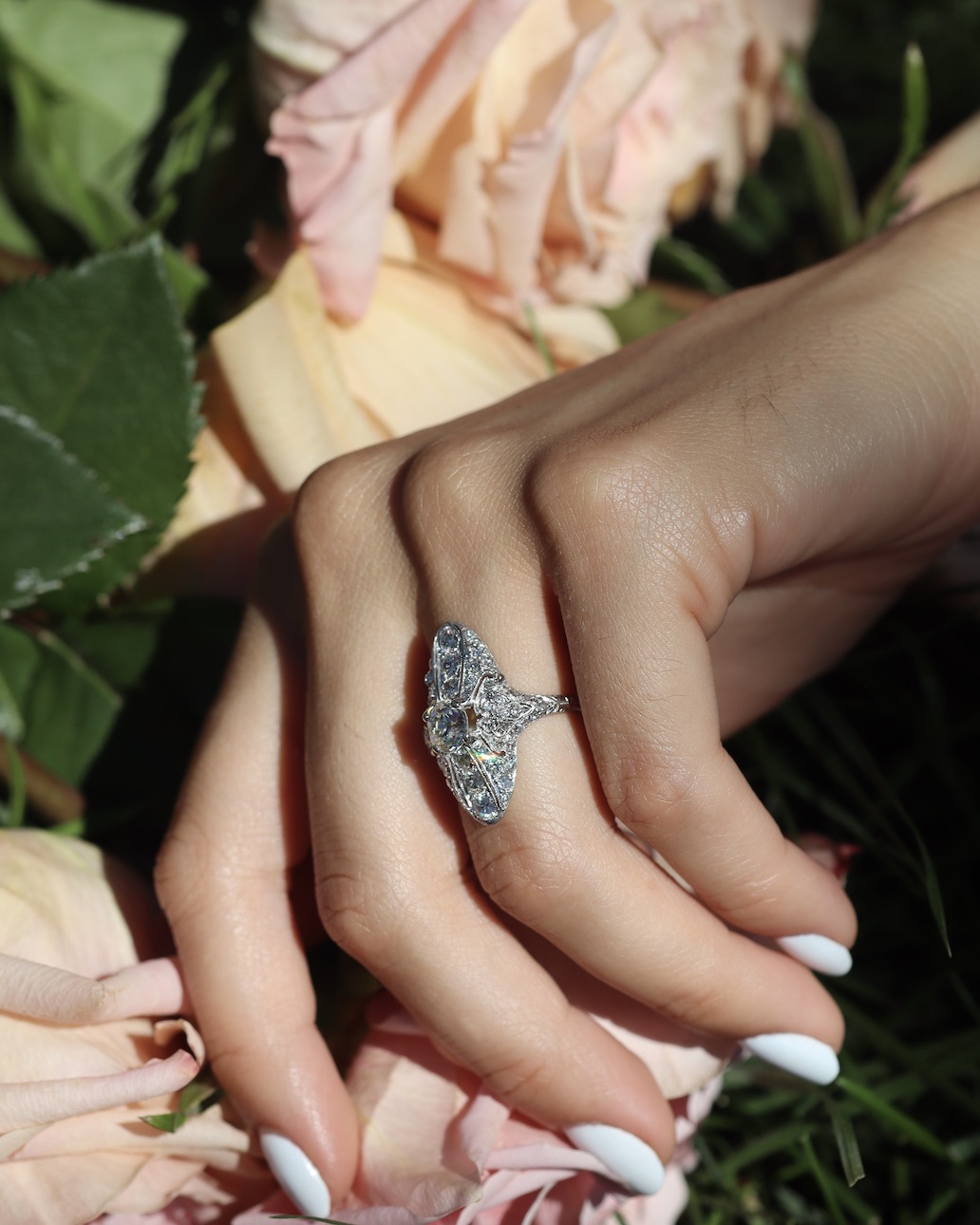
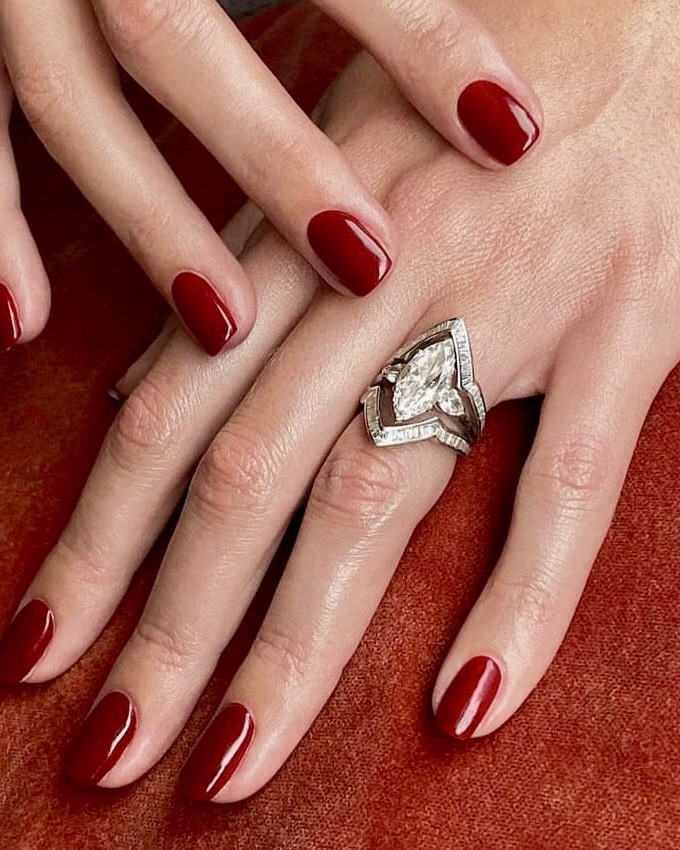
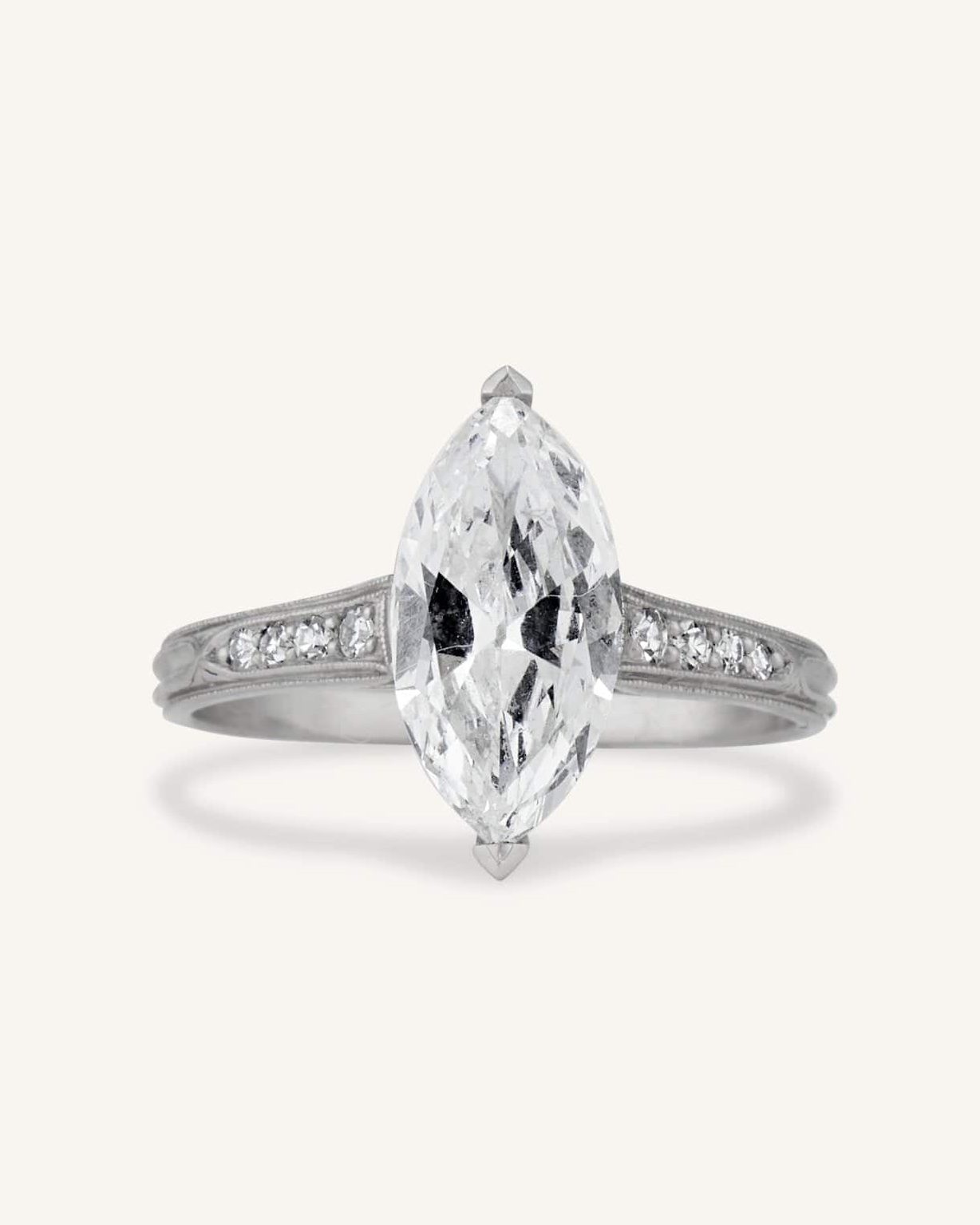
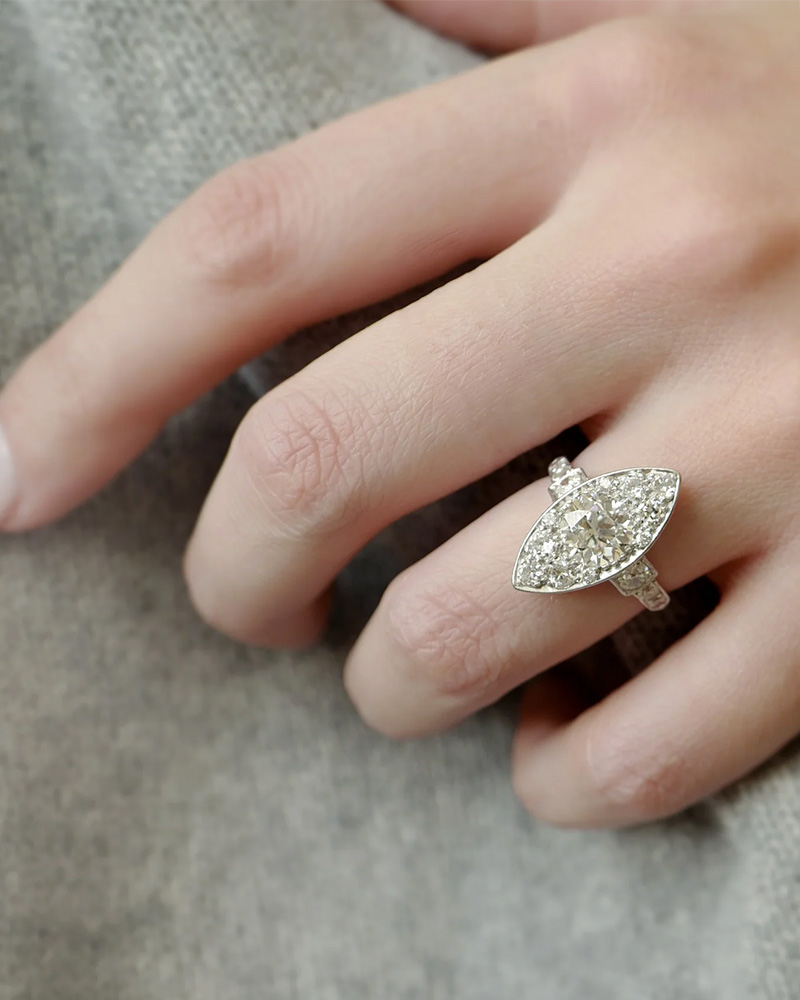
A navette ring is a vintage ring featuring an elongated boat-shaped design with tapered ends, hence the name navette, which means “little boat” in French. Navette rings often feature clusters of diamonds rather than a single stone, which differentiates them from marquise cut rings despite the fact that both styles share the same shape.
Navette rings first originated in the 18th century. They remained popular throughout the Victorian and Edwardian eras, experienced a revival during the Art Deco period and later in the 1950s, and are still beloved by antique collectors today. The style is prized for its flattering silhouette and use of antique-cut natural diamonds, which create texture, sparkle and depth when clustered.
The History of the Navette Ring Style
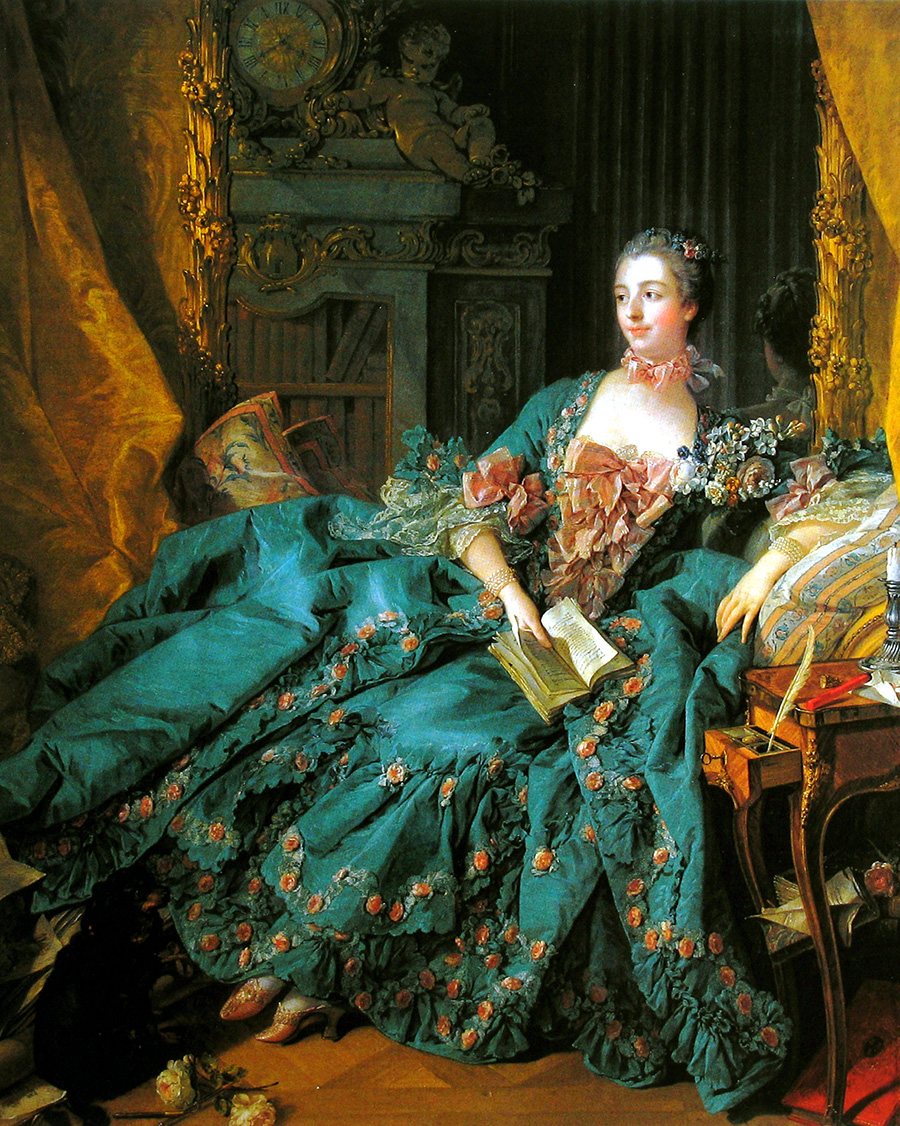

Navette rings experienced a revival during the Victorian era, as diamonds became slightly more accessible and jewelry trends skewed towards romantic, detailed pieces featuring multiple stones.
They remained popular during the Edwardian (1901-1914) and the Art Deco (1920s and 1930s) periods, and styles evolved to include the use of platinum and intricate filigree – both hallmarks of Edwardian jewelry – before adopting the bold, geometric designs of the Art Deco era. Later, in the 1950s, the navette ring made a comeback, driven by the popularity of large rings with maximum finger coverage.
Today, elongated diamond shapes like pear-cut and oval-shaped diamonds have been dominating engagement ring trends, bringing navette rings back into the spotlight as a unique choice with timeless appeal.
Key Features of Navette Rings
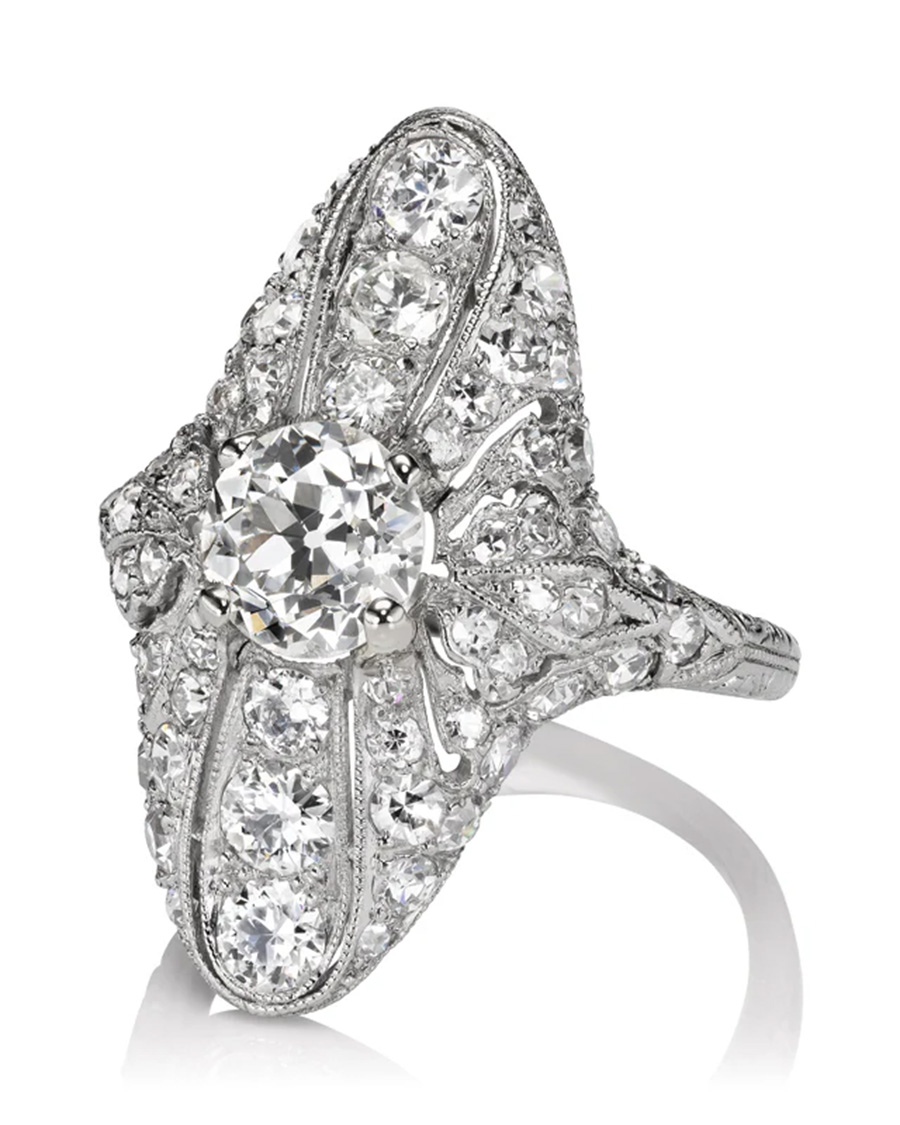
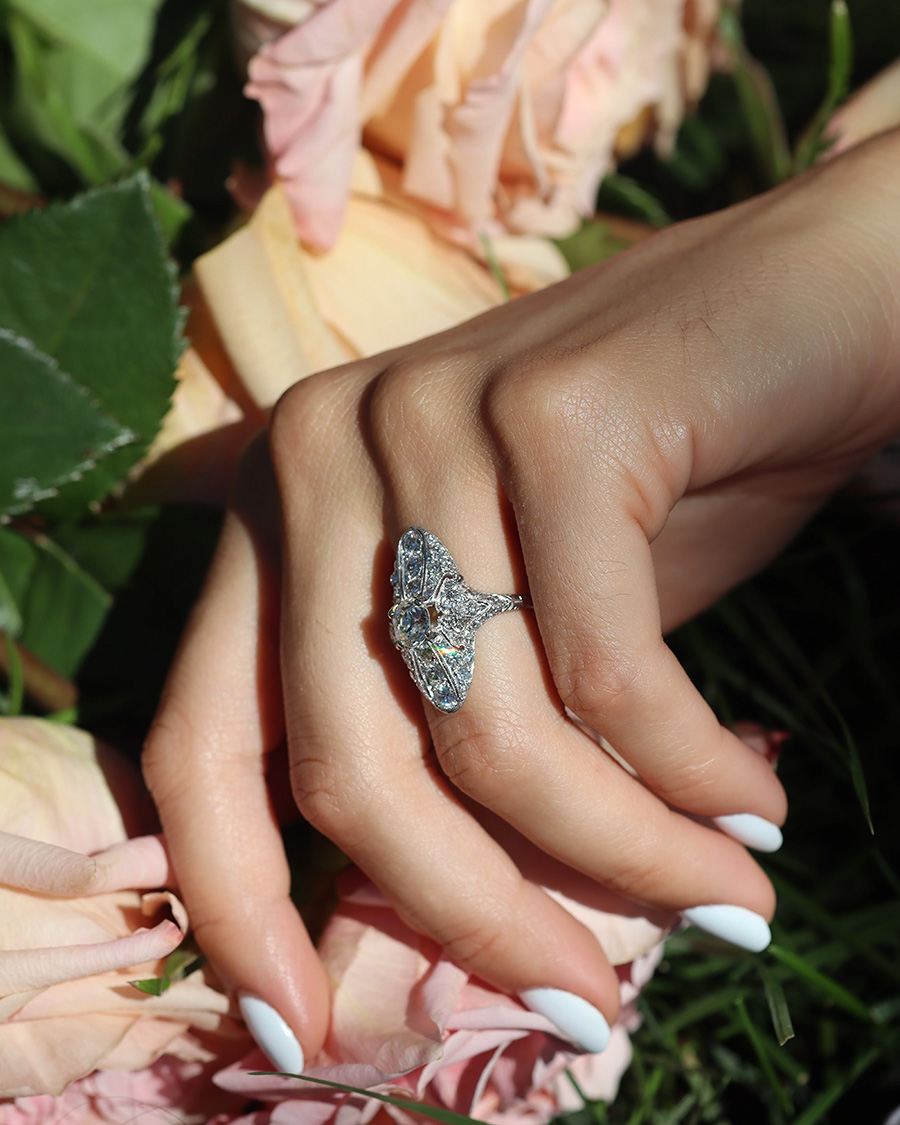
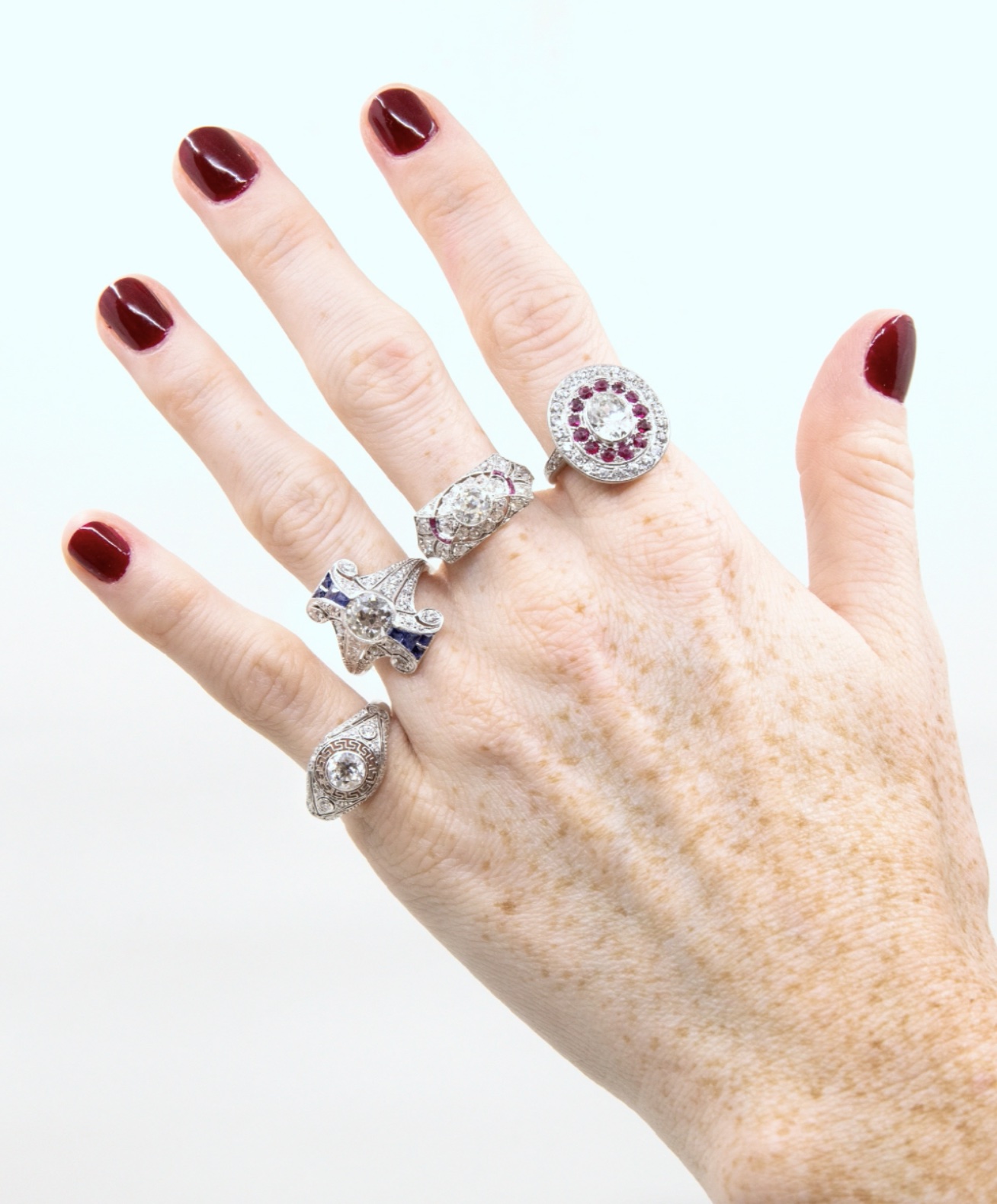
Because there are navette rings from distinct eras, each one tends to have a unique look and story. That said, there are key features that define a navette ring, whether it’s an Edwardian heirloom with intricate metalwork and a mix of diamond shapes or an Art Deco navette with architectural lines and a prominent center stone.
Boat-Like Shape
The key defining feature of a navette ring is its eponymous boat-like shape. It’s long and narrow, beginning and ending with a pointed end, balanced by softer oval lines. This design lengthens the finger while leaving plenty of space to nestle natural diamonds.
Stone Clusters
These rings often feature clusters of stones. Depending on the layout, the effect can be dramatically different. For example, diamonds of the same shape and size create a more uniform look, while a series of larger diamonds surrounded by smaller accent stones offers more dimension and depth.
Regardless, part of the charm of this style of ring is its ability to help diamonds appear bigger and brighter. “The cluster setting produces a more dynamic sparkle, while the shape draws the eye along the length of the ring, giving a greater surface area to reflect light. This can also minimize the appearance of inclusions, as the eye is guided along the shape rather than towards small flaws,” says Josie Chase, antique jewelry professional at Isadoras Antique Jewelry.
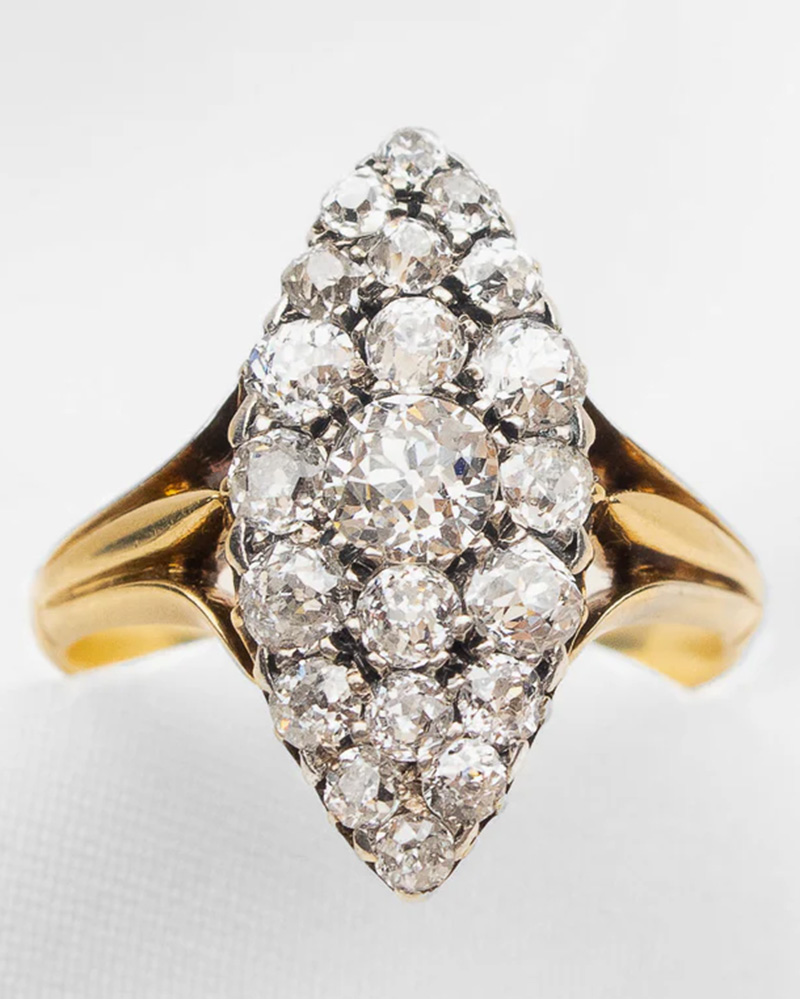
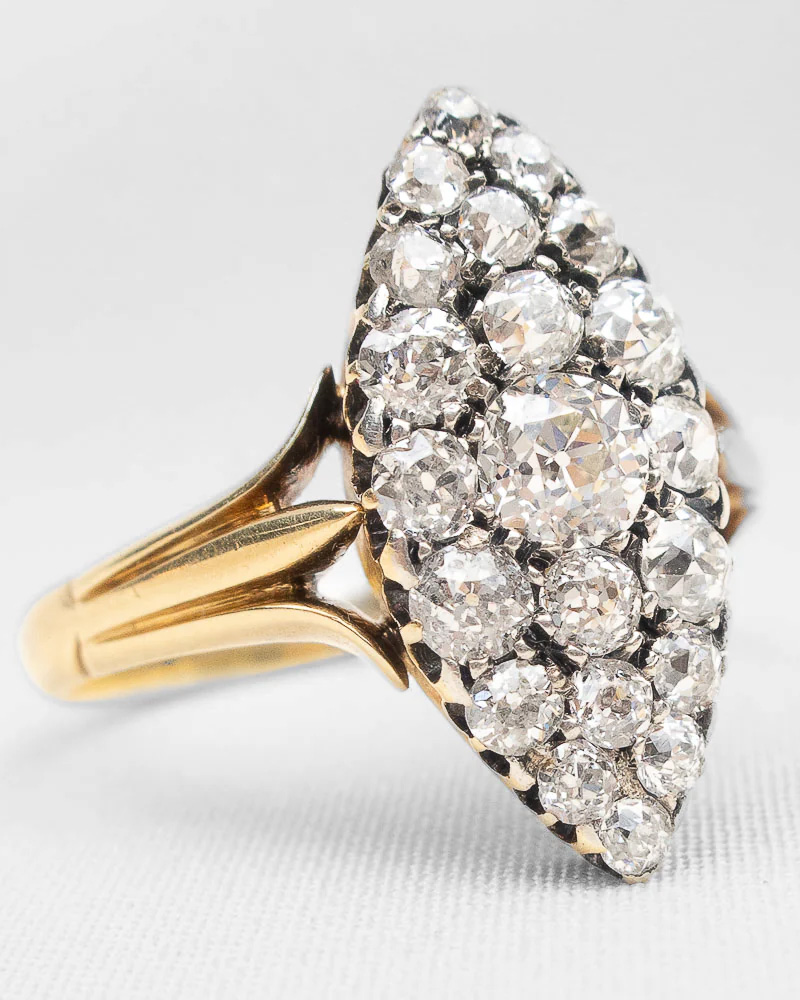
Antique Diamond Cuts
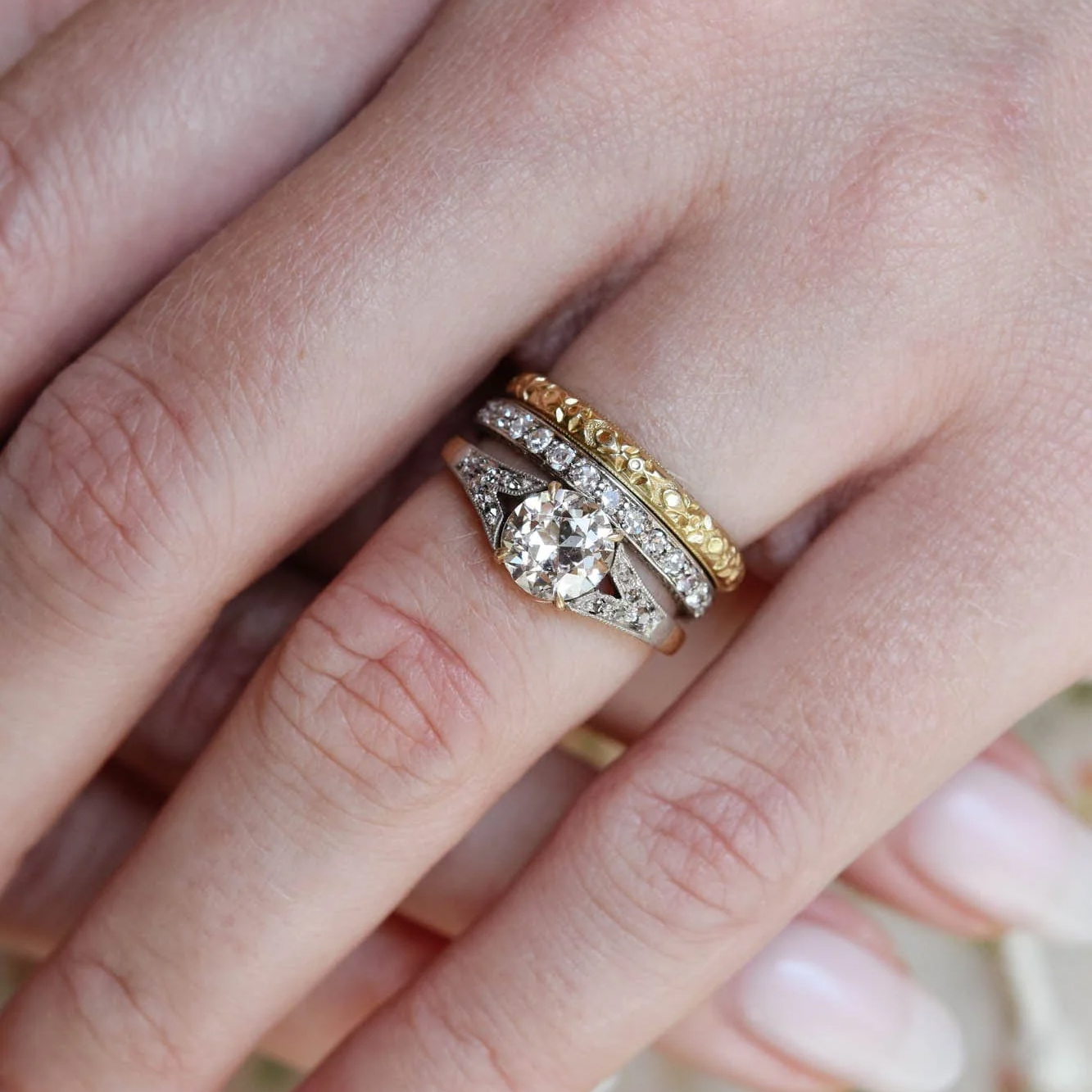
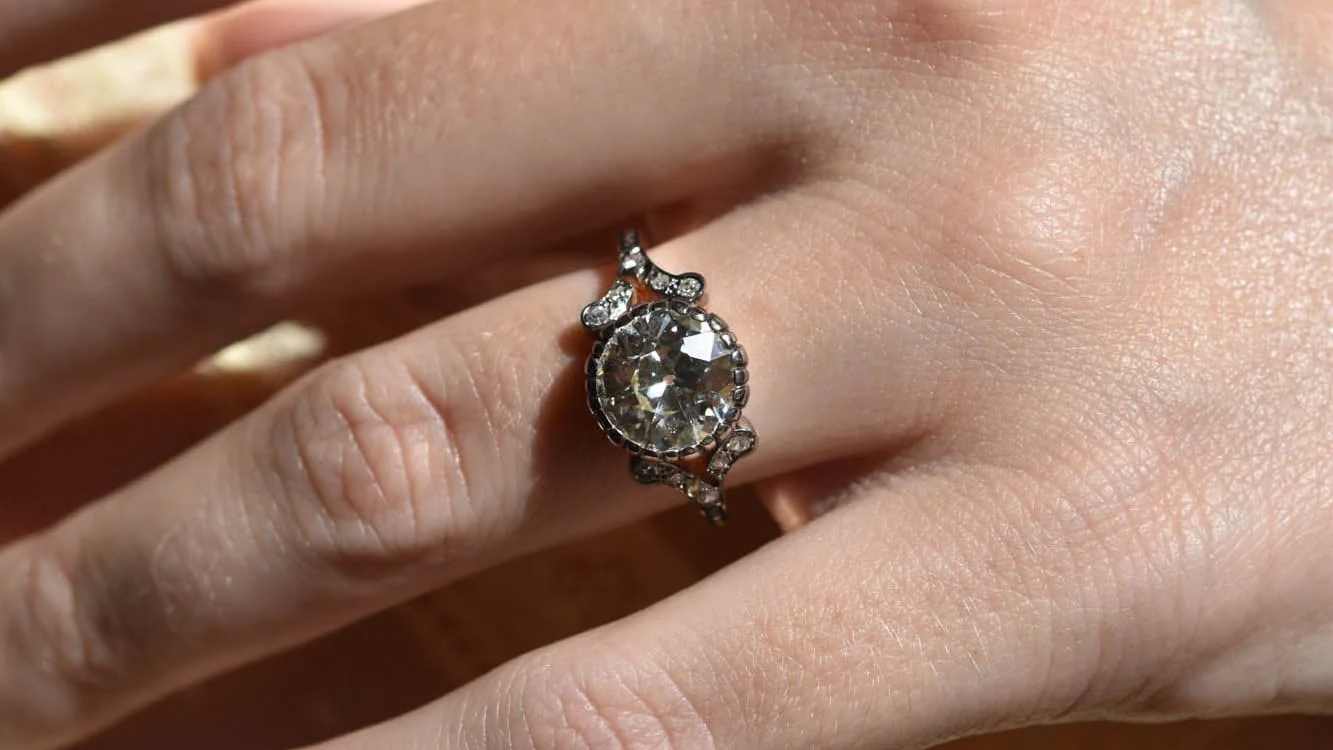
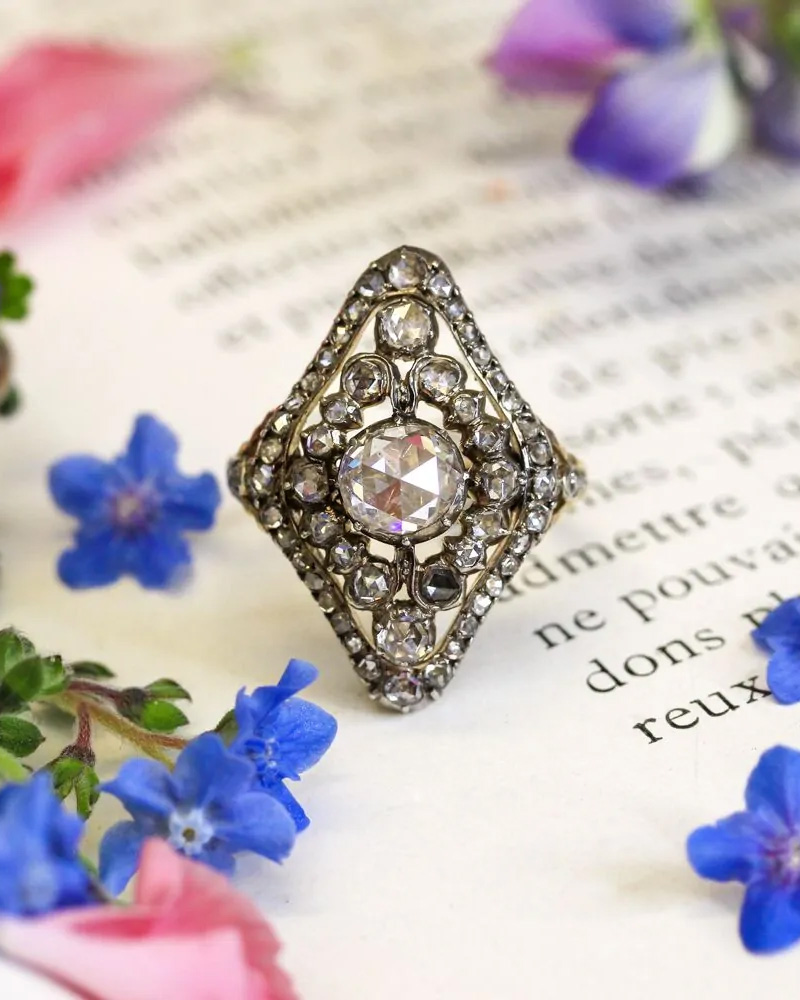
An authentic vintage diamond navette ring features antique diamond cuts. Old mine cuts are common, but you might also come across a navette ring with Old European or rose-cut diamonds.
Because these diamonds were cut by hand, they produce a more understated sparkle and can come with charming irregularities that reveal the unique character of each stone. “We love that navette rings allow for a collection of special antique stones rather than a singular stone. The only thing better than one diamond is many,” says Rogers.
Maximal Finger Coverage
A navette ring makes a statement, and it’s meant to take up space on the finger. However, because of its elegant design, it adds coverage without bulk and can be surprisingly versatile to style.
What to Look For In a Navette Ring
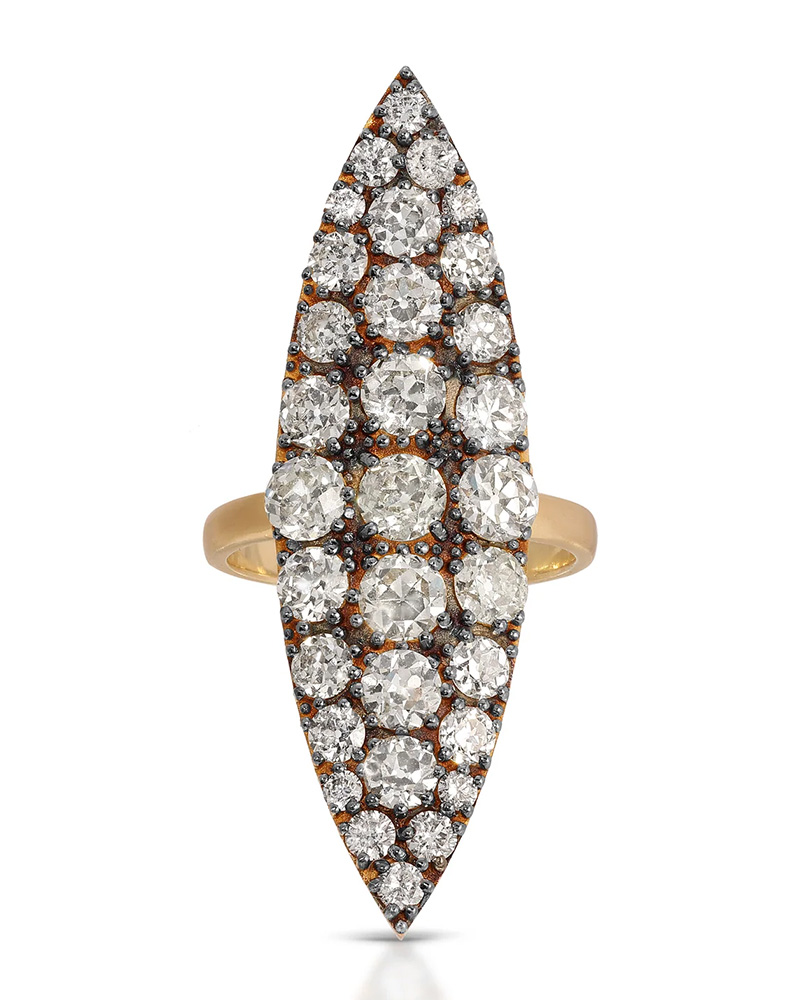
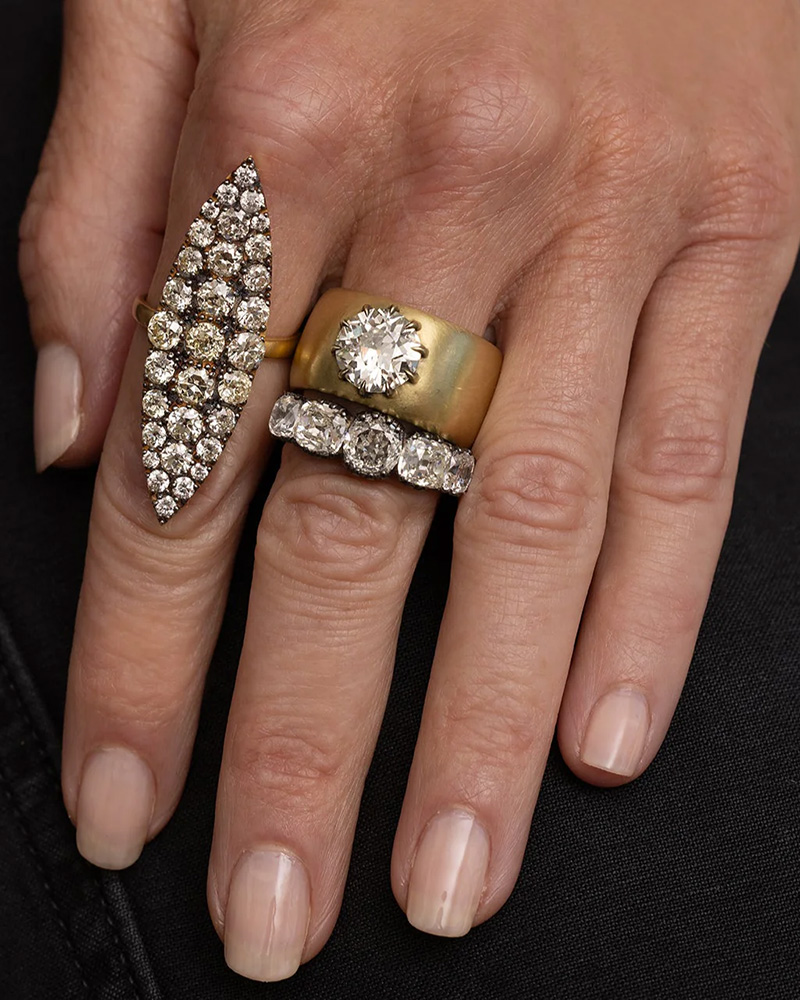
If you’re in the market for a navette diamond ring, it can be hard to narrow down your choice to one piece among all the beautiful iterations of the style available. Below are some factors to consider while shopping.
- Balanced proportions: The way a navette ring fits on your finger matters. “Depending on your finger and hand size, you should look for a navette that flatters your silhouette. The stones are meant to go between your knuckles and not over them,” says Zhang.
- Stone layout: Are you drawn to chunkier layouts or more delicate settings? Do you prefer a more uniform look or find the idea of mixing and matching diamond shapes appealing? “The only important thing is whether or not you love it,” says Rogers.
- Diamond cuts: Different diamond cuts can also change the aesthetics of the ring. Chase suggests going for a ring with rose-cut diamonds for a subtle, glowy sparkle and old mine cut diamonds for bolder, chunkier flashes of light.
- Details: Beyond the stones, metalwork and other design details can set a navette ring apart. From milgrain detailing to airier lines, look for elements that speak to you and help you express your personal style.
Most of all, don’t second-guess your intuition if you find a ring that you can’t stop thinking about. “Remember that nothing haunts you like the vintage you didn’t buy,” says Rogers.
How to Care for Vintage or Antique Navette Rings
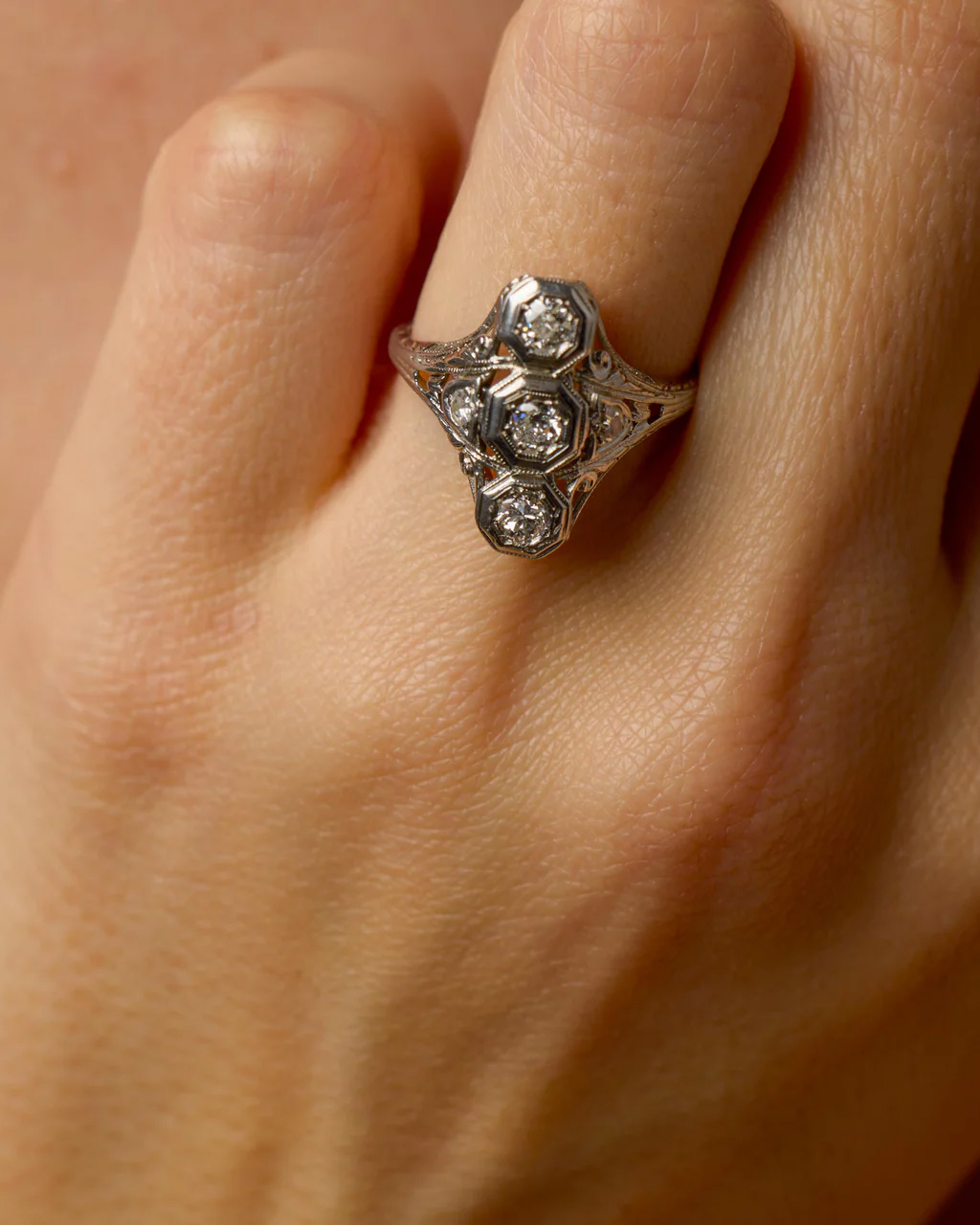
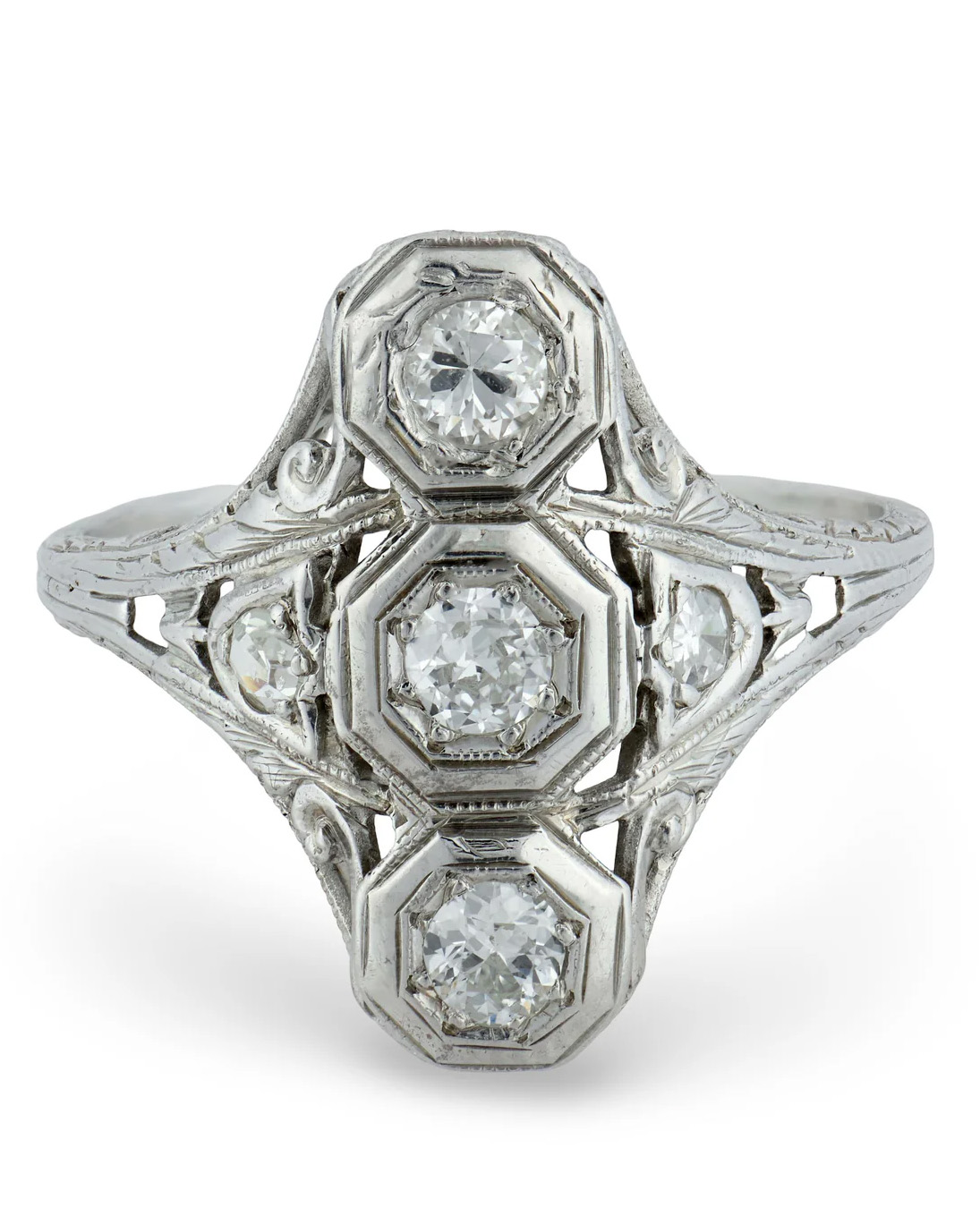
It’s a common dilemma: You bought a gorgeous diamond ring, and you like it so much you’re almost afraid to wear it. Antique jewelry is delicate, especially when it includes clusters of stones, so you’ll want to take good care of it to keep treasuring it for years to come.
A soak in warm water and dish soap and a very gentle scrub with a soft toothbrush is enough to clean a navette ring. Never clean it over an open sink to prevent unfortunate losses.
Save your ring for special occasions, and avoid wearing it when working out, swimming, showering, or doing anything else that might expose it to impact or excessive moisture.
Shop Navette Diamond Rings
Get inspired by natural diamond styles from some of our favorite designers and collectors.
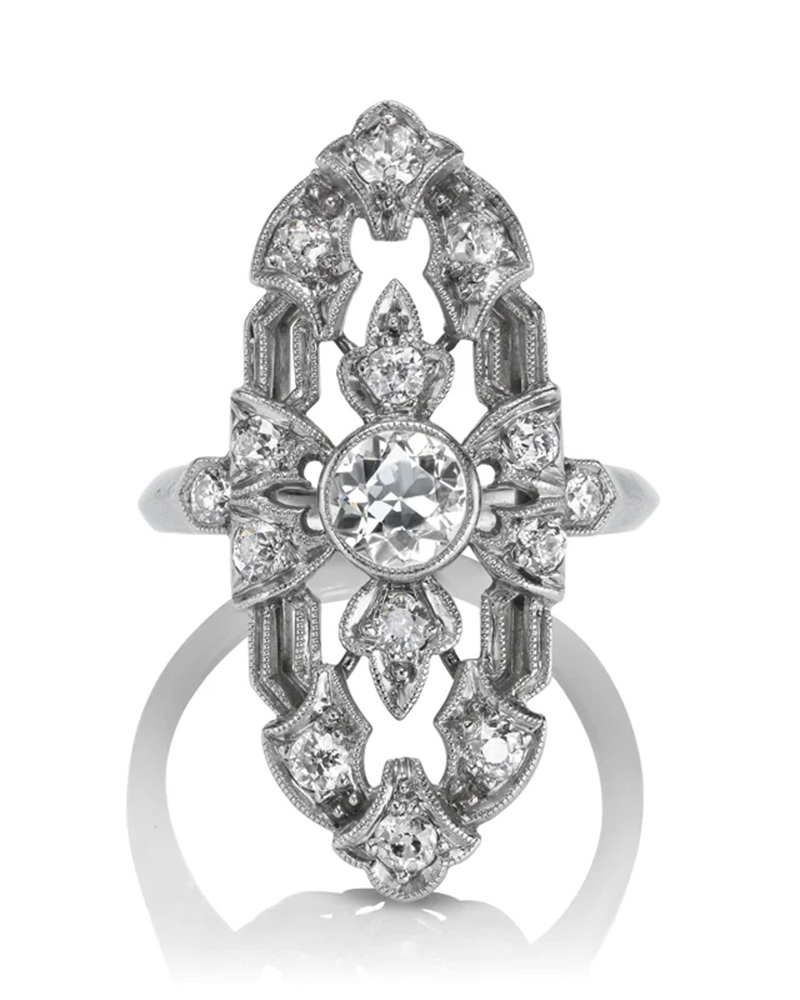
Andria Barboné Truman Art Deco Diamond Ring, $5,900, andriabarbone.com
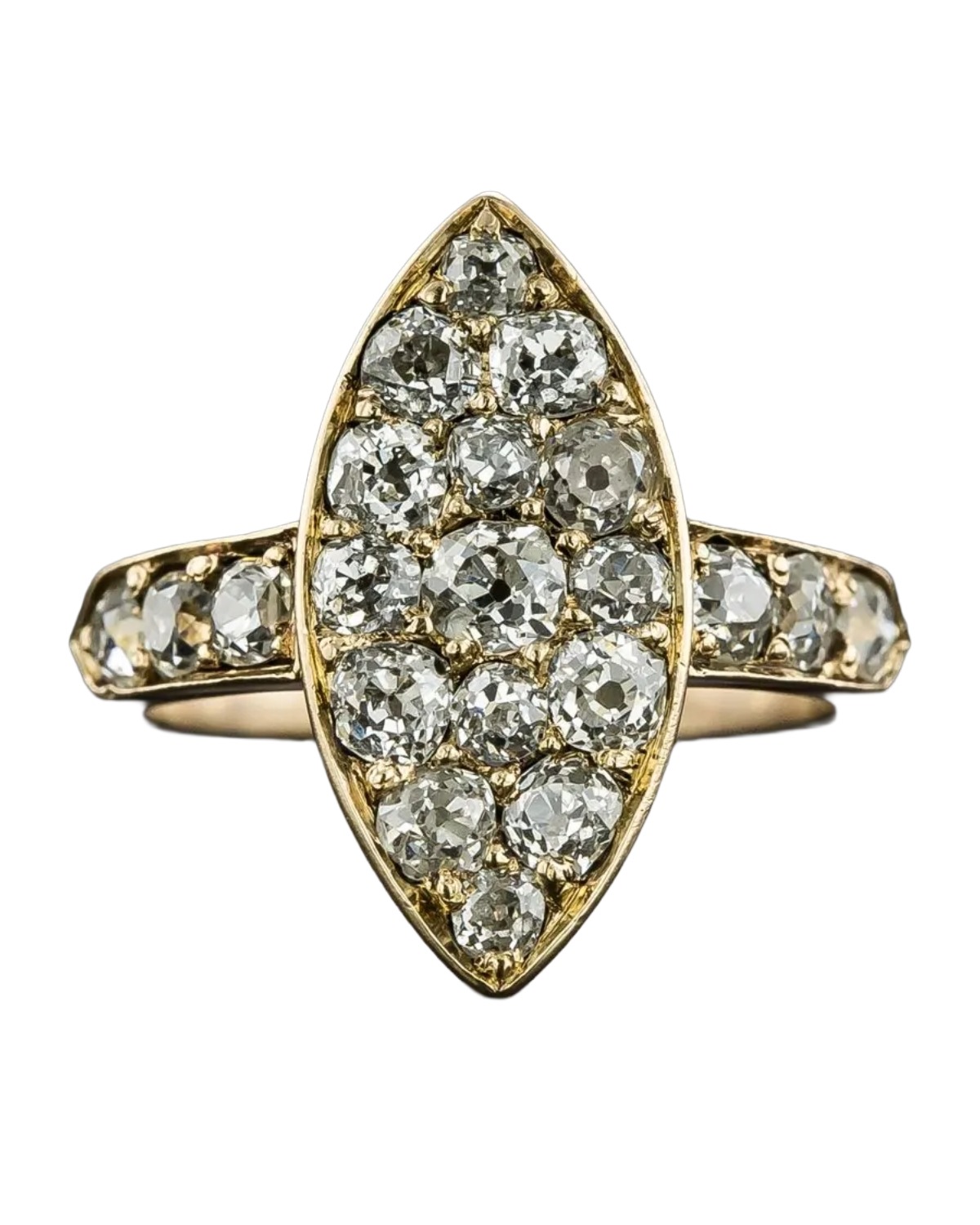
Lang Antiques Victorian Diamond Navette Ring, $3,950, langantiques.com
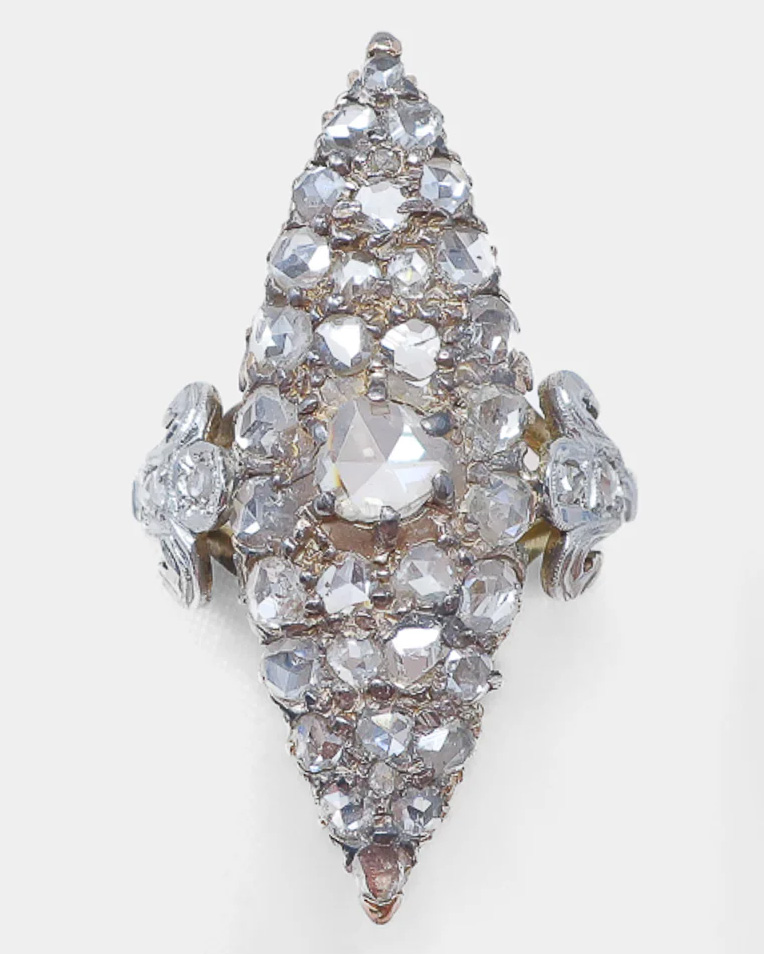
Isadora’s Antique Jewelry Victorian Rose-Cut Diamond Ring, $5,400, isadoras.com
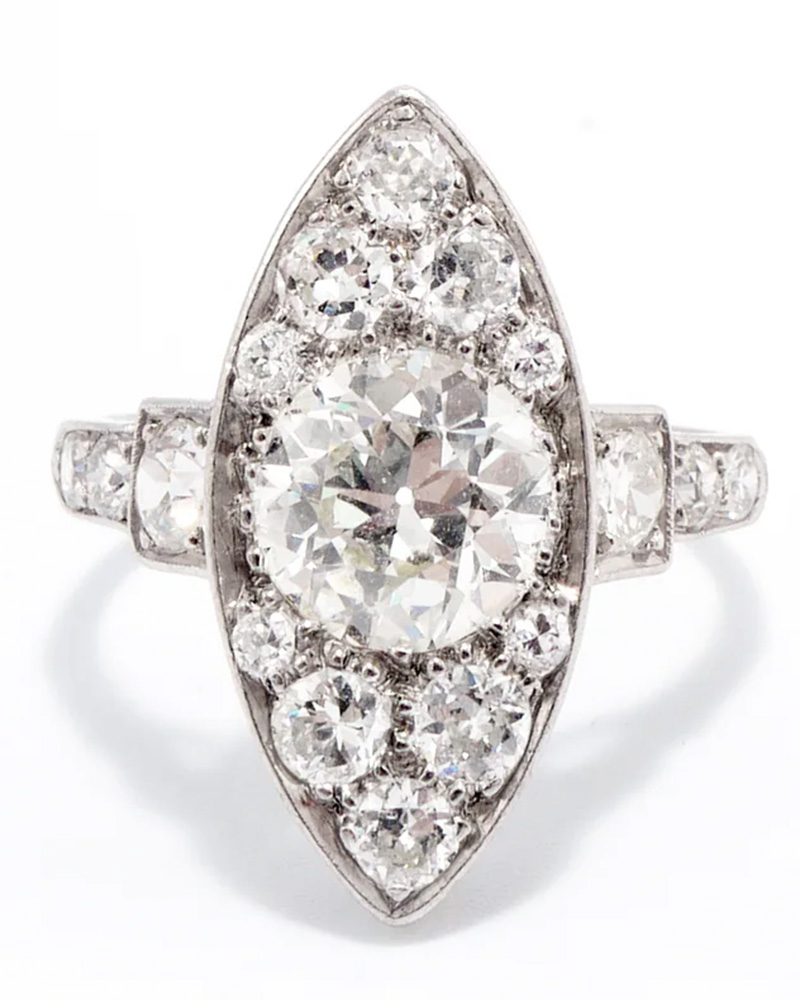
Ashley Zhang Old European Navette Ring, Price Upon Request, ashleyzhangjewelry.com
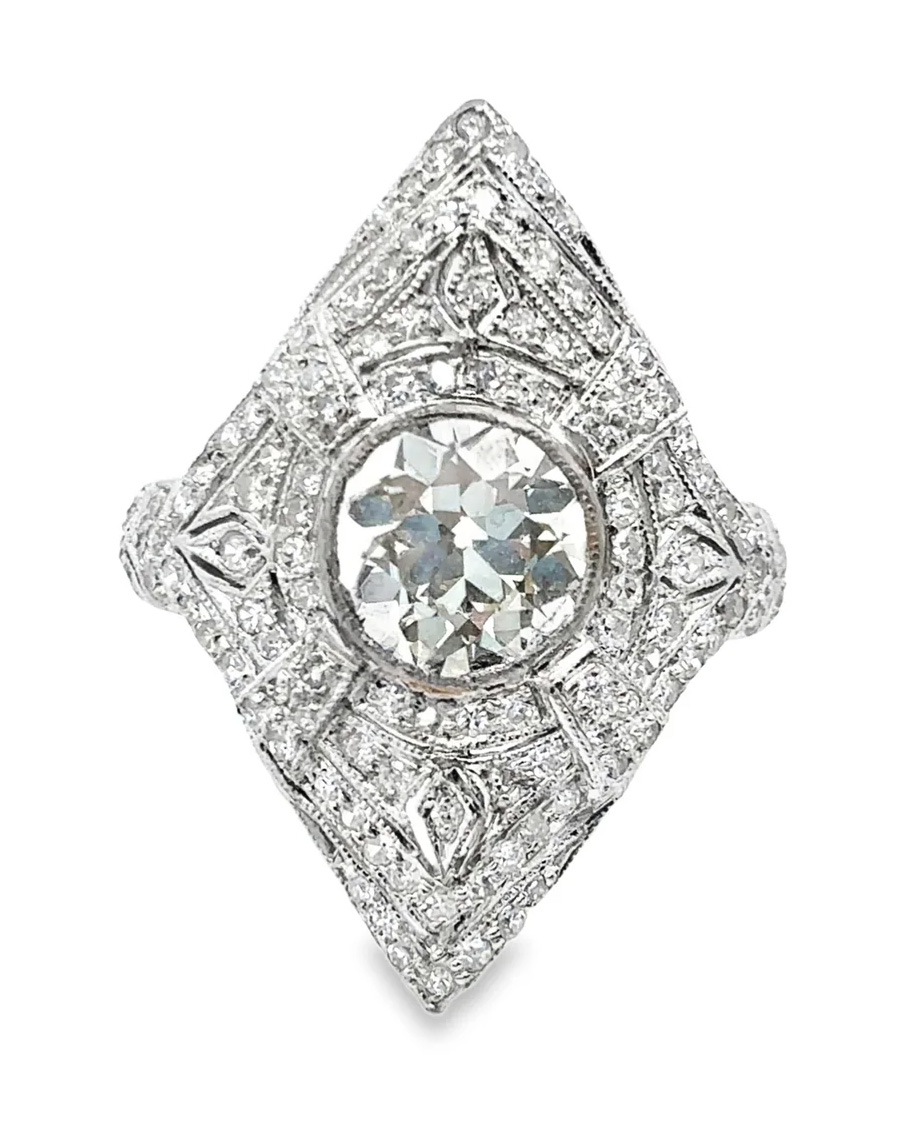
Joseph Saidian & Sons Art Deco Old European Cut Diamond Ring, $10,000, saidiansons.com
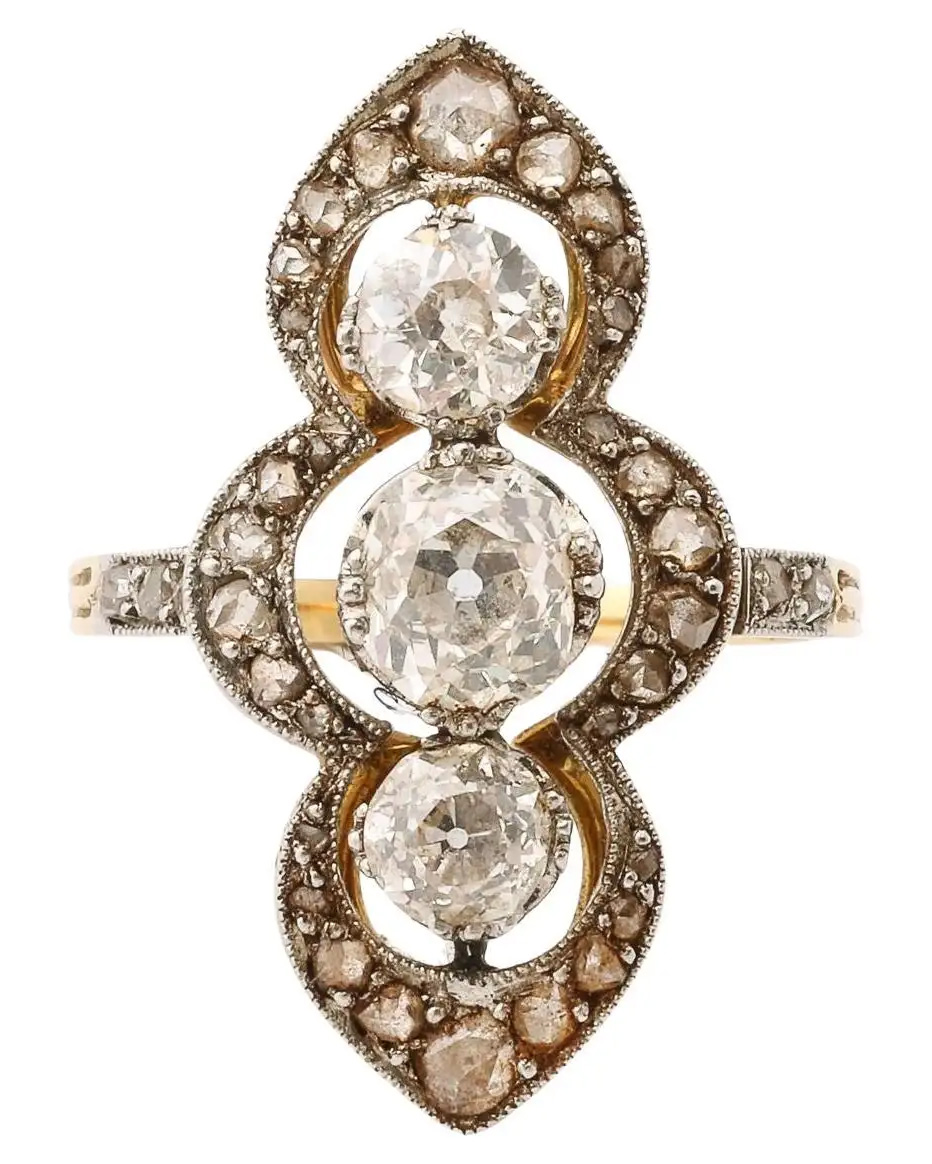
French 19th Century Diamond Ring, $6,500, 1stdibs.com