
Read More
< Engagement Rings & Weddings / Celebrity
What Judy Garland’s Engagement Rings Reveal About Her Life, Image and Eras
From whirlwind romances to Hollywood reinventions, Judy Garland’s five engagement rings trace the glittering — and turbulent — chapters of her life.
Published: December 9, 2025
Written by: Meredith Lepore

Judy Garland famously once said, “In the silence of night I have often wished for just a few words of love from one man, rather than the applause of thousands of people.” These poetic words are very on brand for one of the world’s most talented but also tragic stars.
Though Judy Garland was adored by generations for her powerhouse voice and unforgettable performances — especially her star-making turn as Dorothy Gale in The Wizard of Oz — love was never quite as easy for her as hitting those soaring notes. Over her lifetime, she was married five times: first to David Rose, then to Vincente Minnelli (father of her daughter, Liza Minnelli), followed by Sid Luft (with whom she had Lorna and Joey Luft), and later Mark Herron and Mickey Deans.
While many of those relationships were tumultuous (and her final marriage to Deans was still in place when she passed away in 1969), Judy Garland did end up with some truly exquisite jewelry along the way. And although she might have traded every last diamond for a love that lasted, the pieces she collected still deserve a closer look. They offer a little window into her evolving style, too, from her Vaudeville roots to the moment she stepped “over the rainbow” and into Hollywood history.
Meet the Expert
- Justin Daughters is Director of Berganza, one of London’s leading authorities on antique and period jewelry.
- His work spans decades of handling rare rings and heirloom-quality stones, giving him a nuanced understanding of craftsmanship, provenance, and historical context.
Justin Daughters, Director of jewelry brand Berganza, said of Judy Garland’s engagement ring collection, “The variety reads like a biographical visual narrative: early career restraint (conventional taste or studio norms), a mid-period cinematic/ editorial experiment (Minnelli), a mature embrace of classic diamond glamour (Luft), and finally, the 1960s’ openness to sculptural, personal design (costume/Tourbillon trends). Each ring can be read as a confluence of era trends, partner aesthetics and Garland’s evolving public identity.”
Ahead, we take an in-depth look at Judy Garland’s engagement rings, whose striking differences trace the highs and heartbreaks of her life—and the natural diamond ring that brought her to tears.
Judy Garland’s Ring from David Rose: A Square-Shaped Diamond Wedding Ring
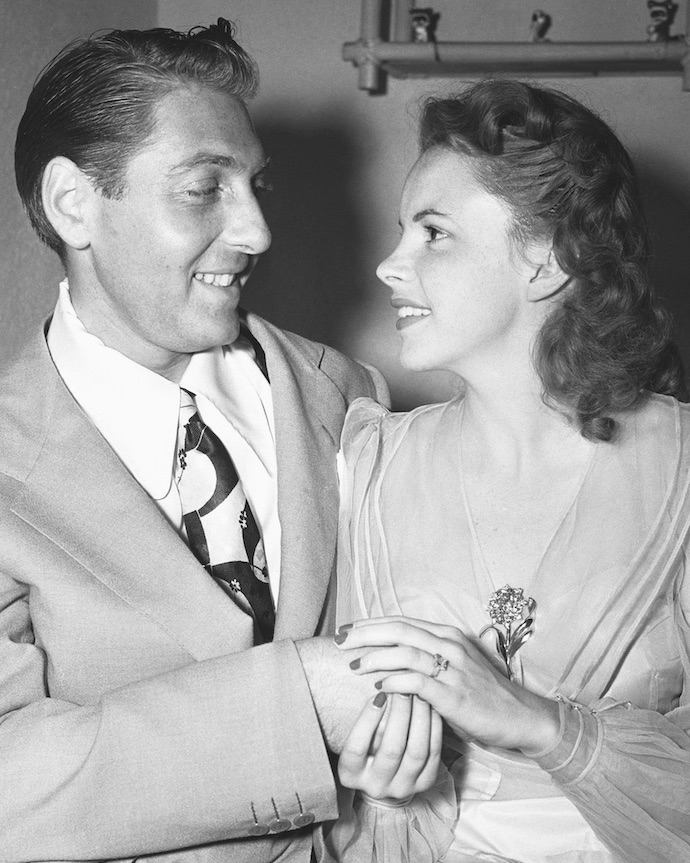
When MGM darling Garland, then only 19 years old, decided to marry 31-year-old Rose, studio executives and publicists were not thrilled — nor was her famously domineering mother, Ethel Marion Milne, who worried the union would ruin her image as a youthful teen. Dorothy Gale marrying an older man?! Shocking! But Garland was young and determined, and so she and the composer eloped in Las Vegas in 1941.
The marriage only lasted a few years, and the “engagement ring” received even less attention. Reports describe a simple square-shaped diamond on a thin band, which she paired with an equally delicate wedding band. Though she wore this ring during the marriage, Garland later clarified it was never given to her as a formal engagement ring.
Judy Garland’s Ring from Vincente Minnelli: A Nontraditional Pink Pearl and Black Onyx Ring
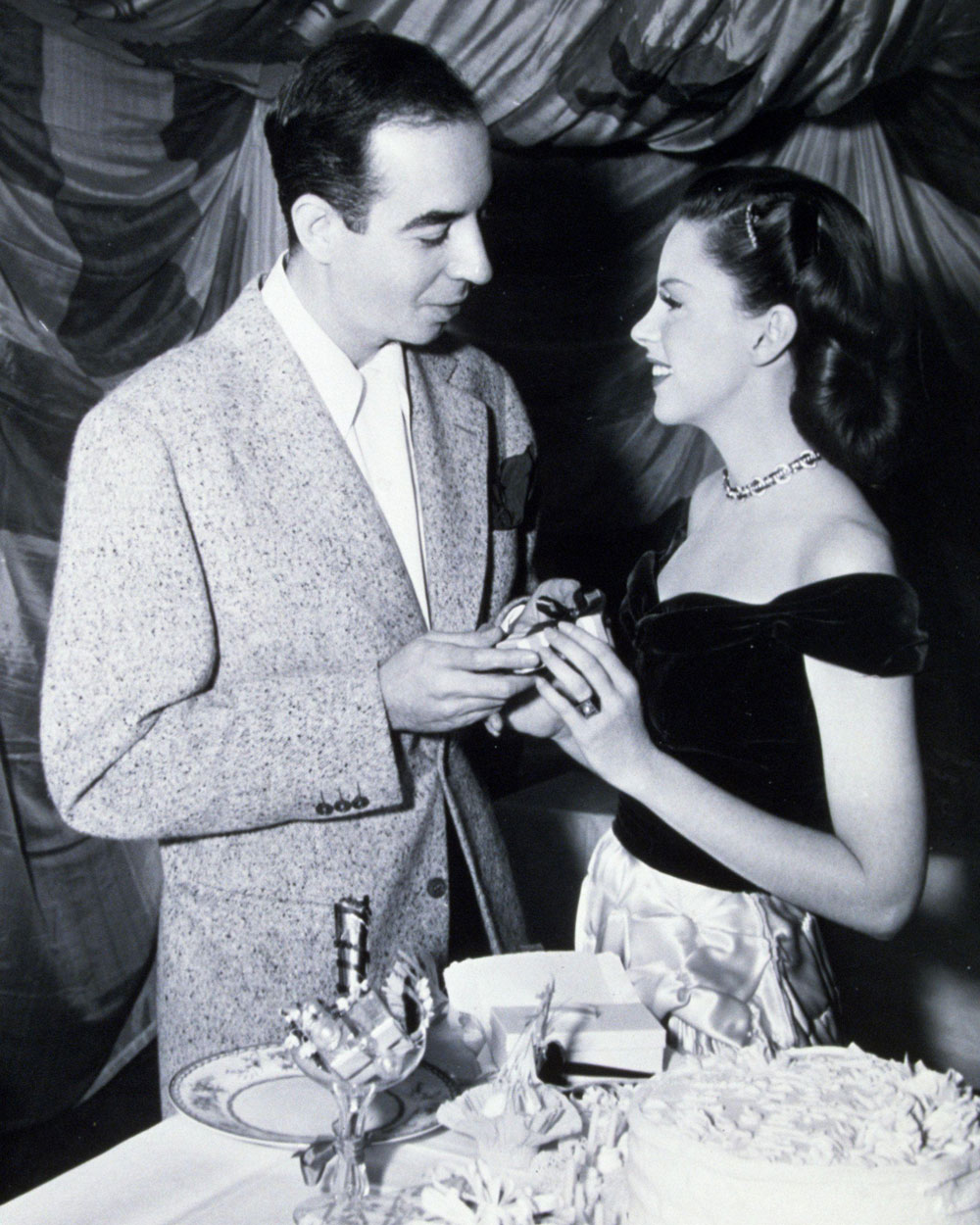
The best things to come out of Judy Garland’s three-year marriage to director Vincente Minnelli were Liza Minnelli and this extraordinary ring. The couple actually met in 1941, but it wasn’t until they worked on one of Garland’s other most popular films, Meet Me in St. Louis, in 1944, that a relationship began. They were married the next year.
Minelli gave her a pink pearl set on a black onyx ring he designed himself. It was a very unique piece, though technically not an engagement ring. Daughters said of the Minelli Ring, “It suggests Minnelli’s directorial eye for contrast, composition and costume: the piece functions like a curated prop or signature look rather than a standard symbol of marital status. For Garland, it signals a willingness to wear jewellery as part of an overall visual persona.”
Daughters emphasized that it was a high-contrast choice but one that made sense for a person with a visual director’s eye for silhouette and tonal drama. “The pearl/onyx ring (documented in coverage) explicitly supports the idea of Minnelli as a visual stylist: strong graphic contrast, curated materials, and an object designed to read as part of a larger image or costume.”
Garland paired the ring with a wedding band made of black enamel gold with pink seed pearls, customized to beautifully complement the wedding ring.
This ring continued Judy Garland’s pattern of not receiving a traditional engagement ring or proposal — a pattern that began with her first husband, David Rose. “Neither Dave nor Vincente ever gave me an engagement ring,” Garland told Modern Screen in 1954. “I don’t know why. They just didn’t.”
Judy Garland’s Ring from Sid Luft: The Classic Marquise-Cut Diamond Garland Always Wanted
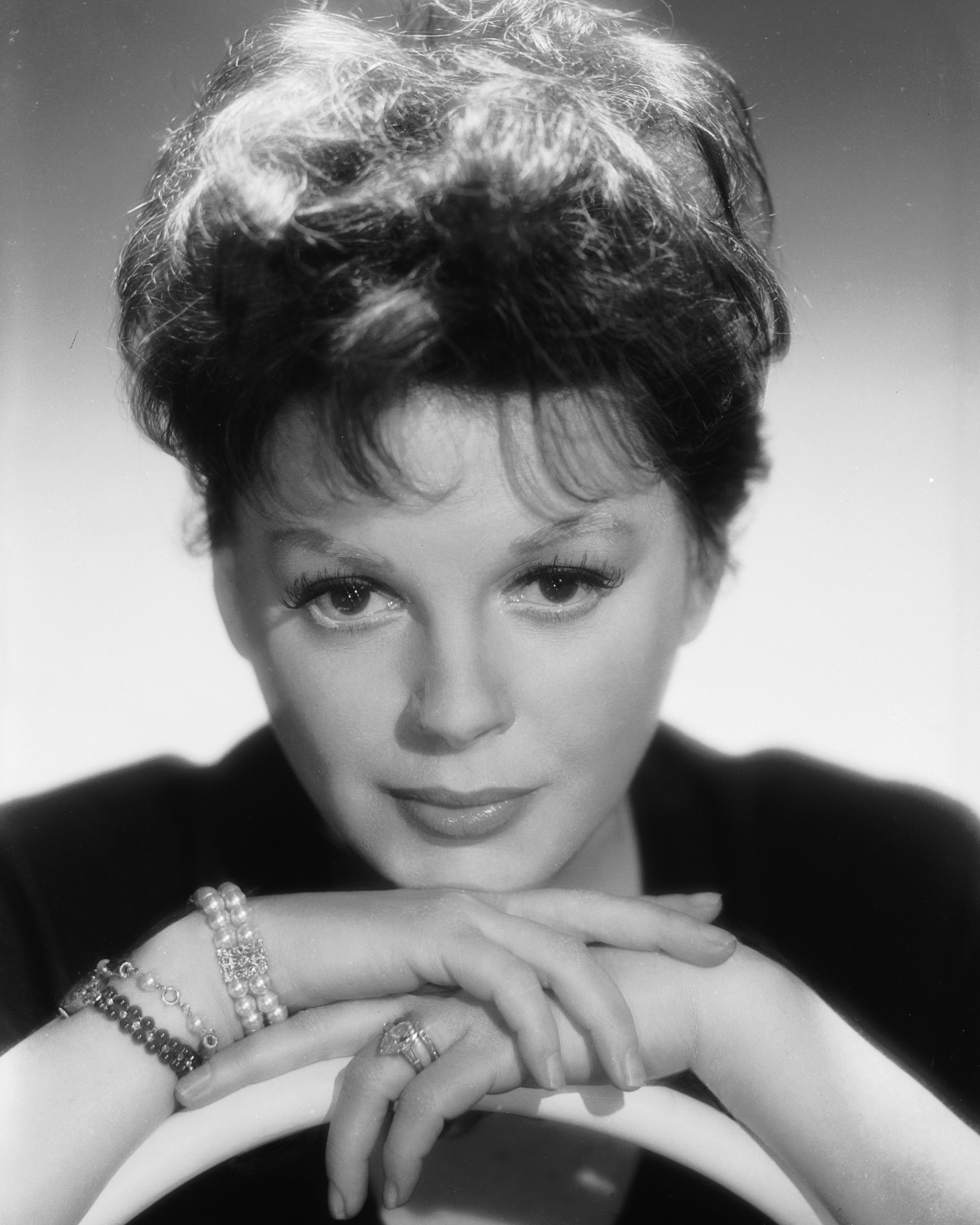
Finally, Garland got some of the traditional normalcy she had come to crave over the years, as someone with a less-than-ordinary life. Luft, a producer and manager, proposed to her with a real natural diamond engagement ring (they were already married for two years at this point, but it counts!) Reportedly, Garland was deeply moved by finally receiving a formal natural diamond engagement ring — a symbol of stability and sincerity she had yearned for.
In a 1954 issue of Modern Screen, Garland recalled, “When Sid said he had a little ‘thing’ for me and slipped the ring on my finger, I just cried. I really did. Honestly, Sid’s the most thoughtful guy!” The marquise-cut piece with tapered baguette side stones was very much of the time.
The diamond engagement ring symbolized a shift in Garland’s life, both professionally and personally. “A diamond-forward, classic silhouette reads as a shift toward enduring, public-facing elegance — less about studio image-making and more about a mature, standalone persona. Given that Luft’s ring is often described as a drop given on an anniversary, it also communicates milestone celebration and an established partnership rather than the symbolic moment of a proposal,” Daughters says. The couple would go on to have two children, Lorna and Joey.
In his 2017 book, Judy and I, Luft wrote, “According to Judy, Vincente was not capable of being a protector or husband in the deepest sense. It was a conflict of interest.” Luft stepped into that void, and a major part of his role as her partner became helping stabilize and rebuild her career. Garland’s dependence on amphetamines — introduced to her as a teenager by studio doctors prescribing pills for weight loss — had led to her being fired from three major films and ultimately dropped by MGM. Determined to help her reclaim her place in Hollywood, Luft championed her comeback, culminating in the landmark film A Star Is Born.
The Rings of Judy Garland’s Later Years
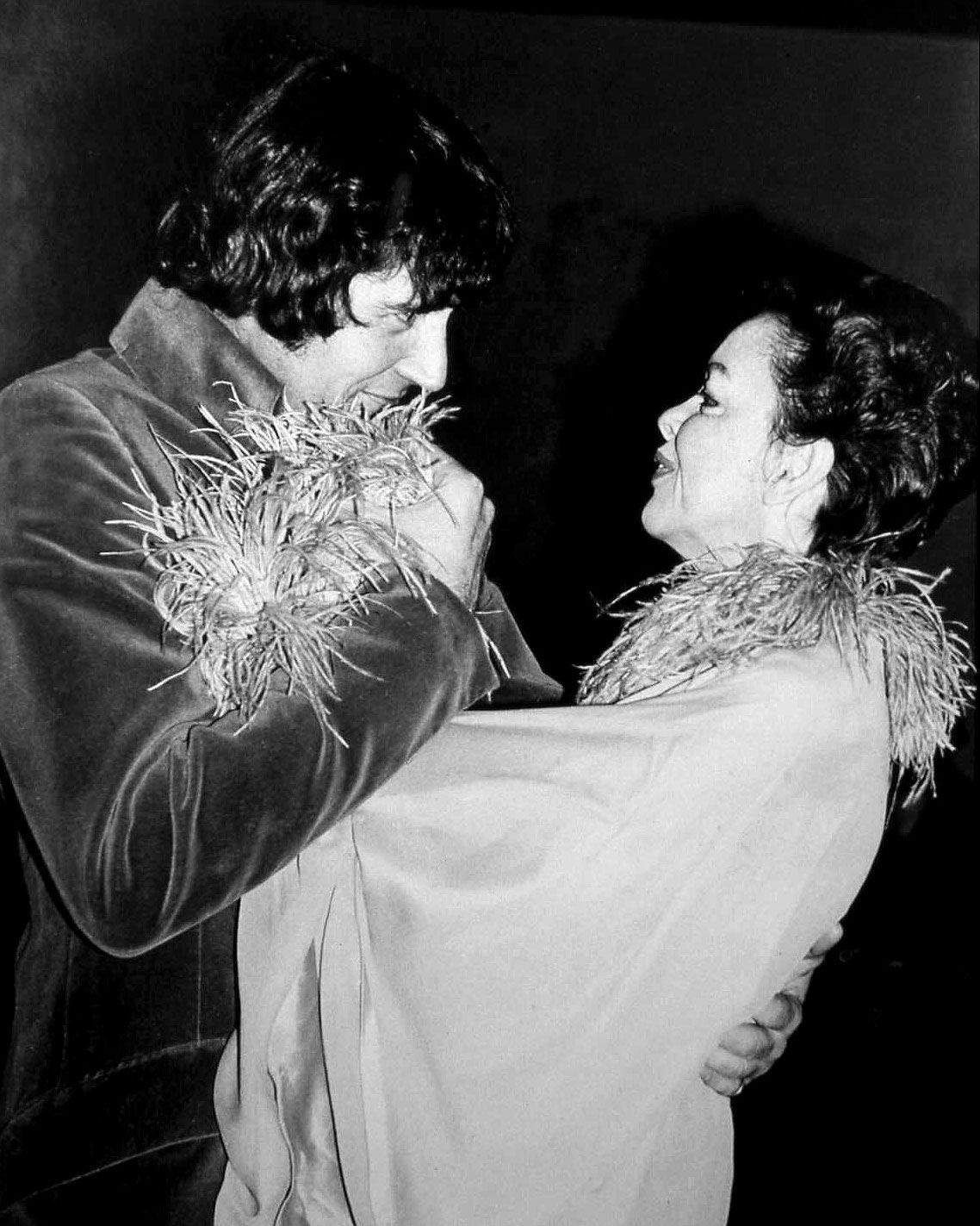
Judy Garland’s shortest marriage was to Mark Herron, lasting only five months. There’s no documentation of an official engagement ring from him, and by this period, she was often seen wearing costume jewelry — including in a 1965 interview the couple gave together. The piece she wore appears to be a tourbillon or bypass ring. As Daughters notes, a 1960s Tourbillon would likely have been cleaner and more modernist in style than the more ornate bypass designs of earlier decades.
Even if it wasn’t a fine jewelry piece, it may still have carried emotional weight for Garland. The bypass ring’s intertwined design symbolizes two souls coming together as one. “For Garland in the 1960s, such a ring could have signified narrative intimacy or emotional connection, perhaps more expressive and personal than a ritual solitaire,” Daughers says.
Daughters also emphasized that the style would have been fashion-forward for the era. “The 1960s embraced sculptural, design-led jewellery; a tourbillon reads as modernist and expressive, aligning with the decade’s move away from strictly ritual solitaires toward pieces that made a stylistic statement,” he says.
At the time of her death, Garland was married to musician Mickey Deans. Their “meet cute” was complicated from the start, as Deans first entered her life while delivering drugs to her. Yet Garland maintained publicly that she felt genuinely loved by him, even as her family and friends believed he was an unsuitable partner for her declining health. In 1969, she told reporters, “This is it. For the first time in my life, I am really happy. Finally, I am loved.” During this period, she was also frequently seen wearing costume rings rather than fine jewelry.
Why Judy Garland’s Engagement Rings Still Matter
Judy Garland’s engagement rings told a true evolution. They reflected not only the fashion and trends of their eras, but also Garland’s shifting persona and life path. Daughters explains that the evolution of Garland’s rings mirrors the shifting aesthetics of each decade: the 1940s favored restrained, geometric designs; the mid-40s moved into more editorial, image-driven experiments like the pearl-and-onyx ring; the 1950s embraced classic diamond glamour with streamlined silhouettes; and by the 1960s, jewelry had shifted toward sculptural, modernist forms such as the Tourbillon style. “The trajectory moves from camera-friendly geometry to bolder graphic choices to diamond-centric polish and finally to expressive form — each reflecting broader cultural and cinematic trends,” he says.
Judy Garland once said, “I do like to be in love. A woman is incomplete when she’s not in love.” That sentiment speaks volumes about what she longed for in her life — and even more about these rings. Her engagement rings reflected her hopes, her reinventions, her vulnerabilities, and her enduring yearning to be loved.


Get the Newsletter
Sign up for the latest diamond news, delivered directly to your inbox.


