< Engagement Rings & Weddings / Engagement Ring History
The Delicate Beauty of Edwardian Engagement Rings
Discover the delicate filigree, airy platinum work, and old-world sparkle that define the Edwardian era’s most romantic engagement rings.
Published: December 1, 2025
Written by: Anouare Abdou
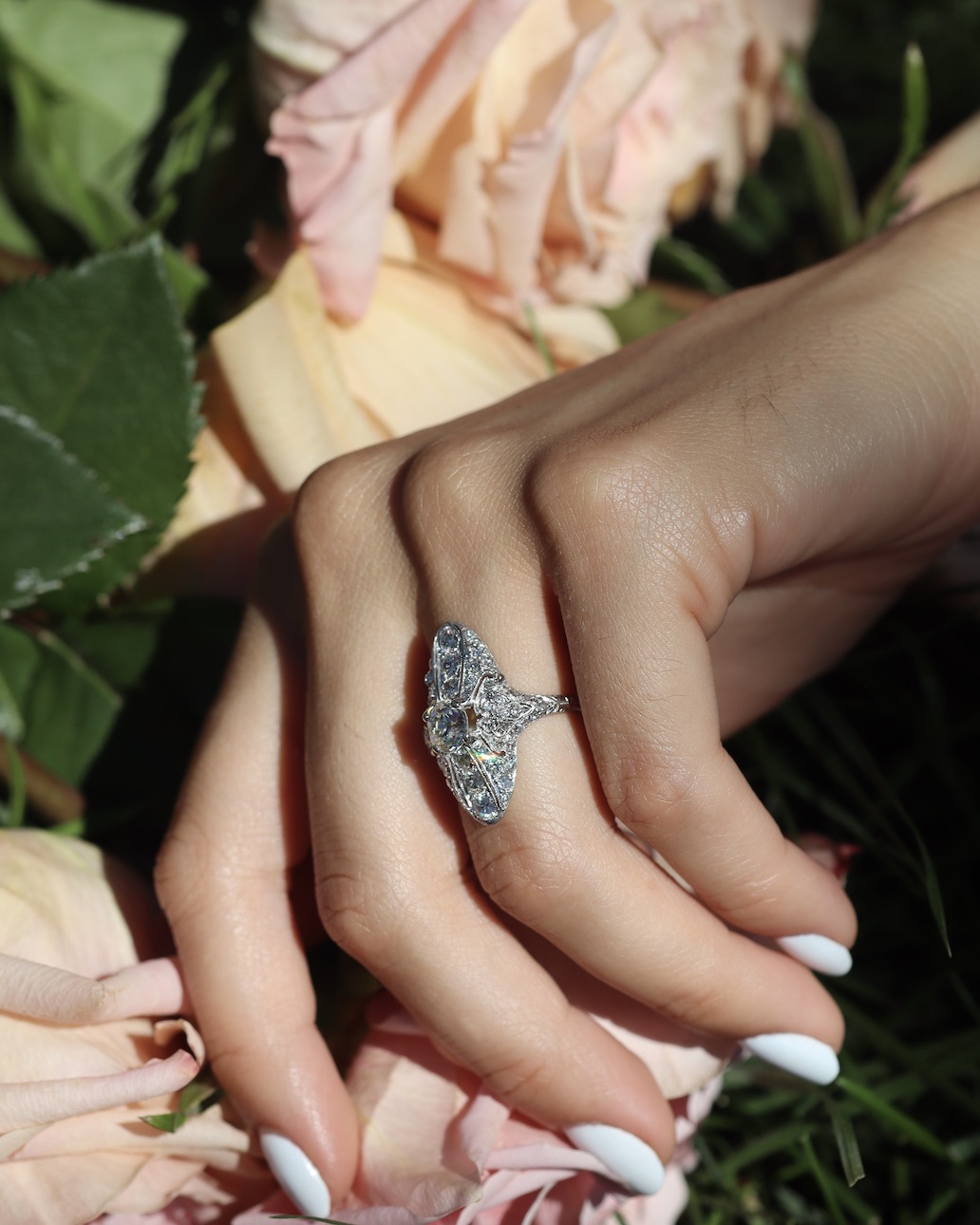
Vintage rings like Edwardian engagement rings are having a moment – and it could be here to stay. According to Cognitive Market Research, the global vintage ring market will expand at a compound annual growth rate (CAGR) of 2.90% a year between now and 2030.
Couples are gravitating towards vintage engagement rings for different reasons, from unique craftsmanship to rich history and sustainability. There’s a certain magic in telling your engagement story and explaining where the ring came from and why it’s special to you. An antique piece adds to the romance of that tale, whether it was passed down by a family member or your fiancé spent months scouring auctions to find the one.
If you like the idea of a vintage ring and are drawn to intricate and elaborate designs, you might just fall in love with Edwardian engagement rings – think hand-cut lacey details, soft florals and marquise diamonds. They were created during a fleeting time in history, but Edwardian jewelers pioneered the use of platinum and their designs still hold an undeniable appeal.
Meet the Experts

Andrew Slesinger is a sixth-generation diamond dealer who has spent his career working directly with rough stones, giving him a deep understanding of how diamonds are sourced, graded, and cut. As the owner and operator of Rough Diamond World, he oversees every step of the process, from procurement to craftsmanship.
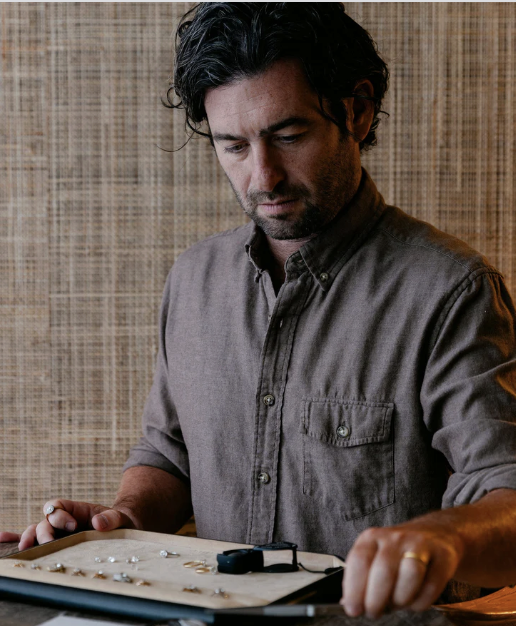
Jared Klusner, a fifth-generation jeweler and owner of Erstwhile, draws on more than a century of family expertise to curate and restore rare antique engagement rings. His deep knowledge of historical craftsmanship, period styles, and diamond artistry has made him a trusted authority for collectors and vintage-ring enthusiasts alike.
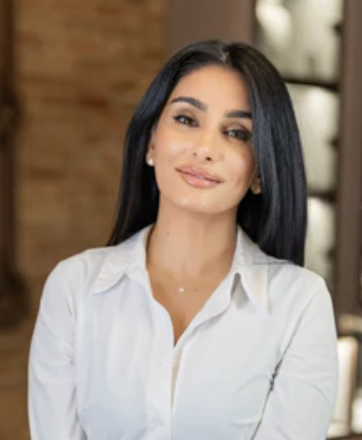
Irina Aran is the founder and designer of Facets Fine Jewelry, a jewelry boutique and design studio based in Brooklyn, New York.
Ahead, discover what sets Edwardian engagement rings apart.
What Is an Edwardian Engagement Ring?

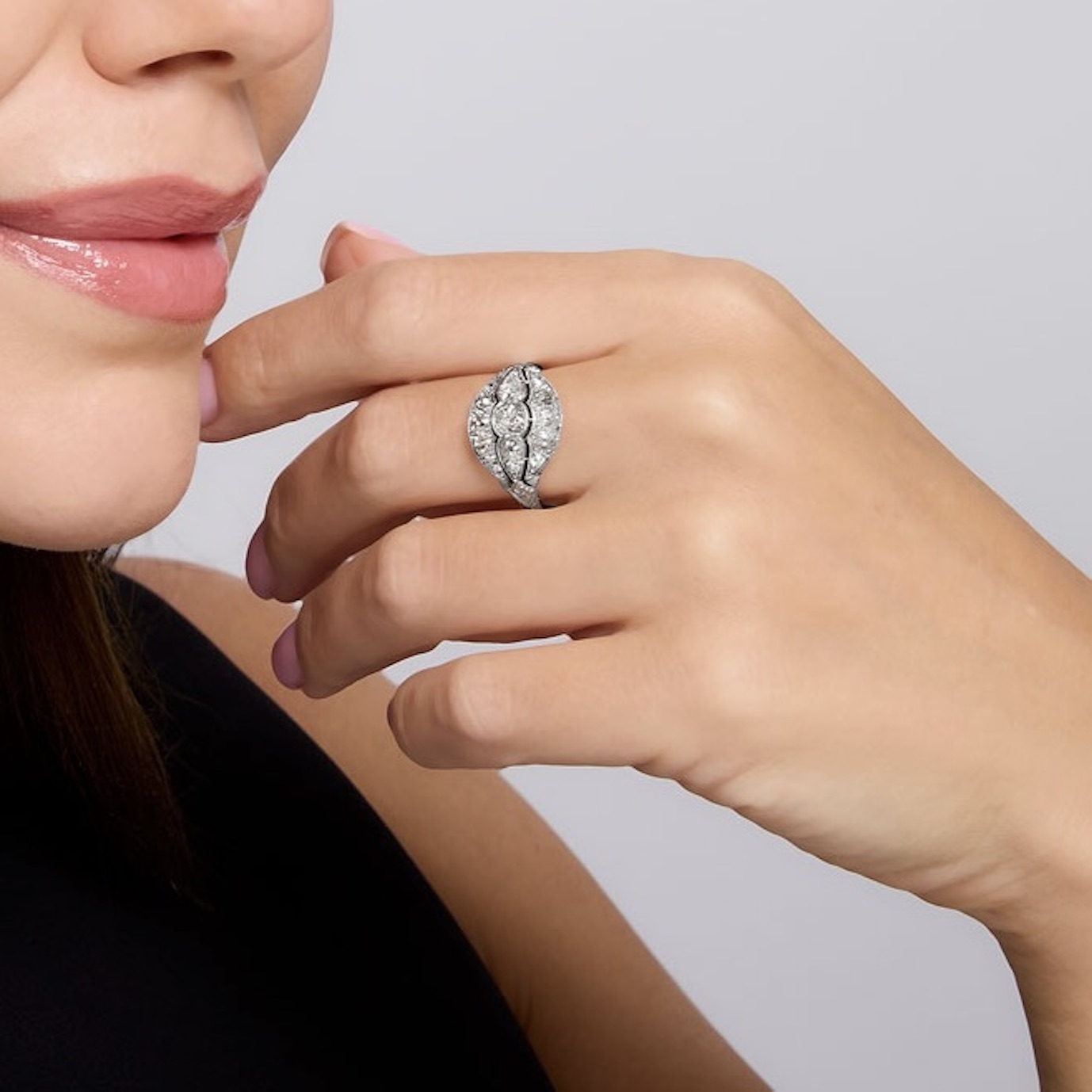
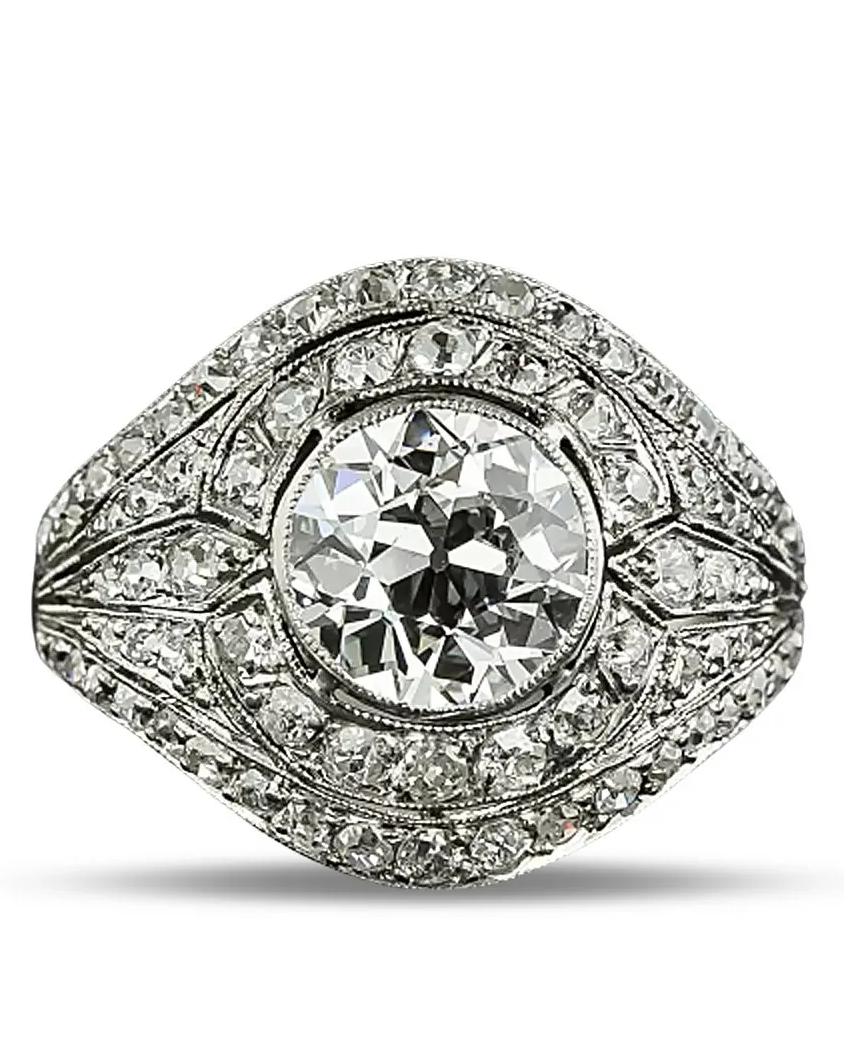
An Edwardian engagement ring is a style from the Edwardian era, which gets its name from King Edward VII, who ruled England from 1901 to 1910. It’s characterized by the use of platinum and techniques like filigree and milgrain to create delicate, ornate designs. It typically features a center stone surrounded by additional diamonds in cluster or halo-style settings.
The History of Edwardian Engagement Rings
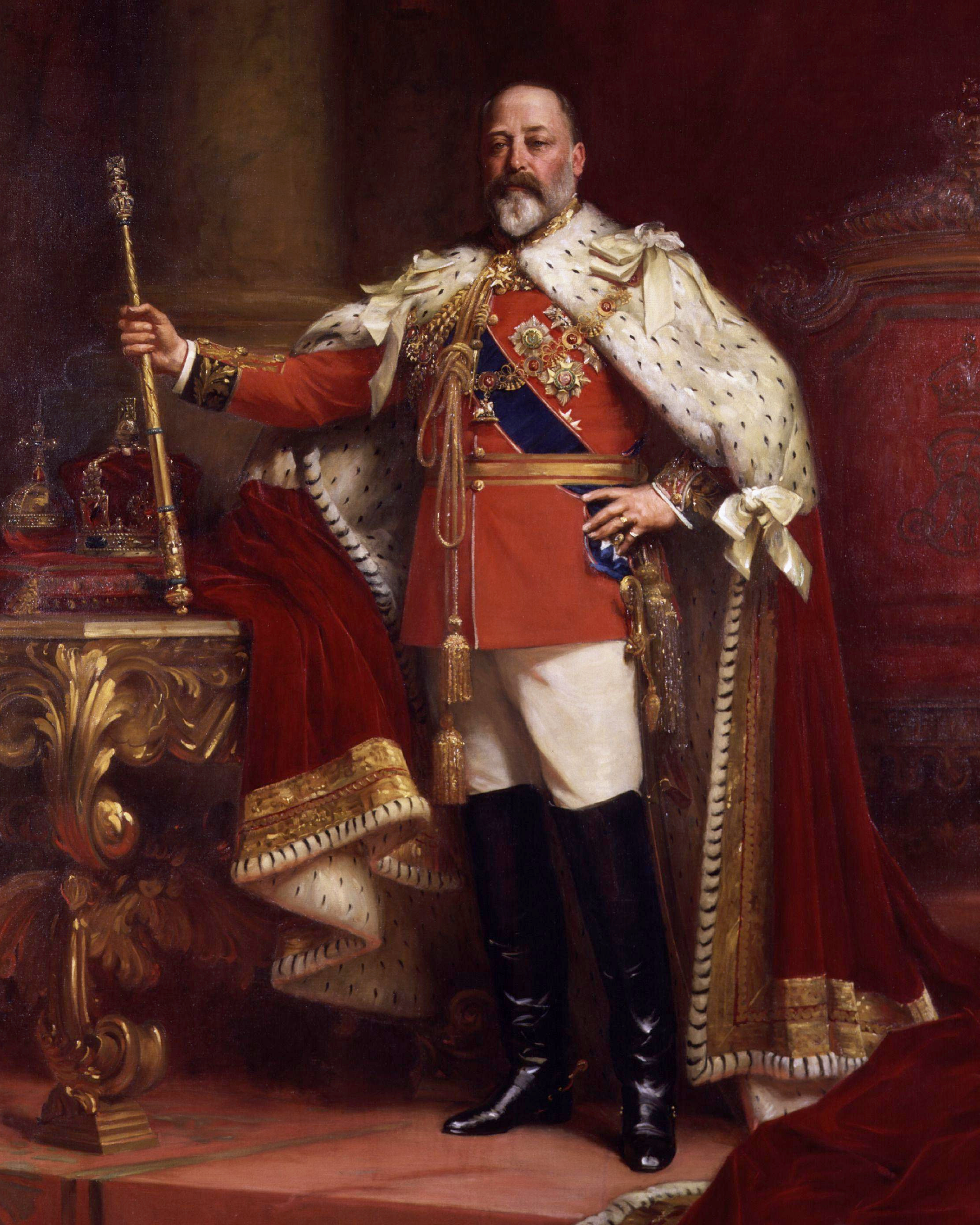
The Edwardian era started with the coronation of Queen Victoria’s son, Edward VII, in 1901. It was a period of optimism for the British Empire pre-World War I, which was reflected in the lifestyle and fashion choices of the elite.
Jewelry was designed to display wealth and opulence. Hand-crafted engagement rings were seen as a status symbol because they stood out from the mass-produced jewelry ushered by industrialization.
Women traded tight Victorian corsets and heavy skirts for flowier, lighter fabrics – and Edwardian engagement rings mirrored that shift with airy silhouettes that contrasted with chunkier styles of the previous era. As diamond discoveries in South Africa expanded access to exceptional natural stones, jewelers began showcasing them more prominently in their designs, often pairing them with pearls.
But there was only one metal able to support the intricate openwork of Edwardian engagement rings and hold multiple stones without breaking: platinum. It was hard to work with, but Louis Cartier, who became the official jeweler of King Edward VII in 1904, proved that it could be done.
“That’s what opened the door to all that beautiful filigree and openwork we associate with the period—rings that feel lacy, airy, and delicate, but are actually very strong,” Jared Klusner, fifth-generation jeweler and owner of Erstwhile, said. “In engagement rings, this translated into platinum mountings that look almost like fabric or lace on the finger, perfectly capturing the romantic, feminine spirit of the Edwardian age.”
Details of Edwardian Engagement Rings
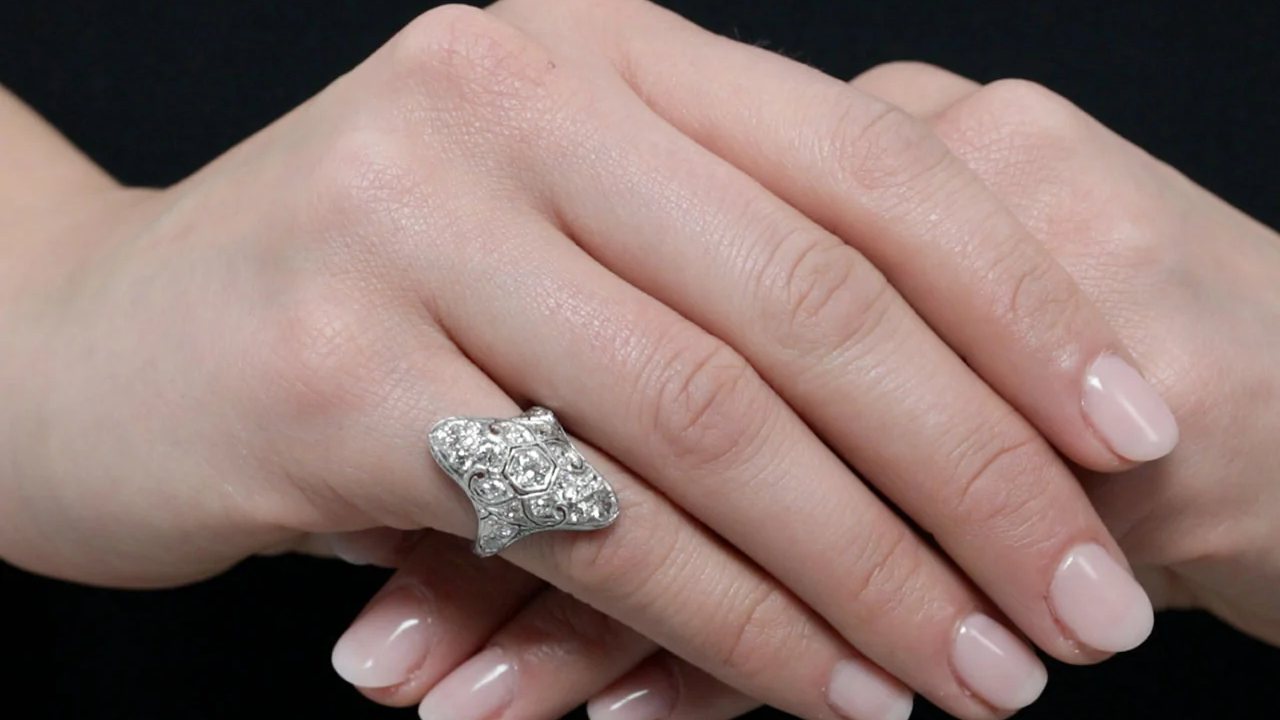
The use of platinum thus became a hallmark of Edwardian engagement rings. Cartier also helped popularize the garland style, inspired by French court aesthetics and defined by classical motifs like florals, garlands, bows and laurel wreaths.
Together, these shifts ushered in a new and unmistakable engagement-ring aesthetic—one defined by delicacy, lightness, and intricate craftsmanship. Below, discover the details that make Edwardian engagement rings truly unique.
The ‘White On White’ Look
As the era embraced lighter, more refined designs, both platinum and diamonds took center stage. “Edwardian engagement rings popularized the use of platinum – white diamonds on white engagement rings became very popular,” says Andrew Slesinger, sixth-generation diamond dealer and owner and operator of Rough Diamond World.
This evolution transformed how jewelers could work with diamonds, enabling finer metalwork, airier settings, and a brighter overall look. “This material shift completely transformed the engagement ring,” says Irina Aran, owner of Facets Fine Jewelry. “The diamond could float, maximizing its light return.”
Filigree and Milgrain
Filigree involves twisting and weaving thread-like strips of metal to create texture and detail. It’s a signature feature of Edwardian engagement rings, as it can be used to create light, open patterns that look like intricate lace.
It was often combined with milgrain, where a row of tiny metal beads adds dimension to the edge of a ring. The result? A delicate, soft finish that provides texture without weight.
Hand-Cut Diamonds
Candlelight diamond cuts like Old mine cuts, Old European cuts, and rose cuts were still prevalent during the Edwardian era. These cutting styles amplified the shine of diamonds in the warm glow of candlelight, thanks to features like larger facets. With its soft, elongated shape, the marquise cut diamond was also an Edwardian-era favourite.
Multi-Stone Settings

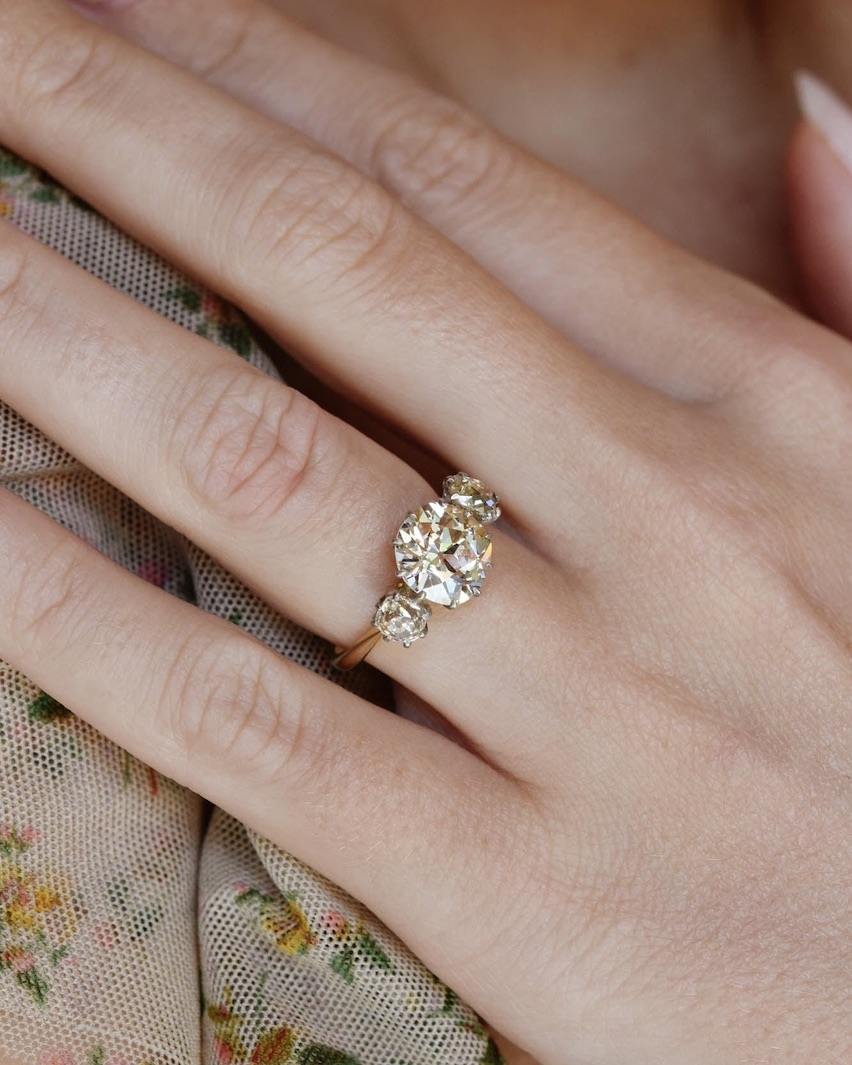
Smaller diamonds often frame the center stone in Edwardian engagement rings, whether in cluster arrangements that blend with filigree to create elaborate, flowing shapes or in early halo settings that boost brilliance.
Nature-Inspired Motifs
Nature was a defining influence in Edwardian engagement ring design. Jewelers shaped prongs into tiny rosebuds, wrapped diamond-studded leaves along the band, and incorporated motifs like petals, bows, and laurel wreaths. The result was a look that felt feminine, romantic, and ethereal.
What to Look for When Buying Edwardian Engagement Rings
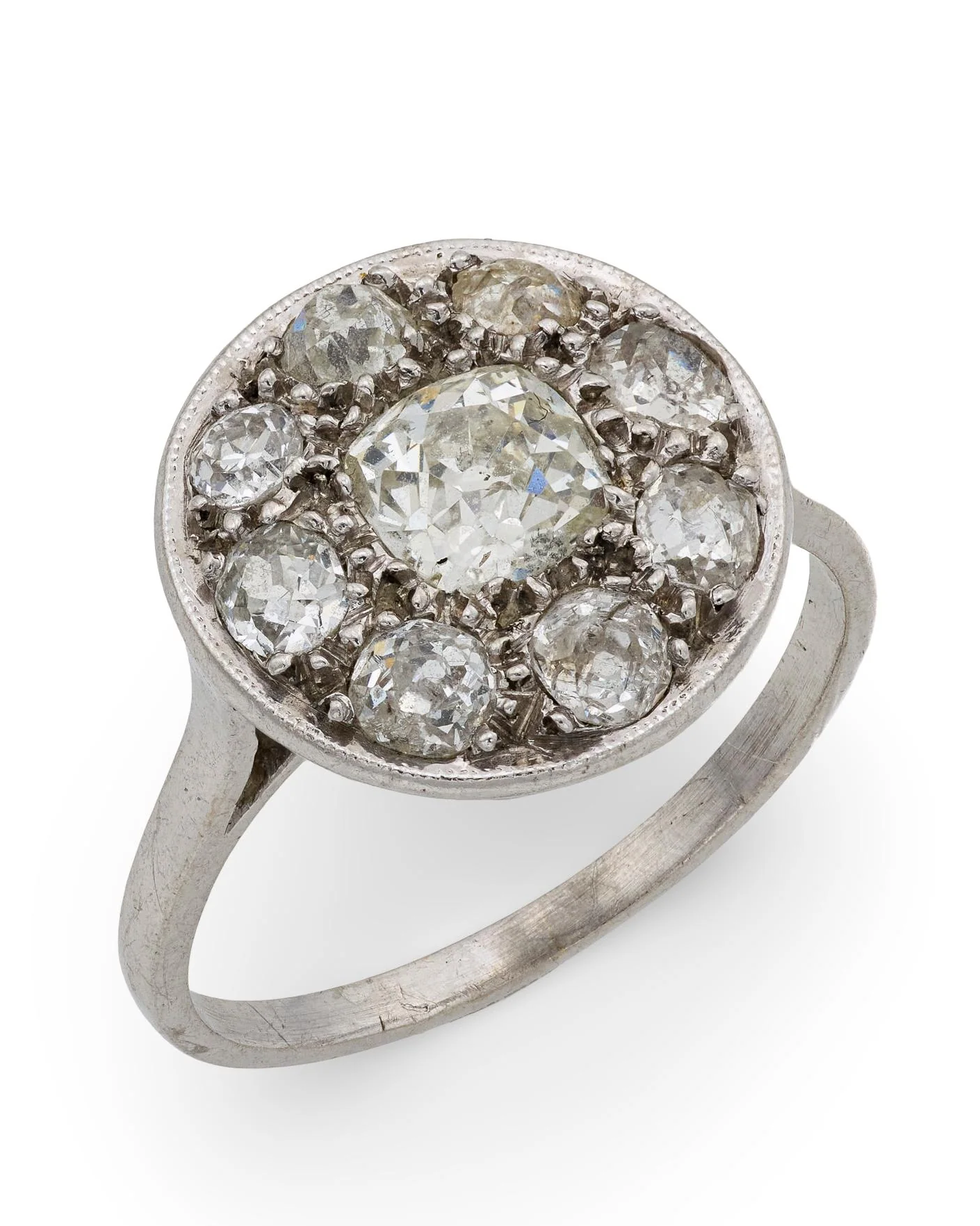
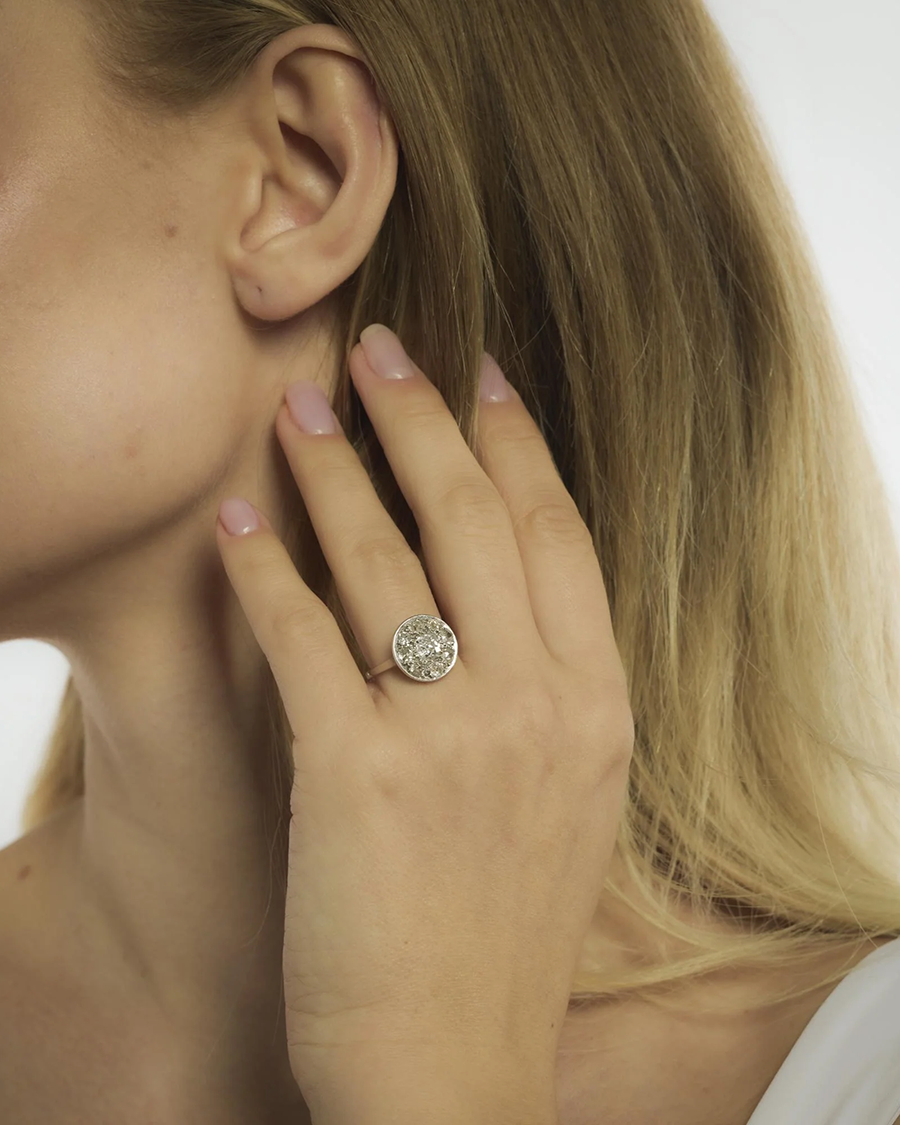
If you are falling for the charm of Edwardian engagement rings, here are some things to consider when shopping for one. First, decide whether you want a modern take on the classic or a true antique. “Many modern jewelers are creating stunning Edwardian-inspired pieces, but a true antique is over a century old,” Aran says.
Hoping to come across an authentic Edwardian ring? Look at the details closely. “The tools used during this time period were rougher and you should be able to see it in the details. A modern-made ring would use precision instruments that tell a different story,” Slesinger says.
“With any ring, I always start by flipping it over. The underside tells you almost everything. A true Edwardian ring is all about its construction: it should be beautifully hand-fabricated, often in platinum (sometimes over gold), not modern cast metal,” Klusner added. “You see it in the way the gallery is pierced, how the prongs are formed, and how the shank is finished. The metalwork should feel extremely fine and crisp, with everything filed and cleaned perfectly.”
When buying such an old, delicate piece, you want to inspect its structure too.
“The prongs holding the stones (both the center diamond and any accent stones) can wear down over a hundred years. You need a jeweler to confirm that the prongs have enough integrity to hold the stones securely,” Aran said, adding that the bottom of the band can also thin out over time and might require professional restoration or a partial replacement.
Lastly, always buy from a reputable dealer who can appraise the ring or provide a certificate of authenticity dating the piece to the Edwardian period.
How to Care for and Maintain Edwardian Engagement Rings
Caring for an Edwardian engagement ring requires a bit more attention due to its age and intricate craftsmanship. “All engagement rings need to be checked every six months to make sure stones are not loose,” Slesinger says. But with a real vintage ring with delicate filigree and slim platinum prongs, a little extra care can go a long way
Avoid cleaning your ring at home with harsh chemicals or ultrasonic cleaners that can dislodge stones. Don’t wear it at the gym, while doing housework or in the shower. Remove your ring when applying lotion or sunscreen. Always store it in a soft jewelry pouch or fabric-lined box when not wearing it, as filigree can easily snag. It’s also best to avoid stacking your ring with a wedding band, as the two rings can rub against each other and leave the shank or gallery thinner and more vulnerable, according to Klusner.
These simple habits will help you enjoy your ring for years to come. And whether you get your hands on a real Edwardian ring or find a modern style inspired by the era, it’s a unique and romantic choice that is bound to start conversations.
Shop Edwardian Engagement Rings
Get inspired by Edwardian engagement rings from some of our favorite designers and collectors.

Lang Antiques English Edwardian Diamond Cluster Ring, $5,650, langantiques.com
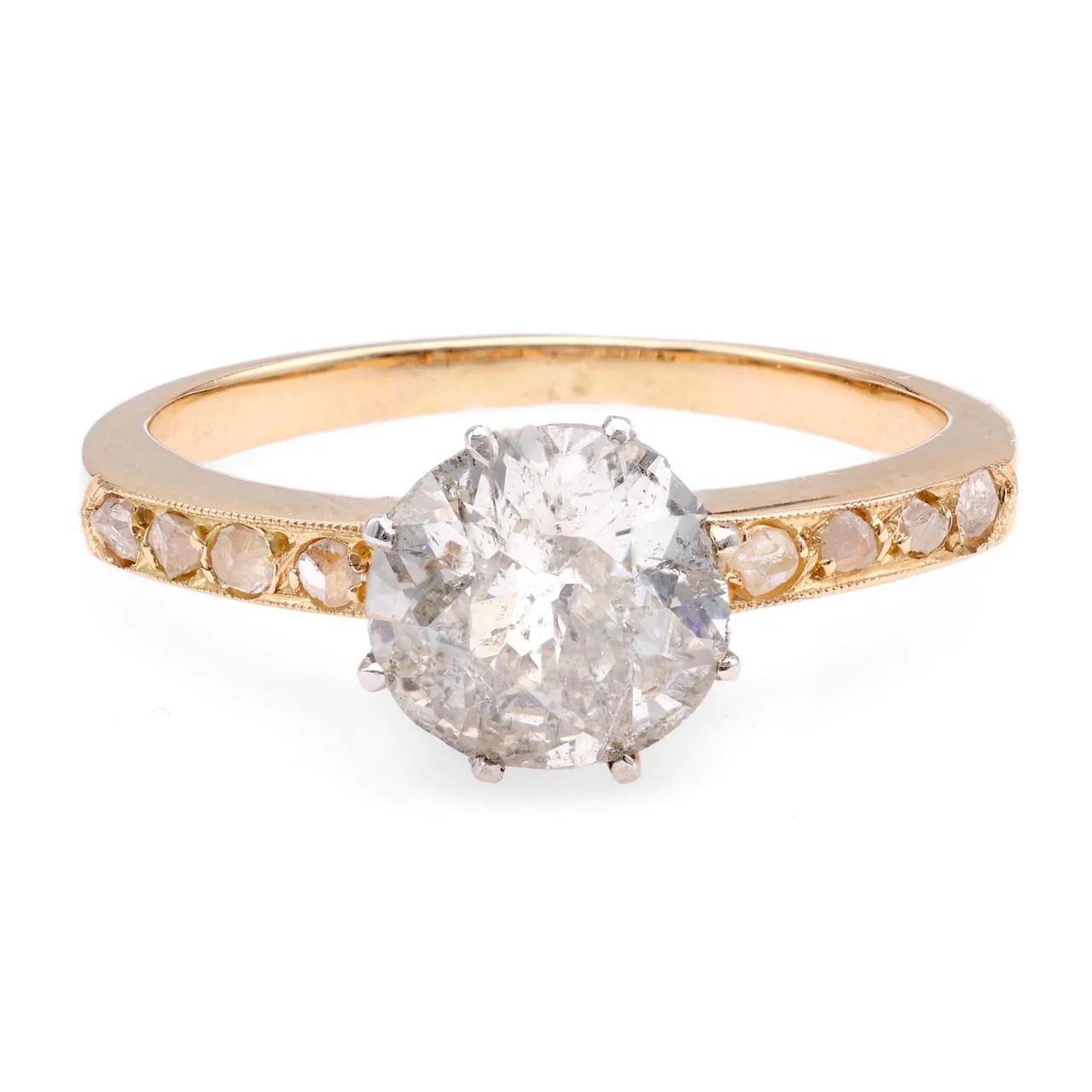
Jack Weir & Sons Edwardian-Inspired Diamond 18k Yellow & White Gold Engagement Ring, $5,950, jackweirandsons.com

Edwardian Diamond Engagement Ring in Platinum, $5,495, 1stdibs.com
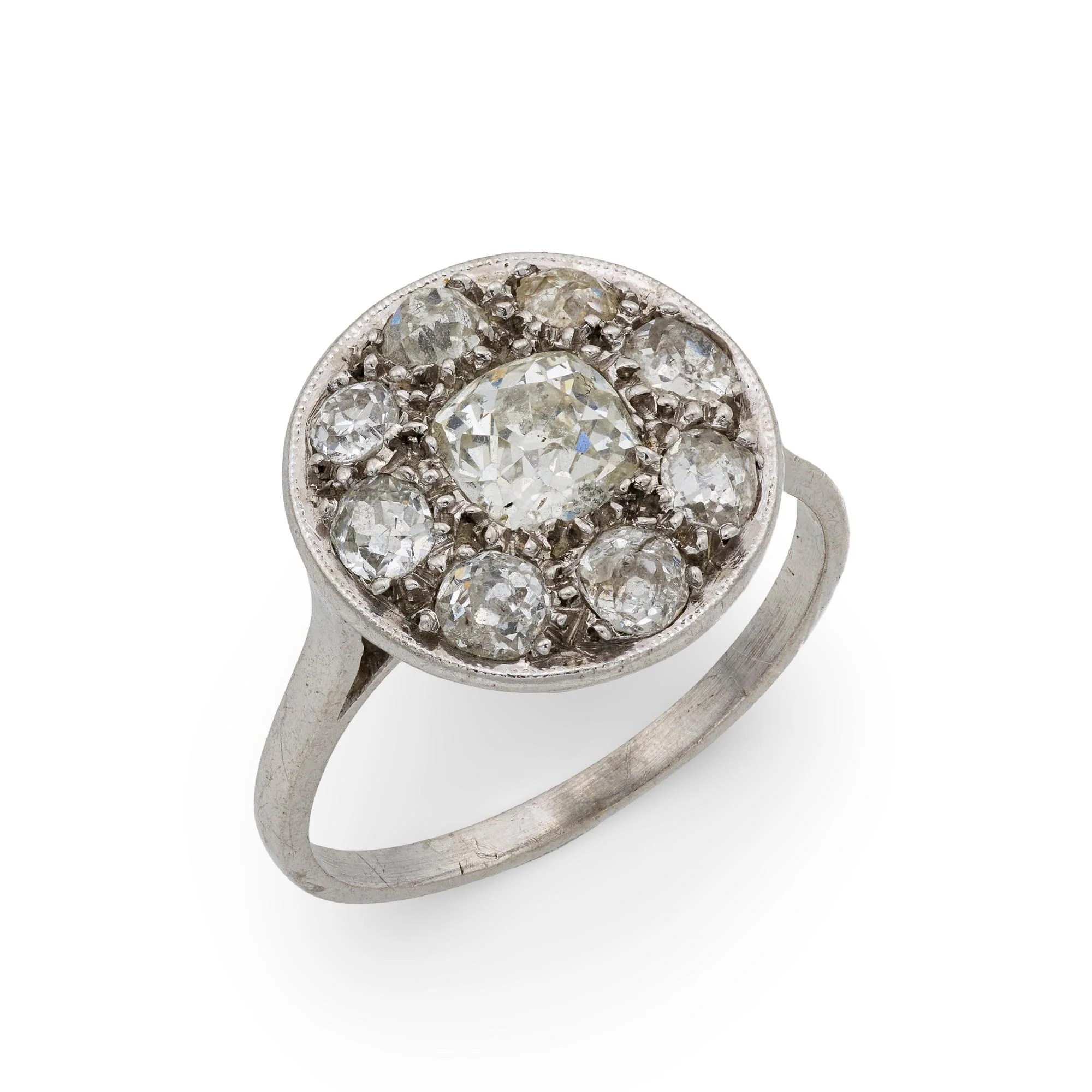
Edwardian Diamond Platinum Cluster Engagement Ring, $5,500, trumpetandhorn.com
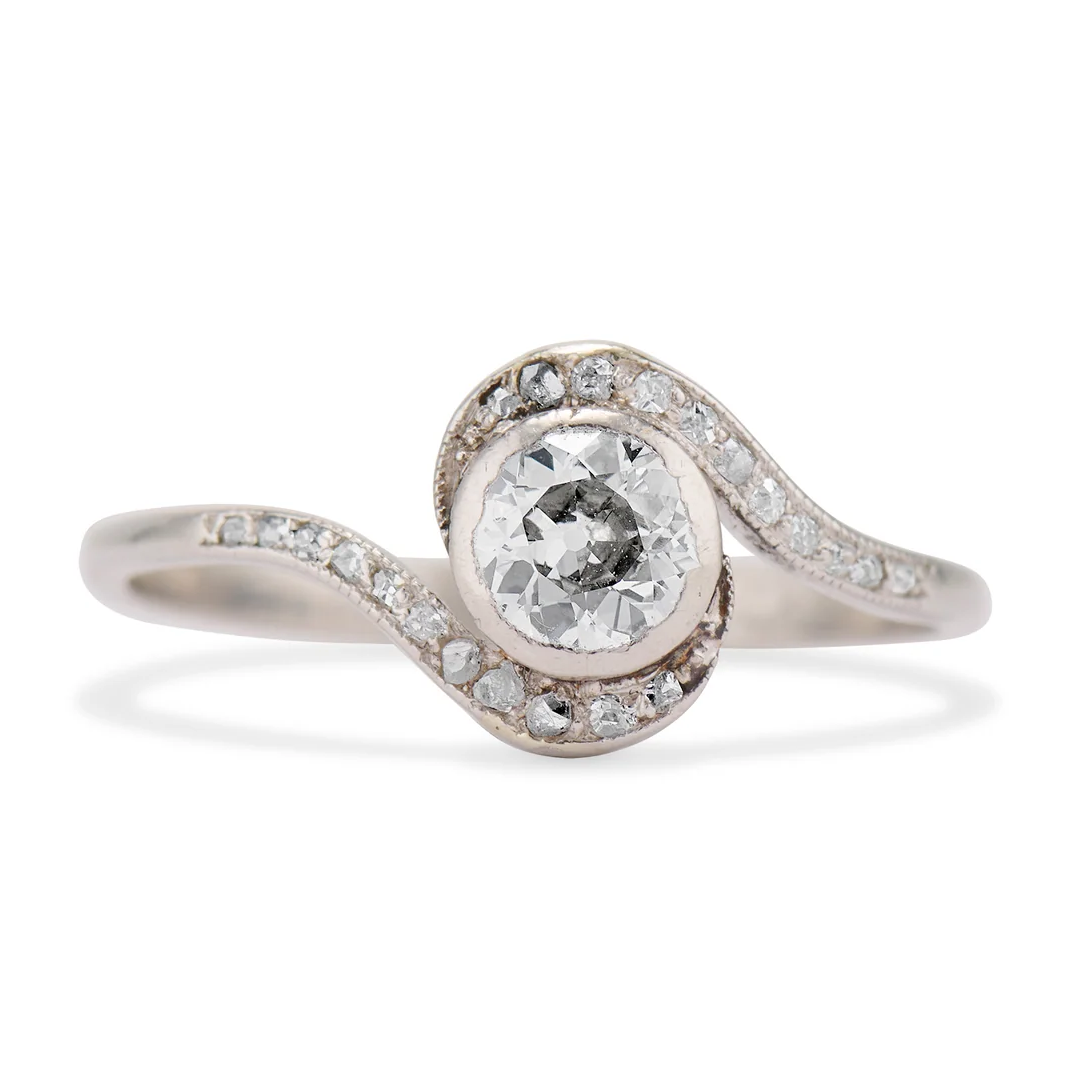
Edwardian Diamond & Platinum Swirl Ring, $2,950, ashleyzhangjewelry.com

Edwardian Three-Stone Antique Old European Diamond Engagement Ring, $32,000, erstwhilejewelry.com
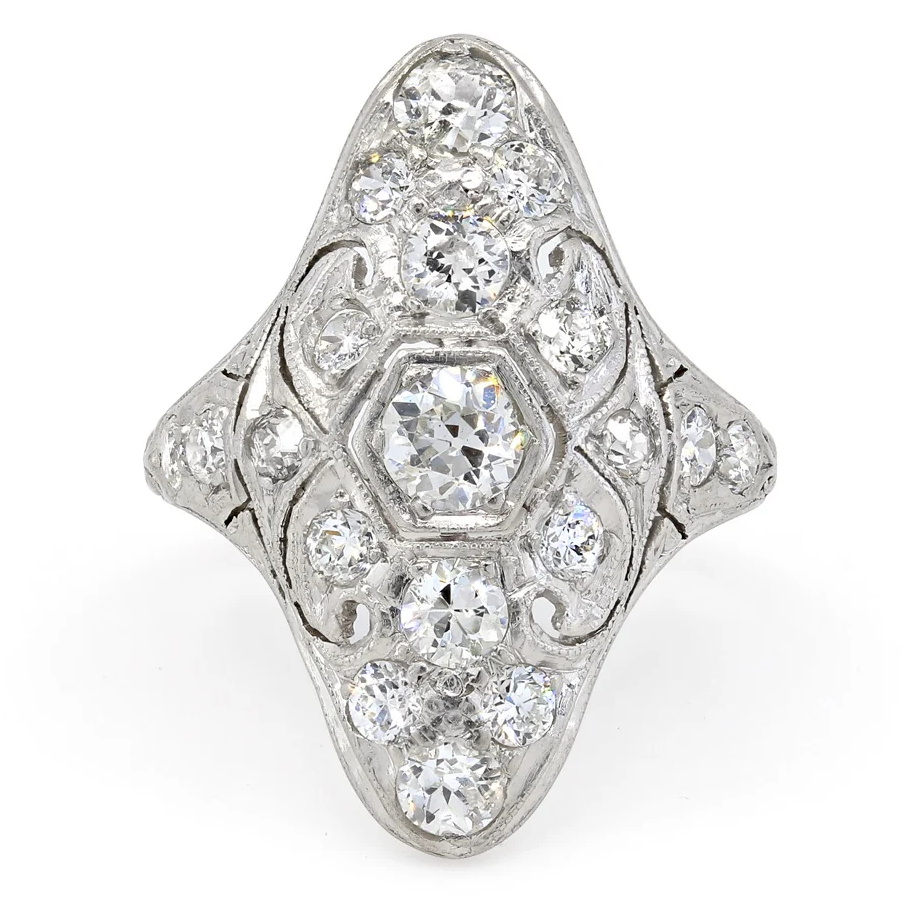
Beladora Antique Edwardian Diamond Filigree Ring in Platinum, $4,150, beladora.com

Antique Edwardian Diamond Ring in Platinum, $1,850, beladora.com