The Jewelry in Wuthering Heights Is Bigger, Bolder—and Completely Intentional
Like in every great love story, the jewelry underscores passion, emotion, and symbolism.

Margot Robbie as Catherine Earnshaw in Wuthering Heights (2026). (CAP/PLF/ Alamy)
Forget historical accuracy. In Emerald Fennell’s Wuthering Heights, the jewelry isn’t meant to blend in—it’s designed to seduce.
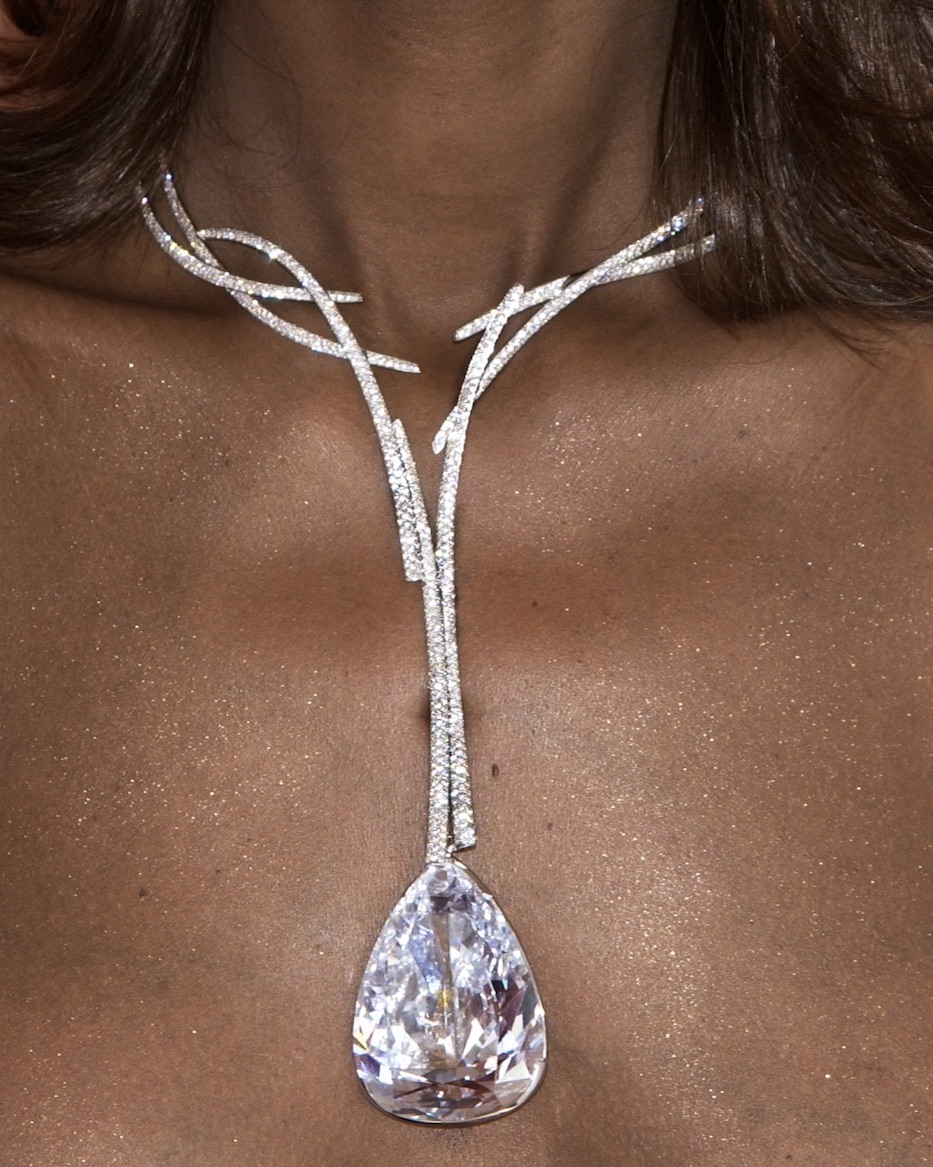
If the film’s red carpet tour is any indication, the message is loud and clear. Leading lady, Margot Robbie, has turned every premiere into a showcase of high-wattage romance and allure, stepping out in what can only be described as drop-the-mic diamonds: Elizabeth Taylor’s famous Taj Mahal heart-shaped diamond pendant, a velvet choker with more than 100 carats of Lorraine Schwartz diamonds, and Jessica McCormack’s pear-shaped diamond suspended from a ribbon of red silk.
She also wore a replica of Charlotte Brontë’s Victorian mourning bracelet, originally woven from the hair of her dead sisters, Emily and Anne Brontë. Each look mirrors the film’s gothic sensuality—lush, dramatic, unapologetically seductive. And that’s exactly how the jewelry functions on screen as well.
Meet the Experts
Helen Molesworth is a renowned jewelry historian, gemmologist, and best-selling author. Her 25-year career has spanned the global gem and jewelry industry from auction houses to academic posts. She’s the Senior Curator of Jewelry at the Victoria and Albert Museum in London and the author of Precious, The History and Mystery of Gems Across Time.
Marion Fasel is an esteemed jewelry expert, author, curator, and trend forecaster. She is the founder and Editorial Director of The Adventurine jewelry newsletter. She is the author of several books, including The History of Diamond Engagement Rings: A True Romance

Rebecca Selva is the Chief Creative Officer of Fred Leighton, a legendary jeweler renowned for its exceptional collection of vintage and antique pieces. She has spent the last 30 years curating period jewelry across all eras, including Georgian, Victorian, Edwardian, Art Deco, and mid-century.
Wuthering Heights Jewelry: History vs. Hollywood

In Wuthering Heights, jewels don’t simply accessorize the costumes; they set the mood. Big baubles glow, framing faces, heightening tension, and amplifying longing. Necklaces illuminate Robbie’s character, Catherine Earnshaw’s features in shadowy scenes. A bold gemstone cross telegraphs forbidden love. Iridescent stones woven into her hair portray fantasy. The pieces are outsized, symbolic, even decadent—less about realism and more about emotion.
Which means they’re nothing like what a woman would have actually worn in late 18th-century England, when Emily Brontë’s classic novel takes place. That departure is deliberate.
“It’s a modernization of a period drama,” says Helen Molesworth, senior curator of jewelry at London’s Victoria and Albert Museum. Under costume designer Jacqueline Durran’s direction, the world skews fairytale rather than faithful: large costume jewels, exaggerated stones, crimson gowns, frothy layers.


Visually, it’s far more cinematic to see gorgeous, colorful jewels and fabrics than the drab clothes of the era.
“Visually, it’s far more cinematic to see gorgeous, colorful jewels and fabrics than the drab clothes of the era,” Molesworth explains. “We’ve been conditioned by shows like Bridgerton. Jewelry offsets the dourness. Wuthering Heights can be grim—the jewels add light and beauty.” In other words, the sparkle is strategic.
Jewelry historian and author Marion Fasel agrees. Period accuracy, she says, has never really been the point in Hollywood. “There’s never been a period movie that accurately portrays the jewelry on screen. It’s Hollywood. It’s an artistic impression.”
For Fennell, that impression feels personal as well as cinematic. The director is the daughter of British jewelry designer Theo Fennell, known for lavish, colorful pieces, and that bold sensibility shows. Big crosses. Dramatic chokers. Stones woven into hair. The jewelry is impossible to ignore.
“It’s a visual feast,” says Rebecca Selva, creative director of Fred Leighton, the vintage jewelry house long favored by Hollywood stylists and celebrities. She likens the effect to Sofia Coppola’s Marie Antoinette, where candy-colored baubles and layered fabrics create a lush fantasy. “The jewels weren’t accurate—but they were perfect for the vision.”
Why Wuthering Heights Prioritizes Sparkle Over Accuracy

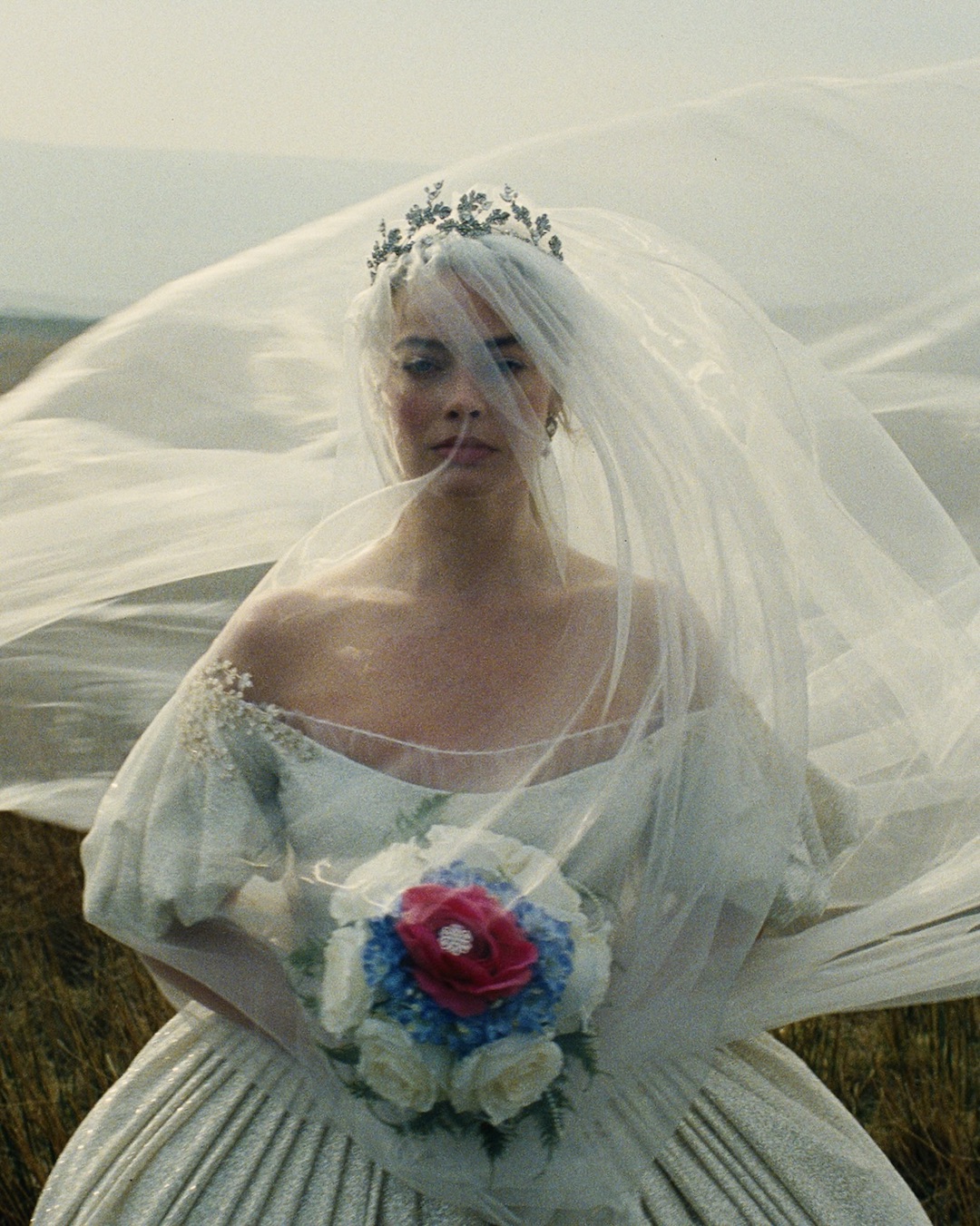
That same philosophy drives Durran’s costumes. In interviews, she’s said Robbie’s more than 50 looks reflect emotion and personality, not any single era. Victorian, Elizabethan, Tudor, contemporary, and even Old Hollywood references mingle freely. The jewelry follows suit, much of it costume pieces sourced from Chanel’s archives, Joseff of Hollywood, and André Fleuridas for Mazer—names that helped define classic movie glamour.
Historically speaking, though, the real Victorian landscape looked very different.
“There wouldn’t have been globs of rubies, emeralds, and diamonds,” Molesworth notes. Instead, women wore paste stones, garnets, topaz, citrine, and amethyst—pretty but far subtler. Cinematically? Not nearly as effective.

So, the film leans into spectacle. Take Catherine’s crimson cape moment: a sweeping fairytale silhouette punctuated by a supersized cross sparkling with what looks like emeralds, rubies, and diamonds. It’s closer to Chanel’s 1950s costume crosses—already inspired by the 19th century—than anything historically precise, Molesworth points out. But it works. The stones mirror the saturated colors of the wardrobe and intensify the emotion onscreen.
“The jewelry was purposeful,” Selva says. “There’s a largeness, a boldness. It reflects how emotionally charged Cathy and Heathcliff’s relationship is.”
If the production had stuck to reality, she adds, the pieces would have been restrained: gold chains, rose-cut diamonds, ribbons, cameos—personal, delicate, neoclassical. Beautiful, yes. But not exactly what drives obsession and desire. Fennell’s Wuthering Heights isn’t subtle. It’s heat, shine, and scale.
Beyond Brontë: The Tempestuous Love of Elizabeth Taylor and Richard Burton
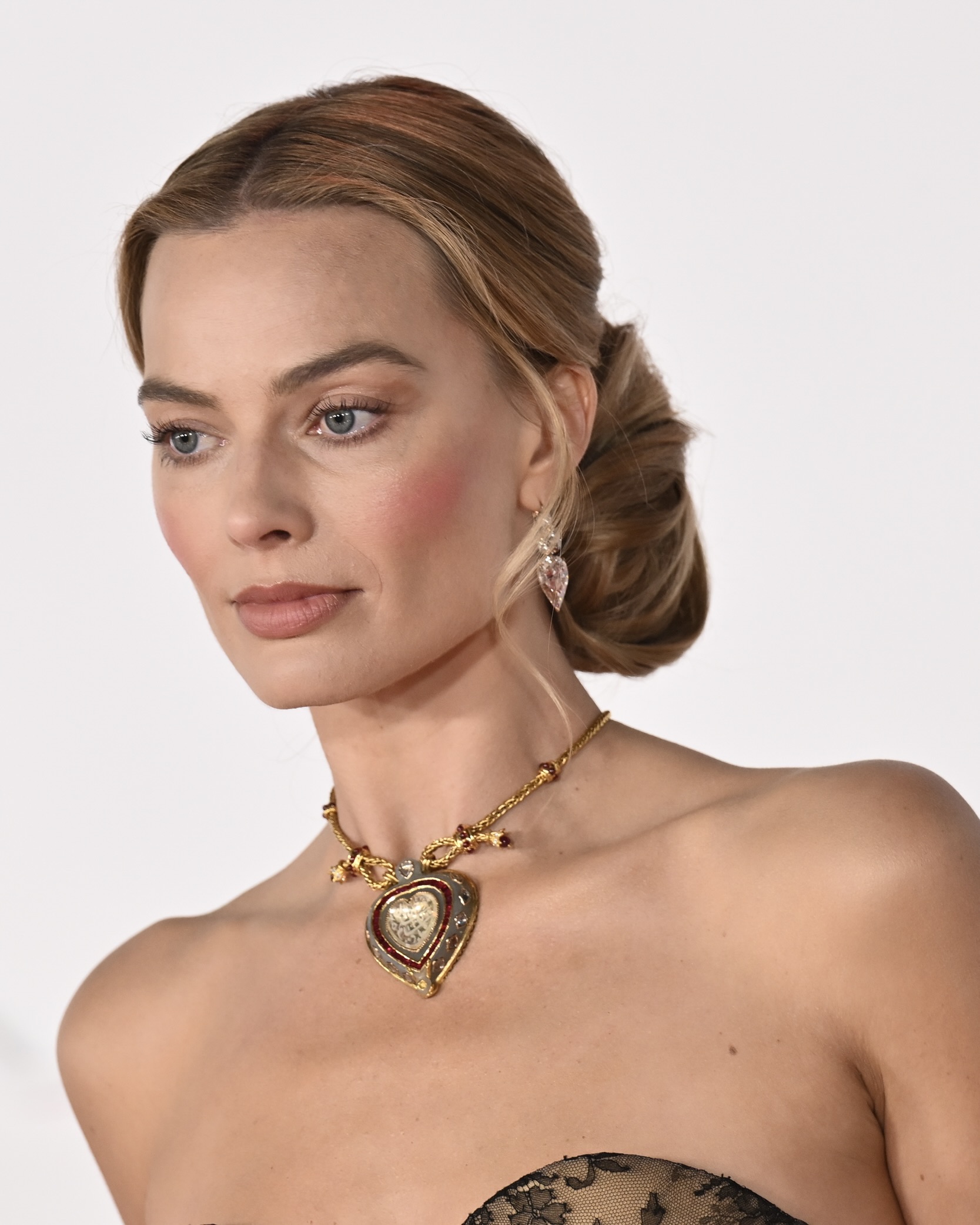
And the inspiration doesn’t stop with Brontë. Fasel sees a clear nod to Old Hollywood’s most passionate love story: Elizabeth Taylor and Richard Burton. Their legendary, tempestuous romance—complete with headline-making jewels—feels like a modern parallel to Catherine and Heathcliff’s all-consuming bond.
“Liz and Richard were this obsessive, furious love—that crazy love,” Fasel says. “And theirs wasn’t fiction; it was real. That’s what the movie is channeling.”
Which makes Robbie wearing Taylor’s Taj Mahal pendant on the press tour feel less like styling and more like storytelling. The heart-shaped diamond, inscribed with “Love is Everlasting,” neatly ties fiction to Hollywood myth.

And the symbolism continues. Following filming, Robbie commissioned matching gold signet rings for her and co-star Jacob Elordi from Cece Jewellery in London, enameled with two skeletons embracing in a bed of thorns and engraved with Brontë’s famous line: Whatever our souls are made of, his and mine are the same.
It’s romantic. It’s theatrical. It’s a little over the top. Just like the jewelry—and exactly the point.