< Culture & Style / Jewelry Trends
Pavé Diamonds: A Second Skin of Endless Sparkle & Craftmanship
The art of pavé diamonds down to the millimeter.
Written by: Alexandra Cheney
Published: November 25, 2025
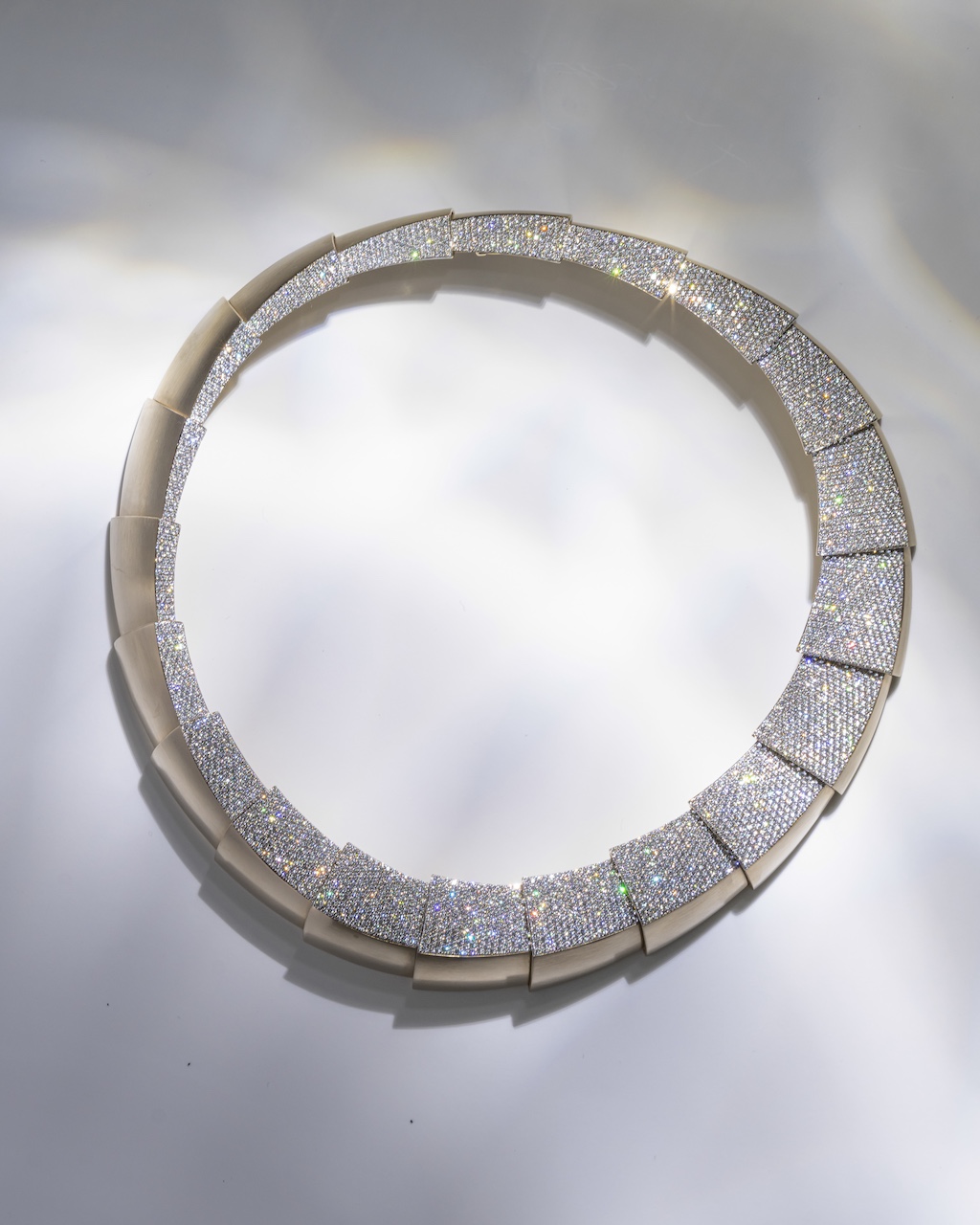
Picture a carpet of sparkle, an illusion of endless shimmer of not one or two, ten or twenty, but hundreds of diamonds – not a prong or bezel in sight. And yet the almost-liquid smooth surface, a second skin of pavé diamonds that covers a pendant, snakes around a bangle, or sits within a ring, hails from a centuries-old technique.
Across the market, jewelry houses, large and small, are refining micro-pavé into distinct house signatures. Heritage names like Pomellato, Graff, and Vhernier are sharpening their own high-jewelry languages, while family-run ateliers such as Sidney Garber and Maison H lean on calibrated stones, advanced scanning, and tight tolerances to achieve that uniform, albeit flexible, field of light. Independent stalwarts like Ippolita, Grace Lee, and Katkim draw bold silhouettes all the while reducing metal, lowering profiles, and amplifying brilliance with pavé diamonds.
Meet the Experts

Grace Lee is the Creative Director of her eponymous fine jewelry collection, which she launched in 2008 after leaving a career in finance. Known for her refined aesthetic and architectural approach to design, she has built a loyal following for her modern yet timeless pieces.

Born and raised in Florence, Ippolita Rostagno has always been inspired by Italian culture. She studied sculpture and ceramics at the Istituto d’Arte in Florence. After working in bronze and stone on large-scale works, Ippolita launched her eponymous jewelry collection, IPPOLITA, in 1999 in New York with Bergdorf Goodman.

Katherine Kim is a Los Angeles-based designer who prioritizes sustainability and global responsibility through her jewelry brand KATKIM. Her designs have been featured in Vogue Paris, Elle, Harper’s Bazaar, and worn by celebrities like Rihanna, Gigi Hadid, and more.
A Modern Approach to Pavé Diamonds
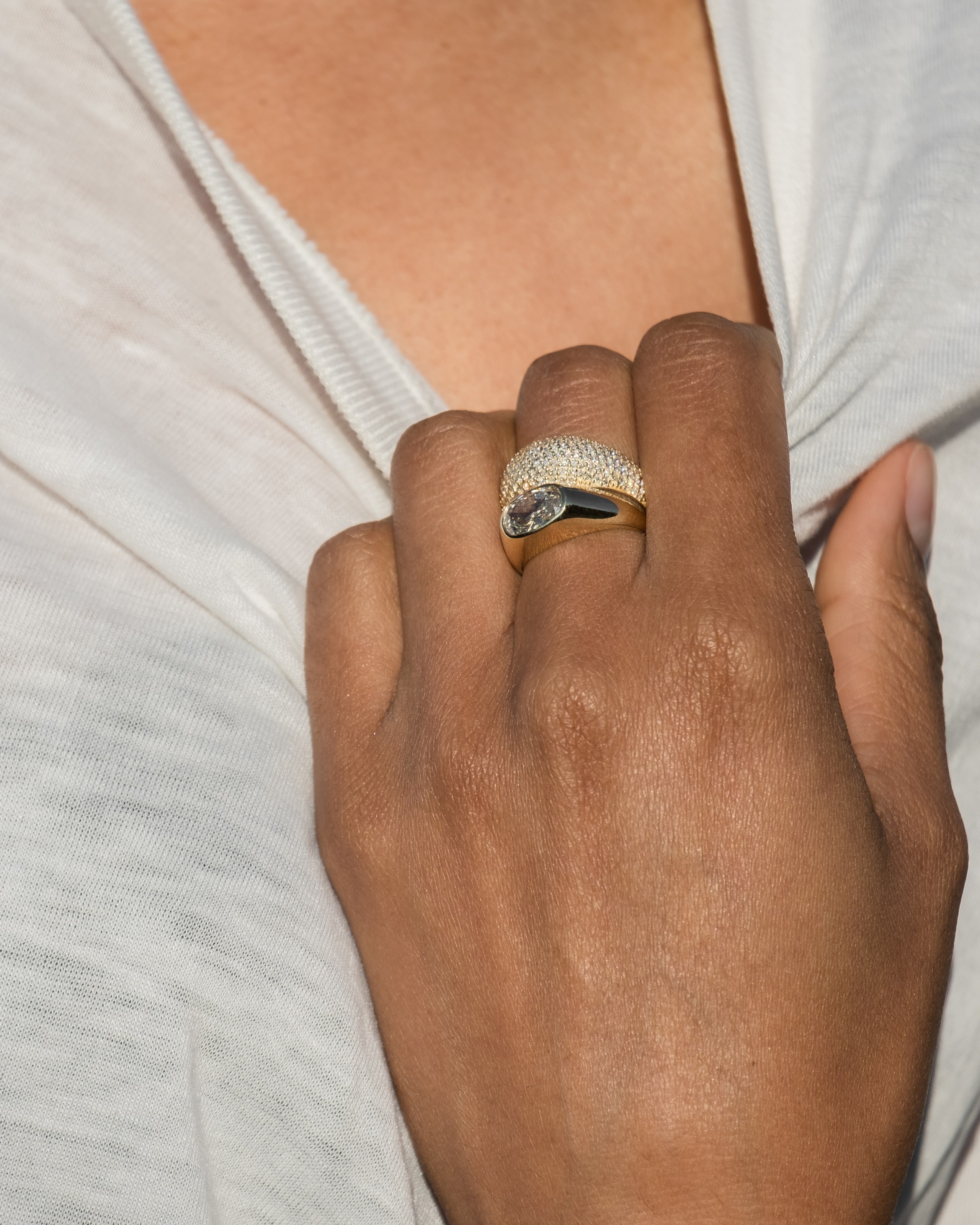
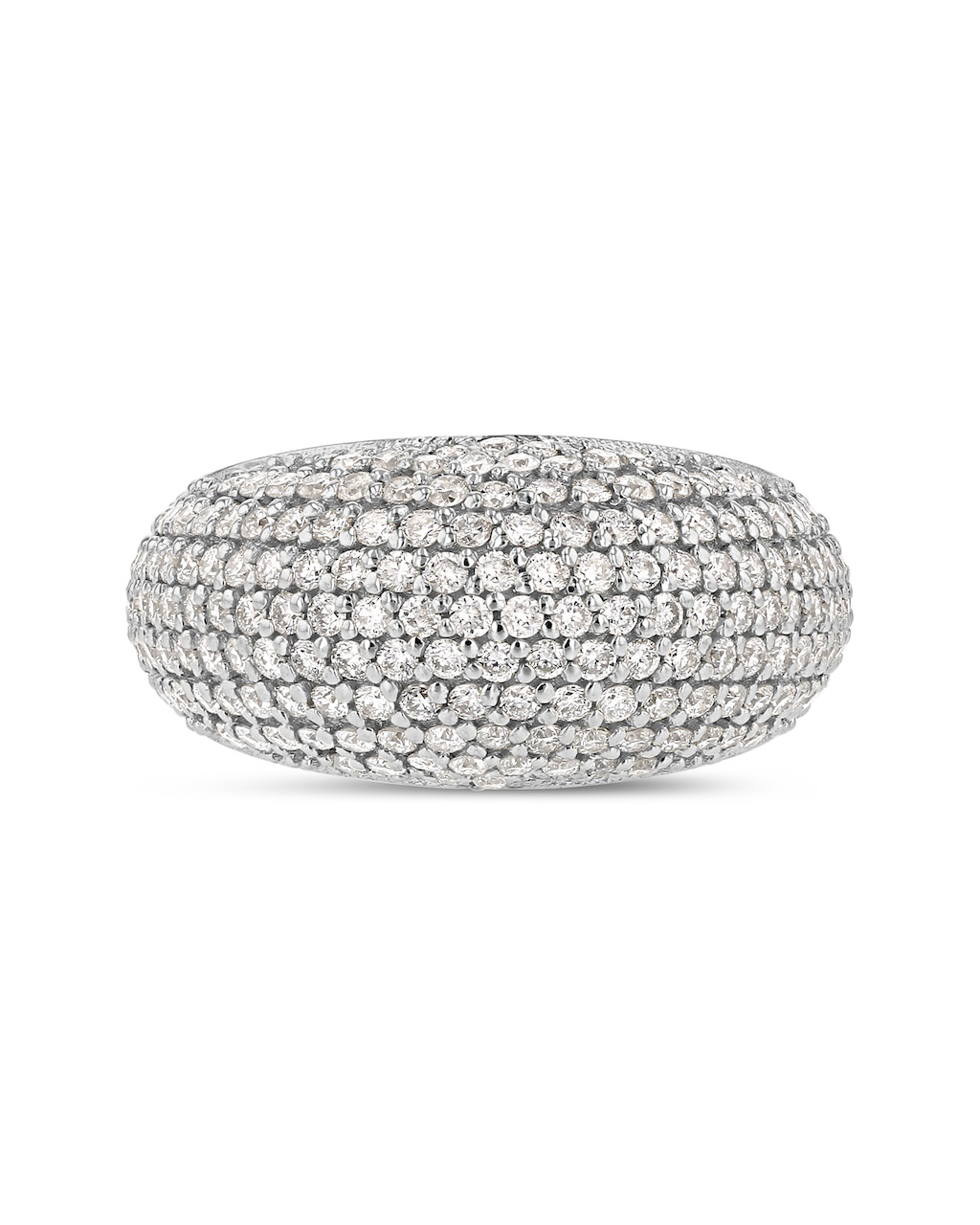
“This is not your grandma’s pavé,” said Grace Lee, adding, “I would call it a modern take. You don’t just wear it when you go to dinner. Some clients wear my jewelry to the gym, much to my dismay, but they can because functionally it’s so seamless and fluid.” Demi Globe, her signature piece, is a 14-karat domed gold ring with pavé diamonds that’s 9 mm at its widest point. Rising off the finger like a bubble, the Demi Globe (from $7,880) is delicate yet practical, elevated but everyday.
That philosophy informs Lee’s updates to the classic four-prong vocabulary. “The first part is a mathematical formula: to hollow out the ring and get the settings as low as possible without hitting the finger while also being able to stack rings. One one-hundredth of a millimeter (smaller than the diameter of a single strand of human hair) will change what it looks like and how it sits. Second, pavé with natural diamonds adds another level of dimension while giving a material that’s almost as seamless as using just gold. I can get intricate, and it won’t look messy. It’s how I make pavé more interesting for the now consumer.”
As The Jewelers’ Review noted in 1893, “From Oriental and Italian jewelry the Bohemians learned the Pave method.” According to JCK, the article explained the gem mounting and setting process (without the need for the teeth of a prong setting). “This proved not only to be durable but allowed the utmost variation of form, so that the invention may be considered the foundation of the present industry.” That craftsmanship has been passed down and adapted, yielding multiple methods for achieving pavé diamonds.
Heritage Brands and Their Signature Pavé Diamond Techniques
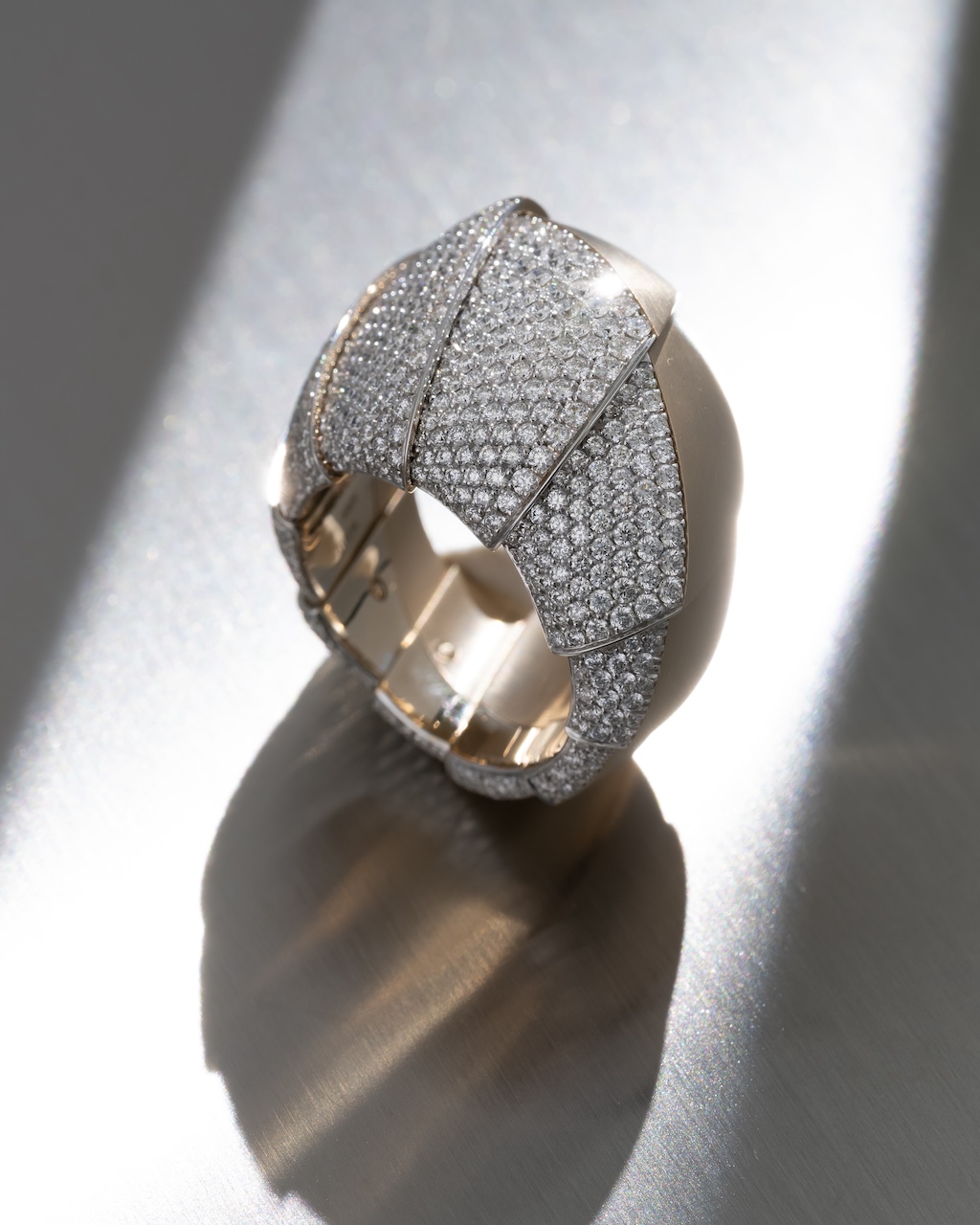
Heritage houses like Vhernier, Graff, and Pomellato continue to champion proprietary pavé approaches developed over decades and incorporated into some of their most popular lines. At Vhernier, for example, all uniform pavé pieces are made with their two-prong setting, as doing so with four prongs would “compromise the fluidity of the design.” The result is “velvety surface … that is at once sculptural and sensual,” reads a Vhernier brief.
In the decade since Graff adopted the atomic precision of 3D printing to develop Snowfall, a line of watches and jewelry meant to mimic the natural flurries after which they are named, the house has continued to push its prototyping. One of their latest collections, Snowset, leans on the pavé diamond snow setting that originated at Jaeger-LeCoultre in 2002, where gem-setters used mixed diamond sizes packed tightly to blanket the metal like fresh snow.
Both timely and timeless, micro-pavé is more than a venerable technique. The word drawn from the French for “to pave,” pavé, dates back more than 200 years. Today’s iteration merges automated cutting and advanced natural diamond scanning with ever more precise techniques. The result is a setting that maximizes radiance and amplifies the visual impact of smaller stones that continue to captivate jewelers and clients alike.
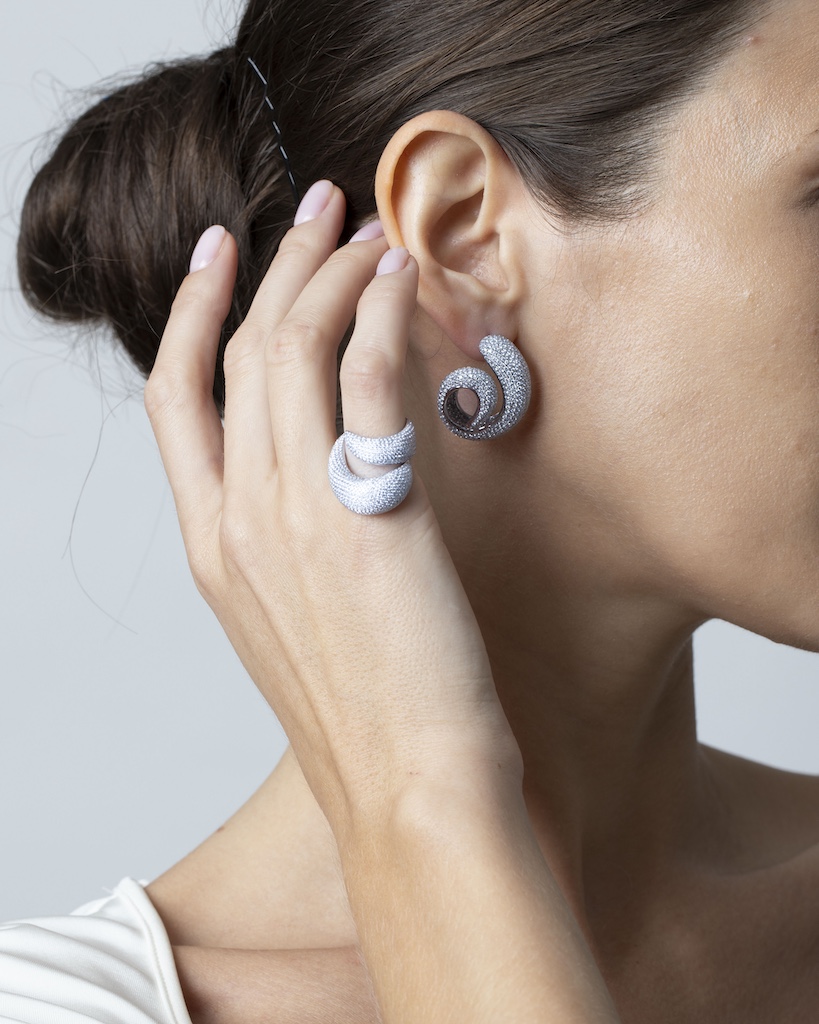
Maison H Jewels, the Dubai-based husband-and-wife team of Hisham Mahomed and Fatima Tayob, spent years conceptualizing their pavé diamonds “Skin” collection. “We took the name seriously and created a second skin of diamonds,” says Fatima Tayob, who designs all the Maison’s collections.
From a subtle wave to a curlicue, the organic, diamond-covered shapes of the Skin rings and earrings (from $8,000 to $18,000) “are meant to mimic the appearance of molten gold that has delicately flowed and solidified on your skin,” she added. The sense of movement and ease owes much to the family’s familiarity with natural diamonds.
How Technology is Transforming Pavé Diamonds

In the diamond business for four generations, the Mahomeds built Maison H after decades of polished-stone sales and contract manufacturing for nearly a dozen brands. Diamond procurement remains part of their offering. “We use a whole lot of technology, from the rough to the polish to the mounting. We have a process where we identify the thickness of gold and what’s required to make it stand out,” said Mrs. Mahomed.
“Historically, in one single piece, you had four to five sizes in micro-pavé,” said Mr. Mahomed. “Instead, we’ve created this very fluid, silky effect. With calibrated, sized diamonds, there’s not a single rough edge. In fact, if you rub any of our pieces against a piece of silk, they won’t catch.” In addition to polishing diamonds to calibrated measurements, the Mahomeds also scan each natural diamond and batch-sort for color and clarity.
Within the “Skin” collection, diamond sizes range from 0.9 mm to 1.15 mm, while gold thickness runs from 1.5 mm to 2 mm. Within each individual piece, however, the diamonds are uniform in size, with only a three- to four-percent variance in gold weight.
“For me, micro-pavé, skin diamonds, above all must be brilliant, comfortable and just have a wow effect,” said Mrs. Mahomed.
The Versatility and Range of Micro-Pavé Diamonds in Fine Jewelry

Likewise, for Ippolita Rostagno, founder of Ippolita, that breathless moment arrives in executing “something very simple but extremely difficult.” While that may read as a contradiction, Rostagno elaborated: “The Coral reef bangle is the perfect example because the design intent was to make it feel and look like Italian coral, very thin, not like Asian coral, and also feel smooth and delightful to the touch. To do that, the diamonds had to be particularly small. Normally, you do four prongs, a stone, and then sitting next to another stone four prongs, but that becomes very visible, which isn’t good.” The pavé diamond bangle starts at $6,995.
To minimize prongs, she devised a shared-prong mapping system so the stones nestle without the eye noticing. “If you don’t know or appreciate the beauty of the workmanship, it’s like, wow, this is more expensive looking than the bigger stones. The more you teach people about the process and the product and the design intent, the more they appreciate micro-pavé,” she said.
While an absolute fixture in high jewelry, micro-pavé also has range. Because the diamonds and gemstones used are often too small to be secured by prongs, this setting can achieve a variety of price points.
“Micro-pavé defines fine jewelry and allows for a strong silhouette,” said Katherine Kim, of Los Angeles-based brand Katkim. Her single-ear options—including the Petite pearl pavé ear pin, Lorraine pavé earring, and Crescendo flare pavé ear cuff—begin under $2,000. Because micro-pavé accounts for about half her designs, Kim confirmed that any solid-metal style she offers is also made in micro-pavé. “That setting is part of the DNA of the brand, it’s unlimited, and who doesn’t want a piece of jewelry full of diamonds?”
In other words, pavé diamonds prove it’s not the size of the natural diamonds, it’s how you set them.
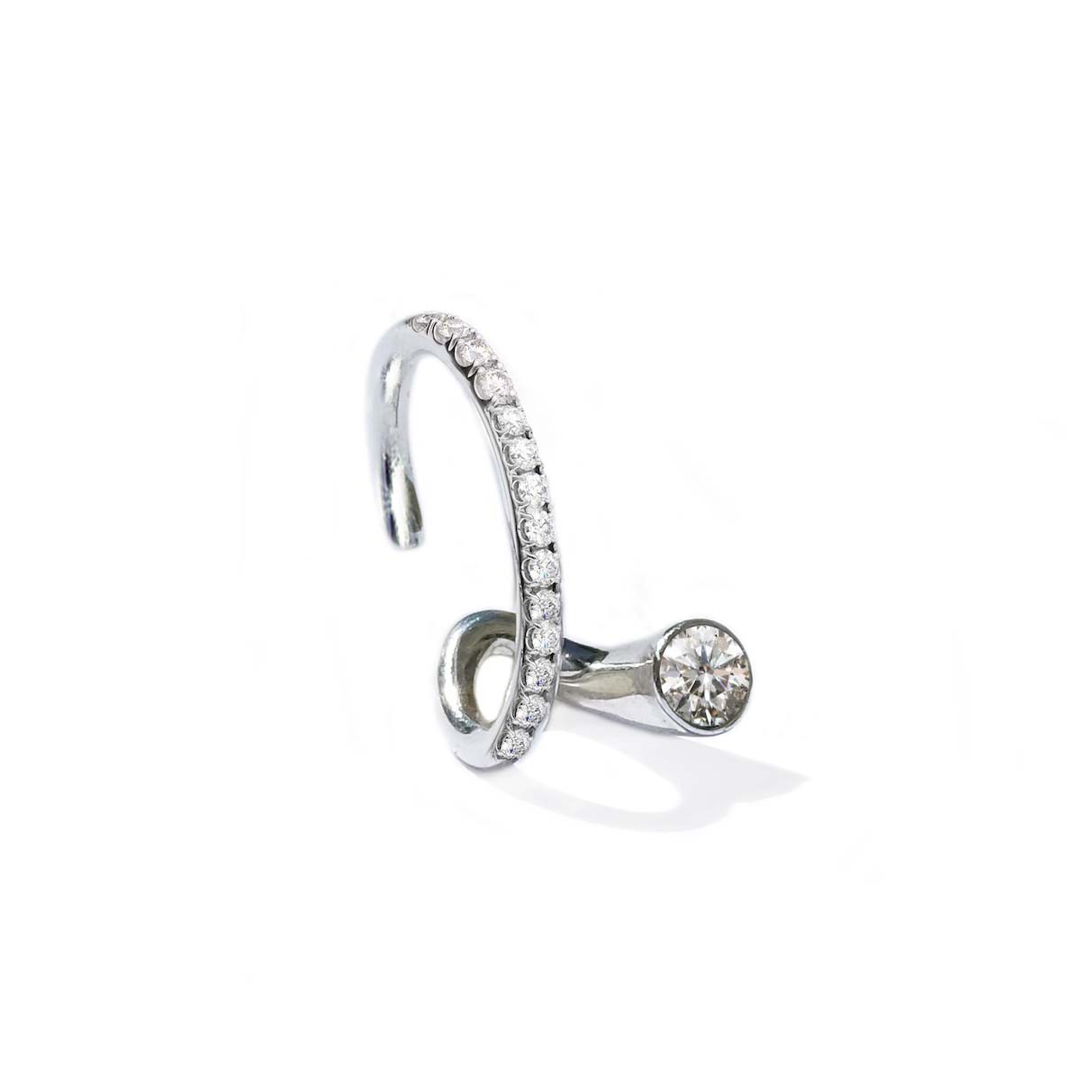
KATKIM CRESCENDO FLARE PAVÉ EAR CUFF, $1,800, KATKIMFINEJEWELRY.COM
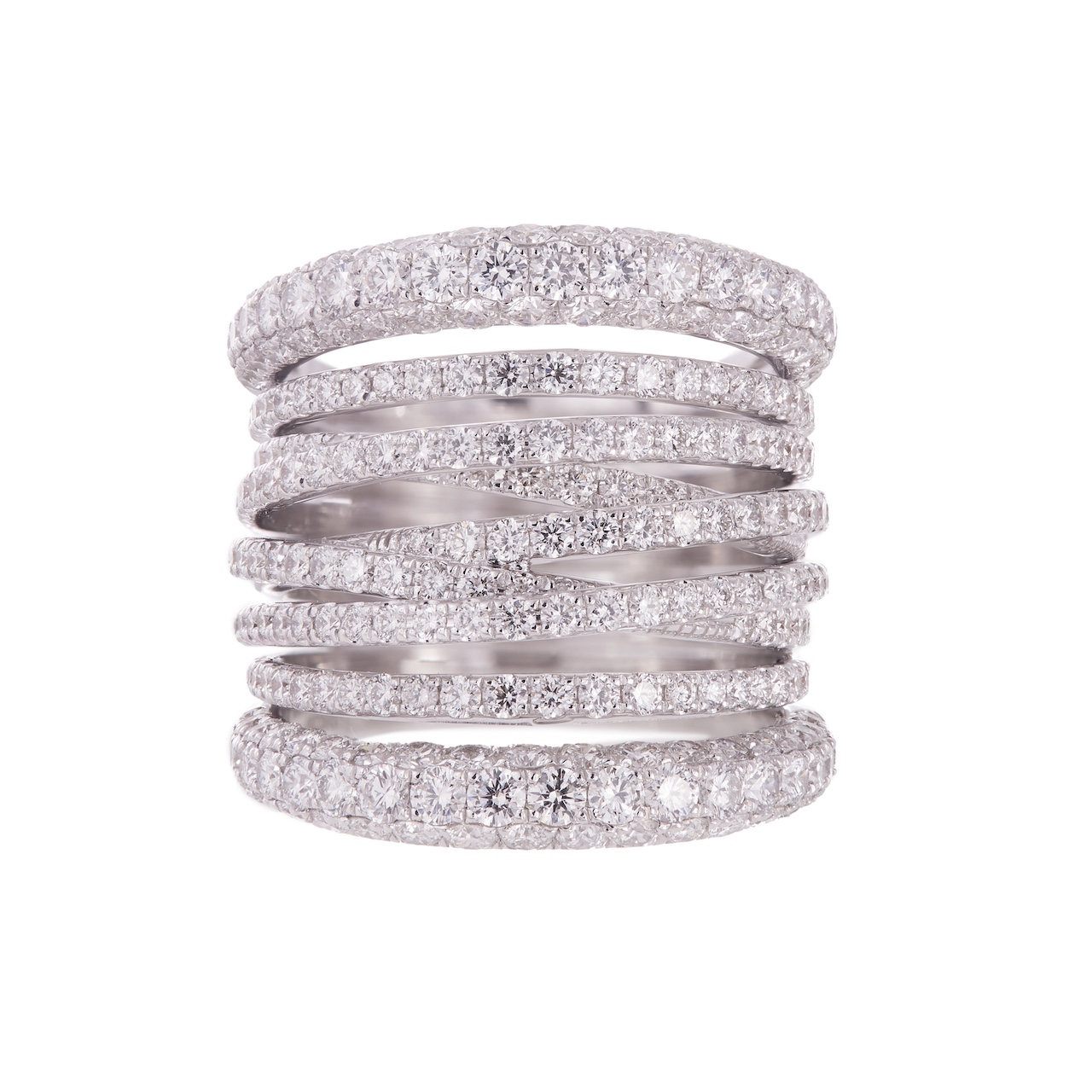
SIDNEY GARBER TALL SCRIBBLE RING, $22,000, SIDNEYGARBER.COM
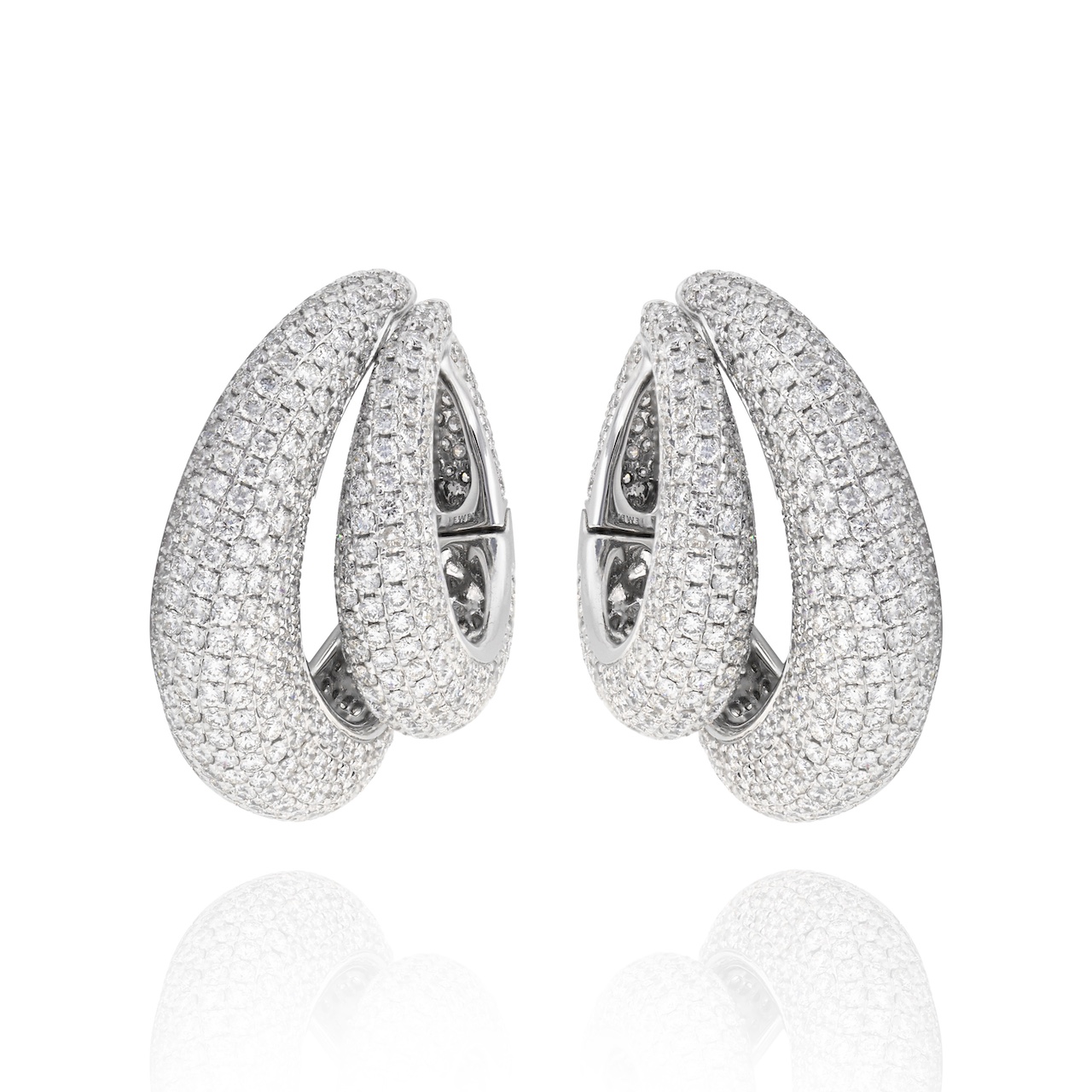
MAISON H SKIN PAVÉ EARRINGS, PRICE UPON REQUEST, MAISONHJEWELS.COM

VHERNIER ARDIS HIGH JEWELRY BRACELET, PRICE UPON REQUEST, VHERNIER.COM