< Responsibility / Environmental Impact
How the Diamond Industry Is Working to Protect the Honey Bee
Petra Diamonds is prioritizing ecosystems, livelihoods, and the honey bee through diamond mining.
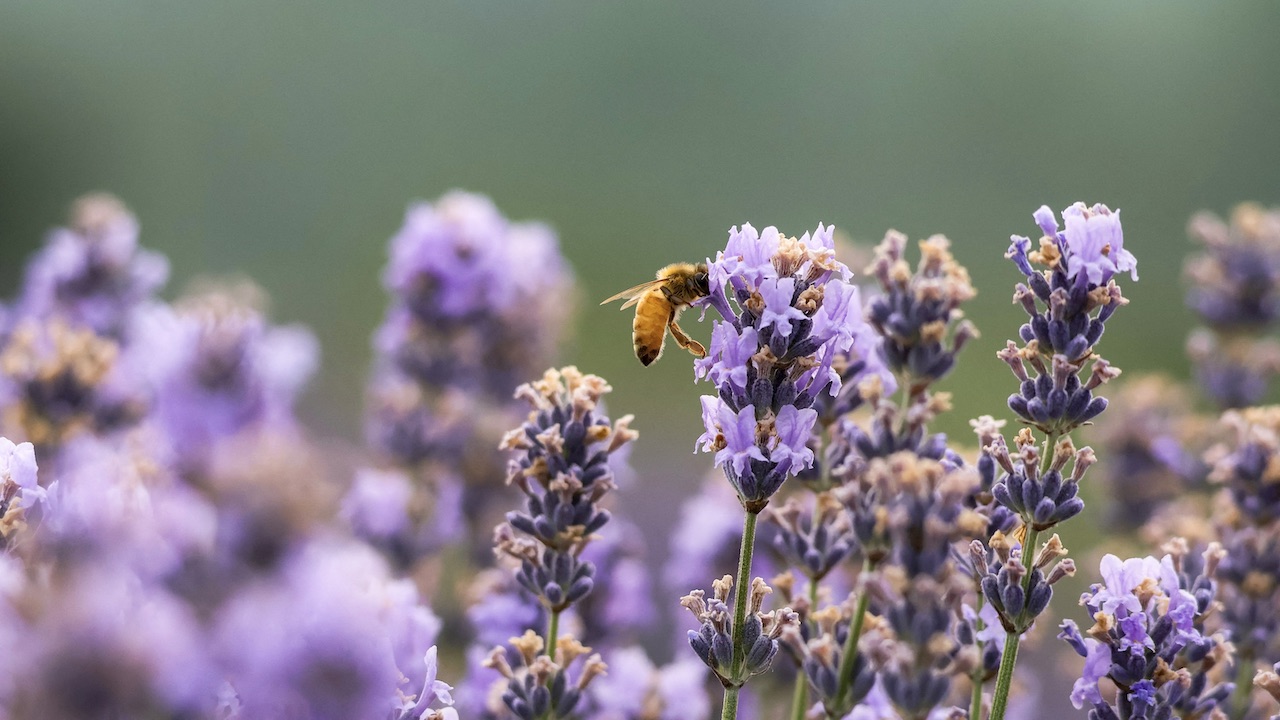
A honey bee collects nectar from lavender blossoms (Getty Images)
When most people think of diamonds, they picture red carpets, glimmering jewels, and moments of romance. But behind every stone lies a story far more profound than carats and clarity—a story about livelihoods, ecosystems, and a future that diamond mining companies like Petra Diamonds are helping to improve.
This is the brilliance not captured in the 4Cs: a diamond’s ripple effect from mine to finger. From job creation and education to biodiversity conservation, Petra Diamonds shows that responsible diamond mining can transform entire regions—sometimes in unexpected ways, like saving honey bees.
Meet the Expert

- Grant Mobley is the Jewelry & Watch Editor of Only Natural Diamonds.
- He is a GIA Graduate Diamonds Graduate.
- He has over 17 years of jewelry industry experience, starting with growing up in his family’s retail jewelry stores.
Diamond Mining as a Catalyst for Change
Petra Diamonds operates three major mines across South Africa and Tanzania, and the scale of its positive footprint is remarkable. In 2024, Petra generated nearly $400 million in economic value, with more than 93% of total procurement directed to local suppliers—fueling local businesses, transportation companies, food providers, and security services.
Jobs are the foundation of this impact. Over 95% of Petra’s workforce comes from local communities, and the company pays wages that far exceed regional averages, helping those communities thrive well beyond the mine gates. In addition, Petra invested millions in direct social and community projects last year, spanning education, healthcare, skills development, and infrastructure improvements.
But Petra’s approach goes deeper than salaries and services. Driven by the principle of “shared value,” the company roots the benefits of natural diamonds firmly within the communities where it recovers them. This philosophy drives initiatives like the groundbreaking Bongi Bees and Goodie Bees projects, both dedicated to protecting and sustaining honey bees.
Why the Honey Bee Is at the Heart of the Story
At first glance, diamonds and honey bees couldn’t be more different. Yet they share a common thread: both are integral to sustaining life and livelihoods in remote areas. Globally, bee populations are facing an unprecedented crisis. Since the 1990s, researchers have recorded 25% fewer bee species worldwide, according to analyses of global occurrence data from the Global Biodiversity Information Facility.
In the United States, the picture is equally alarming. Between April 2024 and April 2025, bees lost roughly 56% of their colonies—the highest losses ever recorded by the national survey led by Auburn University and the Apiary Inspectors of America.
The stakes are enormous. Three-quarters of the world’s flowering plants and about 35% of global food crops depend on animal pollinators, meaning that one in every three bites of food we eat relies on bees and other pollinators. According to the Intergovernmental Science-Policy Platform on Biodiversity and Ecosystem Services (IPBES), that dependence translates into an annual economic value of US$235–577 billion in global crop production supported directly by animal pollination. These findings point to a mounting risk of irreversible biodiversity loss if current trends continue.
This is where Petra’s environmental stewardship comes into focus. Acknowledging that mining operations inevitably interact with surrounding ecosystems, Petra has invested heavily in projects designed to help restore balance, and honey bees have become a focal point of that mission.
Bongi Bees: A Hive of Hope
It began as an experiment: Petra tested honey production inside its mine using a mobile container equipped for honey extraction. When the pilot program ended, Petra could have sold the valuable equipment. Instead, the company donated it to Bongi, a passionate local beekeeper just 12 kilometers from the mine.
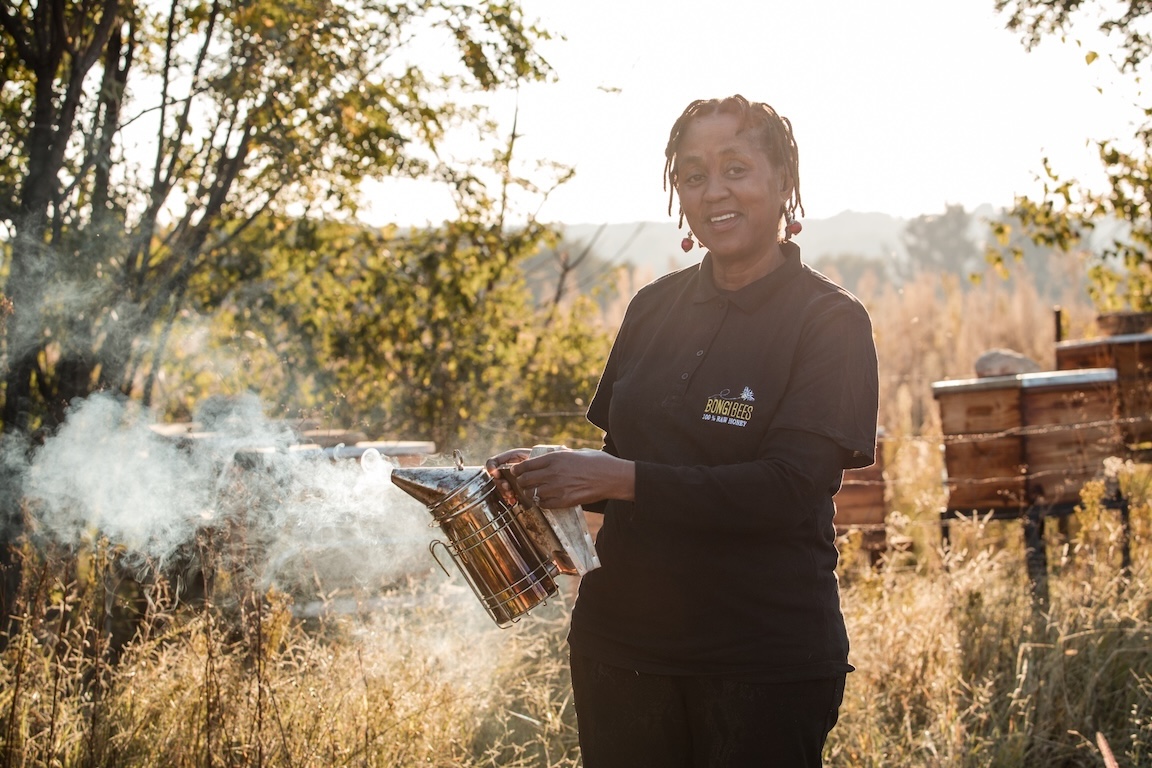
That single act of empowerment has since blossomed into something extraordinary. Bongi now operates a licensed honey station, outfitted with professional-grade extractors, stainless settling tanks, and protective beekeeping gear, all supplied by Petra. Lulu Letlape, managing director of Bongi Bees, says she has transformed from an informal harvester into a trained entrepreneur running a university-level operation. Her station also doubles as a training hub for local women, creating new pathways to financial independence.
Petra continues to support her growth by upgrading infrastructure every few years, ensuring Bongi can meet rising demand. “The support goes beyond a mere contribution,” Letlape says. “It is an investment in growth and sustainability.”
Goodie Bees: Turning Passion into Prosperity
In another corner of the Cullinan Diamond Mine community, Petra equipped Mngonezulu Elliot Machete’s Goodie Bees project with professional honey-processing tools, including a spinner, a complete settling tank, a decapping station, and a sachet packaging machine.
The results have been transformative for Goodie Bees. Annual honey production has nearly tripled, soaring from 1,340 kilograms to 3,600 kilograms, equivalent to nearly 5,000 large jars. The project now packages honey efficiently for wider distribution and has even won gold at a national honey competition. Goodie Bees is now pursuing food-safety certifications and developing innovative honey derivatives like granules for natural flu relief.
Machete recalls: “Before the intervention and funding, harvesting was traditional and worked against the bees. It destroyed combs, forcing the bees to spend more time repairing damage, and outsourcing the process was costly. With the proper machinery donated, we’ve saved time, and production is now efficient.”
A Bigger Picture: Beyond the Hives

Petra’s beekeeping projects are just one thread in a much larger tapestry of environmental and social investment in the regions where it recovers natural diamonds. Each year, millions of dollars are invested in biodiversity conservation across all mine sites, with nearly 7,000 hectares of protected land under Petra’s care.
Petra’s support for local schools and training programs reaches thousands of students, while partnerships with regional health services provide screenings, clinics, and health education to more than 8,000 residents annually.
By connecting environmental health, food security, and economic opportunity, Petra Diamonds creates a model in which the prosperity born from natural diamonds is as enduring as the stones themselves.
The Buzzing Brilliance of the Honey Bee
When you look at a natural diamond, you see its sparkle. But when you follow its journey, you find something richer: buzzing apiaries, thriving schools, resilient communities, and restored ecosystems. Petra Diamonds reminds us that a diamond’s beauty doesn’t end in its facets. Its true brilliance lies in what it builds—the livelihoods supported, the ecosystems protected, and yes, even the honey bees saved.
In the end, natural diamonds are more than symbols of love. They are also investments in a sustainable future where both people and the planet can thrive.