Helicopters, High tech, and Honey-Hued Stones: Discovering Desert Diamonds in Namibia
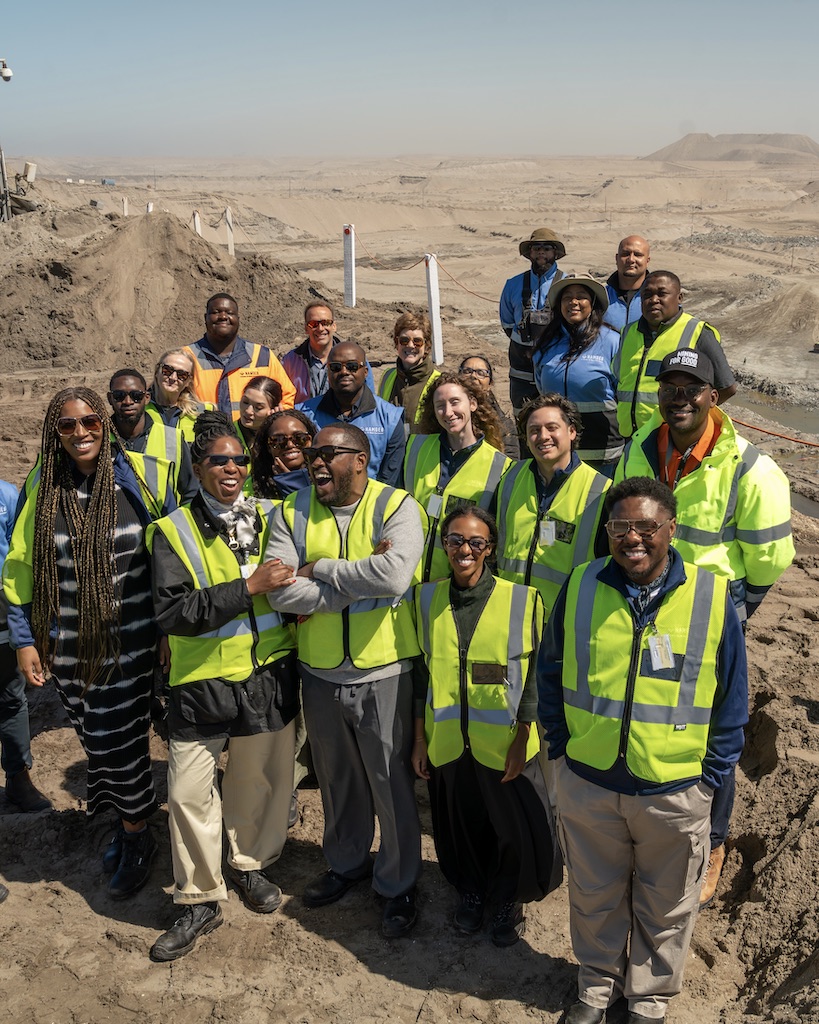
Leah Faye Cooper explores Namibia for a closer look at the technology, and the sorting, cutting, and polishing facilities behind desert diamonds. (Courtesy of De Beers Group)
Whenever I receive an itinerary for a work trip, I save it to my iPhone’s Books app and study it intently. I like to know exactly what I’ll be doing (and also where I’ll be eating and what outfits to pack). Late last year, before traveling to Namibia to explore the mining, characteristics, and use of what the jewelry industry has coined desert diamonds, one line of the itinerary stood out: 12:00 PM EDT for Atlantic 1 Vessel DBMN — Helicopter Ride.
I had been on a helicopter once before, also during a work trip, and the plan was to never ride one again. I’m a nervous flyer in general, but find helicopters particularly terrifying. And while I figured that Atlantic Vessel 1 DBMN was a ship, even with that 12 PM venture clearly spelled out, I had a hard time visualizing what that afternoon would entail. Resisting the urge to ask Google or my De Beers’ hosts, I decided I would just be surprised. I was.
Meet the Expert

Leah Faye Cooper is a New York City-based writer and editor covering the intersection of fashion and culture. A former contributing editor at Vanity Fair, her work has also appeared in Elle, GQ, Harper’s Bazaar, The Hollywood Reporter, and the Wall Street Journal. Before pursuing a career in fashion journalism, Leah spent two fantastic years teaching high school English in Houston through Teach For America. She loves handbags, French fries, and her middle name—in equal measure.
After landing in Johannesburg and spending the night there, my travel mate and I took an early flight to Oranjemund, a diamond mining town in southwest Namibia. We spent the morning at an operational base of Debmarine, the country’s leading marine diamond mining company.
How the Atlantic Ocean Became a Hotbed of Desert Diamonds
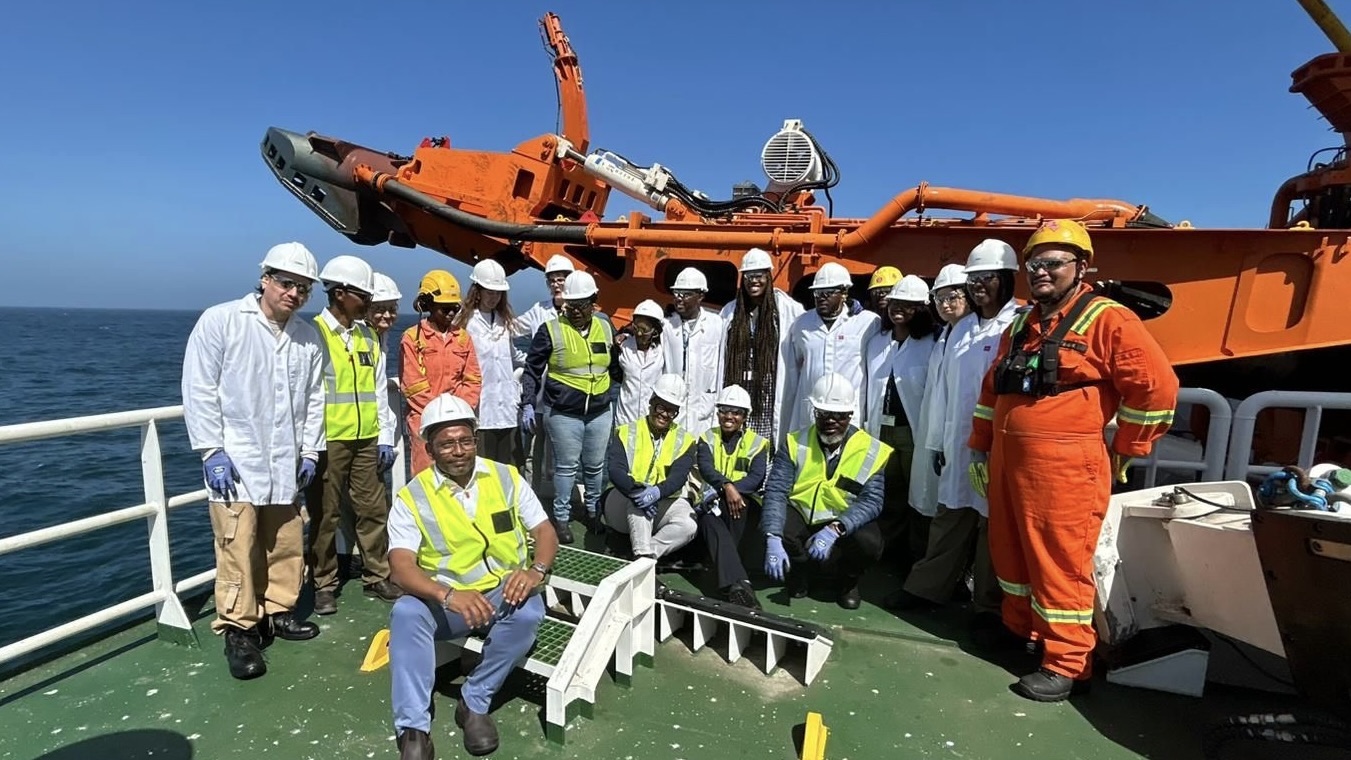
There, CEO Willy Mertens and COO Maenge Shipiki-Kali spoke about how the Atlantic Ocean became a hotbed of natural diamonds, and how Debmarine recovers them. In short, after forming in modern-day South Africa and emerging to the surface through volcanic eruptions over 100 million years ago, diamonds migrated to the Atlantic via the Orange River.
Over time, they were carried north by currents, settling on the ocean floor off the Namibian coast. Today, Debmarine owns and operates seven marine diamond recovery vessels, among them the Atlantic. Just as I was putting two and two together, a helicopter safety video began to play, and soon after, we were all being weighed and given thick, red neoprene jackets for a flight that would take us from dry land to the Atlantic vessel in the middle of the ocean.
The Innovative Technology Behind Natural Diamond Recovery



I can’t speak to the helicopter ride because I closed my eyes and disassociated until we touched down on the ship, but I can say that the technology on board is fascinating. Engineers and machine operators guide a 280-ton seabed crawler along the ocean floor, which vacuums sediment onto the ship. The extractions are filtered and x-rayed for diamonds, and 99 percent of the materials that are dredged up are redeposited back into the ocean. The remaining natural diamonds are then shipped to sorting, cutting, and polishing facilities in Windhoek, Namibia’s capital city.
Desert Diamonds Come in a Spectrum of Natural Colors
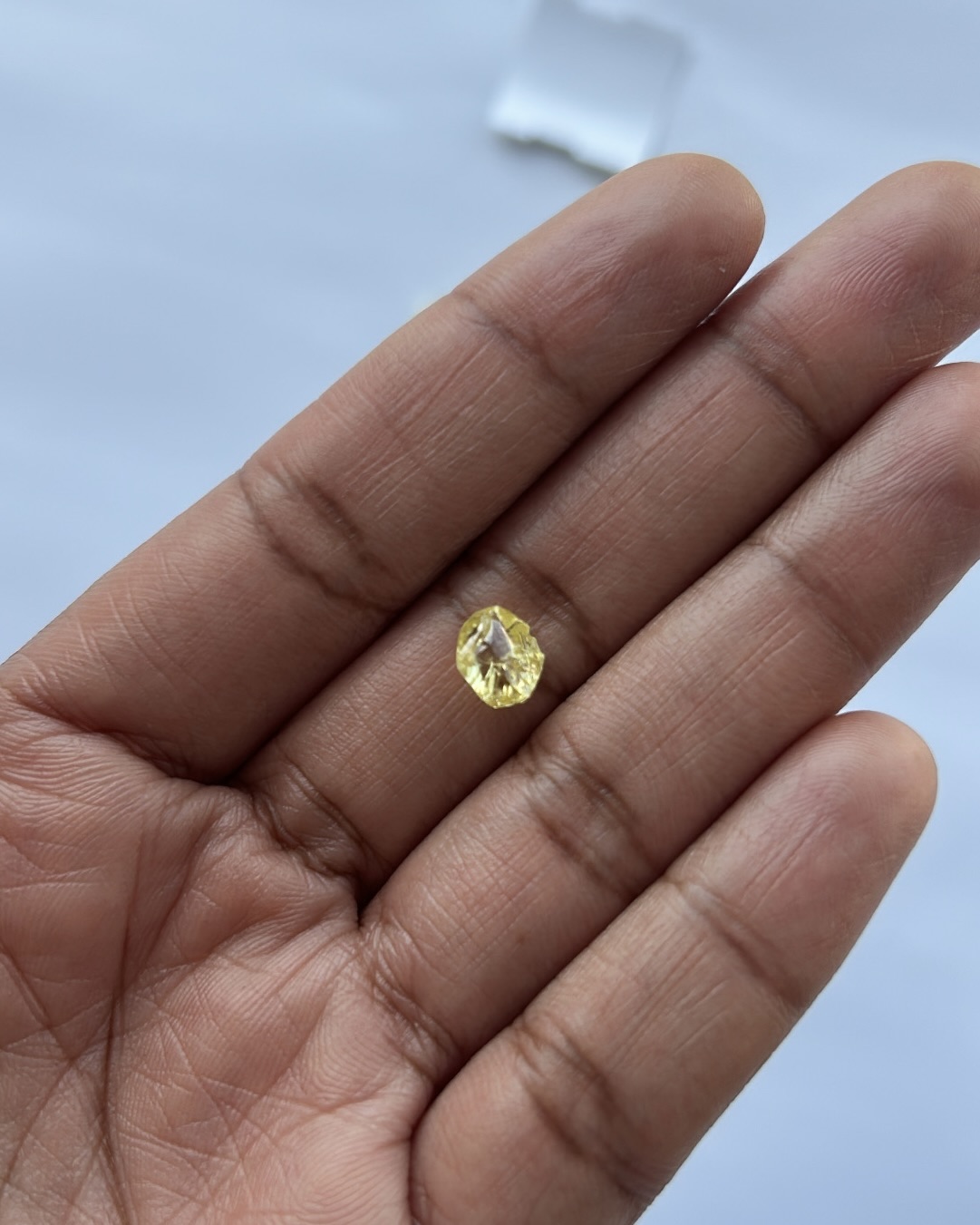
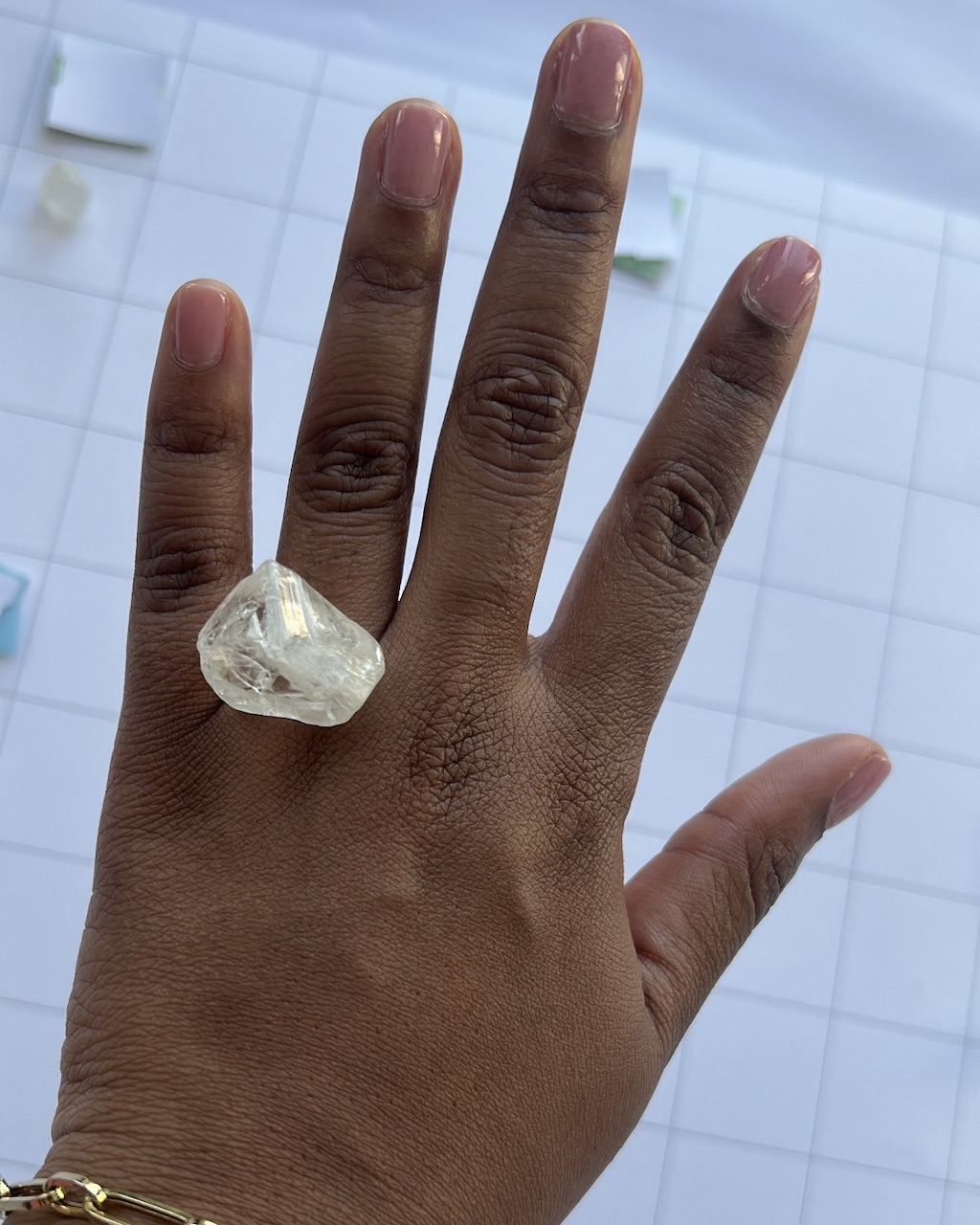
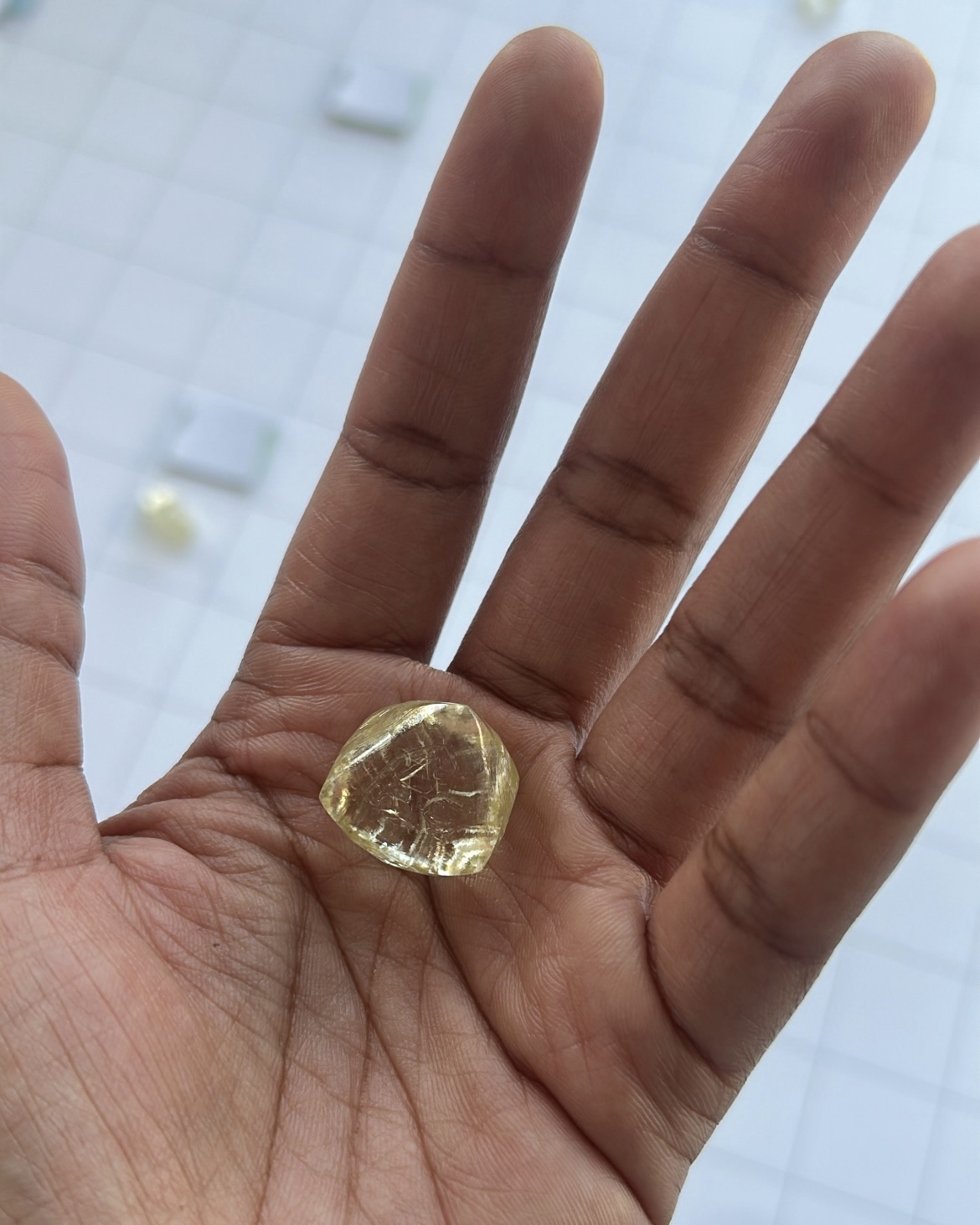
Many diamonds recovered from the Atlantic—as well as those found in the Namdeb mines on land along the southwestern Namibian shoreline, which we also visited—formed in a spectrum of sandy shades ranging from champagne to honey to cognac, hence the label desert diamonds. These natural stones have historically played second fiddle to the colorless and near-colorless diamonds also found in the region, which have long been the most sought after. But that’s beginning to change.
The Rising Prestige of Natural Desert Diamonds
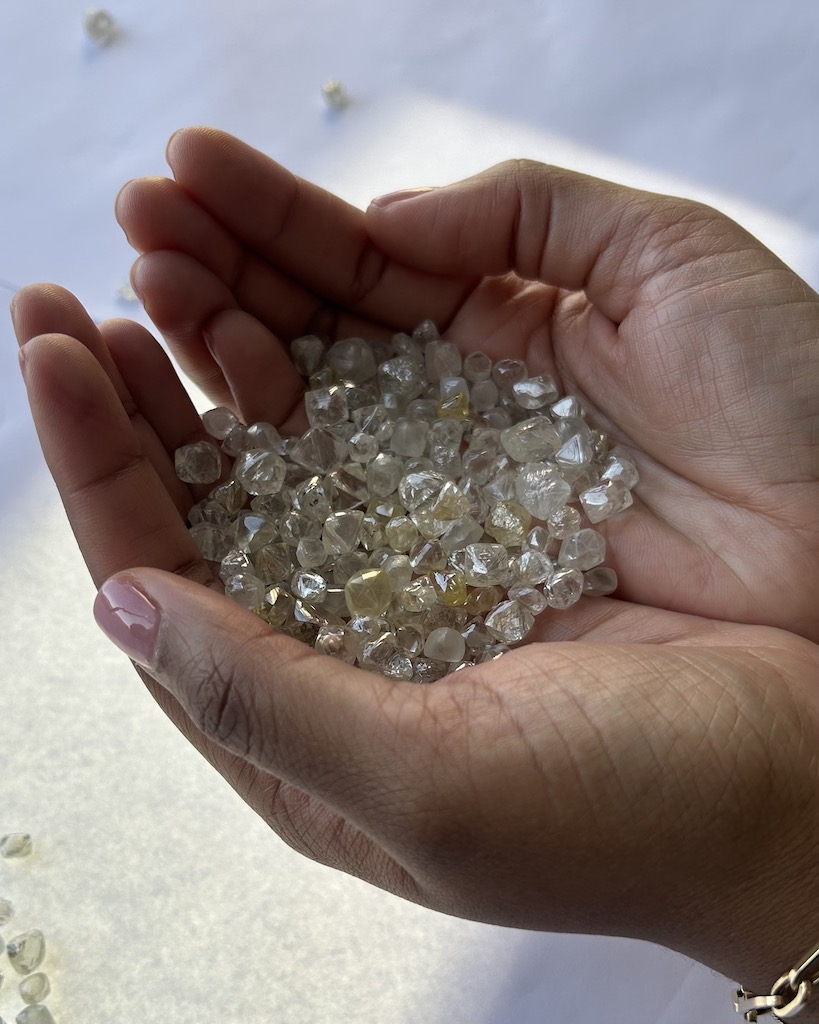
In January 2025, Khepri Jewels founder Reema Chopra told the Wall Street Journal that clients looking for unique, understated diamonds were especially drawn to brown stones. And last September, this publication broke down their popularity, owing much of it to the prevalence of colorless lab-grown diamonds. Only a tiny fraction of lab-grown diamonds are produced in brown hues, and even those that are can’t mimic the exact tones and refractions of natural desert diamonds. Thus, a group of stones that was once overlooked for their perceived imperfections is now being sought out specifically for them.
Examining Namibia’s Rough Desert Diamonds

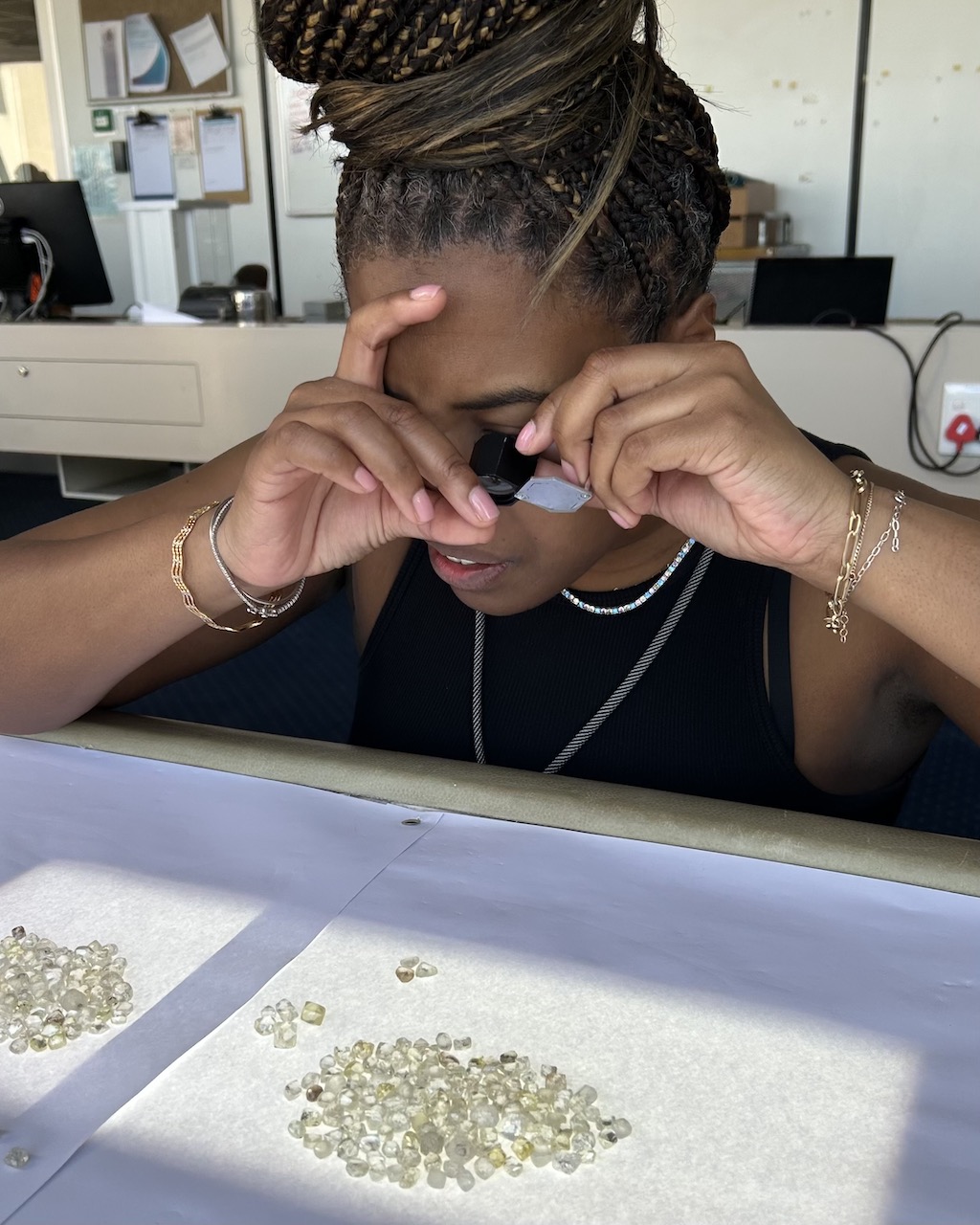
I saw the variety of these natural diamonds and the singularity each stone possesses when we traveled to the Namibian Diamond Trading Company (NDTC) sorting and valuation facility in Windhoek. There, neat pools of raw diamond are arranged across a worktable spanning the length of a wall. Professionals sit before each pile, examining every stone and separating them into groups according to size, shape, clarity, and color. I was partial to one massive diamond with the faintest honey undertone, and another much smaller stone in a translucent lemon yellow.
Our next stop? TaTe Diamonds—a fully integrated fine jewelry brand that sources diamonds from Debmarine and Namdeb. TaTe cuts and polishes stones in their Windhoek office, then sends them to their flagship showroom and boutique in Atlanta’s Buckhead neighborhood. There, they set them in the brand’s bespoke designs.
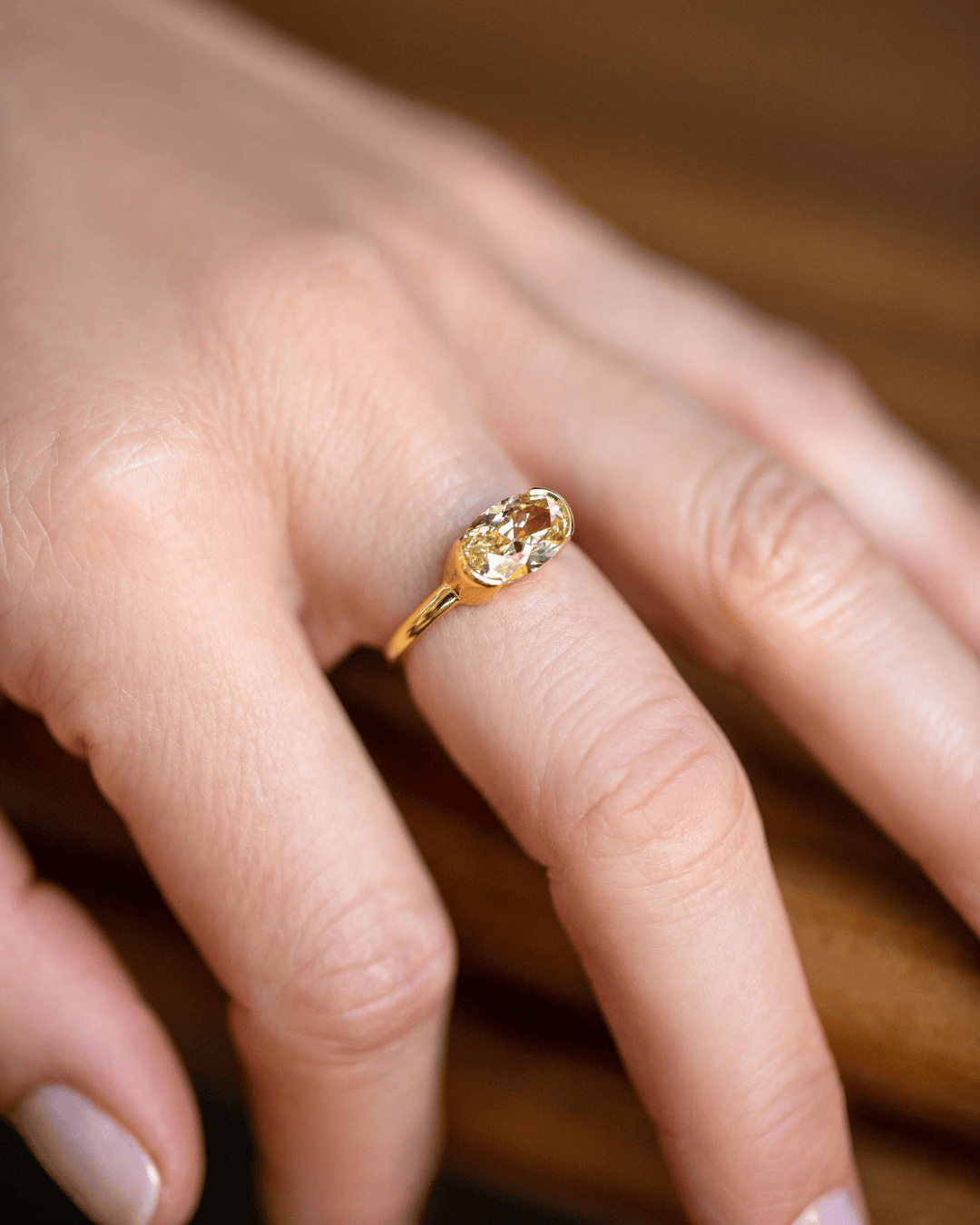
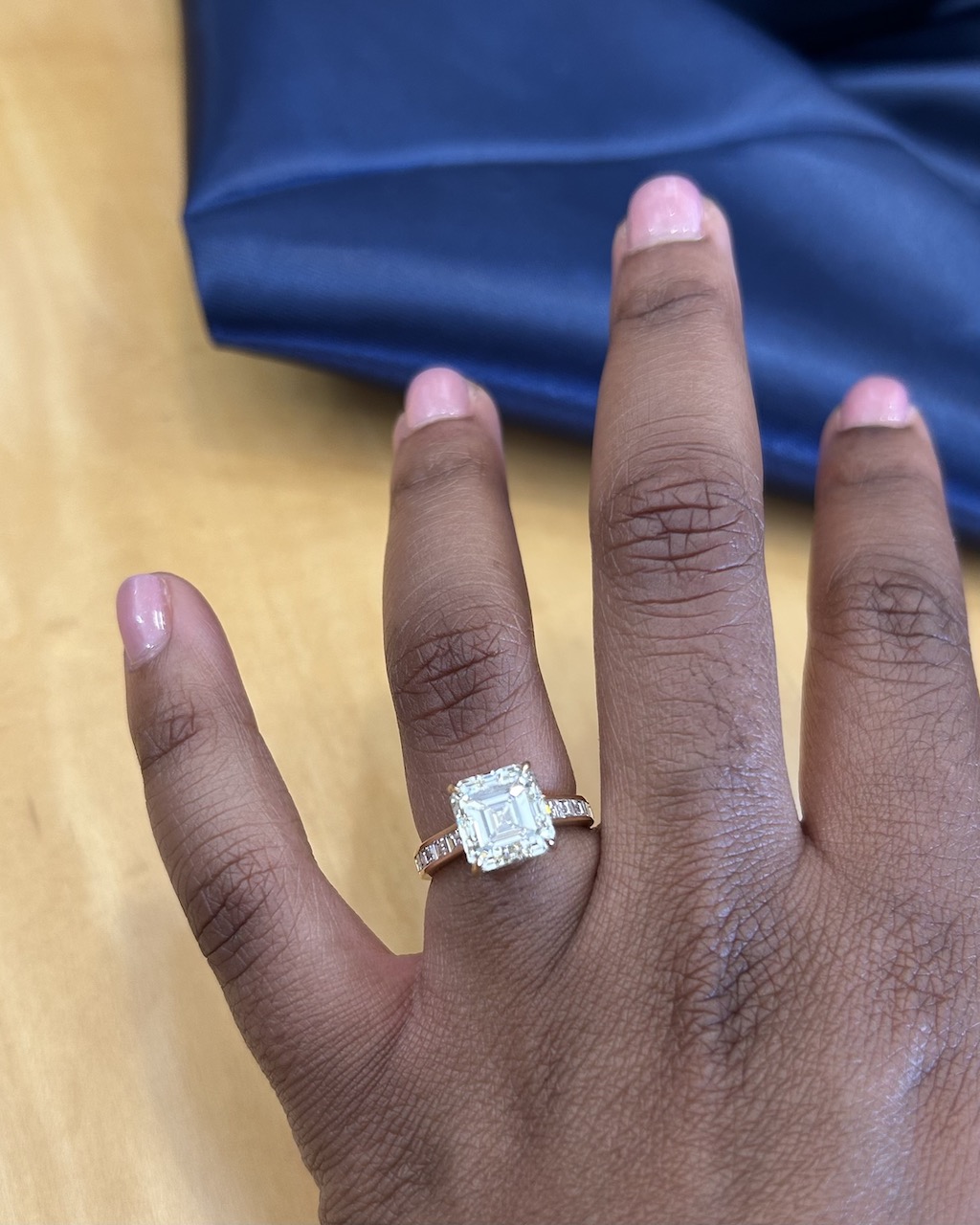
At TaTe, we watched an imaging machine highlight natural diamond inclusions to determine how to cut them for maximum clarity, and observed polishers bring out the brilliance of stones with hand tools and spinning disks. When we looked at pieces from the TaTe collection, my eyes landed on a 6.02-carat channel-set Asscher-cut ring in 18-carat yellow gold. Taking it off was the only low point of the trip.
A Responsible Future for Namibia’s Desert Diamonds
I have always been wary of the diamond industry. It was built on colonization and exploitation, and that harm can never be undone. But thankfully, the tenor of today’s natural diamond industry differs vastly. In 2024, Namdeb Holdings—a 50/50 joint venture between the Namibian government and DeBeers—contributed $545 million to the country, funding hospitals, schools, infrastructure, and other public services.
Namdeb and NDTC employ over 3,600 people, and many of those I met—among them engineers, cutters, machine operators, and environmental scientists—were born and raised in Namibia and educated through programs supported by diamond industry revenue. They were passionate about their work and expressed a grounded view of Namibian diamonds—appreciating them more as natural wonders unique to their home than as flashy, expensive adornments.
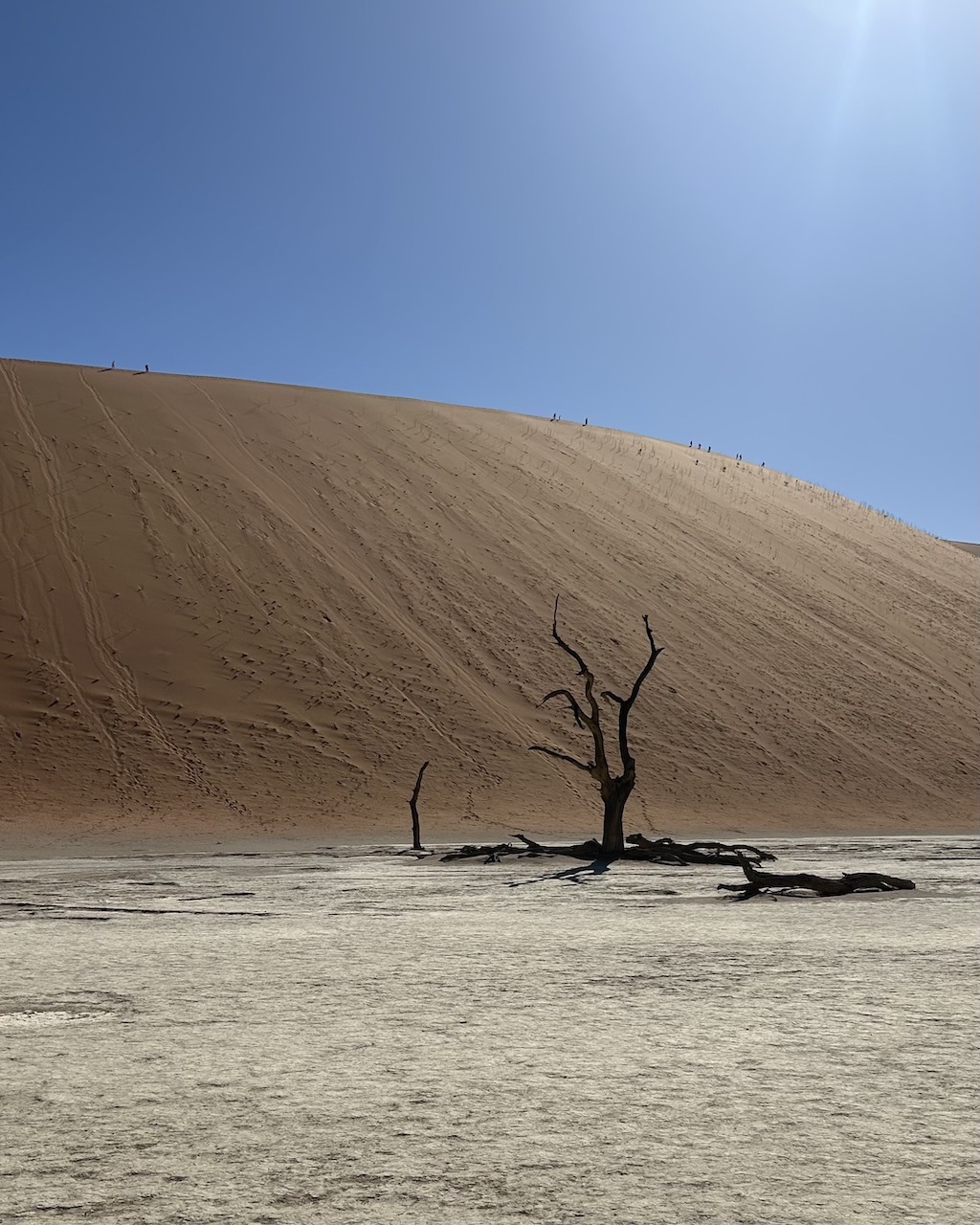
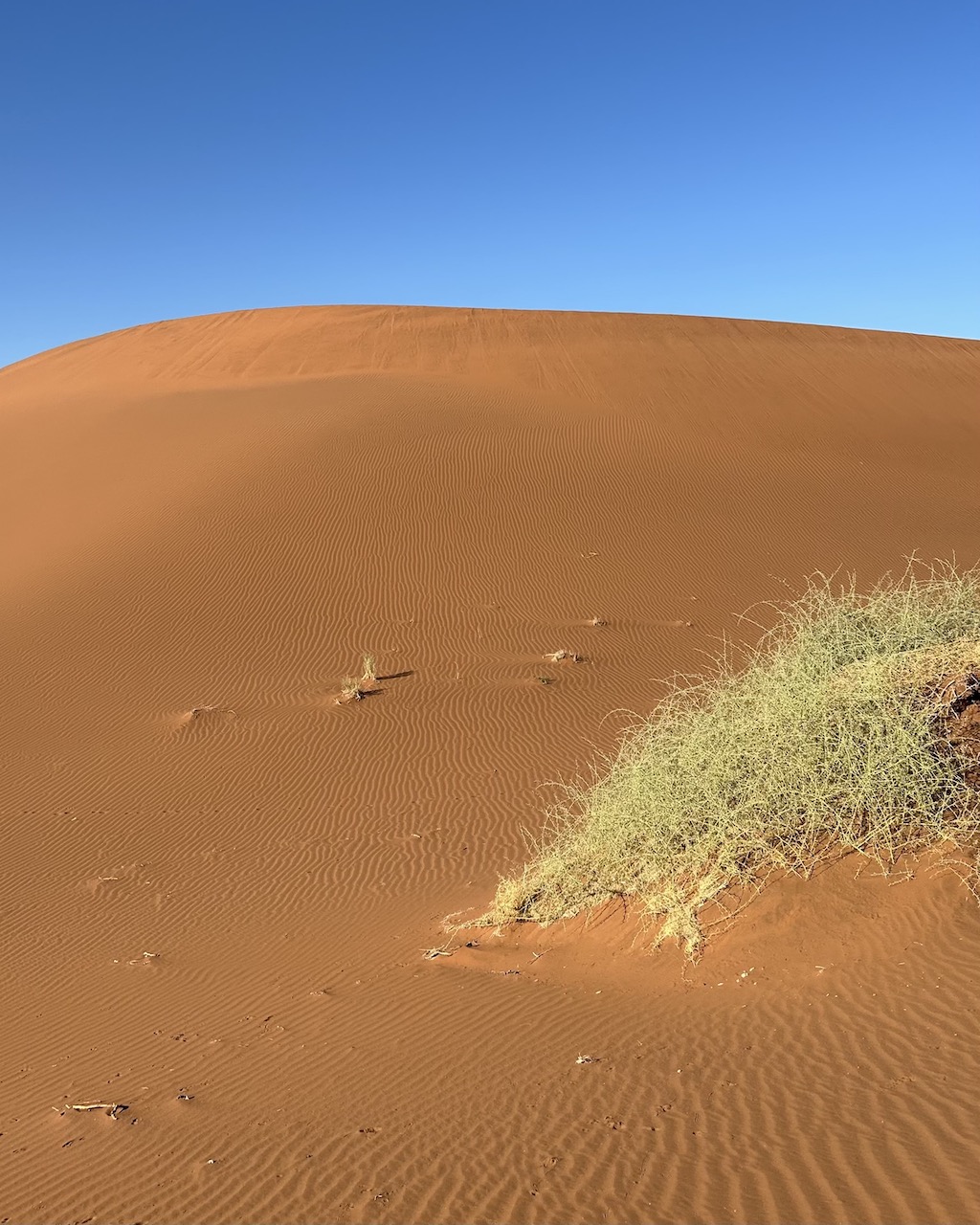
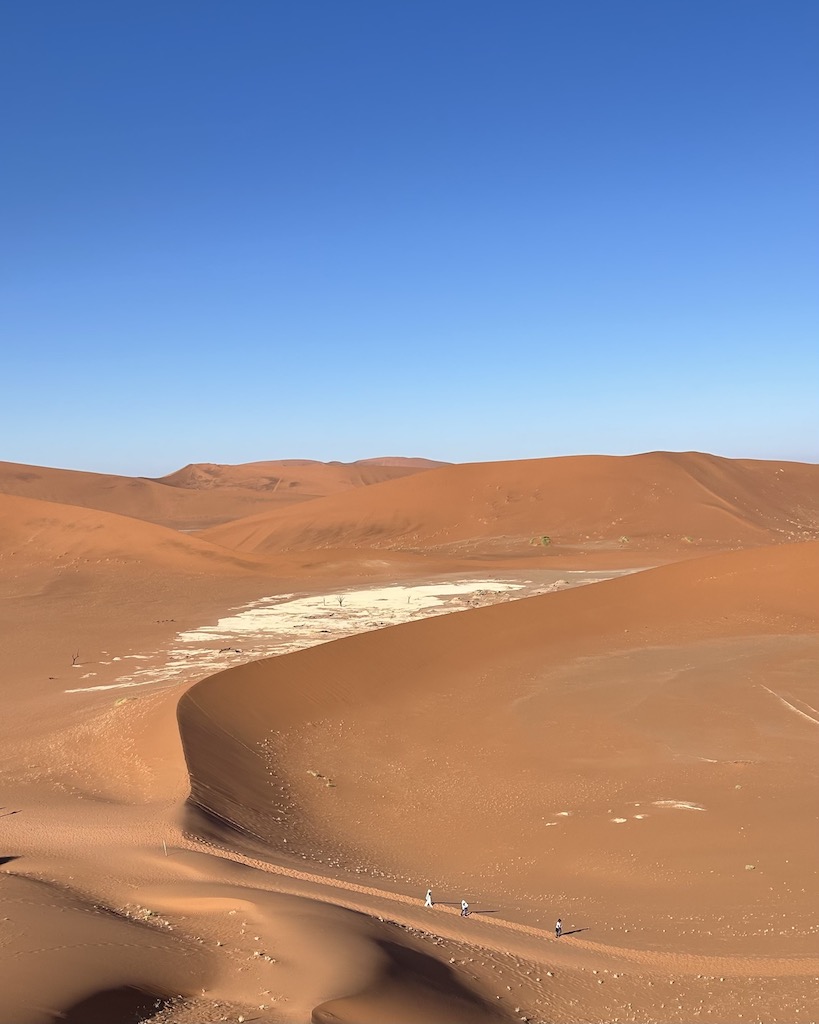
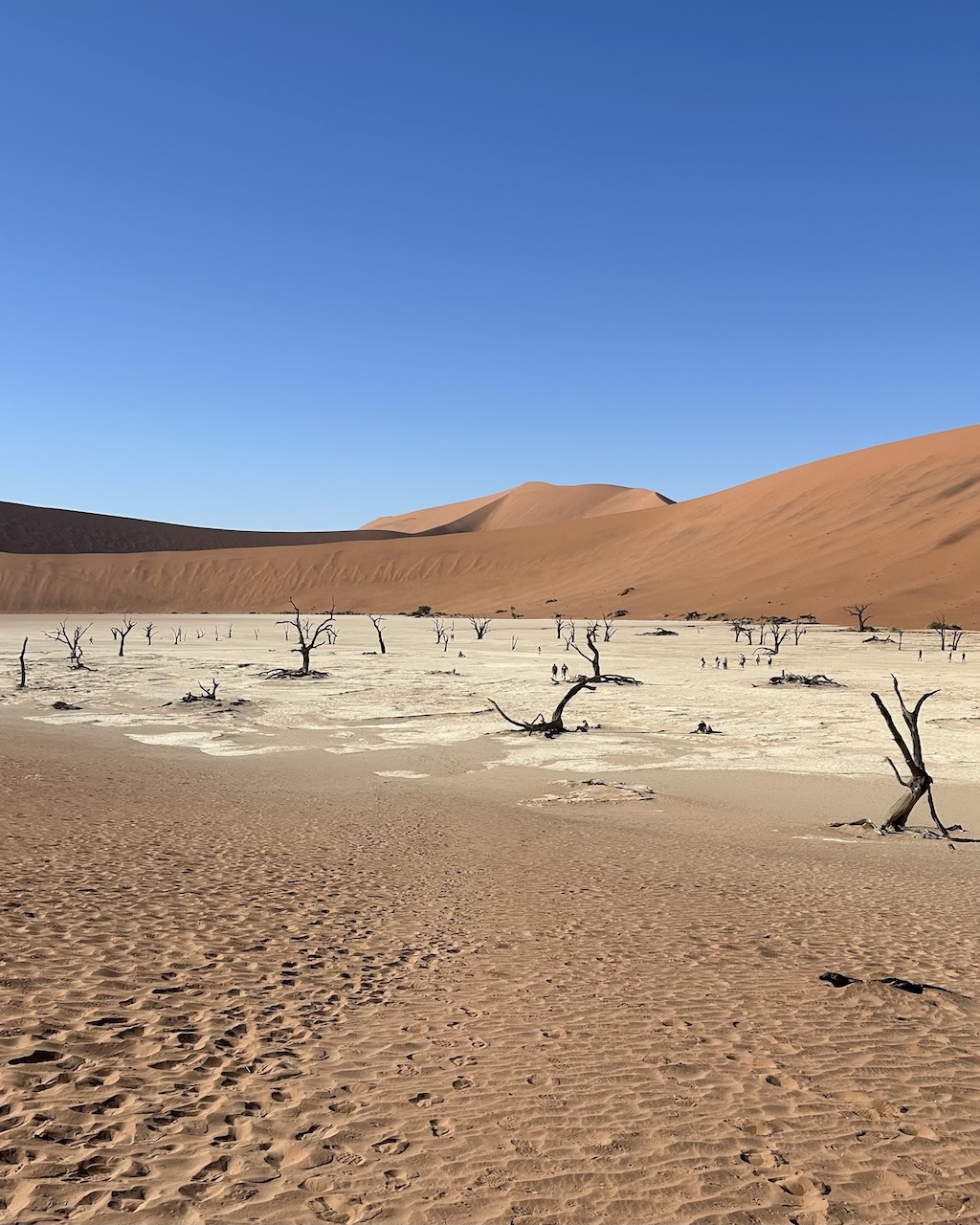
Namibia is a proud country, and understandably so. It’s home to the Namib Desert, the oldest desert on Earth; the Sossusvlei sand dunes and Deadvlei clay pans are otherworldly; and more cheetahs and black rhinos roam free there than anywhere else in the world. Last year, the vast, friendly, culturally diverse country elected its first female president, Netumbo Nandi-Ndaitwah; many countries have yet to do the same. After a week, my short summation was this: Namibia is an incredible place—that happens to have some really beautiful natural diamonds, too.