

The Old Mine Cut: Why India Is Central To Its Story
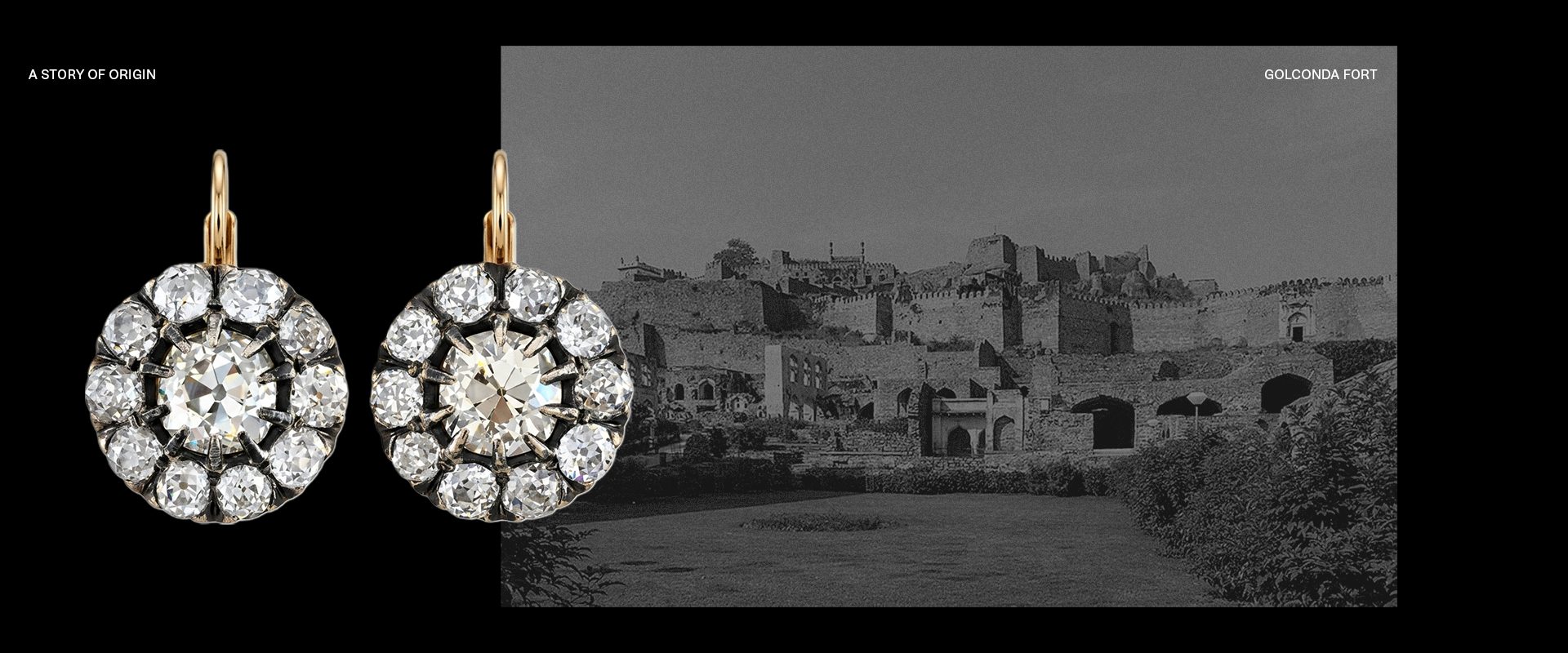
OLD MINE CUT NATURAL DIAMOND EARRINGS UMRAO • IMAGE WIKIMEDIA COMMONS
For centuries, the world’s most important diamonds came from India. The old mine cut was shaped by that material, carried along vast trade routes, and refined into one of the most storied cuts in jewellery history. Today, as it returns to global prominence, its story leads back to India — not as a point of rediscovery, but as the place where it was first shaped, materially and in meaning.
Meet the Author

- Archana Thani is a jewellery consultant and the former Managing Editorial Associate for Vogue India.
- With over 7 years in the jewellery industry and over 10 in fashion, her work has been featured in titles including Vogue India and Conde Nast Traveller India.
- A true jewellery lover, she is dedicated to sharing her knowledge of the global contemporary fine jewellery market with a wider audience.
The old mine cut takes its name from the mines that supplied the world with diamonds before South Africa’s Kimberley fields opened in the 1870s and transformed the industry entirely. Those earlier sources were not deep industrial excavations, but alluvial fields — riverbeds and surface deposits worked by hand over centuries. The most significant of these lay along the Krishna River basin in Andhra Pradesh. From around 1725, deposits in Minas Gerais, Brazil, would expand supply. But India came first. For roughly two millennia, it was the world’s only known source of diamonds.
It is a remarkable thing to hold an old mine cut diamond. The stone is warm, slightly irregular, shaped by hand rather than a machine. Its light behaves differently — deeper, softer, more interior than the calibrated brilliance of a modern cut. There is a sense, when you look at it, that you are looking at something that has travelled. And in the case of the finest examples, you are. You are looking at a stone that may have begun in the ground of Andhra Pradesh, passed through the trading networks of the Golconda Sultanate, and reached the hands of European lapidaries who shaped their craft around it. That journey produced one of the most distinctive cuts in the history of jewellery.
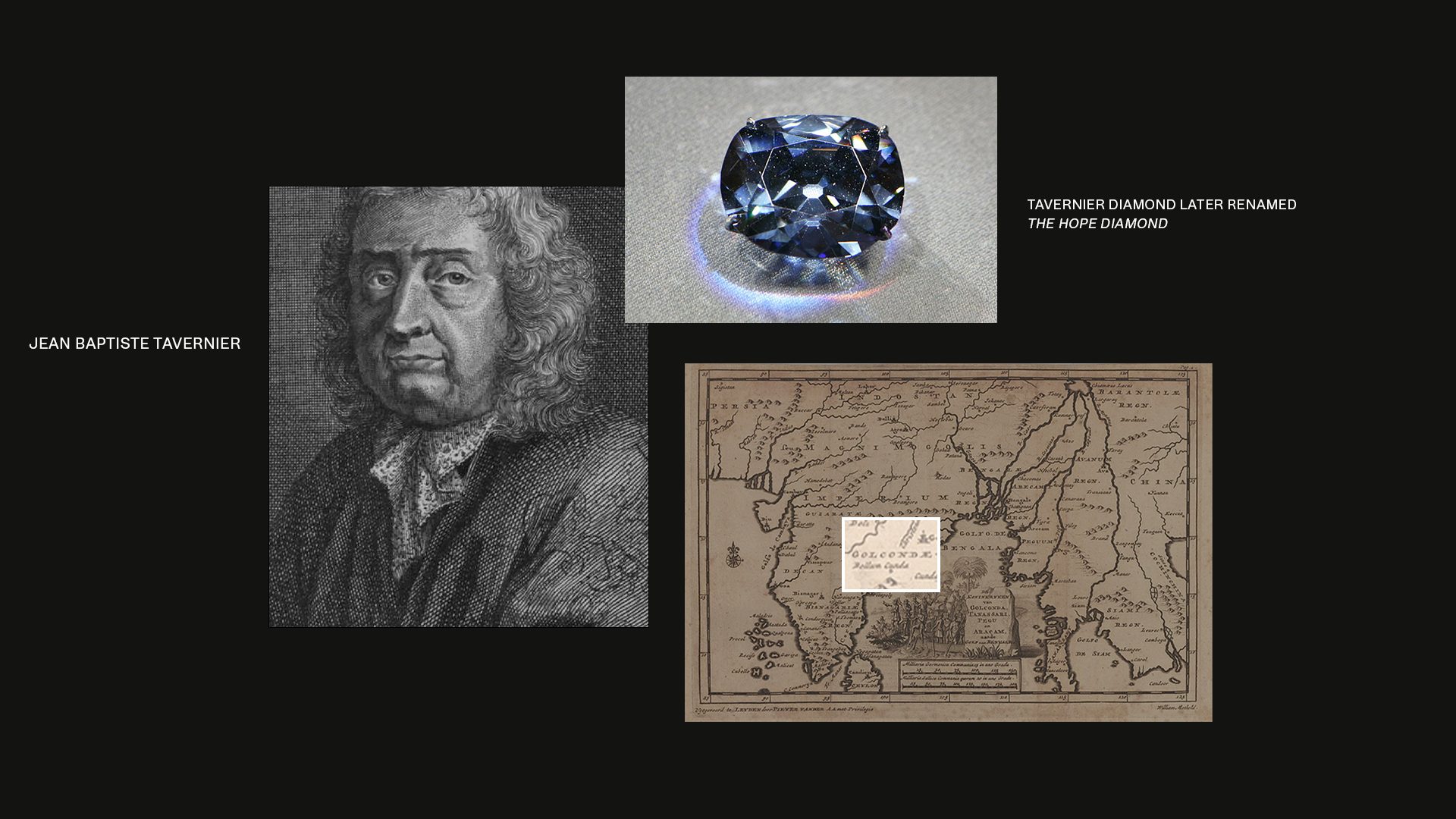
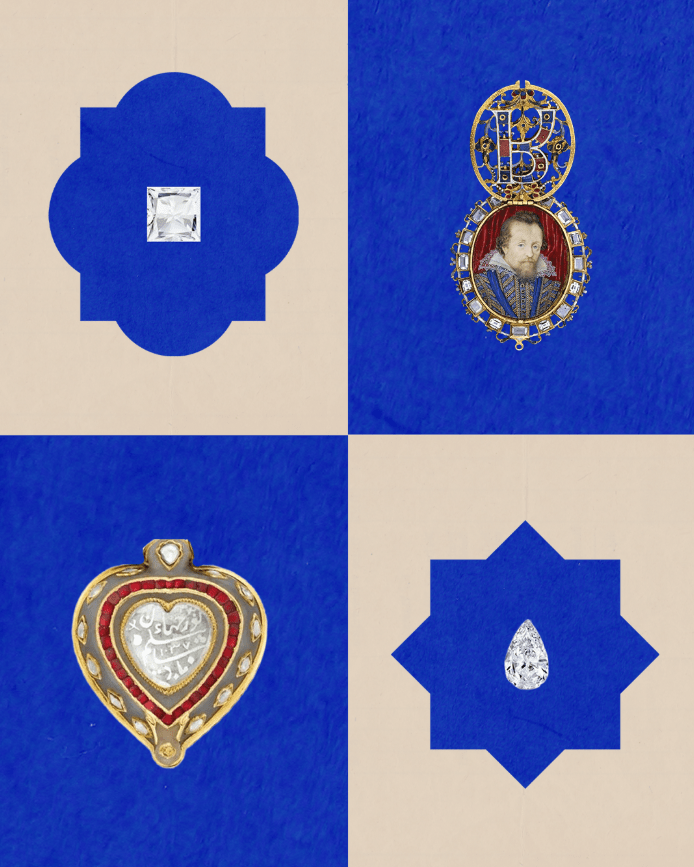
A seventeenth-century account brings this world into focus. The French merchant Jean-Baptiste Tavernier travelled repeatedly to the Golconda region in search of diamonds. He returned to Europe with stones that would become some of the most celebrated in history — among them the Tavernier Blue, later recut as the Hope Diamond. He also carried back detailed observations and sketches, shaping how Indian diamonds would be understood in Europe for generations.
The old mine cut emerged from this moment of exchange. Figures such as Tavernier, alongside traders like Mir Jumla — the seventeenth-century merchant who rose to become Grand Vizier of the Golconda Sultanate — were part of a network that connected India to Persia, Arabia, Europe, and beyond. At its centre was Golconda Fort, the political and commercial hub through which diamonds moved outward across continents.
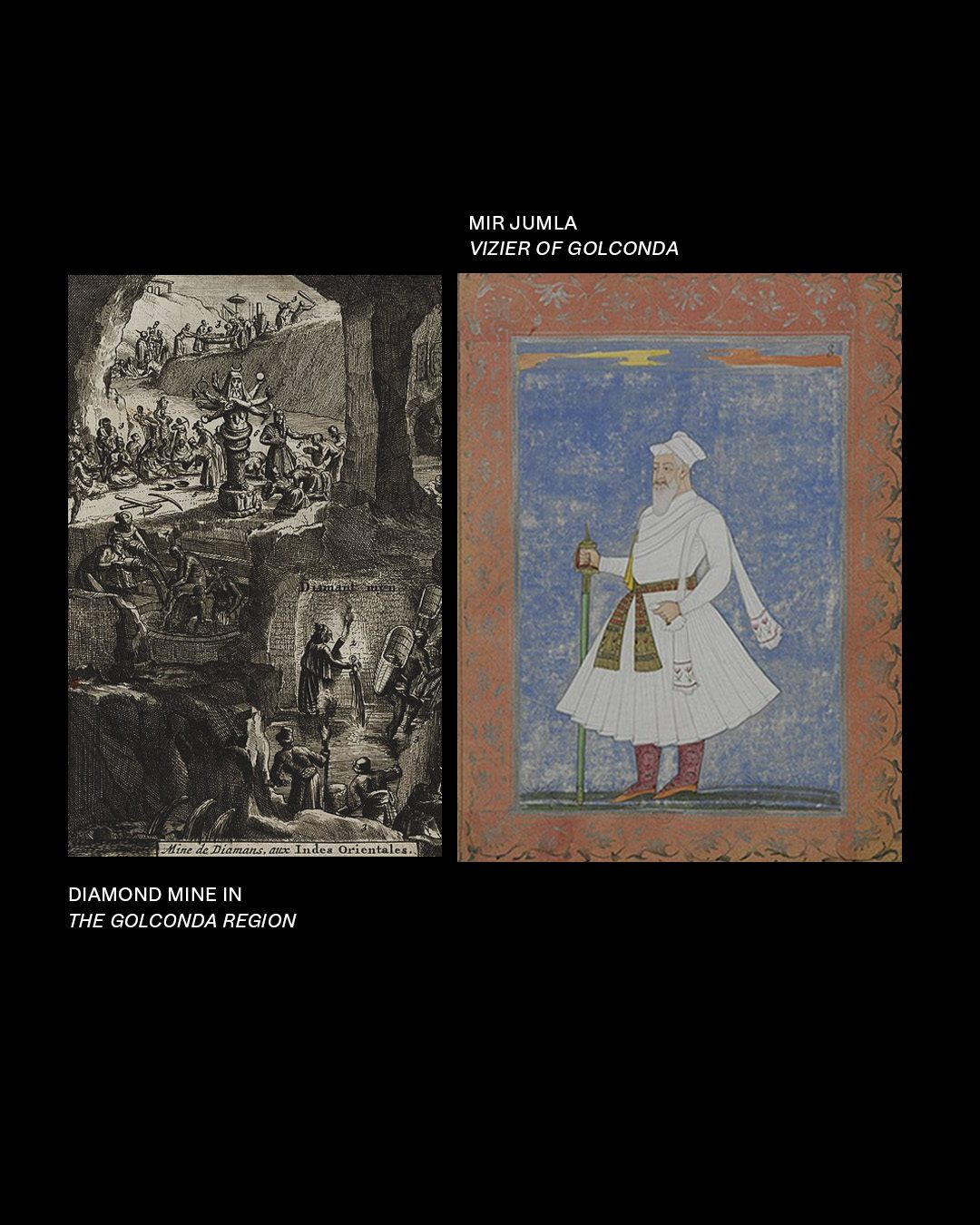
IMAGES K GIRIDHARLAL • WIKIMEDIA COMMONS
What resulted was a shared evolution: Indian material of extraordinary quality encountered European lapidary traditions, giving rise to a style of cutting that neither would have arrived at alone — yet one that remained fundamentally shaped by the material from which it began.
The old mine cut did not appear fully formed. It was the culmination of centuries of evolving technique — from early polished crystals to increasingly complex faceting, eventually arriving at the multi-faceted form that dominated jewellery from the eighteenth through the nineteenth centuries. Later innovations would lead to the old European cut, and eventually the modern round brilliant. But the old mine cut remains the most characterful point in that lineage — the one still closest to the rough, and the one that continues to carry the visible trace of the hand.
Its defining features are distinct. A high crown, a small table, a deep pavilion, and a large, open culet that appears as a soft circle when viewed from above. The outline is cushion-like, following the natural geometry of the octahedral rough rather than conforming to a fixed mathematical ideal. These stones were cut by eye, not by formula — the cutter responding to the material in front of them. No two are identical. Each carries slight asymmetries, individual facet placements, subtle irregularities. Not imperfections, but decisions. Not flaws, but character.
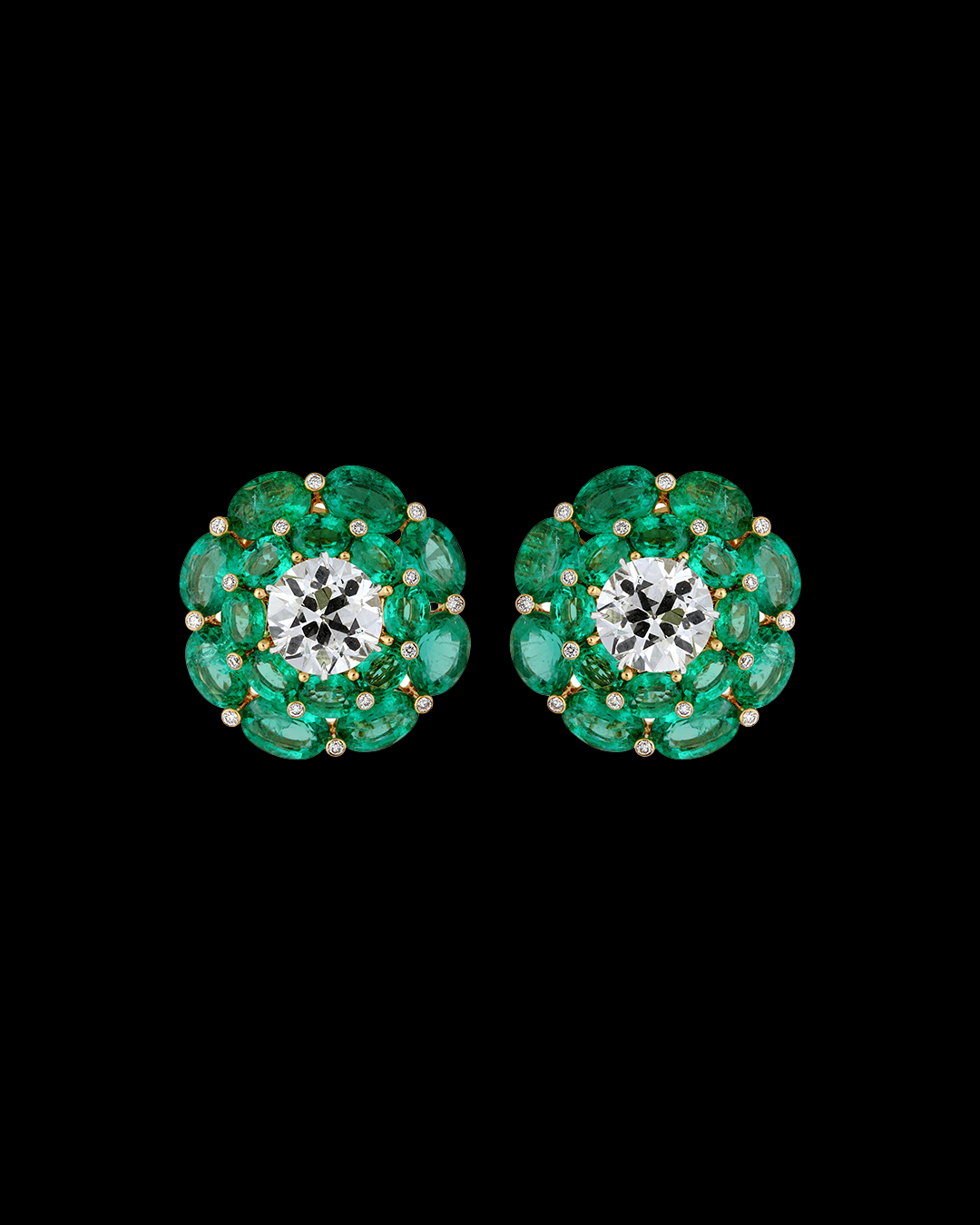
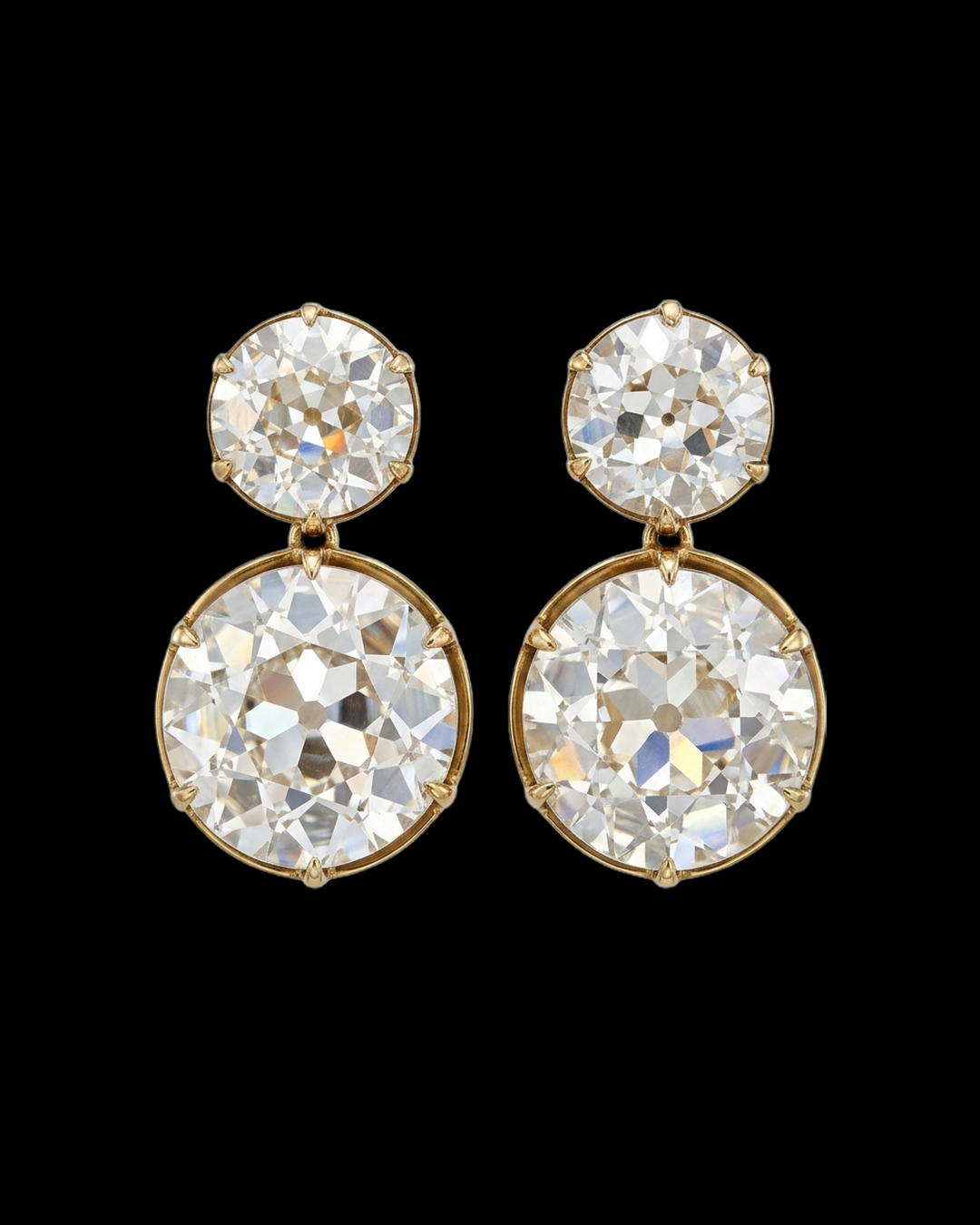
OLD EUROPEAN CUT NATURAL DIAMONDS EARRINGS ALOK LODHA • UMRAO
The quality of light an old mine cut produces is equally distinctive. Where a modern diamond is engineered for maximum brilliance under controlled conditions, an old mine cut responds to atmosphere. Candlelight, natural daylight, the ambient glow of a room — these are the conditions in which it comes alive. Its fire is slower, deeper, more internal. It does not flash; it glows. It is a stone that reveals itself over time, rather than announcing itself all at once.
Not every old mine cut diamond originates from India. The discovery of Brazilian deposits in the eighteenth century provided the volume that allowed the cut to proliferate across Europe. But volume and standard are not the same. Brazil expanded the market. India established the benchmark — both in material and in the standards against which diamonds would be judged.
Across India, the appeal of the old mine cut does not need to be introduced. It is not newly acquired, but deeply familiar. These are stones that do not strive for uniform perfection, but hold something more nuanced — variation, warmth, a visible trace of the hand that shaped them. In a culture where jewellery is lived in, layered, inherited, and continually reinterpreted, that quality resonates deeply.
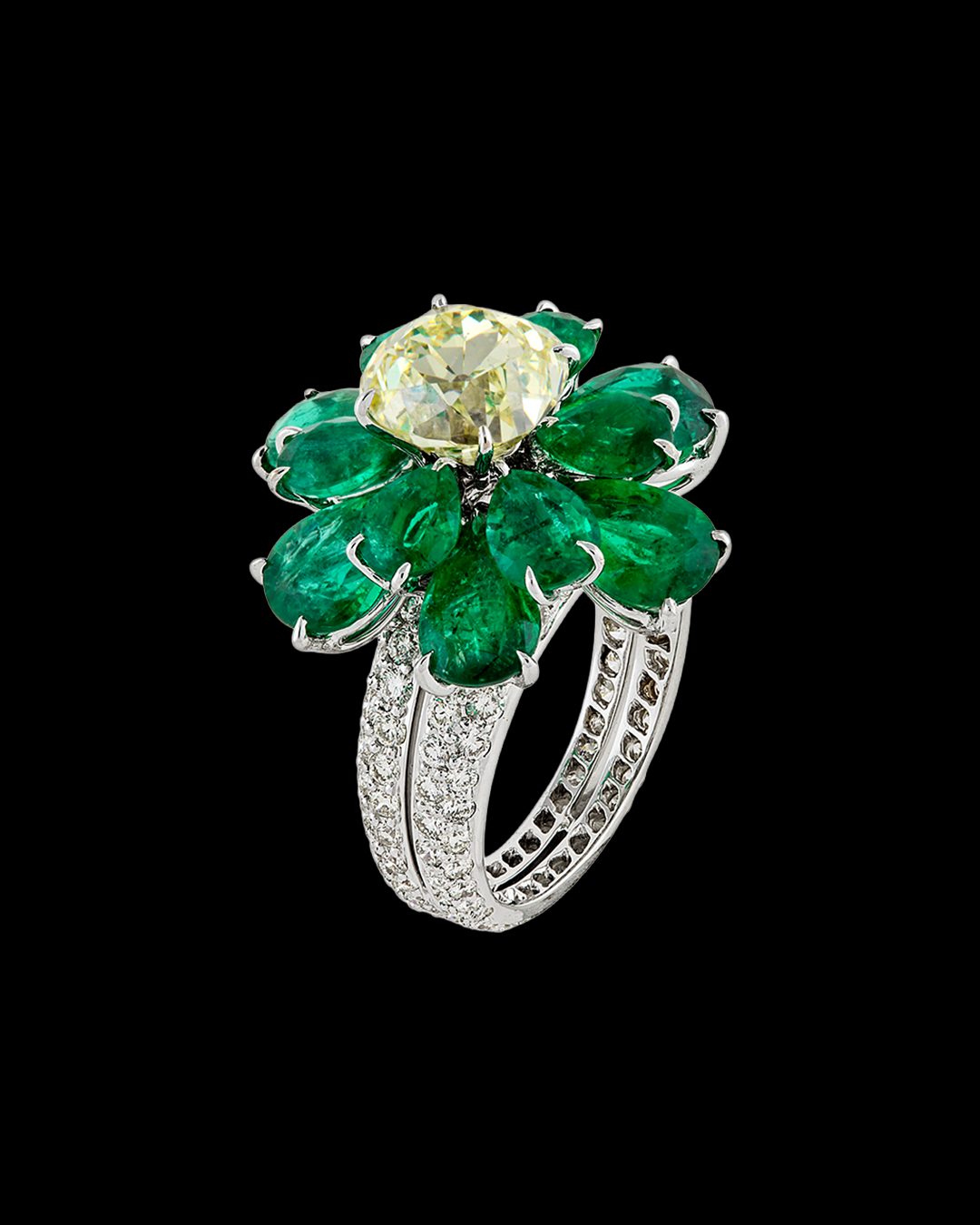
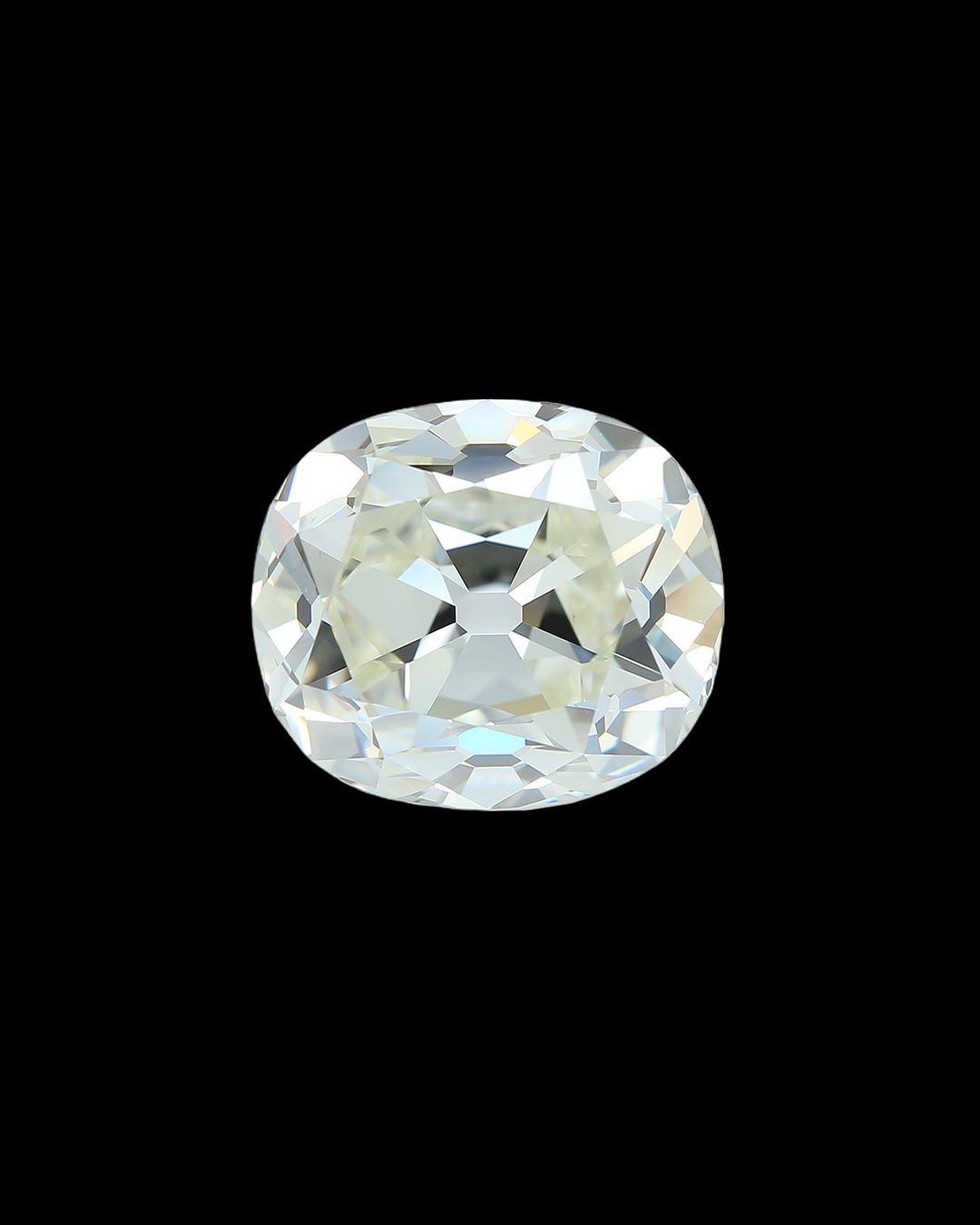
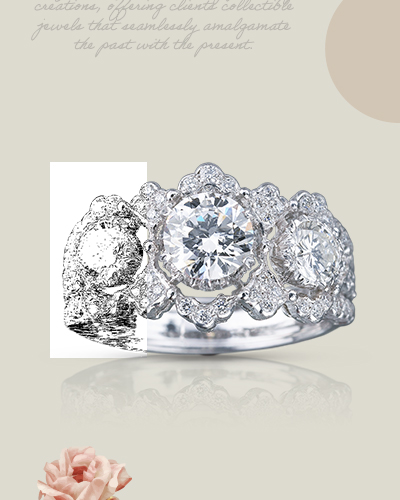
OLD MINE CUT NATURAL DIAMOND RING ALOK LODHA • K GIRIDHARLAL
The attraction is not only aesthetic, but emotional. Old mine cut diamonds do not feel finished in the way modern stones do. They feel continuous. Like objects that have already lived a life before reaching you — and will continue to do so after. This sense of continuity, of jewellery as something that evolves rather than arrives complete, aligns closely with how jewellery has long been understood across this region.
For designers working with these stones today, the dialogue feels instinctive. Whether resetting inherited pieces into contemporary forms or sourcing old mine cuts anew, the connection between material and design language is natural. These stones do not require reinterpretation so much as recognition.
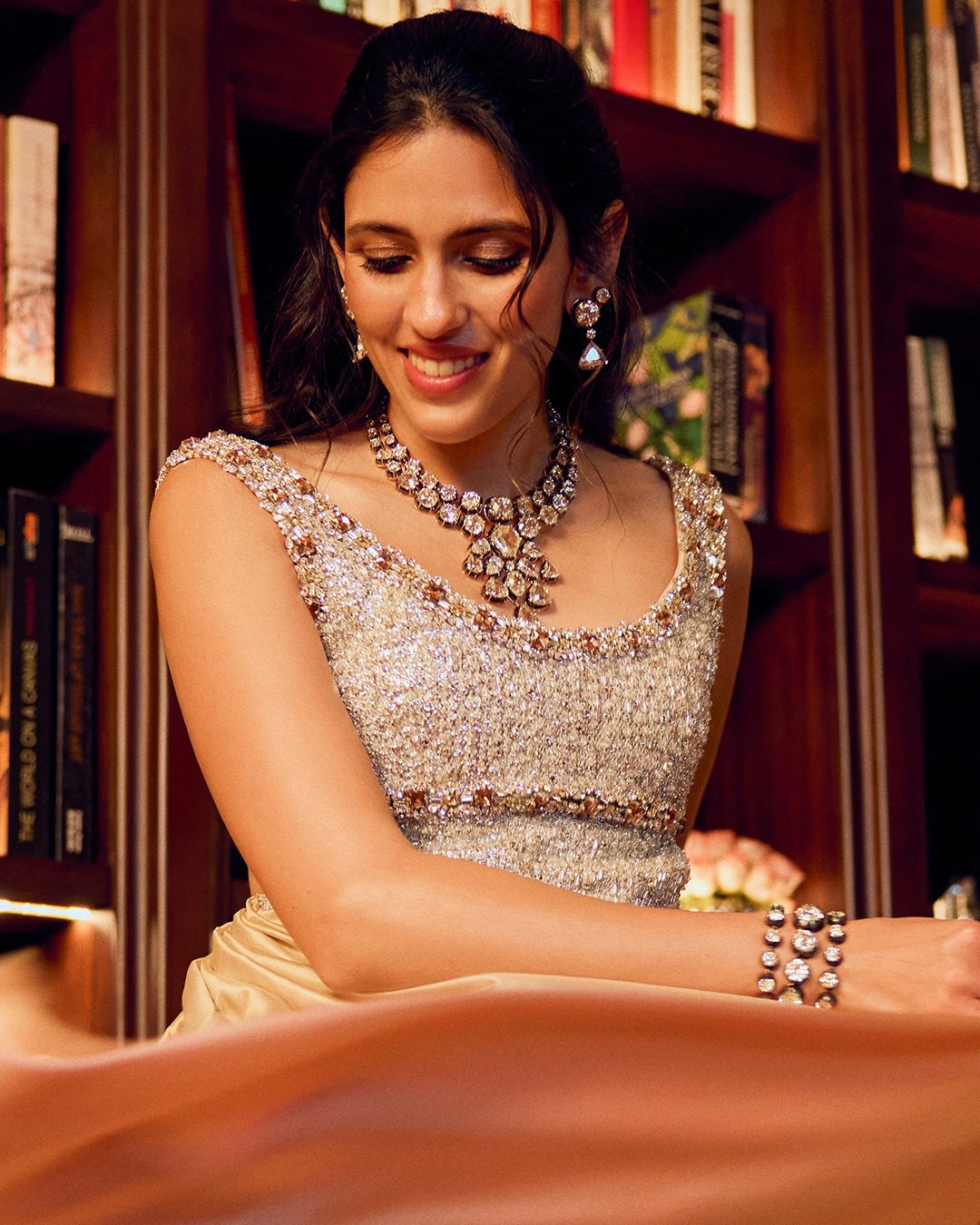
Shloka Ambani wears an old mine-cut natural diamond necklace, crafted with rare Golconda diamonds.
INSTAGRAM: @kantilalchhotalal
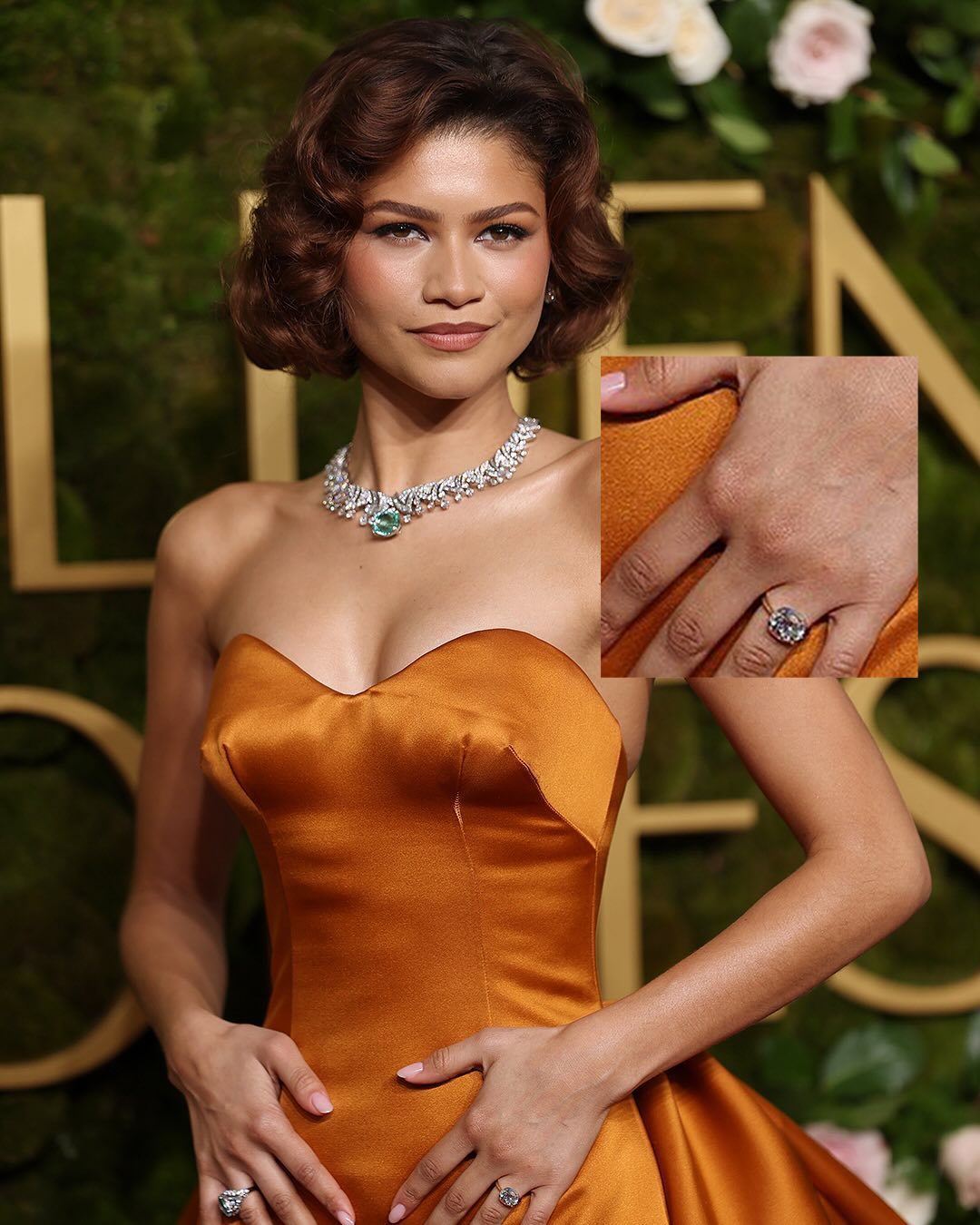
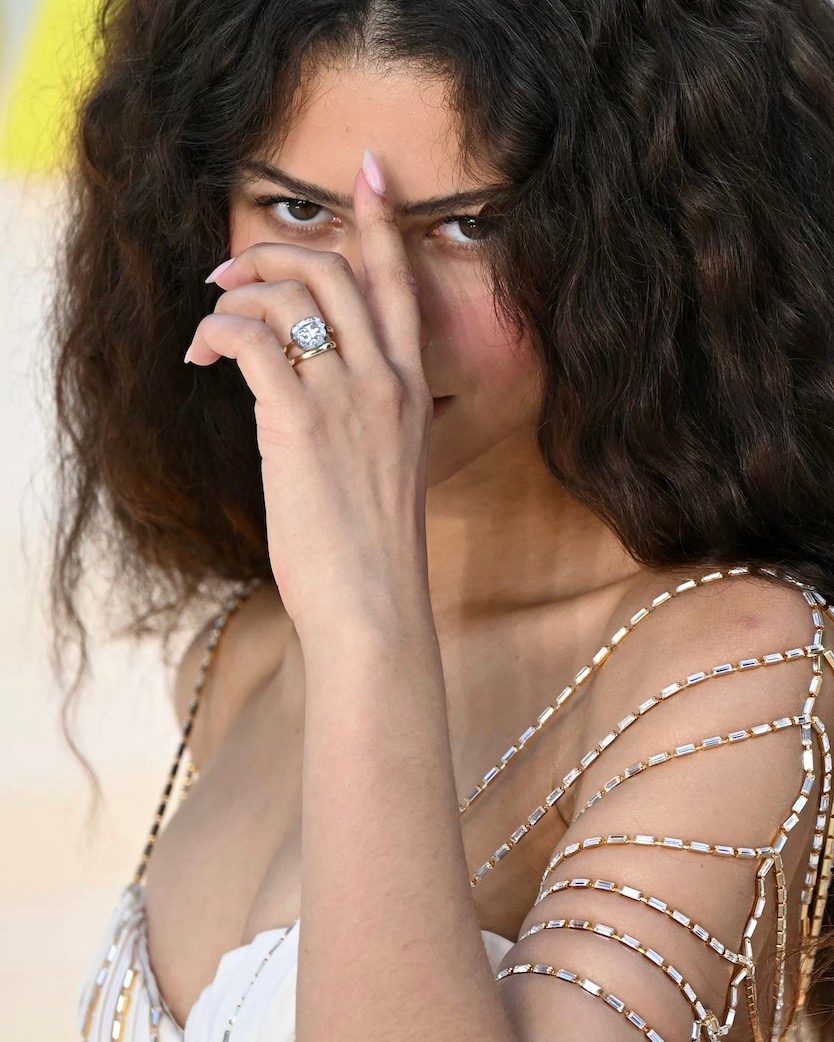
Zendaya’s elongated cushion-cut engagement ring traces back to the old mine cuts of the 1700s.
INSTAGRAM: @bvlgari

Isha Ambani Piramal’s 2026 MET Gala jewels featured multiple strands of old mine-cut diamonds.
INSTAGRAM: @anaitashroffadajania

For Taylor Swift’s engagement ring, Travis Kelce chose a brilliant-cut old mine diamond, bezel-set in yellow gold.
INSTAGRAM: @taylorswift
For those encountering old mine cut diamonds through family collections, one practical distinction is worth noting. “Old mine cut” refers to a style of cutting, not a guaranteed age. Stones can be cut in this manner today, just as antique examples continue to circulate without formal documentation. In markets where jewellery passes through generations informally, this distinction matters. A diamond may carry centuries of a family’s history, or it may simply carry the visual language of that history.
Part of the appeal of the old mine cut lies in this very tension — between what is inherent to the cut itself, and what feels inherited through it. Both have value, but understanding the difference allows for a more informed relationship with what you own. Perhaps that is the enduring pull of the old mine cut. Not that it reflects light with absolute precision, but that it holds it — slowly, unevenly, with depth. Like something remembered, rather than newly seen.
Newsletter