Why Everyone Loves a Pear-shaped Diamond
Blending the curve of an oval with the drama of a marquise, the pear-shaped natural diamond has evolved from regal icon to contemporary must have.
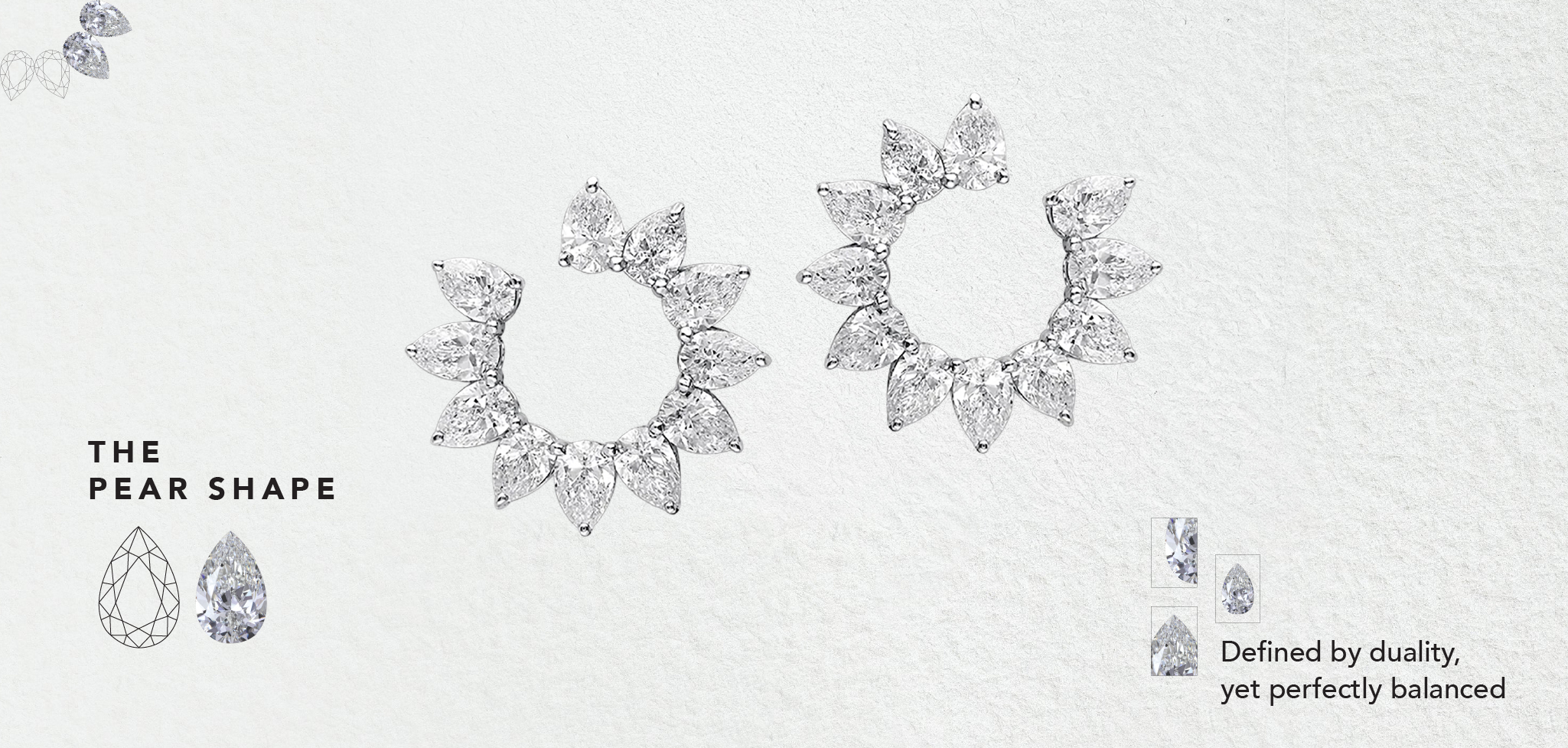
The pear-shaped natural diamond has always occupied an intriguing middle ground. Neither entirely soft nor overtly sharp, it balances opposing impulses with quiet confidence. Sitting somewhere between the familiarity of an oval and the drama of a marquise, the pear is a hybrid form — one that feels intentional rather than inevitable. It’s a shape that never feels accidental. You don’t arrive at a pear by default — you choose it because you want tension, not perfection.
That balance is precisely what has allowed the pear-shaped diamond to endure. While other diamond cuts rise and fall with fashion cycles, the pear continues to resurface in new contexts, shaped less by trend than by design thinking. To understand its relevance today, it helps to look beyond romance and consider the pear as a form that has evolved — culturally, technically, and aesthetically.
A Shape Born of Innovation
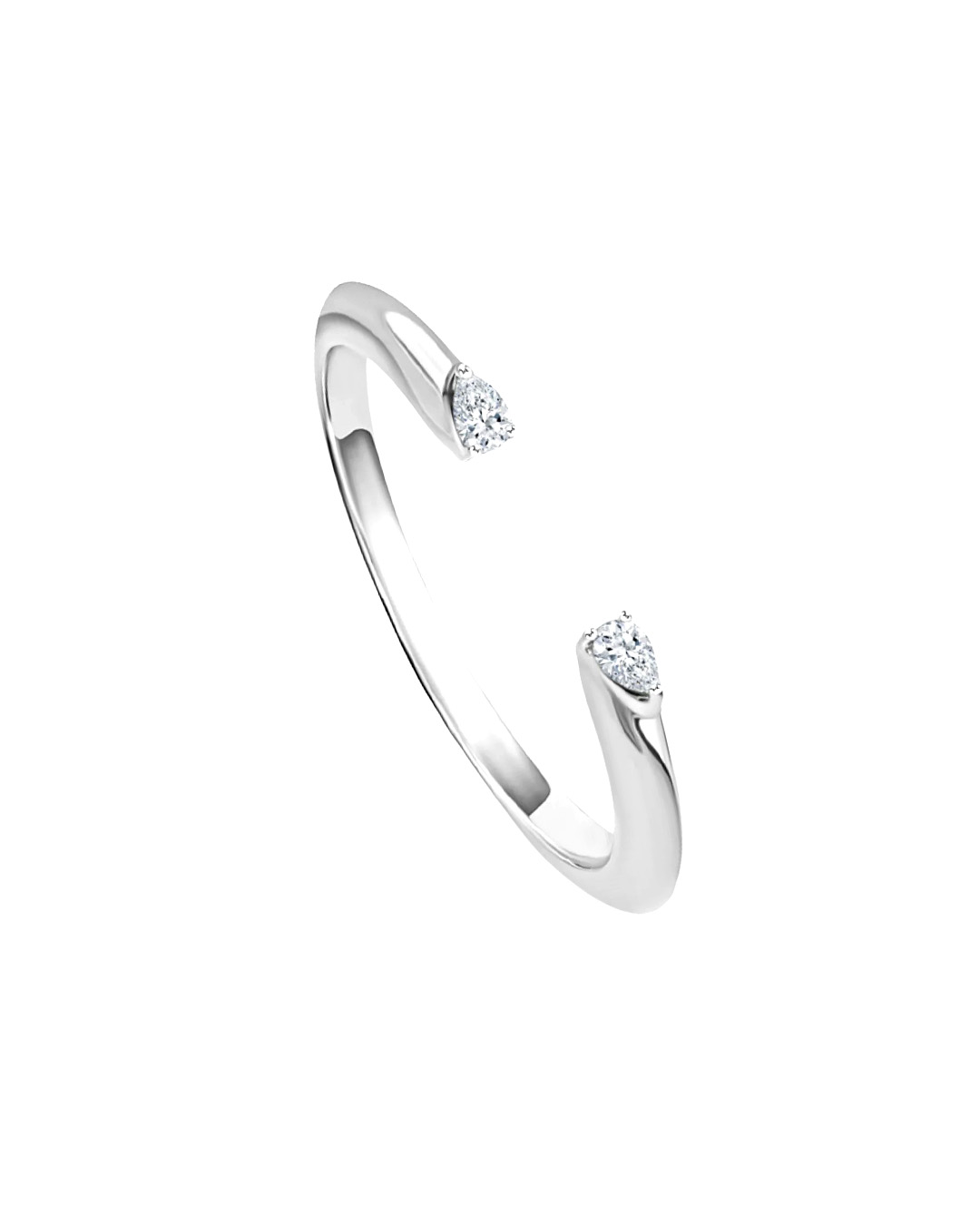
The origins of the pear-shaped natural diamond can be traced back to the 15th century, when Flemish diamond cutter Lodewyk van Bercken developed the scaif — a revolutionary polishing wheel that transformed diamond cutting from rudimentary shaping into a precise craft. This innovation allowed cutters to work with greater symmetry and control, opening the door to elongated and more complex forms, including early versions of the pear.
What changed at that moment was intention. Natural diamonds were no longer just shaped — they were designed. From the outset, the pear demanded balance. Its success depended on proportion, alignment, and restraint — a synthesis of curve and line that could not rely on symmetry alone. This sensitivity would go on to define the pear’s identity for centuries.
From Regal Display to Cultural Icon
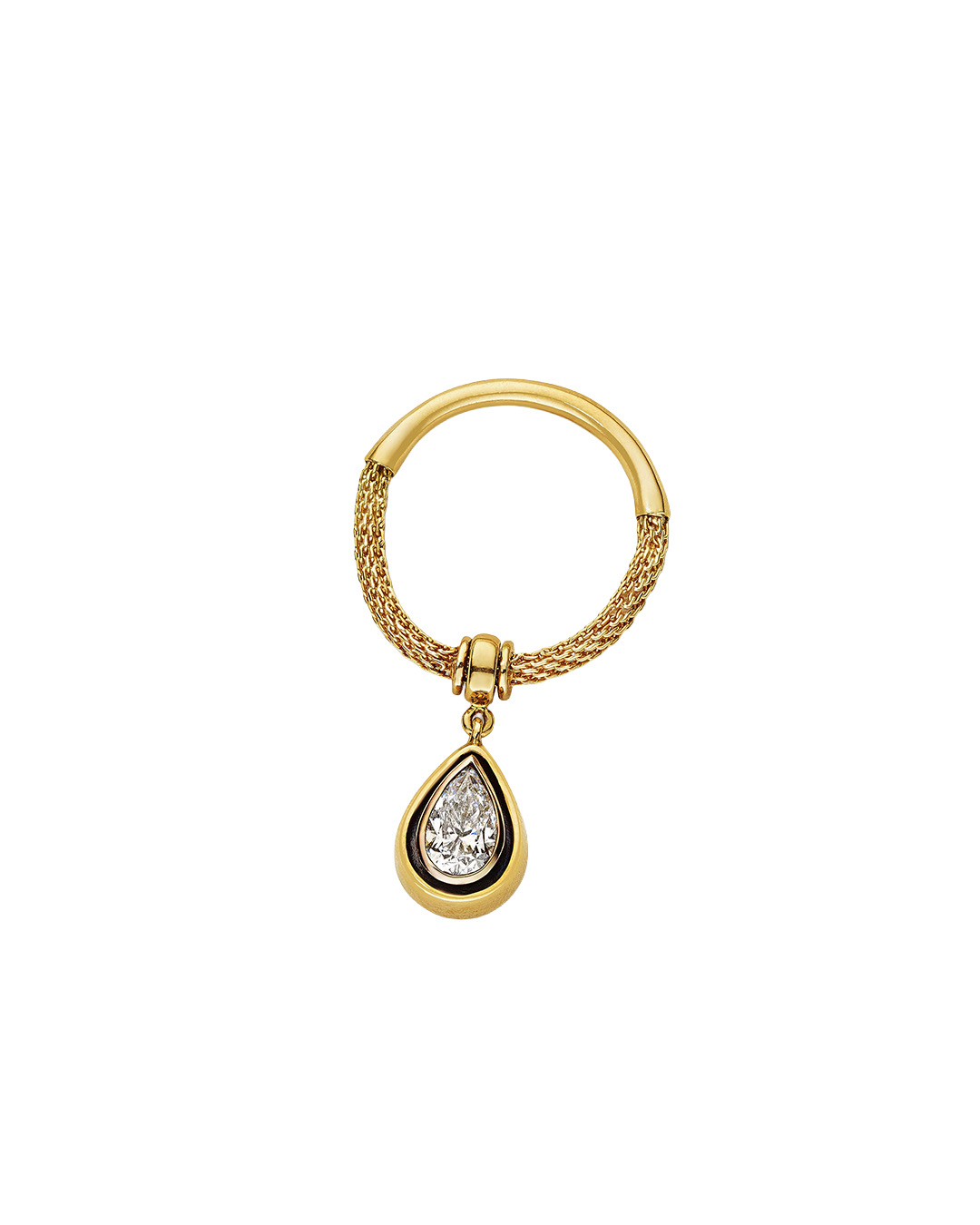
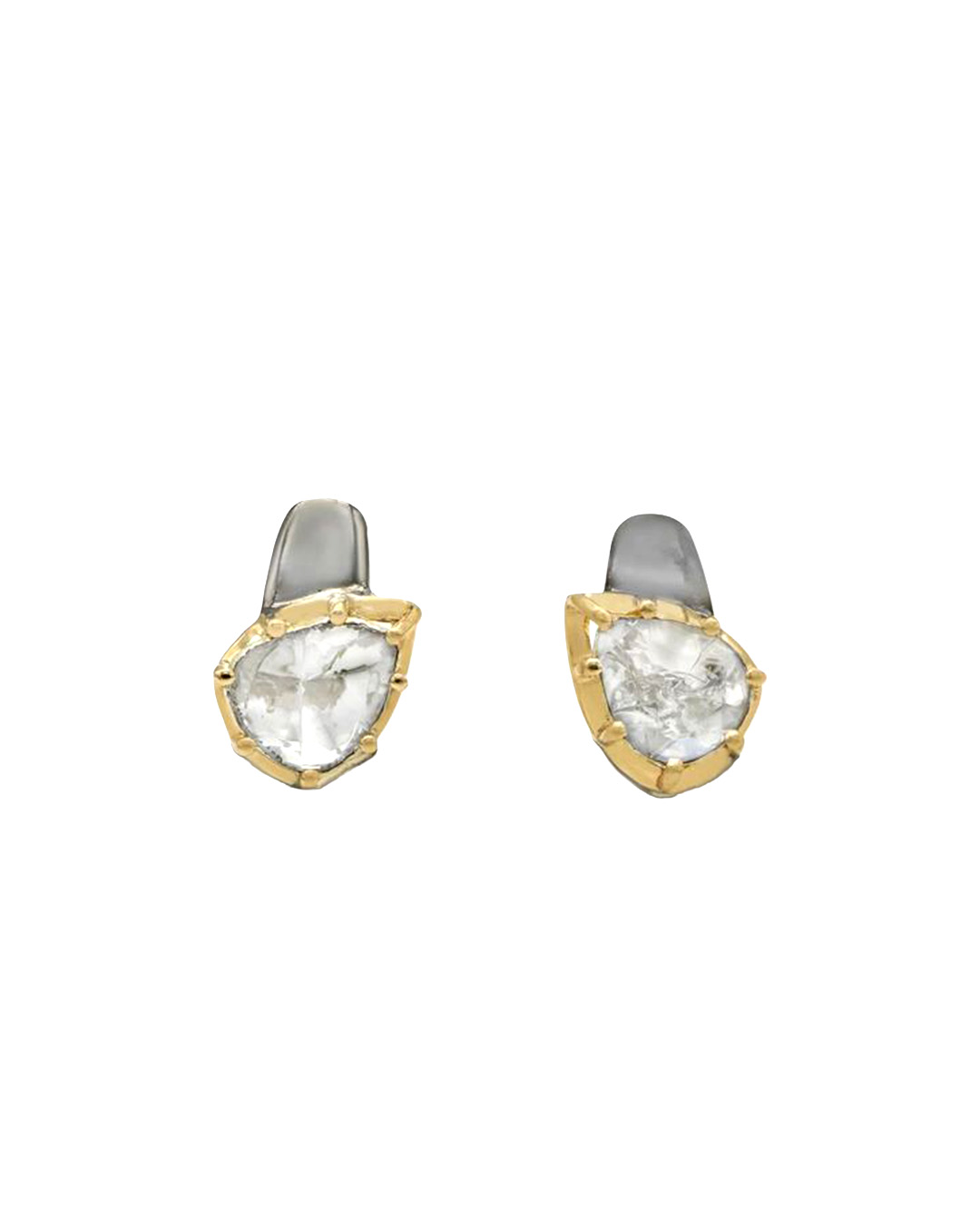
Historically, pear-shaped diamonds were closely associated with ceremony and status. Their elongated silhouette naturally suited drop earrings, pendants, and formal jewellery — pieces designed to move, catch the light, and be seen from a distance.
Perhaps the most famous example remains the Taylor–Burton Diamond — a 69.42-carat pear-shaped natural diamond purchased by Richard Burton for Elizabeth Taylor in 1969. First set as a ring and later remounted by Cartier as a necklace, the diamond transcended jewellery to become a cultural symbol.
It wasn’t simply the size of the stone that made it iconic, but the way the pear shape asserted itself. Its directional form led the eye, claimed space, and projected authority.This was not a sentimental use of the pear. It was bold, declarative, and unapologetic — reinforcing the idea that the shape has always carried an edge beneath its elegance.
The Pear as Design Form
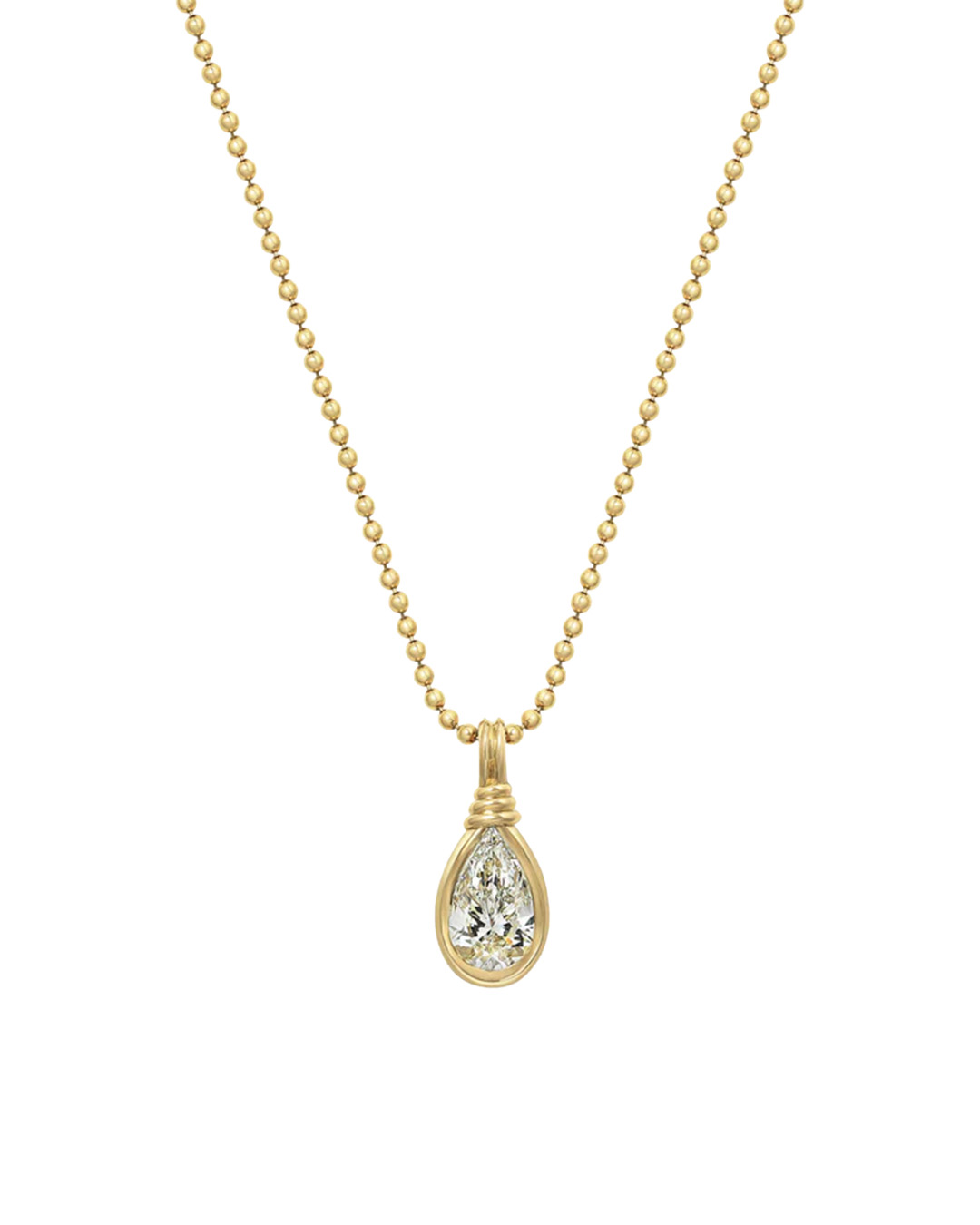
At its core, the pear-shaped diamond is defined by duality. One end curves gently, dispersing light in a way that feels familiar and inviting. The other tapers to a point, introducing focus, tension, and direction.
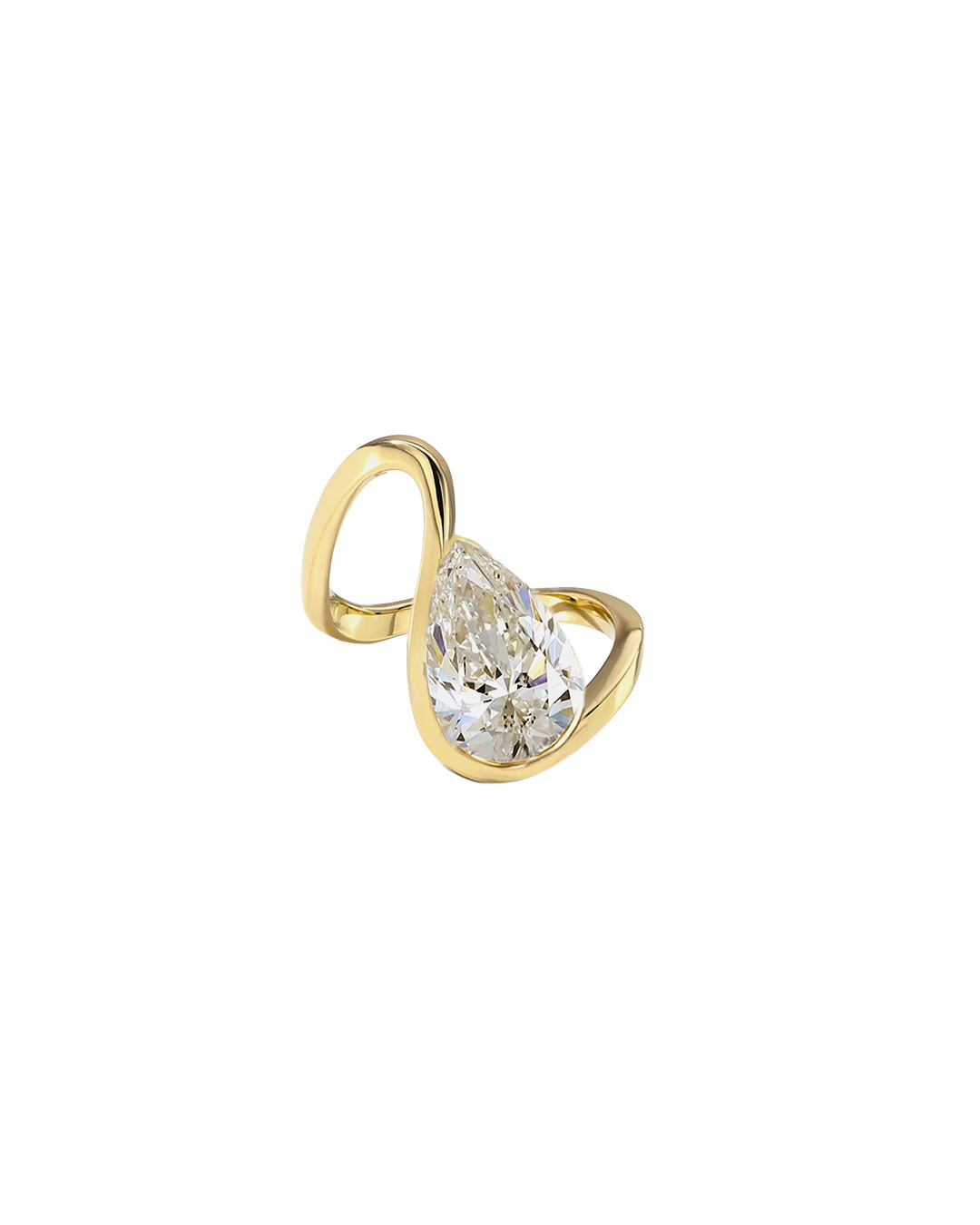
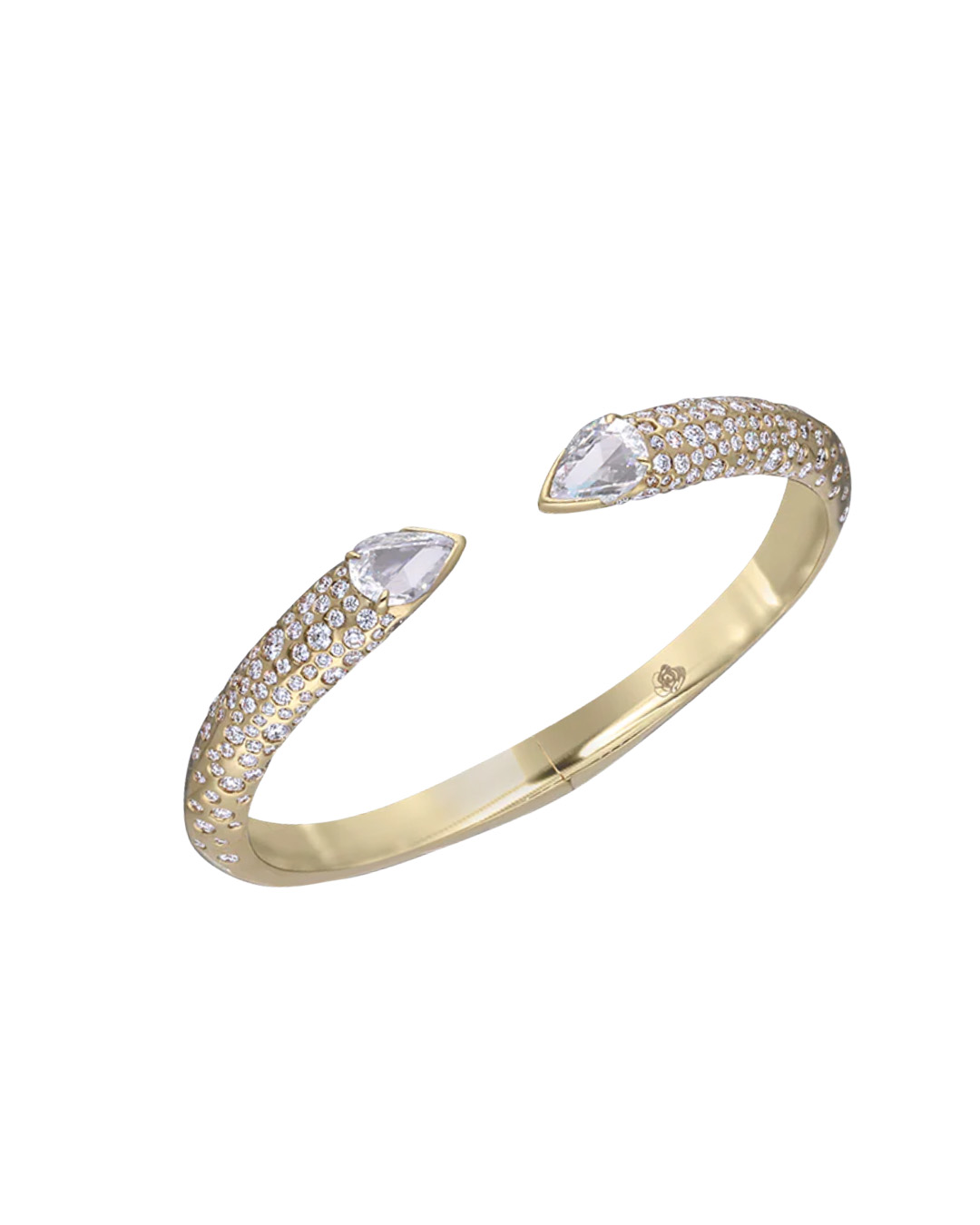
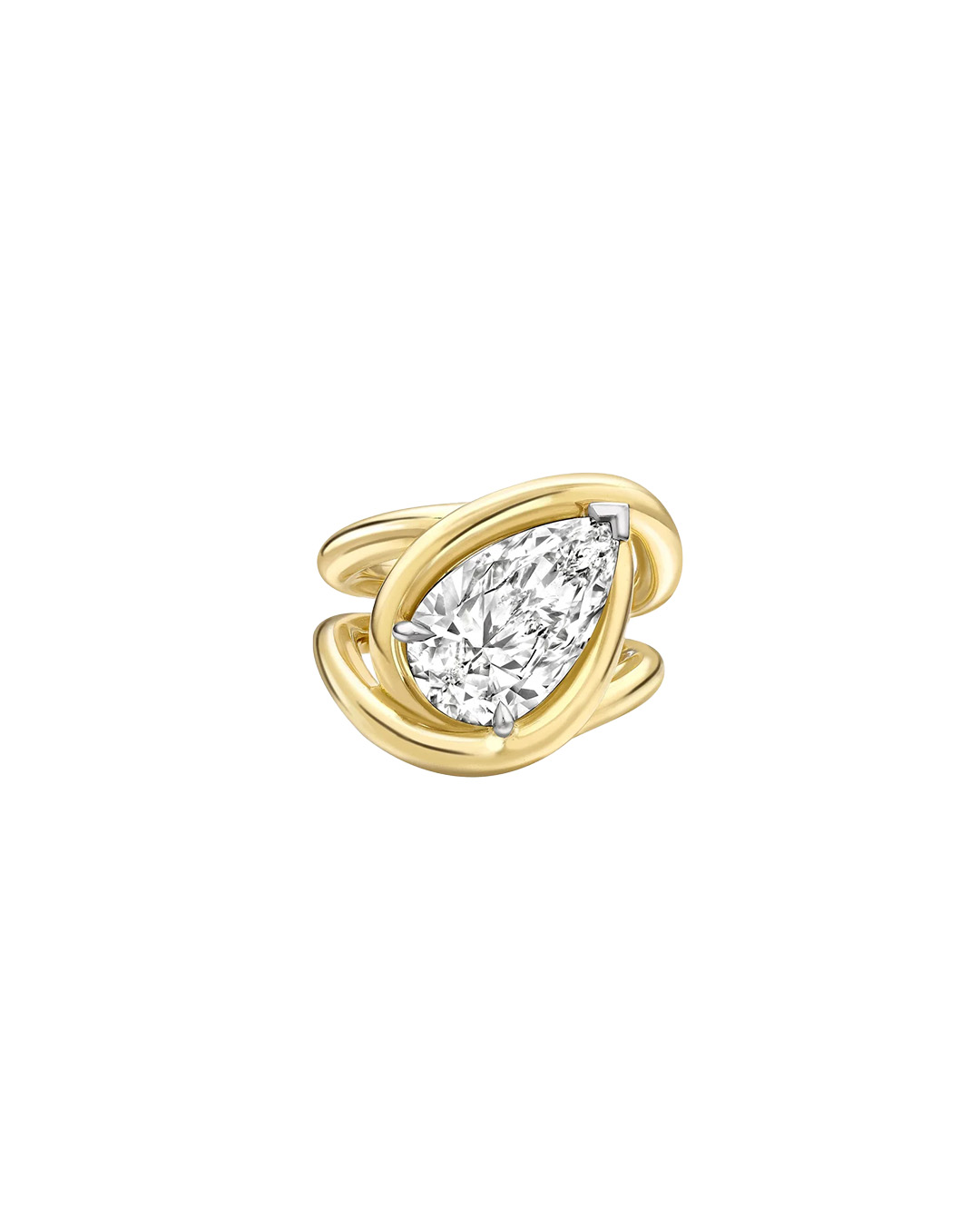
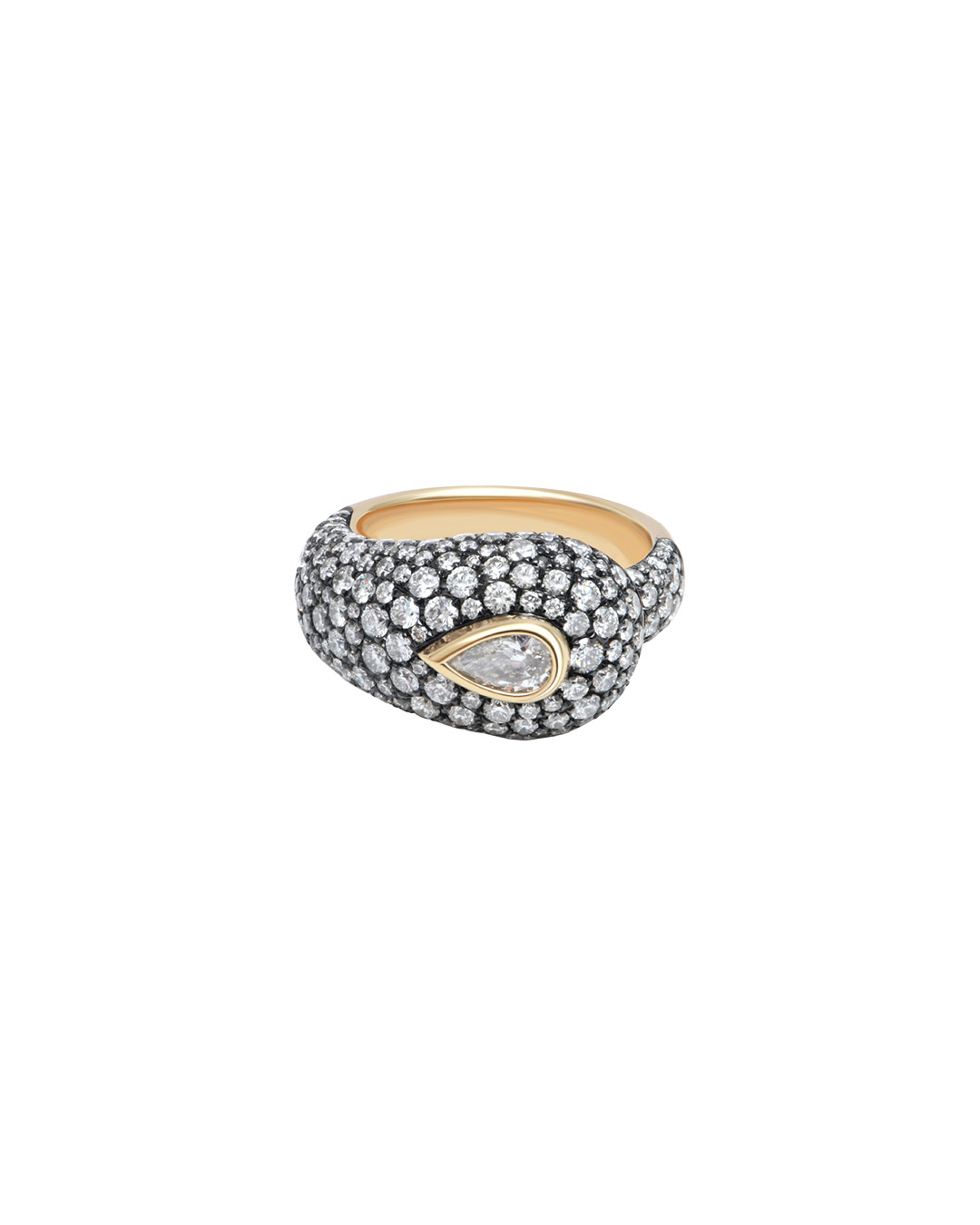
This duality gives the pear unusual versatility. It can soften a composition or sharpen it, depending on how it’s positioned and what surrounds it. Orientation becomes a creative decision rather than a technical one. A classic north–south pear reads elegant and elongating; turn it east–west and it immediately feels graphic and modern. Tilt the stone slightly off-axis and the pear becomes more fluid, expressive, almost calligraphic in character.
The pear’s hybrid nature — neither fully curved nor strictly linear — gives it a flexibility that many designers find creatively liberating. Where more predictable cuts impose a fixed identity, the pear leaves room for interpretation.
For Pooja Gandhi, founder of Kamyen, that adaptability is central to its appeal. “I definitely think the pear shape is more adaptable than a heart, a princess cut, or even a marquise,” she explains. “It’s more neutral — it fits with other shapes more easily, maybe even more so than rounds. It connects things well within a piece.”
That adaptability also extends to proportion. “I don’t think there’s such a thing as a classical pear,” Gandhi adds. “Ratio is very personal — there’s no right or wrong. Fuller pears, very elongated pears — both have so much character and say so much about the wearer.”
When designing, proportion becomes a compositional tool rather than a rule. “If the piece has rounder forms like hearts or ovals, I’ll go for a fuller pear,” she says. “If it’s more edgy, with rectangles and corners, I’ll choose a longer pear. It’s about what fits the overall language of the piece.”
Unlike more uniform cuts, the pear actively shapes the jewellery around it — guiding structure and balance.
Beyond a Single Category
As the pear has moved further away from rigid categories, its role in contemporary jewellery has become increasingly compositional. More than a centre stone or symbol, it is now treated as a form that responds to — and reshapes — its surroundings. For designers working with nuance rather than formula, the pear becomes less about statement and more about relationship.
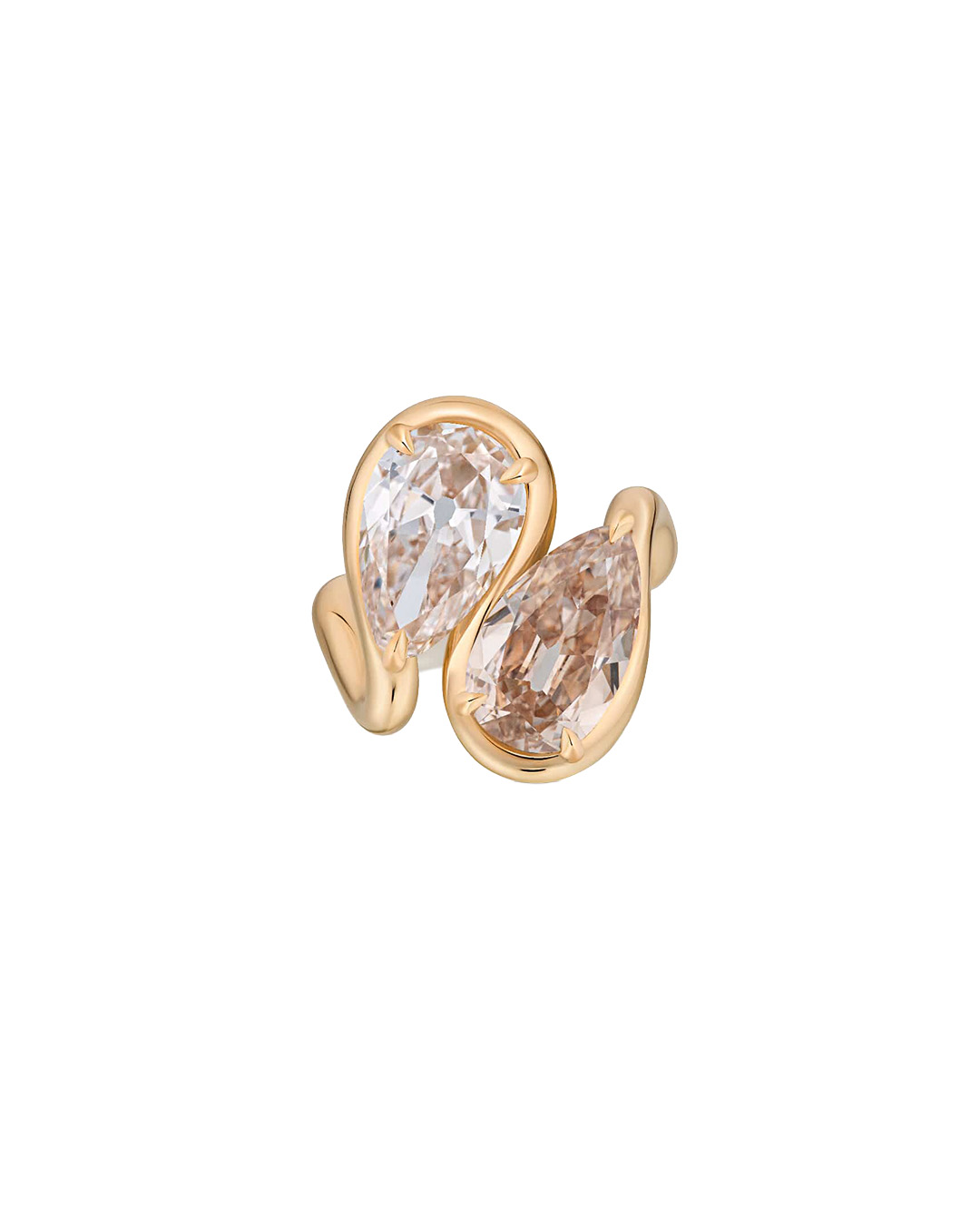
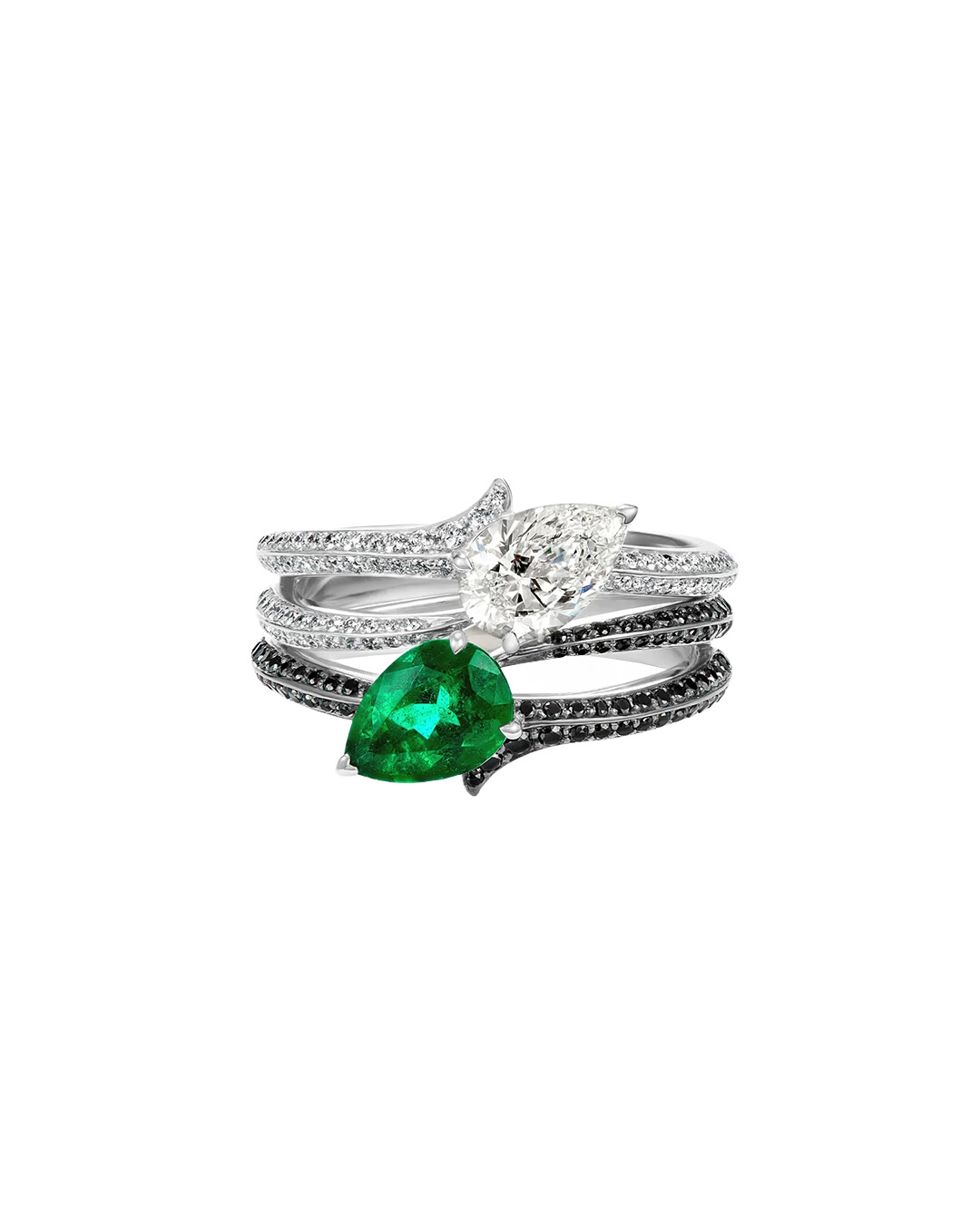
For New York based designer, Vanessa Fernández of Vanessa Fernández Studio, that relationship is never accidental. “I love the way different forms complement one another — I see them as yin and yang,” she explains. “The pear is especially interesting in multi-stone compositions because it already carries contrast within its own shape, so it naturally lends itself to dialogue.”
In toi et moi and asymmetrical rings, the pear often plays a nuanced role — sometimes anchoring the composition, sometimes acting as a counterpoint.
“The key is equality,” Fernández notes. “One stone should never outshine the other. Even when they’re different, they need to feel like a cohesive yin and yang.”
“For me, it’s equally about the make of the stone — how it’s cut — and colour harmony,” she adds. “If either is off, the entire composition loses its integrity.”
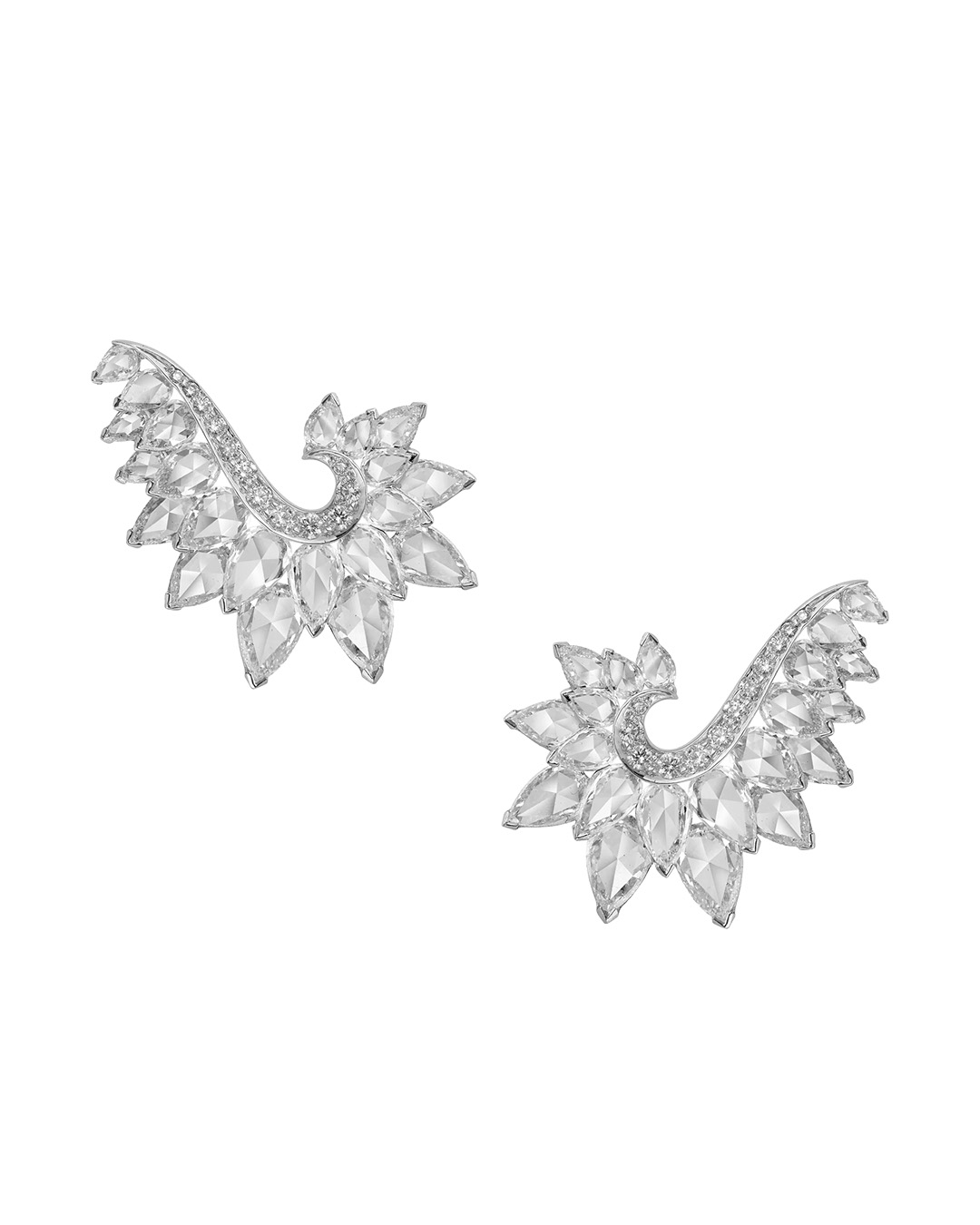
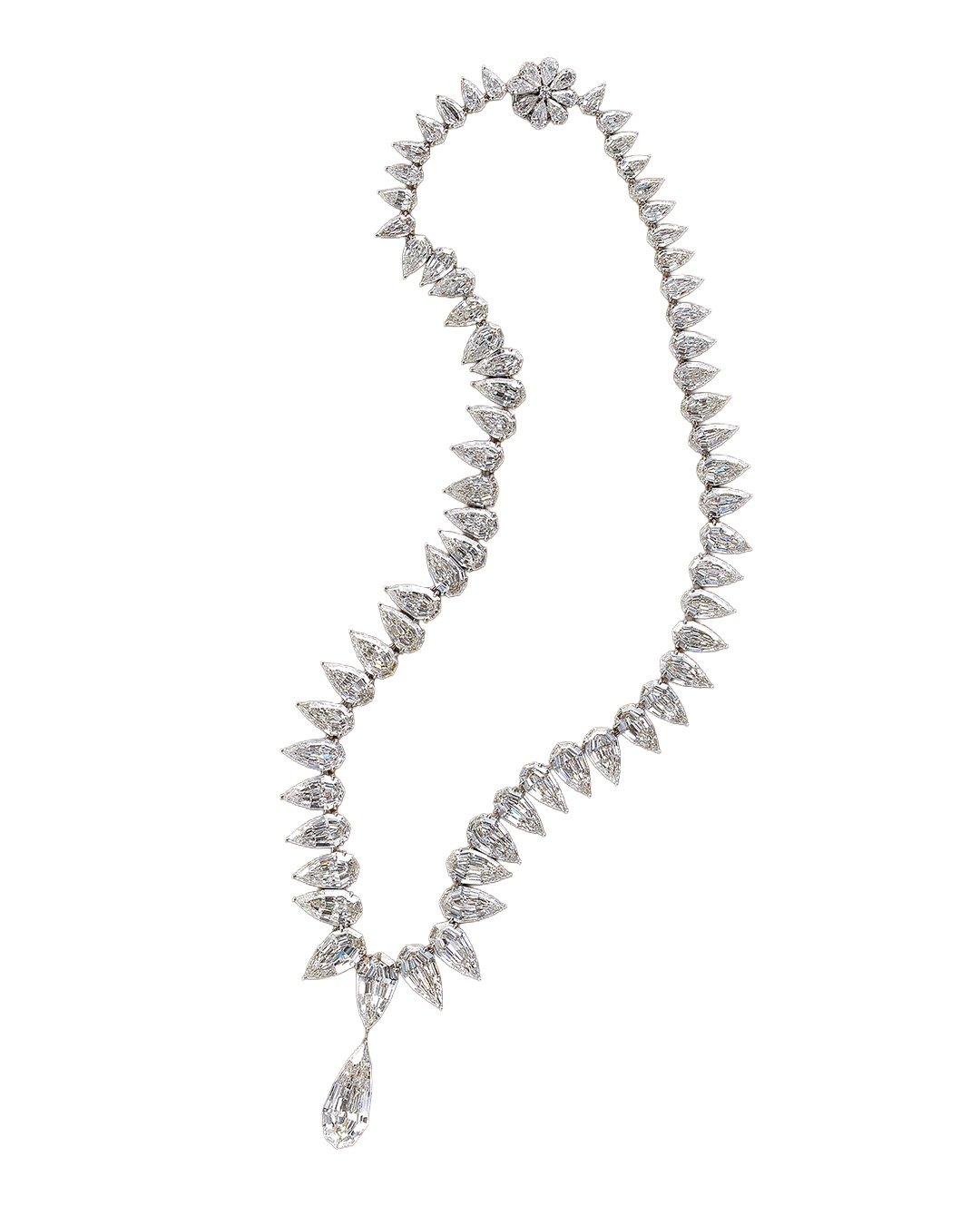
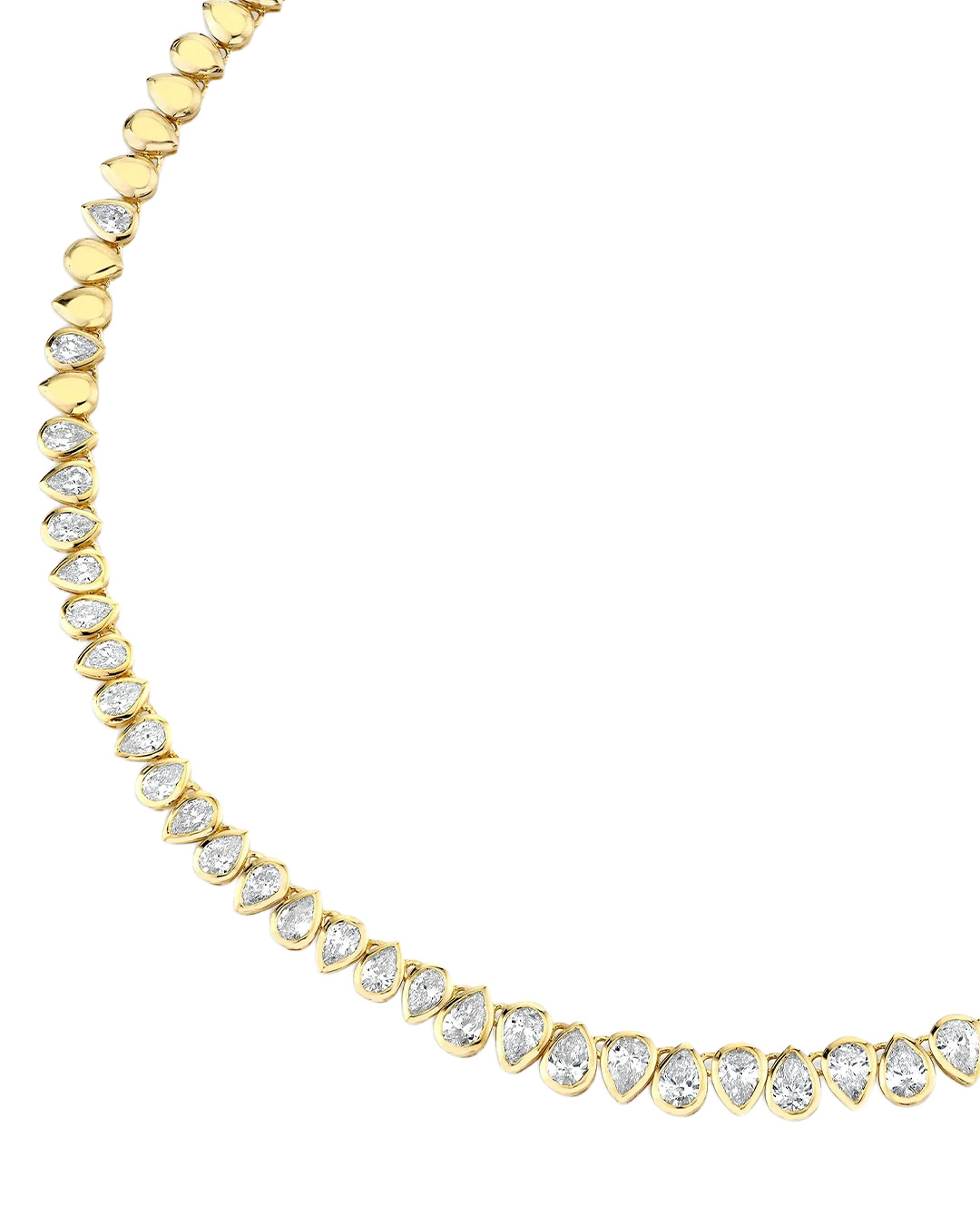
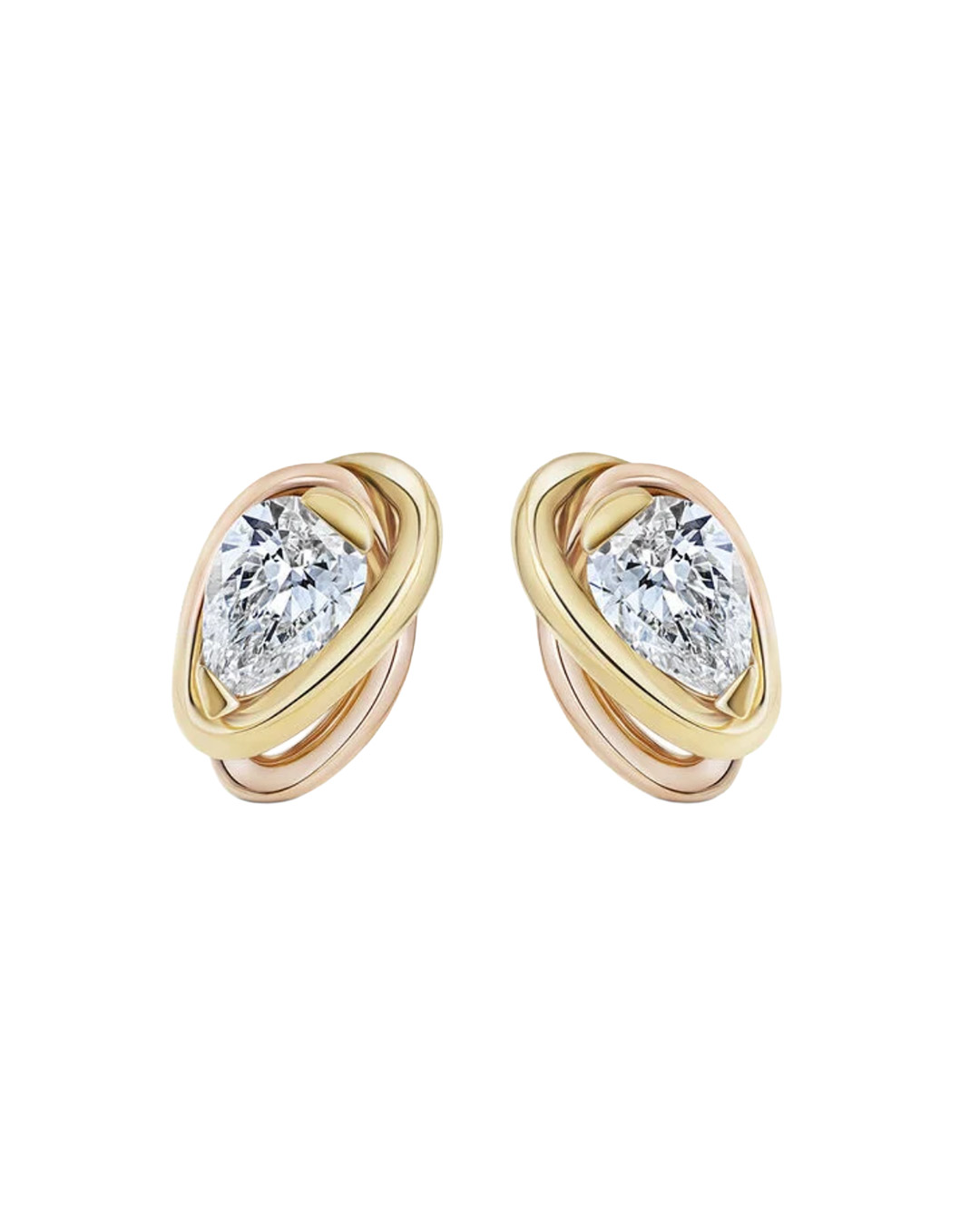
While the pear’s complexity is often worked through rings, its design potential extends far beyond the engagement context. In earrings, pears create articulation and rhythm. In necklaces — particularly rivière or graduated designs — they introduce variation and movement. In pendants and talisman-style jewellery, the shape’s directional quality gives it quiet authority.
Designers frequently use pears in conversation with other cuts — paired with baguettes, half-moons, cushions, or coloured stones — creating compositions that balance geometry with organic form.
Rewriting the Pear’s Romantic Past
For a period, the pear became closely associated with overt romance and vintage styling — ornate settings, decorative flourishes, and predictable proportions. As jewellery aesthetics shifted towards minimalism and personal expression, the shape briefly receded from prominence.
Its return, however, has been deliberate. Contemporary designers have reintroduced the pear through restraint: cleaner lines, lighter settings, and a renewed focus on outline rather than embellishment. Excess metal has been stripped away in favour of proportion and negative space.
This evolution is mirrored upstream. From the trade perspective, the shift is equally clear. Priyal Shankar, a representative of Shivam Jewels, a Mumbai-based diamond manufacturer specialising in classic and unique cuts, notes steady global demand for pear shapes — particularly elongated silhouettes in sizes from approximately 0.6 carats upwards — with strong movement across both calibrated layouts and larger centre stones. He adds that the Middle East remains a key market for the shape, while design-led usage continues to grow in India’s bridal segment.
The modern pear feels edited. It’s no longer about ornament — it’s about clarity. And that clarity allows the pear to move fluidly between soft and edgy, classic and modern, without being confined to a single narrative.
Natural Variation and Individuality
If the pear is expressive by nature, it is also unforgiving. Subtle shifts in curvature, proportion, or light behaviour can dramatically alter how a stone reads — and how it should be treated. This is where experience begins to matter more than preference.
“You notice individuality more quickly in a pear,” says Fernández. “If a natural diamond has an intense colour, it immediately dictates what I’ll pair it with. The colour story has to make sense.” She adds, “I gravitate towards elongated pears. I look for open facets, romantic stones, and some colour — faint brown is a current favourite. It can be barely perceptible, sometimes even tricking the eye into seeing pink.”
In an era increasingly drawn to nuance and individuality, this variability feels less like a complication and more like an asset. Pear-shaped natural diamonds reward close looking and thoughtful design.
How to Read a Pear-Shaped Diamond
With a diamond shape as sensitive as the pear, surface-level assessment is rarely enough. Small variations — invisible on paper — can dramatically affect how a stone behaves once set.
The pear-shaped diamond is one of the most expressive cuts — and also one of the most revealing. Small differences in proportion, symmetry, and light behaviour can dramatically change how a pear appears once set.
MINI GUIDE: WHAT TO LOOK FOR
According to Venus Jewels, a Surat-based diamond manufacturer, these are the things to look out for when purchasing a pear shaped natural diamond.
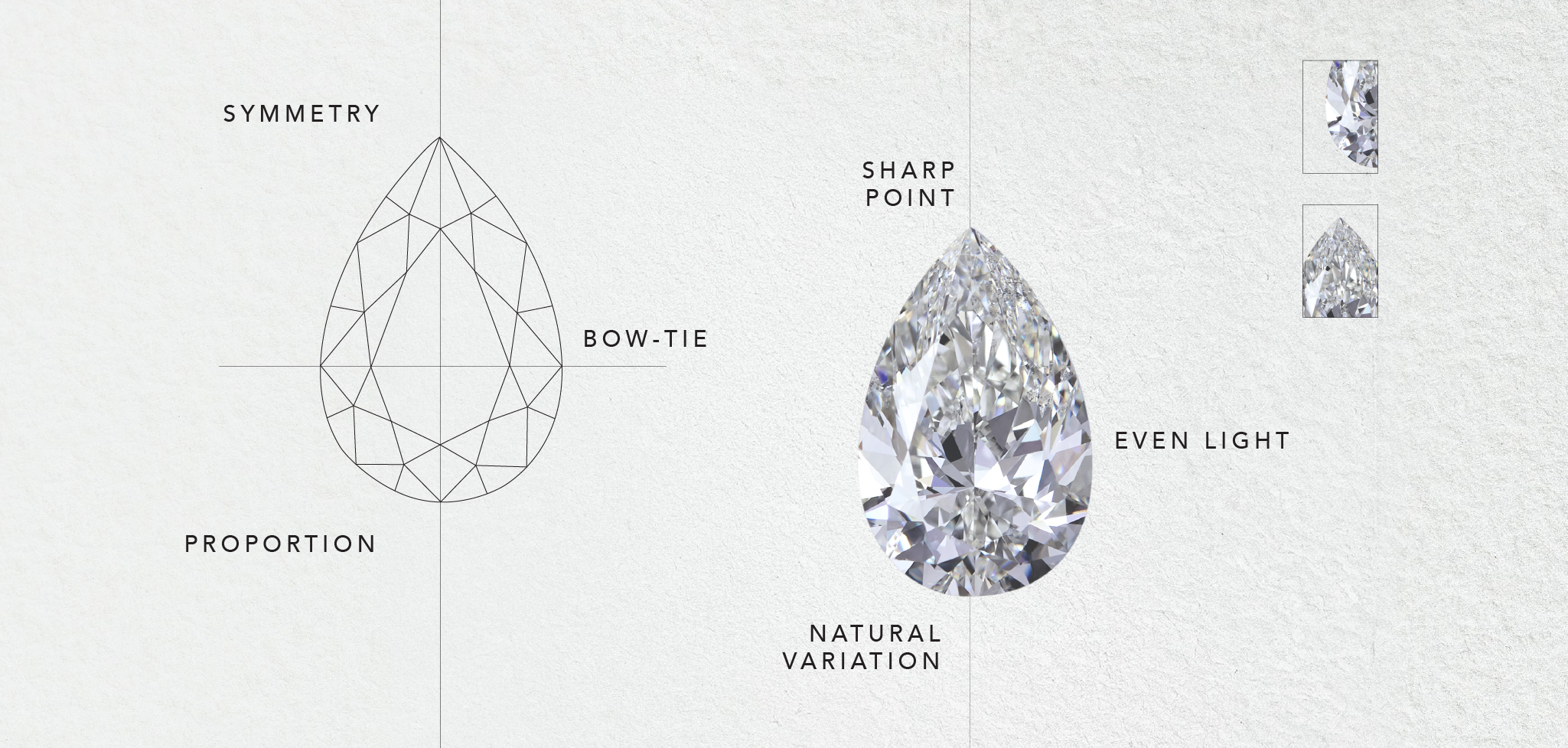
Symmetry First
A pear should feel balanced at a glance. Look for even shoulders, a centered point, and a smooth, uninterrupted outline.
Proportion as Personality
Slimmer pears read sharper and more contemporary; fuller pears feel softer and more classic. There is no ideal — only intention.
The Bow-Tie in Motion
Most pears show some bow-tie effect. A soft, shifting bow-tie adds contrast; a dark, static one can dull the stone. Always view the diamond moving.
Even Light Behaviour
A strong pear has balanced light return across the stone, with no dead zones near the shoulders or belly.
The Point Matters
The tip defines the pear. It should be sharp, undamaged, and thoughtfully protected in the final setting.
Natural Variation
No two pear-shaped natural diamonds behave exactly the same — and that individuality is part of the appeal.