A 10-Point Guide To Understanding Natural Diamonds
Understanding natural diamonds begins with the fundamentals that shape their value. Beneath the polish and allure lies a deeper story of rarity, science, and meaning.
A natural diamond is seldom an impulse buy; it’s a decision that often comes with contemplation and, most importantly, a series of questions. Realistically, though, such questions in fact are often practical. How do I know if I am buying correctly? Why am I paying so much? Why am I investing in natural diamonds when their alternatives are dominating the current conversations? And while these may seem daunting, the answers require taking a closer look at the fundamentals. Ahead, we unpack the nuances associated with natural diamonds, offering a clearer lens into their value and what truly sets them apart.
01. Only One Of Its Kind:
No Two Diamonds Are Identical
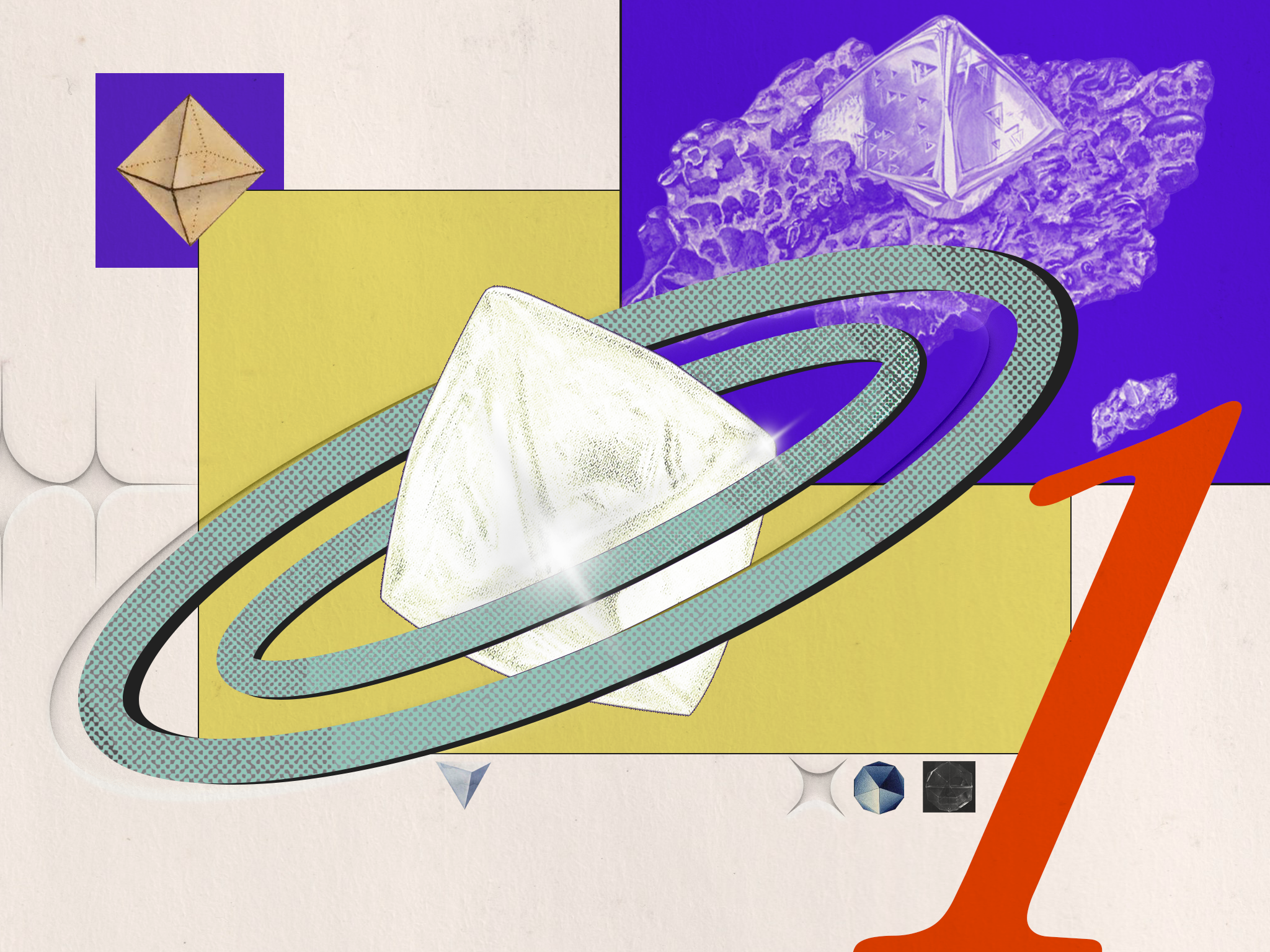
Like human fingerprints, no two natural diamonds are identical. Each stone carries microscopic inclusions shaped by the exact conditions under which it was formed deep within the Earth, making it inherently unreplicable and allowing gemologists to identify, certify and trace each piece with accuracy. That individuality and wearing something singular is why real diamonds hold such weight in moments of commitment and milestones. This also explains why two diamonds of the same size and cut can differ vastly in value because their internal characteristics are unique.
02. The Two Elements Behind Every Diamond: Heat And Pressure
A material so revered that it has shaped legacy houses and is most sought-after to mark life’s most defining moments, yet a diamond’s creation is disarmingly elemental. Contrary to popular belief, natural diamonds are composed of pure carbon, not coal, and are formed by just two forces: heat and pressure. Deep within the Earth’s mantle, nearly 150-200 kilometres below the surface, carbon atoms trapped are subjected to intense conditions. With temperatures ranging from 900°C to 1,300°C and immense pressure over time, approximately between 45-60 kilobars, they crystallise into a diamond. Perhaps that is where one of its true distinctions lies. From something as fundamental as carbon, nature creates something so rare and enduring.

03. Formed Over Three Billion Years

Natural diamonds take 1–3 billion years to form, rather than weeks, having been created long before anything we know that existed today—part of what adds to and preserves their allure. This is because the process of a real diamond formation isn’t linear. Its growth can pause and resume, shaped by subtle shifts in temperature and pressure deep within the Earth’s mantle, beneath the oldest and most stable parts of continents. A diamond may begin forming, lie dormant for billions of years, and then continue again when conditions allow. Eventually, rare, high-velocity volcanic eruptions—phenomena that are themselves uncommon—carry these diamonds to the surface, brought to us by forces of nature that no longer exist in our time. Naturally, owning something created over such an immense scale of time moves beyond instant gratification and instead nurtures a sense of permanence.
04. Decoding The 4Cs: What Defines A Natural Diamond

Price often becomes the reference point for determining an object’s value, something that comes naturally while navigating unfamiliar grounds. However, an informed purchase is a better approach to understanding what you are buying. Although the recent changes to the Gemological Institute of America (GIA) grading reports move lab-grown diamonds away from traditional detailed classifications—introducing simplified descriptors such as ‘premium’ and ‘standard,’ or no grade at all for lower-quality stones—the 4Cs of natural diamonds—cut, colour, clarity, and carat—remain a universal framework for their evaluating quality and determining value.
Cut:
A cut of the diamond is its shape that has the greatest effect on a diamond’s beauty, defining its brilliance and sparkle. The more precise the cut, the more captivating the diamond is to the eye.
Colour:
Colour refers to how colourless a diamond appears. In white diamonds, the less colour present represents a higher grade, ranging from D (completely colourless) to Z (light yellow or brown). The more colourless a diamond is, the rarer and typically more valuable it becomes.
Clarity:
As the word suggests, clarity refers to how free a diamond is from natural imperfections. Most diamonds have tiny internal marks or surface blemishes, but the range Flawless (FL) to Included (I) indicates how visible they are. The fewer and less noticeable these imperfections, the clearer and typically more valuable the diamond appears.
Carat:
Carat simply refers to a diamond’s weight and not its visible size. While one carat equals 200 milligrams, how large a diamond appears can vary depending on how it’s cut and shaped—meaning two diamonds of the same carat weight can appear different in size depending on their cut and shape.
05. Rarity In Five Carats And Above
Annual recoveries of 1-carat diamonds could fill an exercise ball, while 5-carat-and-above natural diamonds would barely fill a basketball. Such a contrast highlights how sharply rarity increases with size, placing diamonds at 5-carat and above in a league of their own. Although a round brilliant cut at this size spans roughly 10.8 to 11.2 mm, size alone doesn’t determine value. Pricing rises exponentially with carat weight, making 5-carat stones considerably more expensive per carat than their smaller counterparts. Precision in cut becomes especially critical here—whether round, oval, or emerald—as each facet must perform across a larger surface, to maximise brilliance.
06. The Six-step Journey Behind A Finished Diamond Jewel
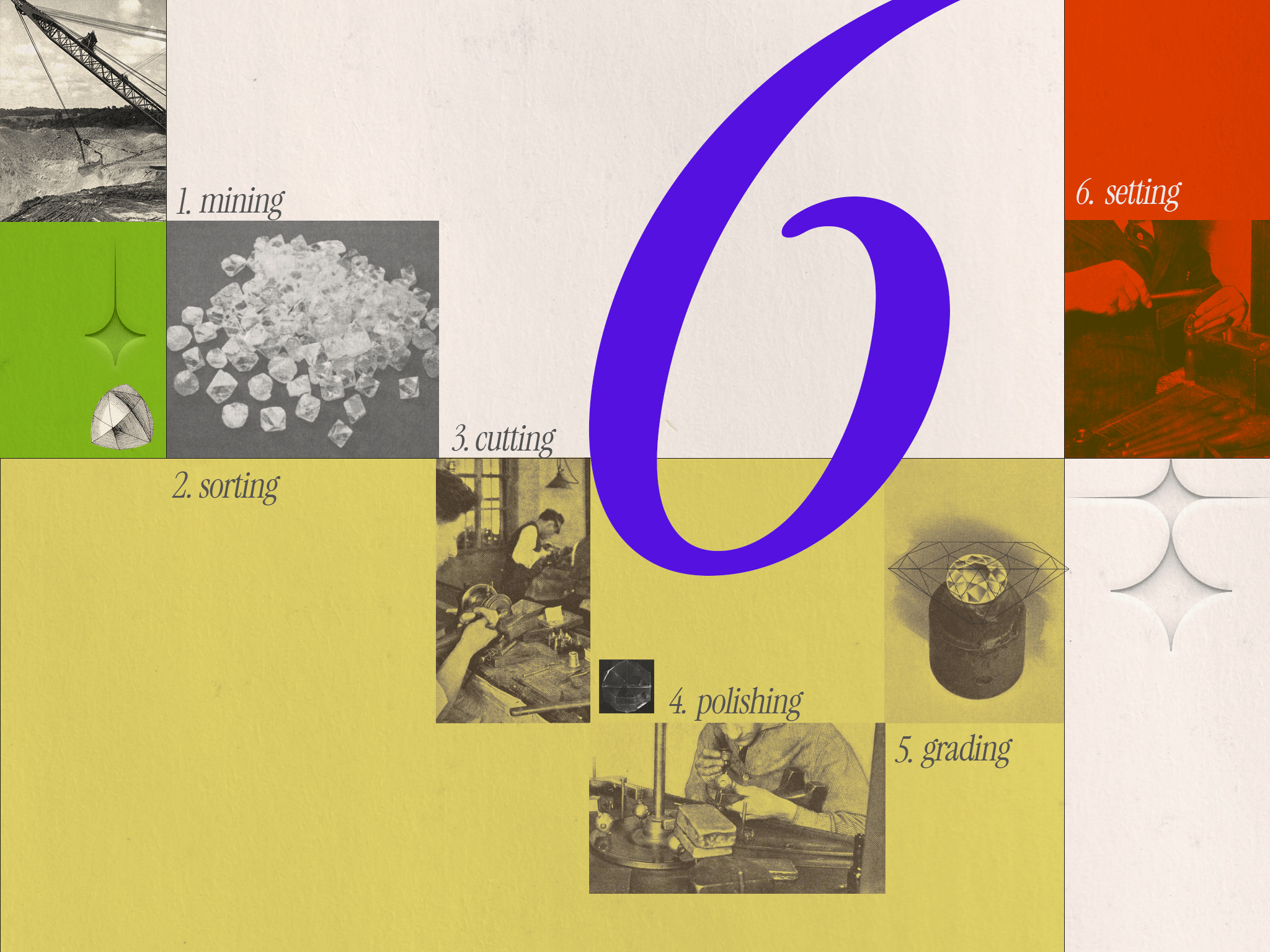
As much as origin plays a significant part, craftsmanship defines what a natural diamond becomes. A finished diamond jewel comes to life through six precise steps, including mining, sorting, cutting, polishing, grading, and setting. It begins deep within the Earth, where rough stones are unearthed, then carefully sorted for their potential. Cutting gives the diamond its shape, while polishing refines its facets to unlock brilliance. Following that, grading assesses quality against strict parameters of clarity, colour, cut and carat. The final step is where a raw natural resource is fully transformed into a piece of extraordinary beauty. Setting is the art of fixing a diamond into metal and is designed to balance maximum light exposure for brilliance and structural durability.
07. Natural Diamonds Discovered Across Seven Continents

The wonders of natural diamonds remain as surprising as they are extraordinary. Discovered across all seven continents, real diamonds remain highly coveted for their rarity, as they are found only in limited locations worldwide. From their earliest findings in India—where ancient riverbeds held a near-monopoly dating from around 2500 BC to the 4th century BC—to their discovery in Brazil in 1720, nearly two thousand years later, major diamond finds have been few and far between. It was only in the 19th century that South Africa redefined the industry with large-scale discoveries. Today, countries like Russia, Botswana, Canada, and Australia produce some of the world’s most notable stones. However, despite this global footprint, diamond deposits remain unevenly distributed and inherently unpredictable, dependent on highly specific geological conditions.
08. The Eight-sided Structure Behind A Diamond’s Strength
Beneath the surface of a diamond lies a material where geometry and chemistry work in lockstep to create a stone that is as resilient as it is rare. What we see on the surface is only the afterglow of that internal structure. Most natural diamonds crystallise as clean, eight-sided forms known as octahedra, shaped deep within the Earth under immense pressure. At an atomic level, carbon atoms are tightly bound in a repeating lattice, with eight atoms in each unit cell, an arrangement that gives diamond its exceptional hardness. It is this remarkable strength that makes even rough diamonds suitable for industrial applications such as cutting, grinding, and drilling, while polished diamonds are durable enough for everyday jewellery.

09. The Nine Greatest Finds Of The World’s Largest Natural Diamonds
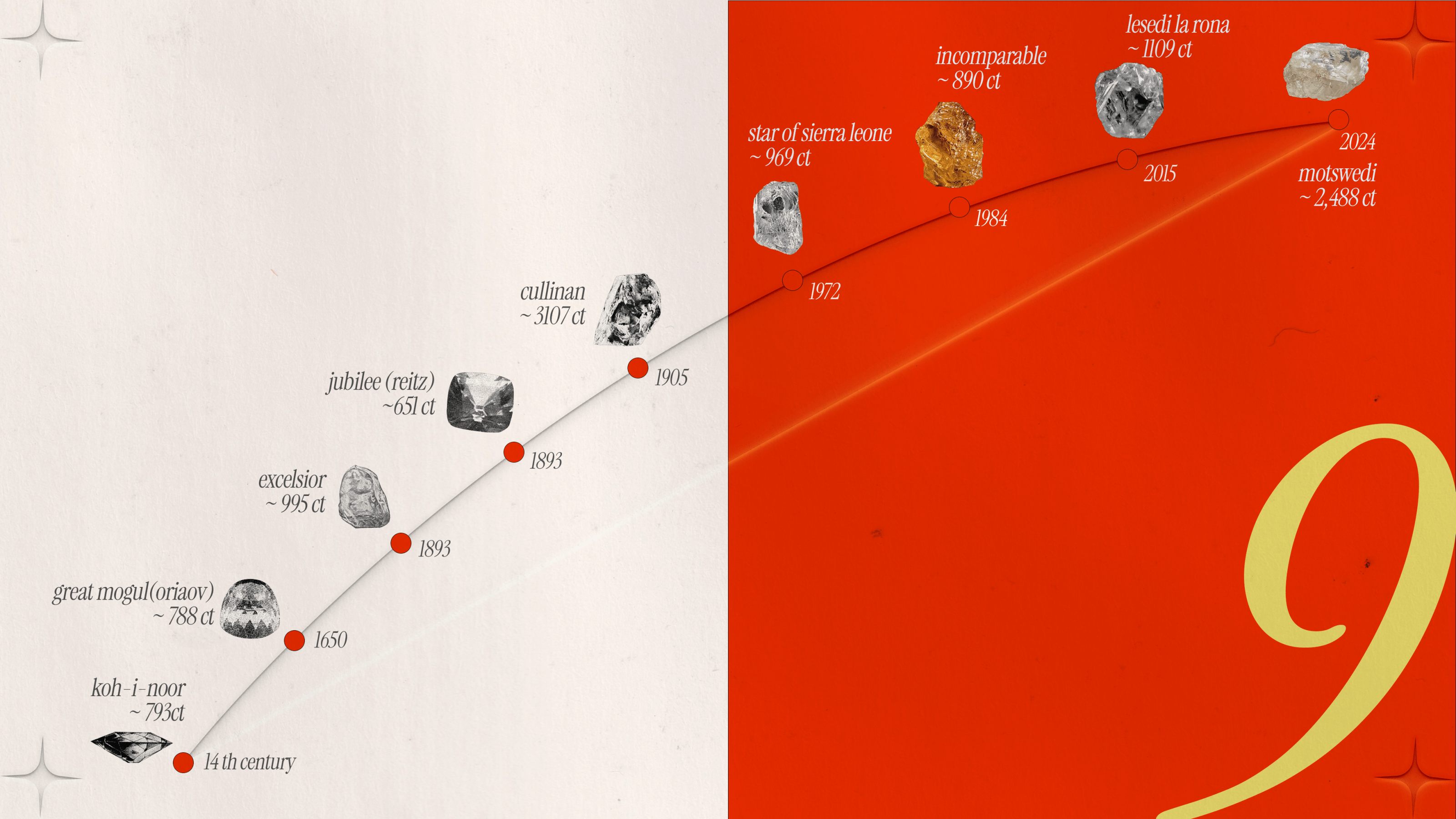
From the 14th century, when the Koh-i-noor diamond—whose history is steeped in the lore of empires and legacy—was discovered at 793 carats, to the recent finding of the Motswedi at 2488 carats in 2024, the history of some of the world’s largest diamonds discovered remains remarkably rare. In all that time, however, only a ‘handful nine’ of such extraordinary stones have surfaced, with the largest being the Cullian, discovered in 1905 at 3,107 carats. Names like the Great Mogul (Orlov), Excelsior, Jubilee, Star of Sierra Leone, Incomparable and Lesedi La Rona only reinforce the point that discoveries of such scale are few, far between and most importantly at the mercy of pacific geological conditions and mining challenges.
10. What A Perfect Ten On The Mohs Scale Means For Diamonds
Over the years, the idea that a diamond lasts forever has captured the endurance of love, the timelessness of a commitment, and an overall emotional connection. But the notion is grounded as much in science as it is in sentiment. One of the most fascinating qualities of a natural diamond is that only another diamond can scratch it. While it can still chip under extreme force, its resistance to scratching remains unmatched, earning the highest ranking of 10 on the Mohs scale of mineral hardness. The exceptional durability comes down to its structure, in which carbon atoms are bonded so tightly under intense heat and pressure that they form one of the strongest natural formations known.