< Historic Diamonds / Royal Stories
A Glittering Tour of Royal Jewelry Exhibitions in Europe in 2026
Royal and Aristocratic Jewels on Display at the Victoria & Albert Museum in London and at the Royal Palace of Gödöllő in Hungary.
Published: December 22, 2025
Written by: Milena Lazazzera
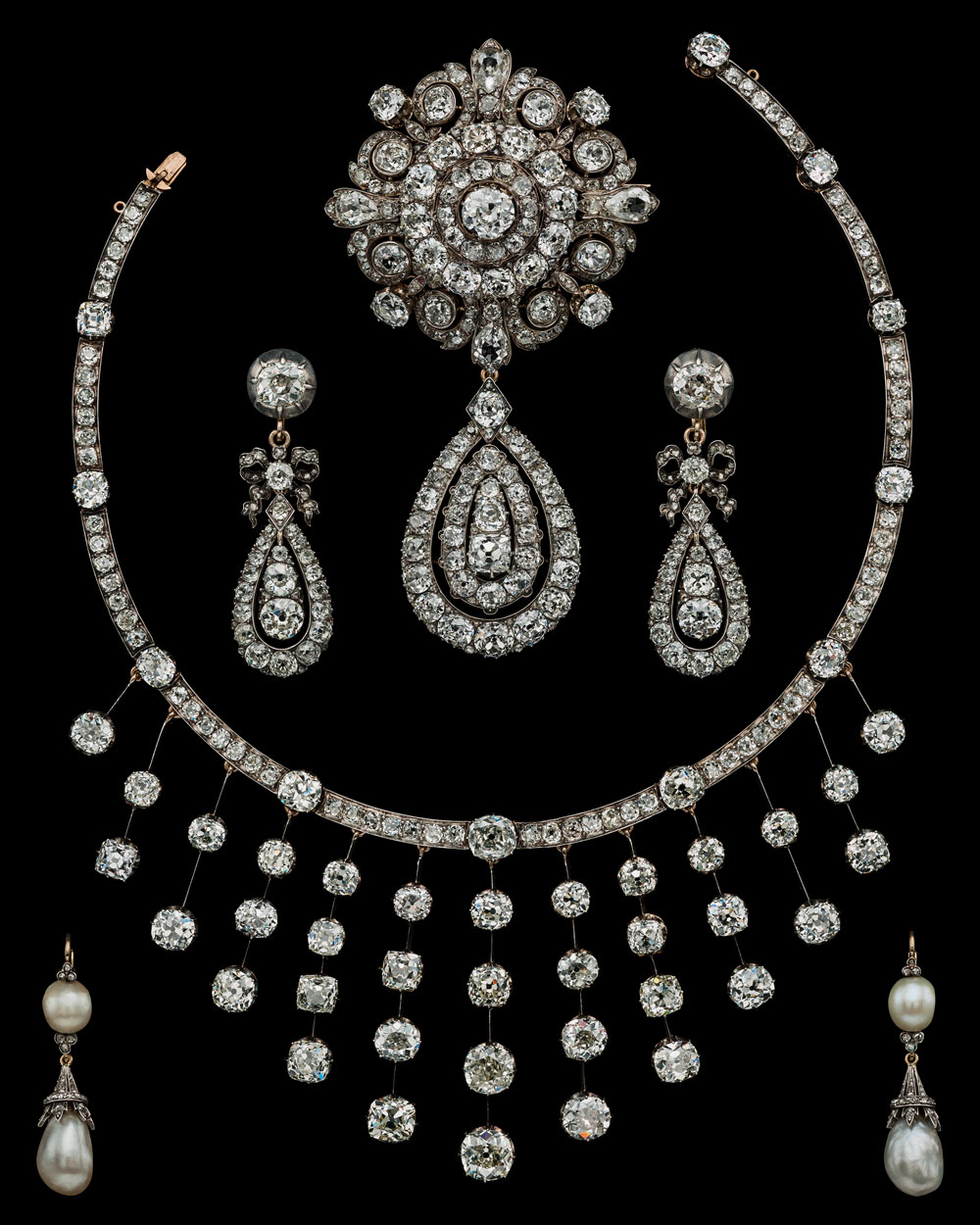
A European tour in the first quarter of 2026 promises to be particularly sparkling, with two exceptional jewelry exhibitions offering a privileged glimpse into aristocratic treasures. In London, the Victoria & Albert Museum presents highlights from the Albion Art Collection — a private assembly of jewels with extraordinary historical value. Near Budapest, at the Royal Palace of Gödöllő, the Habsburgs’ go-to jeweler A.E. Köchert is showcasing two centuries of craftsmanship and celebrating its special connection to Empress Elisabeth of Austria, affectionately known as Sisi.
Meet the Expert

- Milena Lazazzera is a luxury strategy consultant and editor; she combines deep expertise in brand repositioning, international development, and cultural analysis with a passion for high jewelry, watches, and art.
- She is a contributor to leading global publications including The New York Times, Financial Times, The Business of Fashion, British Vogue, Vogue Business, Tatler, and Vanity Fair.
- She advises luxury businesses on defining purpose and long-term vision in a rapidly changing environment, helping brands adapt to shifting consumer values with strategic clarity and authority.
The Albion Art Collection at the Victoria & Albert Museum: Divine Jewels

It was a “heart-shaking” moment in the Jewelry Gallery at London’s Victoria & Albert Museum that prompted Kazumi Arikawa to reorient his life’s work toward the pursuit of extraordinary jewels. That emotional encounter ultimately led him to assemble what is now regarded as one of the finest private jewelry collections in the world: the Albion Art Collection. This December, Arikawa returns to the V&A for the opening of a selection of highlights from his collection, a full-circle moment, and a deeply symbolic way of giving thanks to the institution that helped define his life’s mission.

The Russian Imperial jewels, once part of the Russian Crown Jewels, form one of the most significant groups within the display, revealing the central role jewelry played in defining identity and power. The most remarkable piece among them is perhaps a pearl brooch created in the mid-18th century, during the reign of either Empress Elizabeth Petrovna (r. 1741–1762) or her successor Catherine II, known as Catherine the Great (r. 1762–1796).
The jewel is shaped as an aigrette, crowned by a large central pearl and flanked by three further pearls: two pear-shaped and the other almost perfectly round. The brooch is documented in the 1925 catalogue compiled by Alexander E. Fersman for the Soviet state titled Russia’s Treasure of Diamonds and Precious Stones, the official inventory that described the brooch as “a very artistic specimen of the jeweler’s art of the Elizabethan epoch.”

From the same period comes an exceptional diamond choker necklace with a bow, created around 1760 during the reign of Catherine the Great. The quantity and quality of its diamonds suggest that it was likely part of the empress’s own personal collection.

Equally captivating is the diamond and aquamarine tiara that once belonged to Alexandra Feodorovna, the last Empress of Russia, and is crafted in the distinctly Russian kokoshnik style. The tiara scintillates with luminous aquamarines and diamonds.

The display also includes two outstanding diamond tiaras from the British aristocracy. The first is the Diamond Wild Rose Tiara, crafted in silver and gold in the 1880s by E. Wolfe & Co. Its naturalistic forms and glittering diamonds set “en tremblant” give it an almost lifelike quality, catching the light with every movement of the wearer’s head. The tiara exemplifies why E. Wolfe & Co. quickly earned a reputation in England as the “Tiara Makers,” supplying jewels to leading royal and aristocratic families. Among their most famous commissions was the completion of the Cambridge Lover’s Knot Tiara, later worn by Diana, Princess of Wales.

The second is the Monson Diamond Tiara, a striking example of the Garland Style that dominated turn-of-the-century jewelry. Characterized by ribbon, bow, and foliate motifs, jewels of this period relied on platinum’s exceptional strength to hold diamonds with minimal visible metal, allowing the stones to form a continuous, luminous surface. The tiara takes its name from its original owner, Romaine Stone, an American socialite who married Augustus Monson, 9th Baron Monson, in 1903, around the time the jewel was made. Stone was one of the so-called “dollar princesses,” American heiresses whose marriages into the British aristocracy helped shore up the fortunes of old noble families at the turn of the 20th century.
A.E. Köchert in Gödöllő: Jewels of Empire and Intimacy

A short journey east will take jewelry tourists to another of the royal Jewelry exhibitions in Europe at the Royal Palace of Gödöllő, near Budapest, that, until April 6, 2026, houses “A. E. Köchert: Jeweller to Emperor and Crown,” a sweeping showcase of the historic Vienna jewelry house’s creations, shown alongside remarkable pieces from imperial and noble families. In total, the exhibition brings together around 100 jewels, complemented by some 200 documents and original drawings.
Founded in 1814, A. E. Köchert quickly became synonymous with imperial European elegance, most notably as jeweler to the Habsburg court. Its privileged relationship with Emperor Franz Joseph and Empress Elisabeth lends the exhibition much of its emotional and historical weight. That it is staged at Gödöllő, Sisi’s favorite residence, gives the display added resonance.


The highlights include not only imperial heirlooms but also the celebrated diamond stars created for Sisi, as well as the radiant starburst jewels immortalized in her famous portrait by Franz Xaver Winterhalter.

Among the treasures drawn from aristocratic collections is a Neo-Renaissance brooch designed by Theophil von Hansen and once owned by Empress Elisabeth. Shown publicly for the first time in decades, the jewel offers a rare glimpse into the empress’s personal adornments beyond her most familiar portraits.


The exhibition also delves into the personal and ceremonial jewelry of Archduchess Marie Valerie, Sisi’s youngest daughter. On display are a butterfly brooch glittering with diamonds, emeralds, and rubies, as well as a ruby-and-diamond feather-shaped brooch set with a pearl —a wedding gift to the archduchess.
Together with ornate tiaras, orders, spectacular diamond-encrusted necklaces, and sapphire and diamond parures from extended branches of the Habsburg family, these works chart both the private affections and the formal splendor of a dynasty at its height.