< Historic Diamonds / Famous Diamonds
The Golden Canary Diamond: The Largest Flawless Diamond Ever Sold
From an improbable discovery to a landmark Sotheby’s sale, the Golden Canary Diamond charts one of the most remarkable journeys in modern diamond history.
Updated: March 23, 2026
Written by: Grant Mobley

Sotheby’s has unveiled to the world another once-in-a-lifetime diamond: the Golden Canary Diamond. Weighing a colossal 303.10 carats and graded Fancy Deep Brownish-Yellow, it is one of the largest polished natural diamonds in the world and the largest flawless or internally flawless diamond ever graded by the Gemological Institute of America (GIA). The Golden Canary Diamond sold for $12.4 million at Sotheby’s Magnificent Jewels auction in New York on December 7, 2022, cementing its place in modern diamond history.
Meet the Expert

- Grant Mobley is the Jewelry & Watch Editor of Only Natural Diamonds.
- He is a GIA Diamonds Graduate.
- He has over 17 years of jewelry industry experience, starting with growing up in his family’s retail jewelry stores.
Ahead, discover the remarkable history behind the Golden Canary Diamond and the bold recut that reshaped its legacy.
What Is the Golden Canary Diamond?
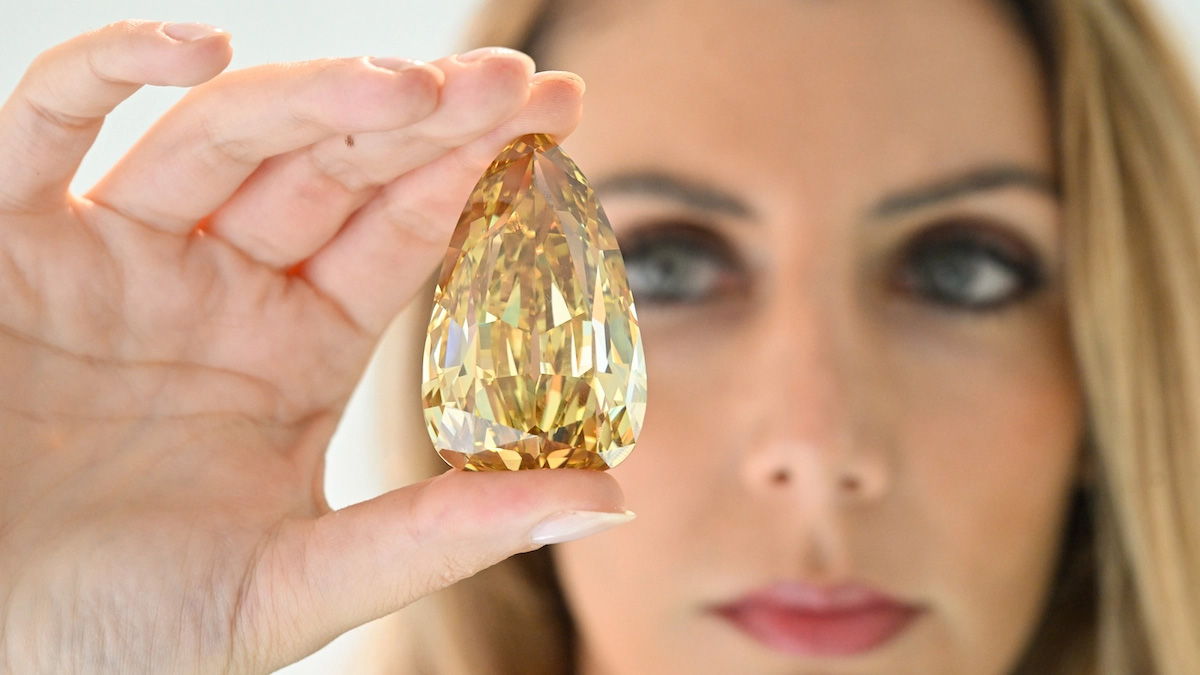
The Golden Canary Diamond is a 303.10-carat natural diamond graded Fancy Deep Brownish-Yellow with an Internally Flawless clarity grade by the Gemological Institute of America (GIA). Cut as a pear-shaped modified brilliant, its proportions were carefully engineered to intensify color saturation and optimize light return, allowing the diamond’s warm golden hue to appear richer and more luminous face-up than its predecessor.
Unveiled by Sotheby’s in 2022 and sold at its Magnificent Jewels auction in New York on December 7, 2022, for $12.4 million, the stone is remarkable not only for its size and clarity, but for its transformation. Recut from the historic L’Incomparable Diamond, the Golden Canary Diamond possesses a rare dual identity, rooted in diamond history yet reimagined through modern cutting technology to emphasize color, brilliance, and classical elegance.
The Golden Canary Diamond’s Origins: From L’Incomparable to Icon
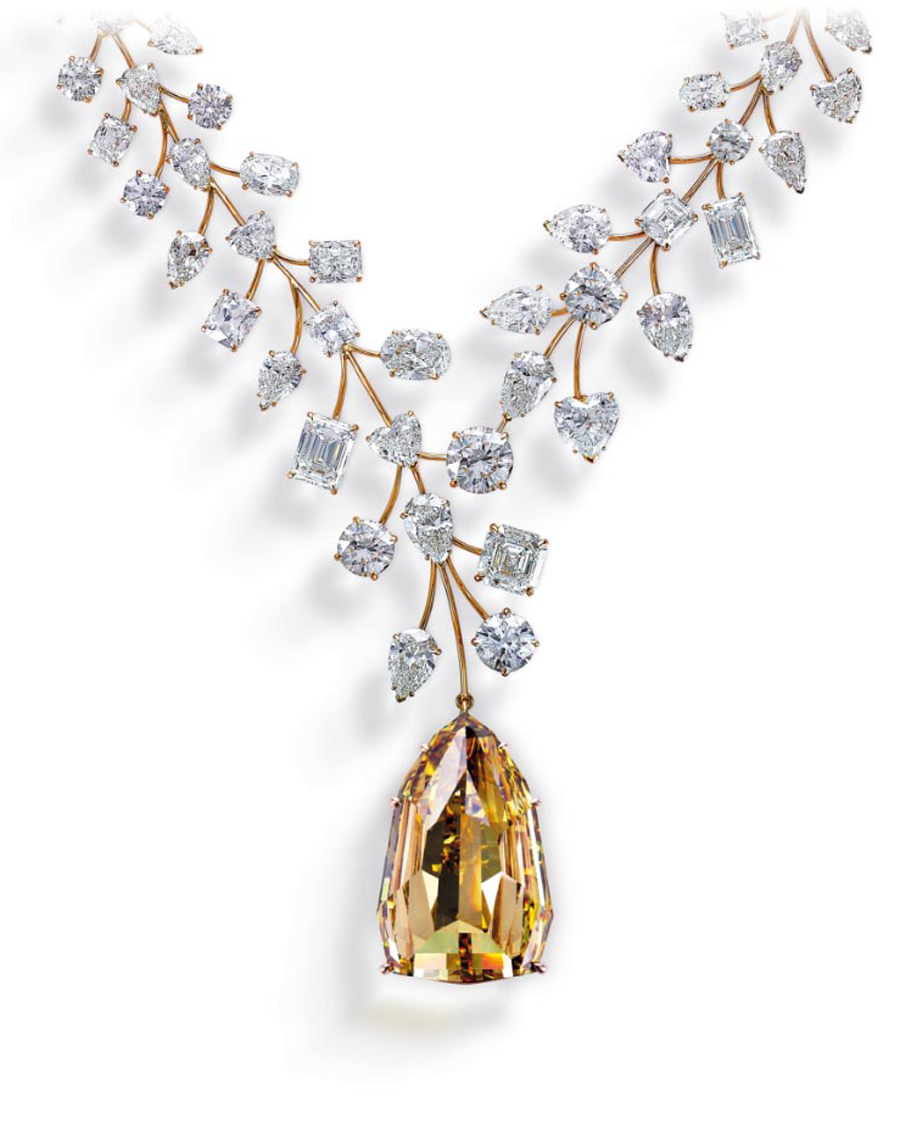
Over the years, the diamond passed through several notable hands, with reported owners including De Beers, Donald Zale—former chairman of Zale Jewelers—and New York diamond cutters Marvin Samuels and Louis Glick. In 2013, the stone reached a new pinnacle of visibility when it was set into a record-breaking diamond necklace by Mouawad, a creation later recognized by Guinness World Records as the most valuable necklace in the world.
The Extraordinary Discovery of the Golden Canary Diamond
The history of the Golden Canary Diamond dates back to the 1980s in the Democratic Republic of the Congo, where it was discovered under extraordinary circumstances. The massive stone was found among a pile of discarded rubble by a young girl playing in the backyard of her uncle’s home near the MIBA diamond mine. Miners had dismissed the rough as too bulky and unremarkable to be a diamond—an extraordinary misjudgment, as it would later be revealed to weigh an astonishing 890 carats.
That discarded stone turned out to be the fourth-largest rough diamond ever discovered. The girl gave the diamond to her uncle, who sold it to local diamond dealers, setting in motion one of the most remarkable journeys in diamond history. Over the next five years, the rough was studied and eventually cut into 15 finished stones. While it could have been fashioned into the largest cut diamond in the world, cutters instead chose to prioritize color and clarity, reducing it to 407.48 carats.
The result was The Incomparable Diamond, a Fancy Deep Brownish-Yellow marvel and the third-largest cut diamond in existence at the time. Its distinctive shield-shaped step cut—with an unusually small table and unconventional faceting—preserved much of the original rough’s scale and presence. Graded by the Gemological Institute of America, it became the largest internally flawless or flawless cut diamond ever created, laying the foundation for what would later become the Golden Canary Diamond.
Only five diamonds have ever been discovered that could rival the scale of this breathtaking stone. If adding another diamond to that historic list sounds too good to be true, it is—because the Golden Canary Diamond was recut from one of them, the legendary L’Incomparable Diamond (also known as The Incomparable), giving new life to an already extraordinary natural diamond.
Formerly weighing just over 407 carats as the famous Incomparable Diamond, the Golden Canary Diamond has been recut from its original shield shape into a more traditional pear shape and is now deeper in color, brighter in hue, and more classic in profile.
The Golden Canary Diamond at Sotheby’s Magnificent Jewels Auction
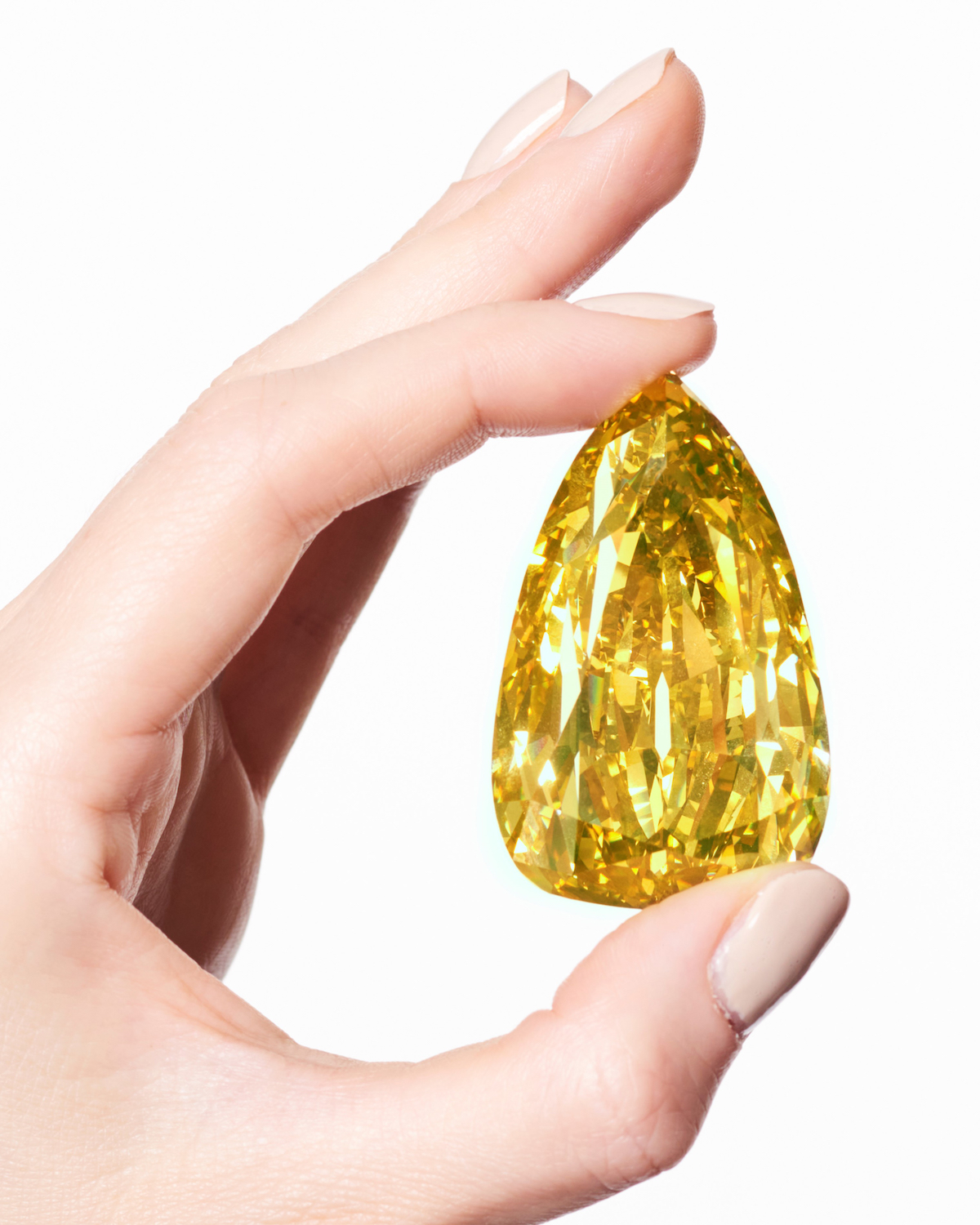
The Golden Canary Diamond took center stage at Sotheby’s Magnificent Jewels auction in New York on December 7, 2022. Offered without reserve and carrying a pre-sale estimate in the region of $15 million, the diamond ultimately sold for $12.4 million, marking one of the most significant natural diamond sales of the year.
Quig Bruning, Head of Jewelry for Sotheby’s Americas, commented, “We have had an exceptional year of presenting extraordinary colored diamonds at our global jewelry auctions, as the demand and appetite for these rarities continue to grow. Just two weeks after the record-breaking sale of the Williamson Pink Star for $57.7 million, we are honored to offer the largest polished diamond in present existence to appear at auction.”
“Steeped in history, The Golden Canary Diamond is one of the most exquisite diamonds to ever be discovered, not only for its sheer size and intensity in color but for its stunning beauty that is sure to captivate collectors around the world. Sotheby’s is privileged to help write the next chapter for this incomparable, reborn gem,” he said.
The Golden Canary Diamond in Jewelry and Museum History
The diamond was first presented to the public in 1984 at the Smithsonian National Museum of Natural History, displayed alongside the world’s most legendary diamonds. Since then, it has appeared in numerous museum exhibitions around the world. Following its recut and sale at Sotheby’s in December 2022, the Golden Canary Diamond entered a new chapter as a privately owned jewel, transitioning from a museum and exhibition icon to one of the most important natural diamonds in modern collecting history.
Why the Golden Canary Diamond Was Recut
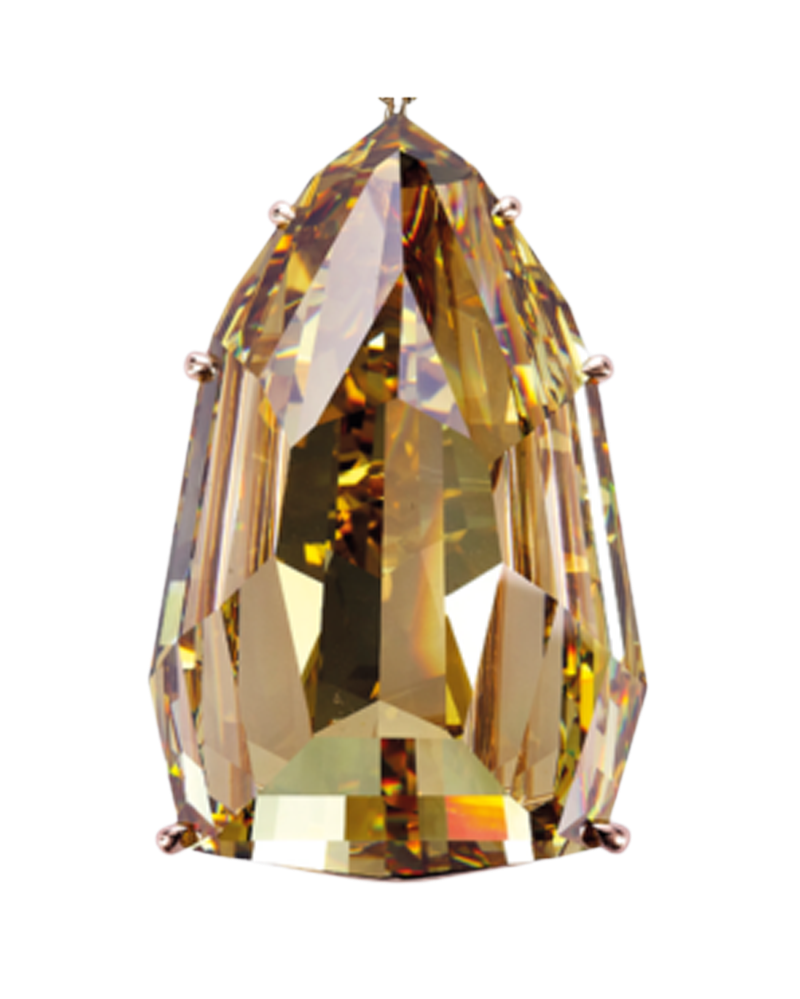
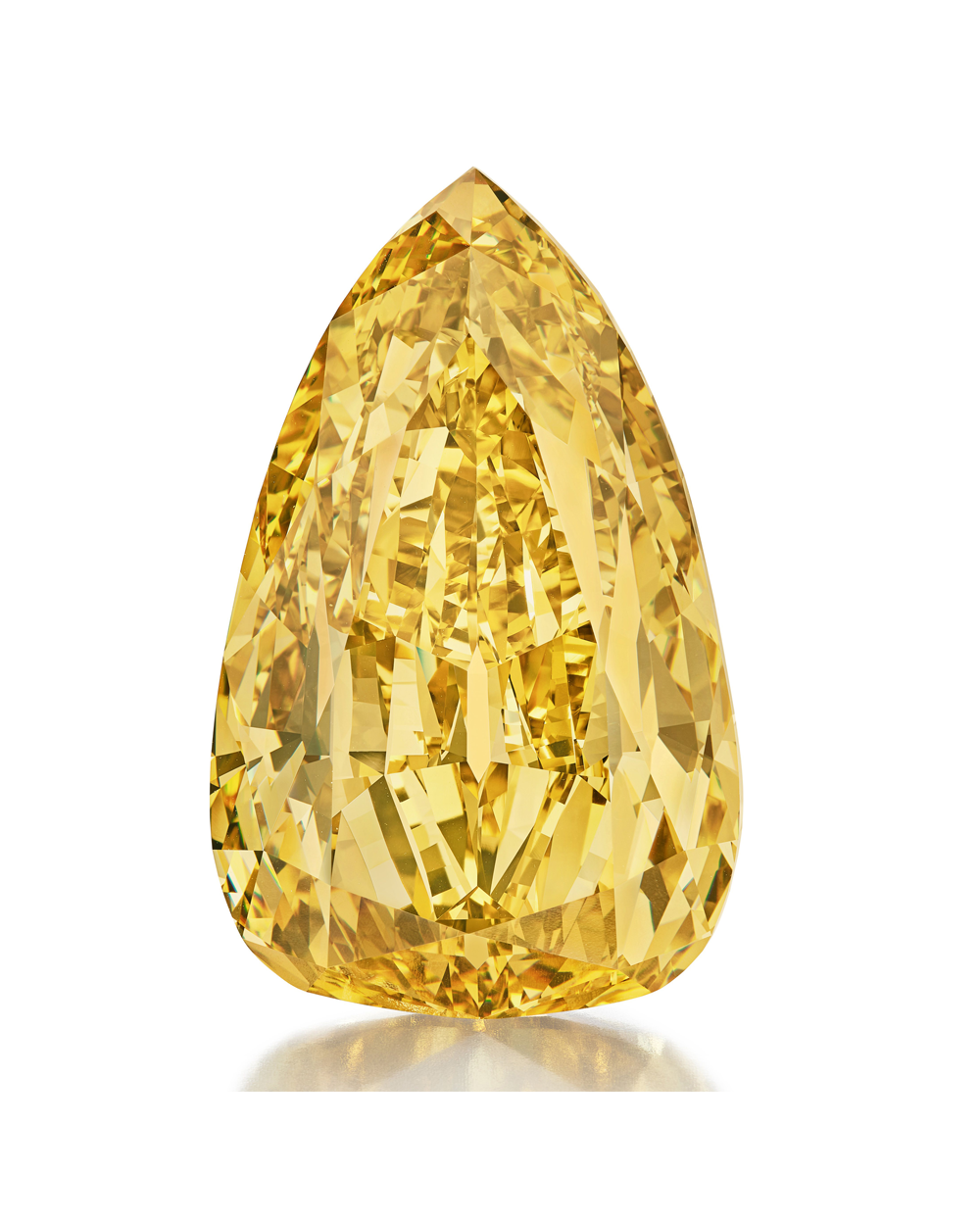
In a decision almost unheard of for a diamond of such size and historical significance, the owners of The Incomparable chose to recut the stone to maximize the depth of its color, enhance its brilliance, and refine its overall shape. Historic diamonds are rarely recut due to the irreversible loss of carat weight and the risk to legacy value, making this transformation especially exceptional.
The transformation resulted in the diamond unveiled today as the Golden Canary Diamond—a 303.10-carat pear-shaped modified brilliant with richer saturation, greater fire, and a more classical silhouette. A pear modified brilliant combines the elegance of a pear shape with additional facet patterns designed to optimize light return and color intensity.
The recut was made possible by advances in cutting technology, including computer modeling, precision scanning, and improved polishing techniques, which allowed cutters to reimagine the diamond’s proportions while preserving its extraordinary clarity. While the process required sacrificing more than 100 carats, the goal was never size alone, but a balance of color, light performance, and visual impact at the highest possible level.
The Gemological Institute of America’s verdict about the stone in its recent monograph is unequivocal: “The recut of the Incomparable to the current 303.10-carat pear modified brilliant is to look at the diamond as new; a re-creation bringing to bear the advances in technology, computer modeling and visual evaluation available today.”
How the Golden Canary Diamond Compares to Other Famous Diamonds
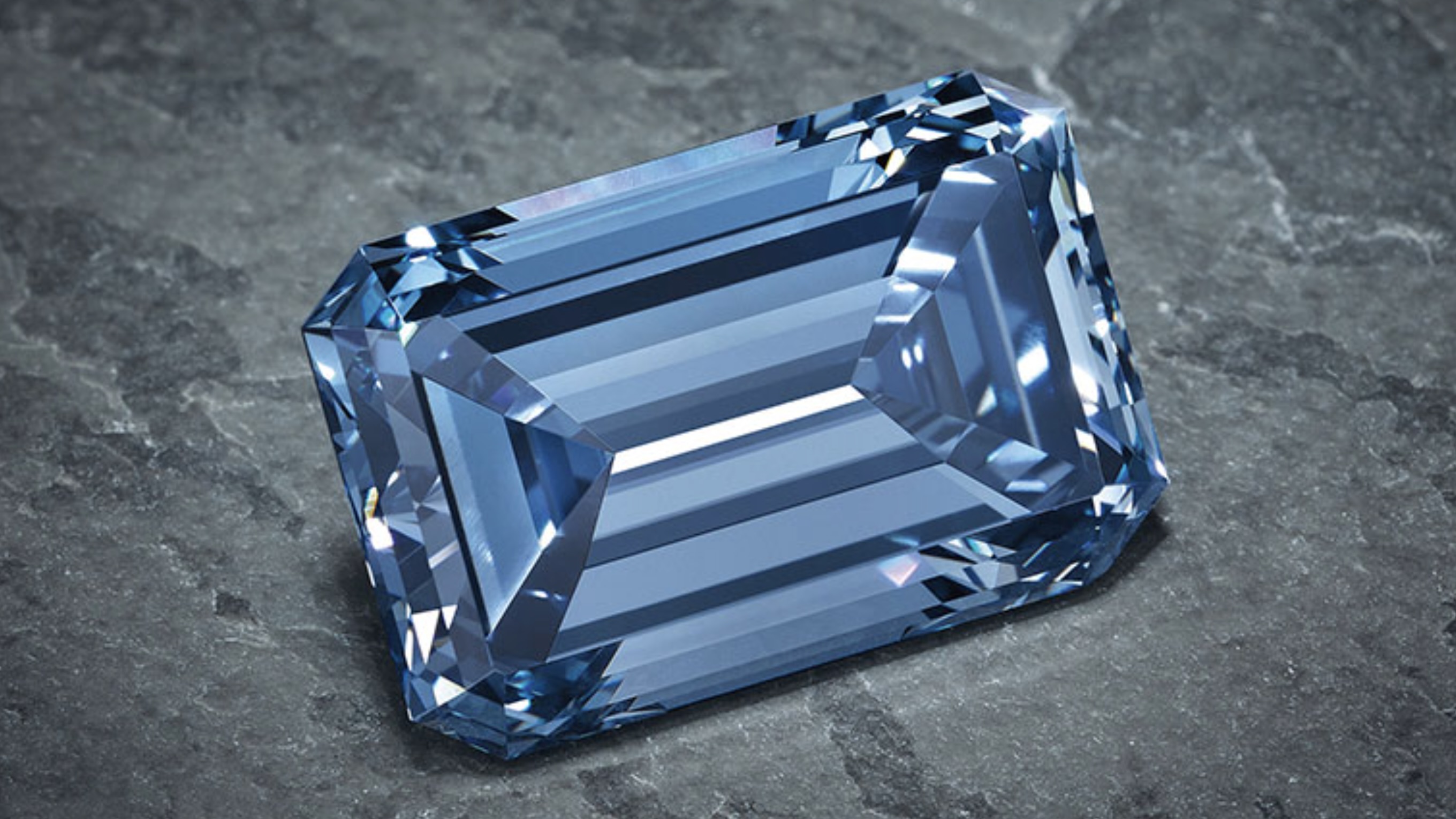
Among the world’s great diamonds, the Golden Canary Diamond occupies a category of its own. While stones such as the Cullinan Diamond are celebrated for their unprecedented rough size, and the Oppenheimer Blue is revered for its intense blue color and auction record, the Golden Canary stands apart for its extraordinary combination of scale and clarity.
At over 300 carats, achieving an Internally Flawless grade is virtually unheard of, particularly for a fancy-colored diamond. By comparison, many of the world’s most famous colored diamonds—including the Oppenheimer Blue and the Williamson Pink Star—are far smaller in size and graded VVS rather than IF.
What sets the Golden Canary Diamond apart is not just its rarity, but its evolution: a stone that has lived multiple lives, from discarded rough to museum masterpiece, record-holding necklace, and finally a reimagined modern icon. In the canon of historic diamonds, it represents a rare intersection of natural wonder, human ingenuity, and enduring legacy.
Where Is the Golden Canary Diamond Now?
Ahead of its landmark sale, the Golden Canary Diamond was showcased on a worldwide tour organized by Sotheby’s, with viewings in Dubai, Taipei, Geneva, and Hong Kong before its appearance at Sotheby’s Magnificent Jewels auction in New York in December 2022. After its sale in December 2022, the Golden Canary Diamond entered private ownership. Like many natural diamonds of exceptional size, rarity, and value, its current location has not been publicly disclosed—a common practice intended to protect both the stone and its owner.
Today, the Golden Canary Diamond resides in a private collection, marking a new chapter for a diamond that once captivated audiences in museums and auction galleries around the world.