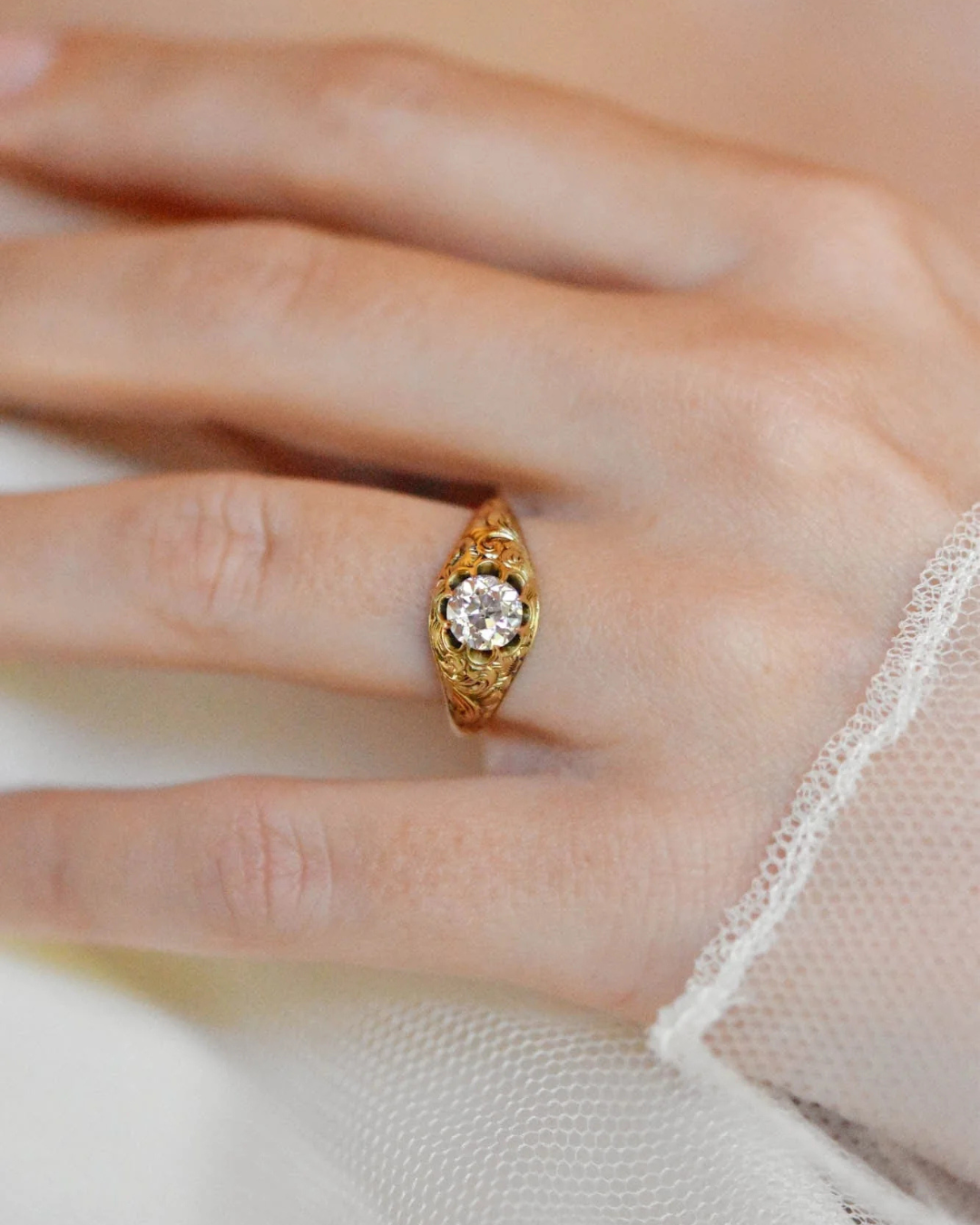
The Peruzzi Cut Diamond: The Step That Led to the Modern Round Brilliant
Credited to a mysterious Venetian cutter, the Peruzzi diamond cut introduced the 58-facet design that would eventually shape the modern round brilliant cut diamond, making it one of the most important chapters in the history of diamond cutting.

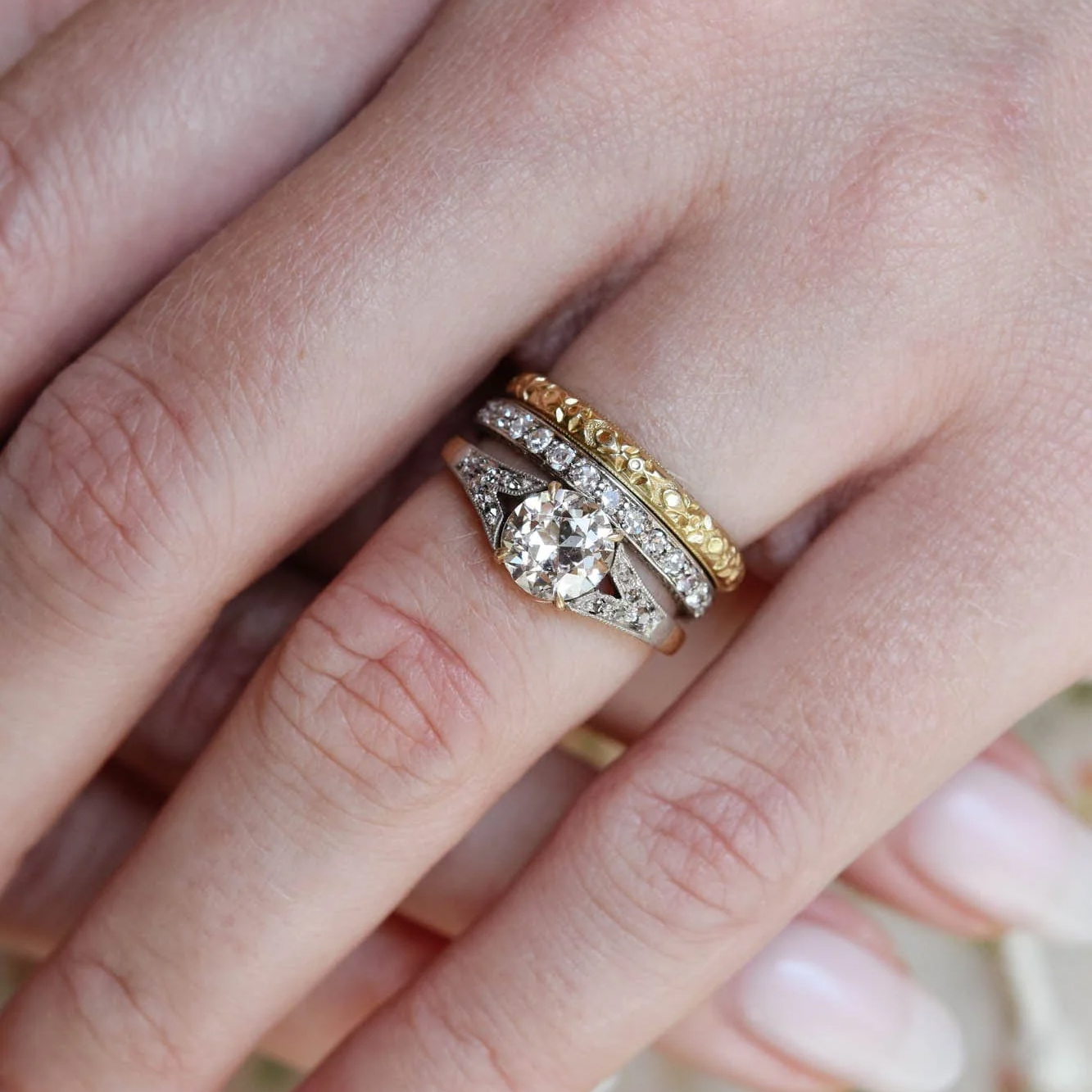
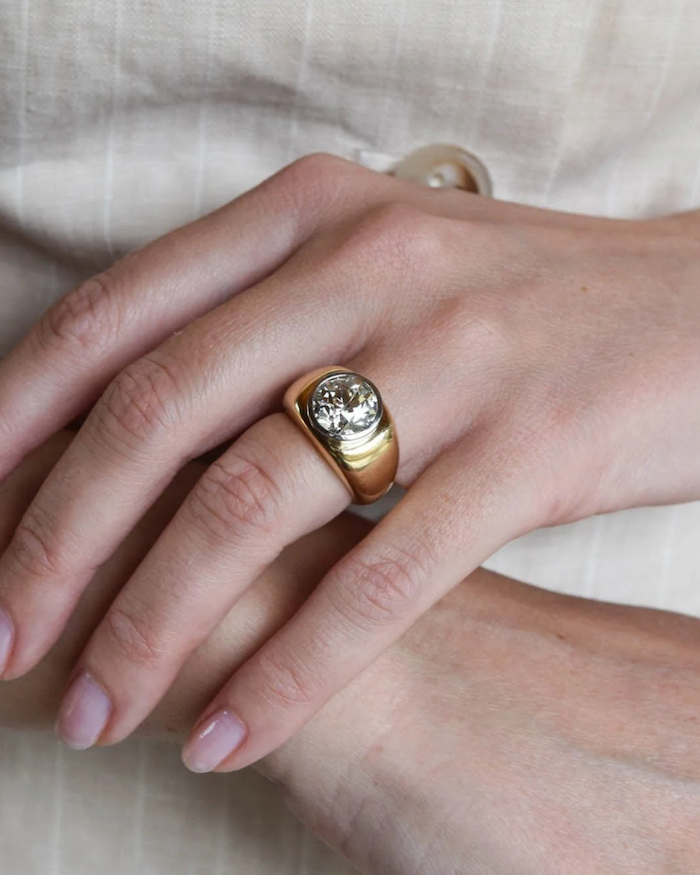
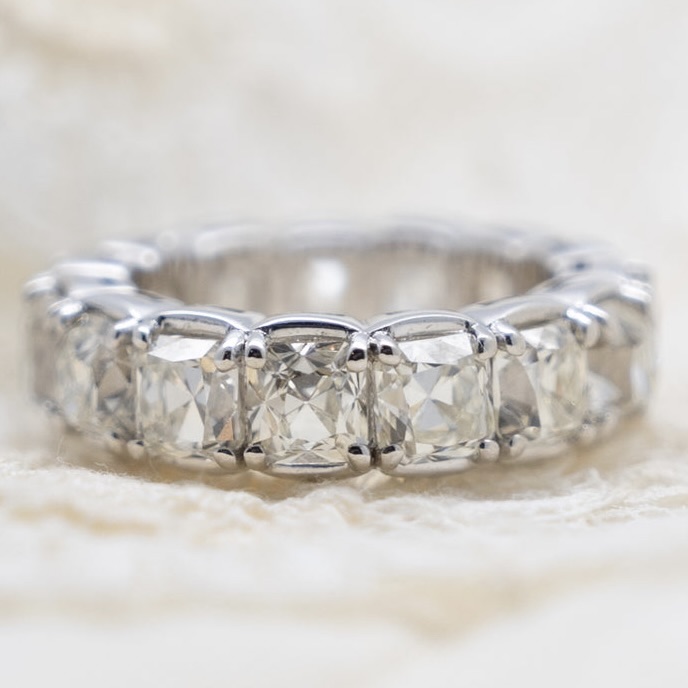
2.88-carat Antique Peruzzi Cut Graduated 5-Stone Ring, $7,950, jewelsbygrace.com
When people talk about the history of diamond cutting, the conversation often jumps quickly from early antique cuts straight to the modern round brilliant. But the truth is that the evolution of diamond cutting happened in small, brilliant steps. One of the most important of those steps was the Peruzzi diamond cut.
Today, the Peruzzi cut sits mostly in the shadows of history, often grouped with Old Mine cuts or antique brilliant styles. Yet in many ways, it represents a moment when diamond cutters first began to understand how dramatically the arrangement of facets could influence a diamond’s brilliance.
Meet the Expert

- Grant Mobley is the Jewelry & Watch Editor of Only Natural Diamonds.
- He is a GIA Diamonds Graduate.
- He has over 17 years of jewelry industry experience, starting with growing up in his family’s retail jewelry stores.
Without it, the modern round brilliant cut diamond, the most popular diamond cut in the world, may not exist as we know it today.
Who Invented the Peruzzi Cut Diamond? The Mystery of Vincenzo Peruzzi
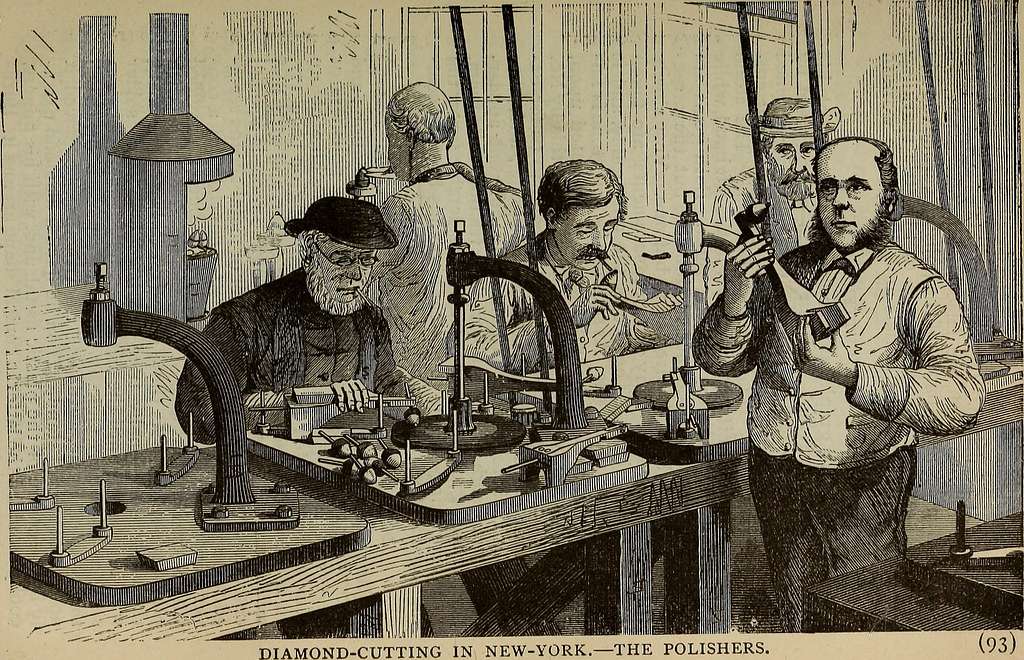
The cut takes its name from Vincenzo Peruzzi, a Venetian diamond cutter who is traditionally credited with inventing the style sometime in the late 1600s. The earliest reference to Peruzzi appears in David Jeffries’ 1751 book A Treatise on Diamonds and Pearls, one of the most influential early works on diamond cutting and trade. Later, a French jeweler named Claire attributed the cut to Vincenzo Peruzzi in his 1813 publication La Science des Pierres Précieuses, describing him as the inventor of the first fully brilliant-cut diamond.
There is just one problem. Despite these references to him, historians have never been able to prove that Vincenzo Peruzzi actually existed definitively.
Whether he was a real person or simply a name attached to a cutting innovation that emerged from Venetian workshops, the diamond cut associated with him unquestionably does exist, and it marked a breakthrough.
From the Mazarin Cut to the Peruzzi Cut Diamond

Before the Peruzzi cut appeared, one of the most advanced diamond cuts in Europe was the Mazarin cut, developed in the mid-1600s and often attributed to Cardinal Mazarin of France.
The Mazarin cut typically featured 34 facets, with 17 on the crown and 17 on the pavilion. For the time, this was considered a dramatic improvement over earlier table cuts.
But the Peruzzi cut took things a step further. By introducing an additional row of triangular facets on the crown, cutters increased the total facet count to 58 facets. This is key to its importance because it’s the same number found in modern round brilliant-cut diamonds.
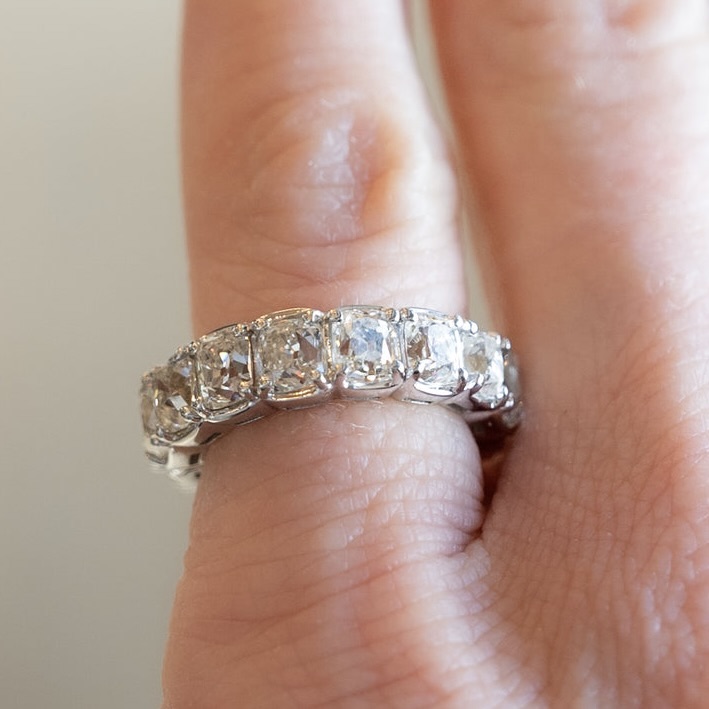
That innovation dramatically increased the diamond’s ability to reflect and refract light. For the first time, diamonds began to display the kind of sparkle and brilliance that people now associate with modern cuts. In many ways, the Peruzzi cut diamond represents the first true ancestor of the modern brilliant cut.
The Origins of the Peruzzi Cut Diamond in Venice
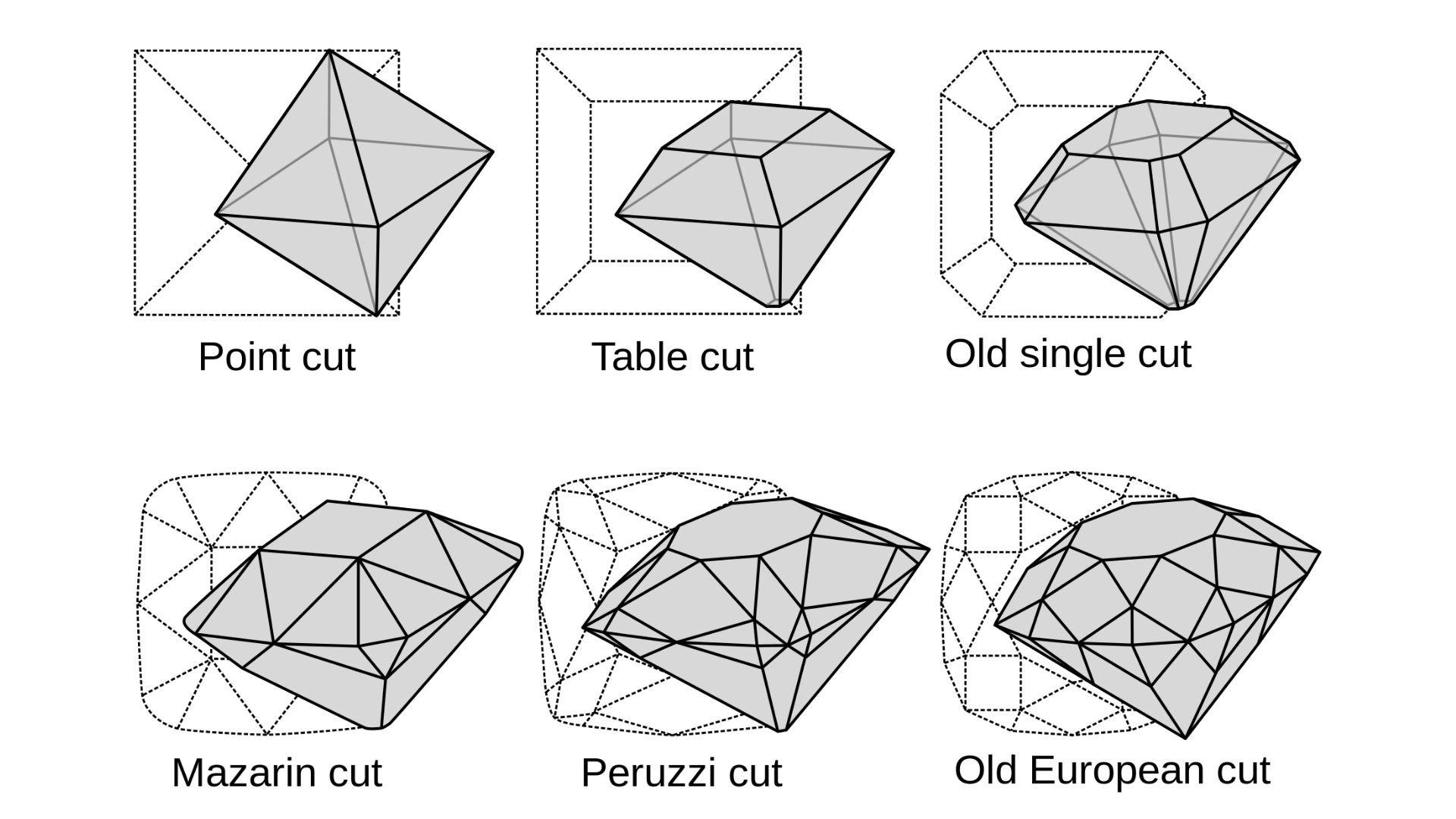
Many historians believe this cutting innovation originated in Venice, which in the 17th century was one of Europe’s most important centers for the luxury-goods and gemstone trade. From there, the technique likely spread to other diamond-cutting hubs such as Antwerp and London, where cutters began experimenting with similar facet arrangements.
The tools used to cut these diamonds would have been hand- or foot-powered polishing wheels, far removed from the precision equipment used by modern diamond cutters. Despite these limitations, artisans were able to create remarkably sophisticated diamonds entirely handcrafted.
How to Recognize a Peruzzi Cut Diamond
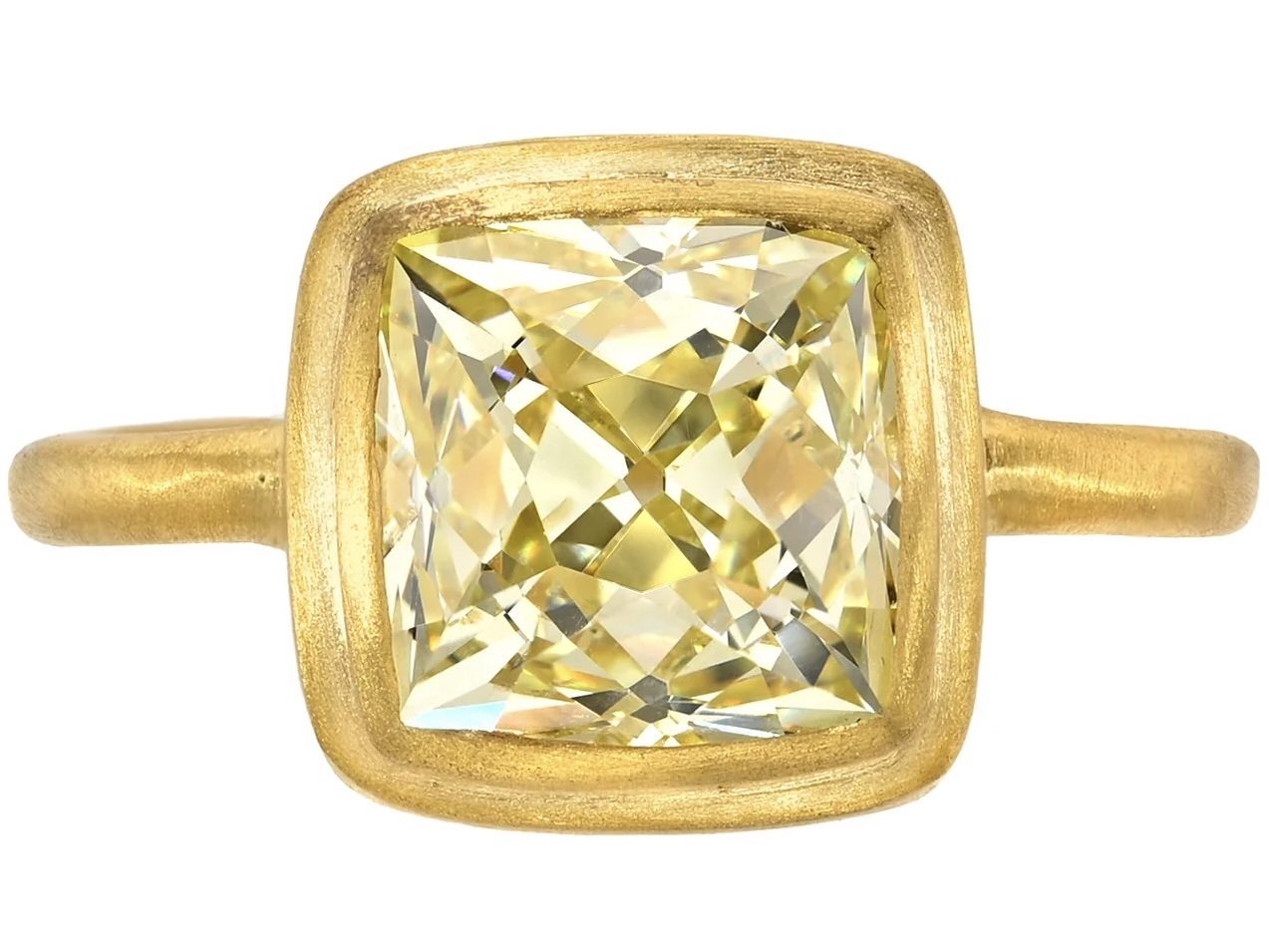
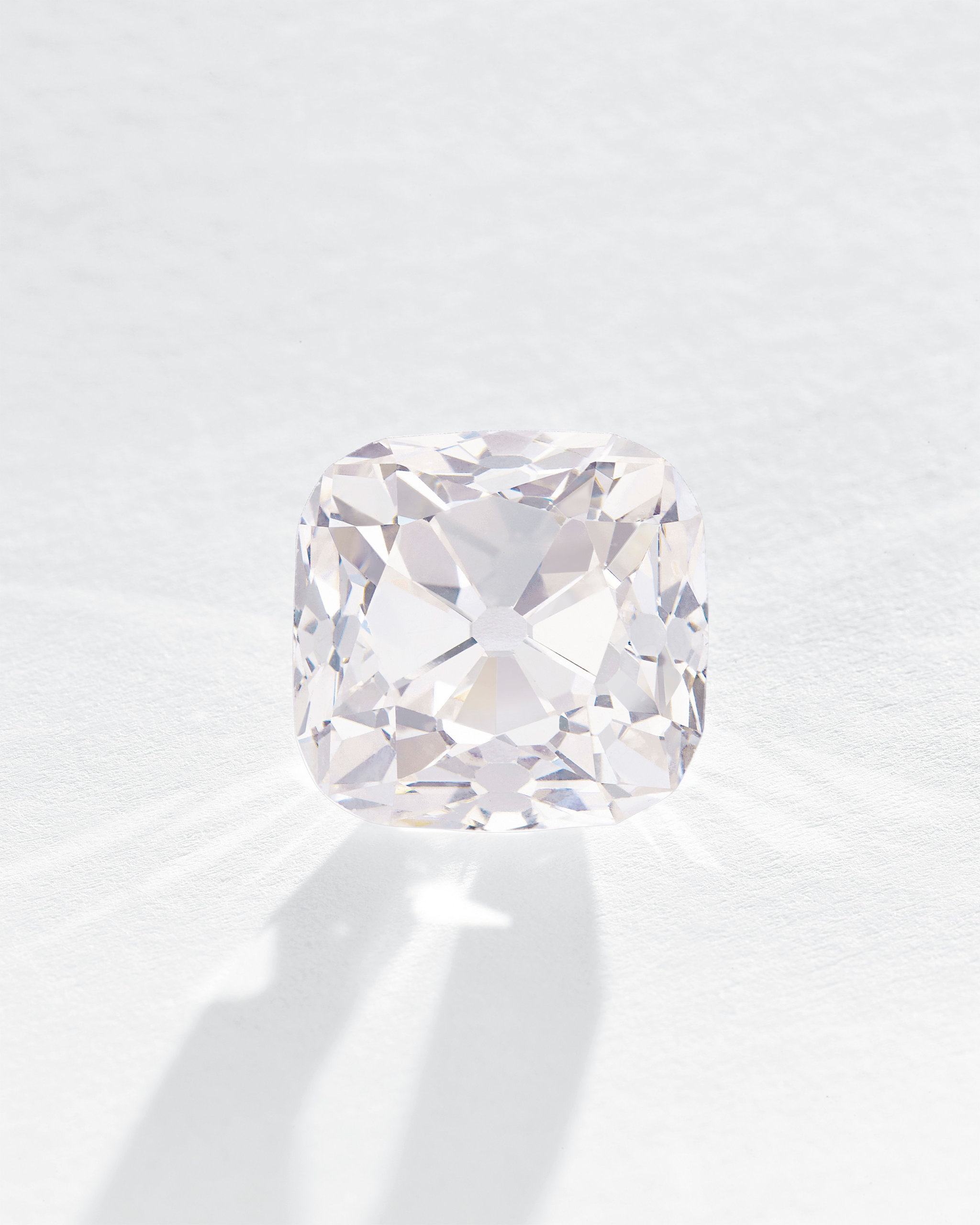
Although the Peruzzi cut shares similarities with other antique brilliant cuts, it has several distinctive features. First, the diamonds tend to be quite deep, with the crown and pavilion often nearly equal in height. This gives the stone a tall profile compared with modern brilliant cuts.
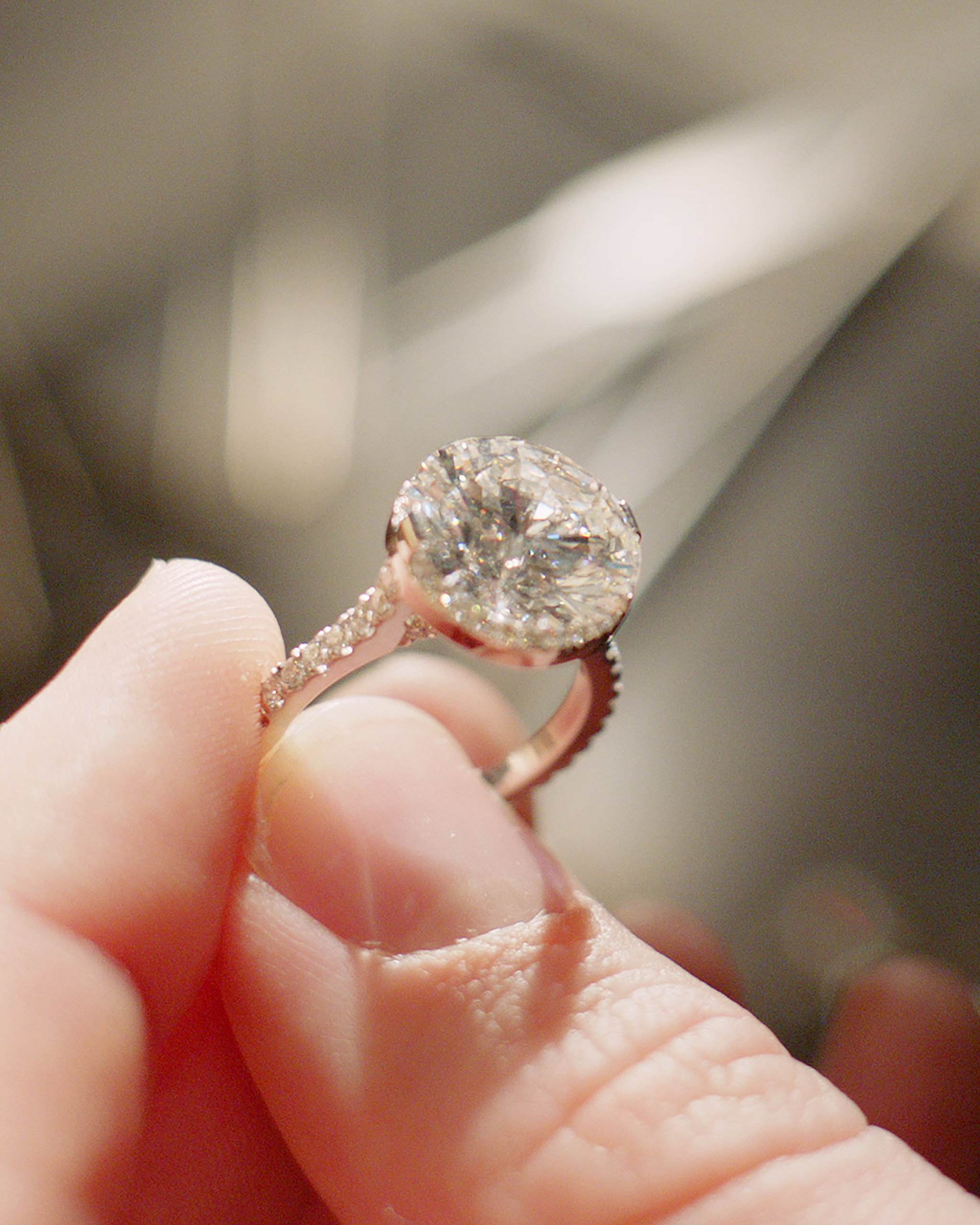
Second, when viewed through the table, the facet arrangement creates a striking Maltese cross pattern, one of the easiest visual clues that a diamond belongs to this early brilliant style. Because the cuts were done entirely by hand, no two Peruzzi diamonds are identical. Each stone reflects the skill and artistry of the cutter who shaped it more than 300 years ago.
Golconda and the Earliest Peruzzi Cut Diamonds
Most of the earliest Peruzzi cut diamonds likely came from the legendary Golconda mines of India, the world’s only source of diamonds until the discovery of Brazilian deposits in the 1730s. Golconda diamonds were famous for their exceptional clarity and transparency, qualities that made them especially suitable for these early brilliant-style cuts. Many of the most famous historical diamonds, including the Koh-i-Noor, Hope Diamond, and Daria-i-Noor, originated from the same region.
The Peruzzi Cut Diamond is the Predecessor to the Old Mine Cut

The Peruzzi cut also occupies an interesting place in the evolution toward the Old Mine cut, which became common after the mid-1700s.
While the Peruzzi cut remained relatively square and very deep, later cutters gradually refined proportions and facet placement to improve light return and reduce wasted diamond rough. These refinements eventually produced the Old Mine cut, which many collectors today associate with Georgian and Victorian jewelry. But the Peruzzi cut came first, and it was an important step that made those later improvements possible.
Why Peruzzi Cut Diamonds Are So Rare Today
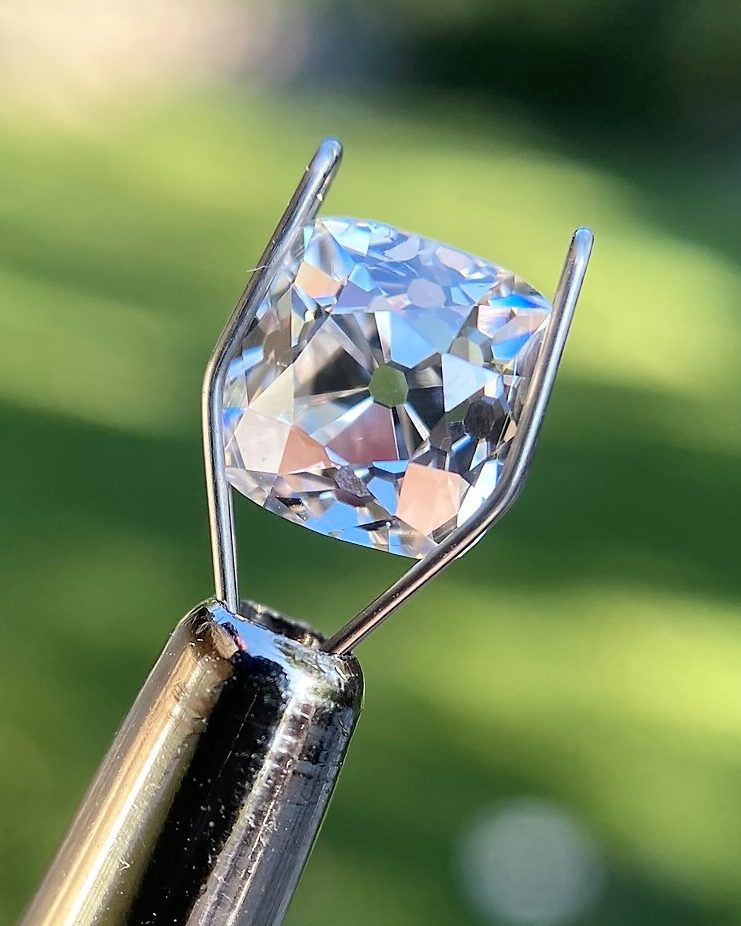
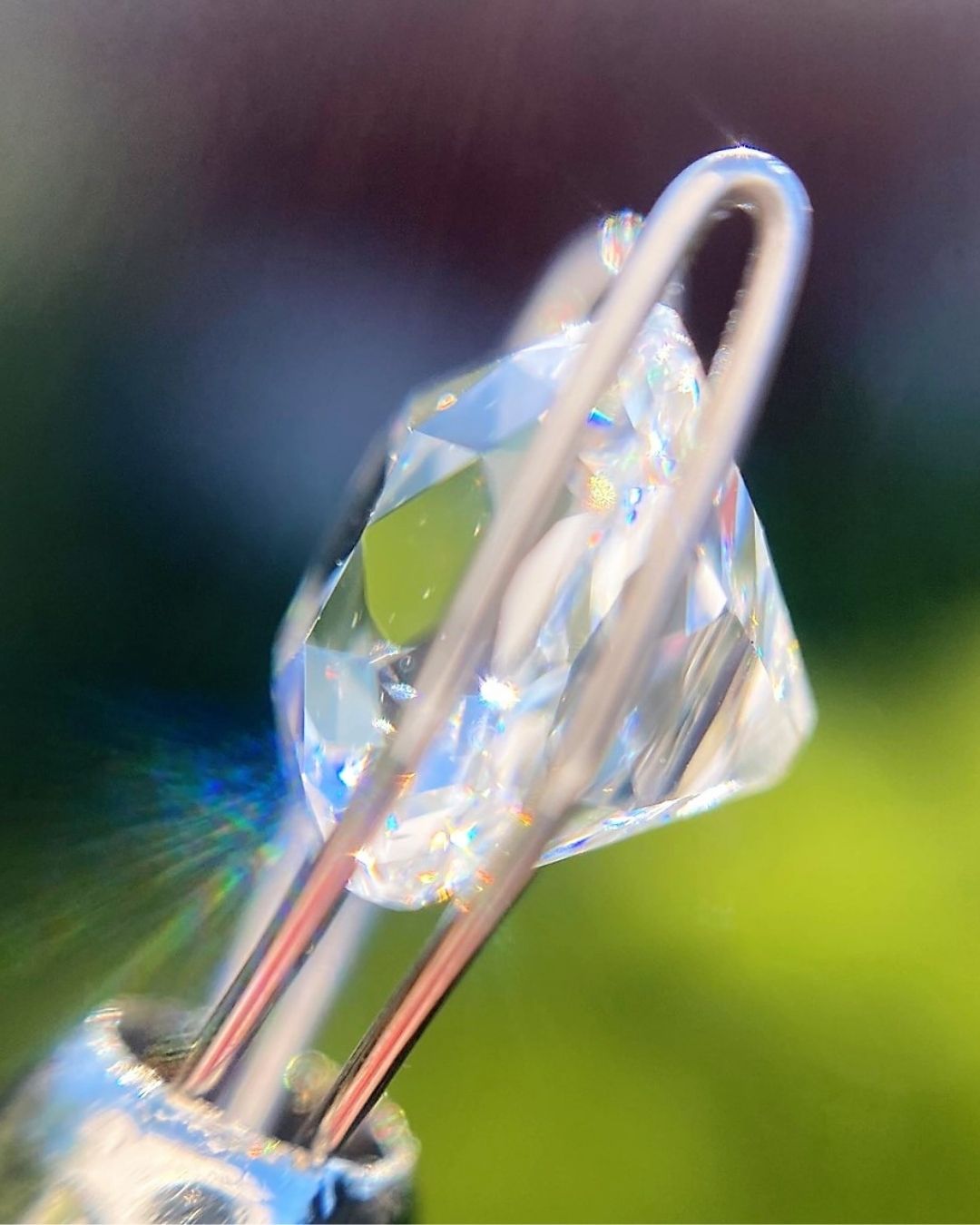
Unlike old mine cuts, which are still occasionally cut today to recreate antique styles, Peruzzi cuts are almost never reproduced. The reason is simple. The cut is extremely inefficient in terms of rough diamond yield. Because the stones are so deep, a one-carat Peruzzi diamond can appear much smaller than a modern one-carat round brilliant.
Also, the depth can cause light leakage, reducing overall brilliance compared with modern cutting standards. For contemporary cutters, sacrificing that much rough diamond weight simply doesn’t make economic sense. As a result, nearly every Peruzzi-cut diamond found today was cut centuries ago. For collectors and historians, that is precisely what makes the Peruzzi cut so compelling.
Each one is not just a gemstone; it is a piece of early diamond-cutting history, created long before lasers, computer modeling, or precision machines entered the trade. And while the modern round brilliant-cut may represent the pinnacle of optical performance, the Peruzzi cut holds a different kind of beauty.