Diamond Report Series
Fancy Colour Diamonds

A series of reports uncovering the trends, origins and unique impacts of the ultimate natural gemstone.
Published: July 2, 2025





Diamond Reports
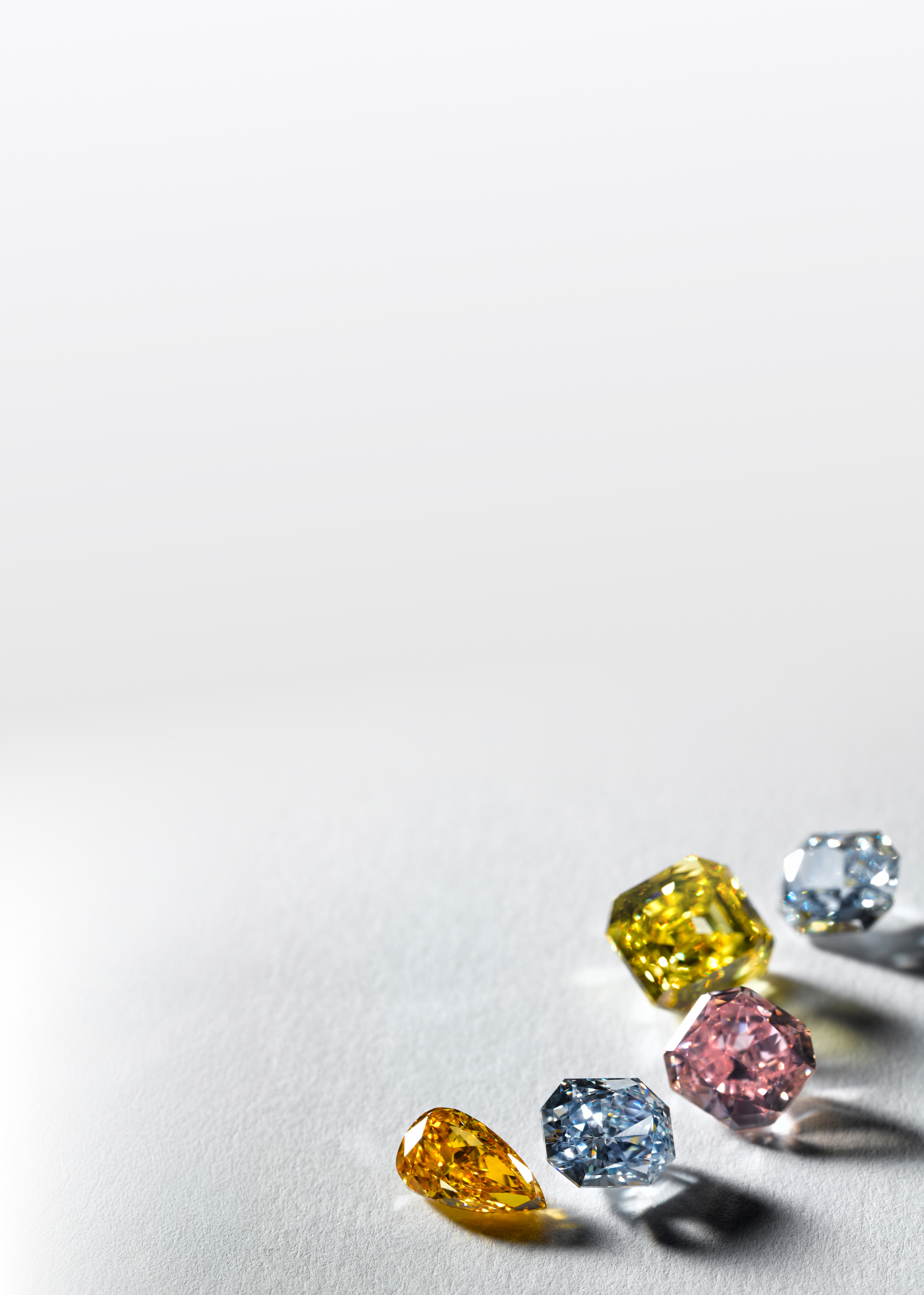
The allure of colour diamonds
Colour diamonds were formed billions of years ago, deep below the Earth’s surface, under exceptional geological conditions. Considering their gruelling journey, each of these gems tells an extraordinary story. For centuries, they have captured the public’s imagination and have been admired and desired by royalty, nobility, historical figures, and, more recently, celebrities and collectors.
These gems come in an astonishing range of hues and each colour bears its own distinctive traits, contributing to the uniqueness of every diamond.
Together, they carry a rich and storied legacy. Their enduring mystique and rarity continue to place them among the world’s most valuable gems, regularly setting records at auctions and in private sales across the globe.
Image Credit: Fancy Color Research Foundation (FCRF)
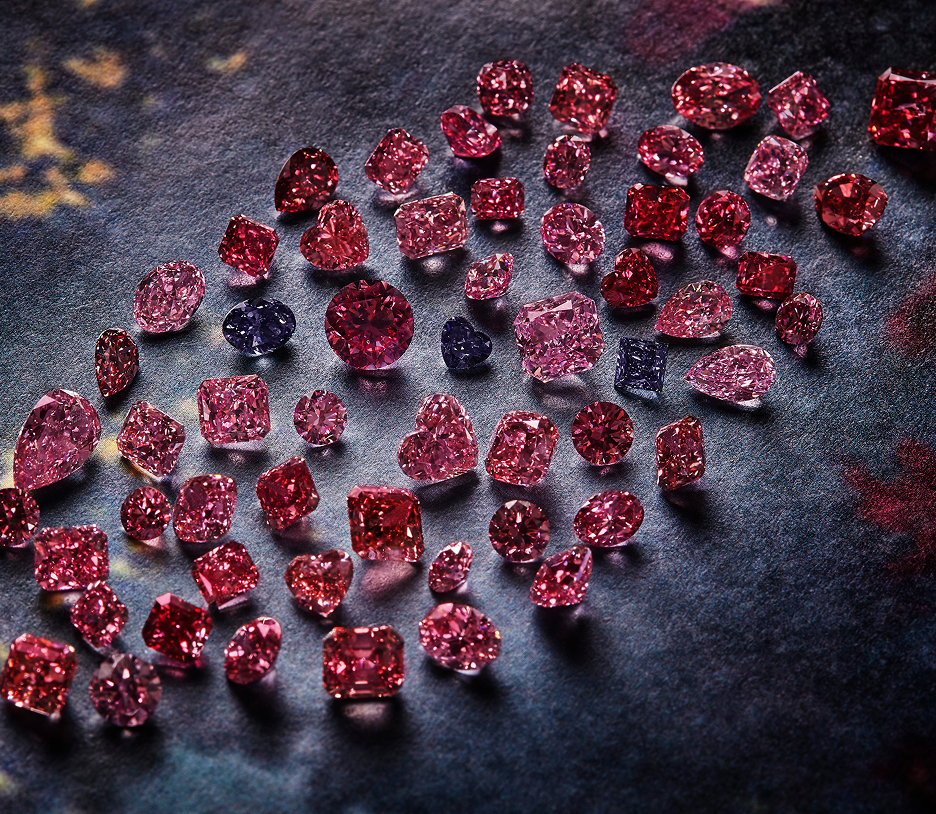
Argyle pink diamonds • Credit: Rio Tinto
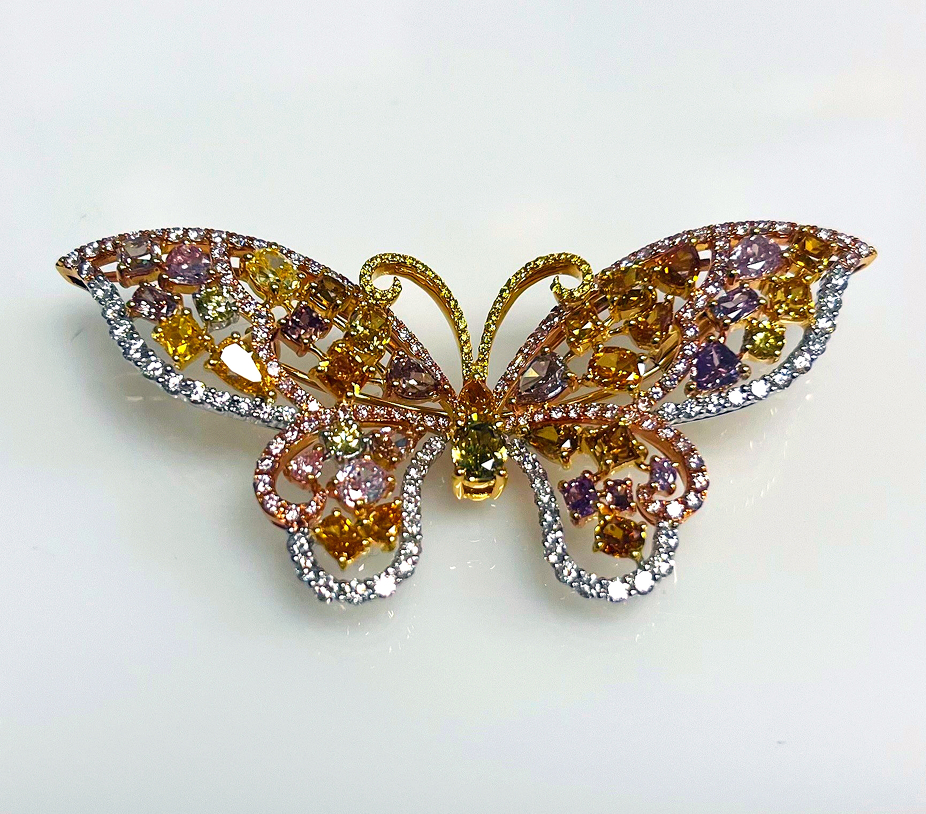
Butterfly Brooch • Credit: Lux Bond & Green

When you consider how rare a diamond must be to make it into high-end jewellery — and then multiply that rarity to the extreme to find and produce a diamond of extraordinary colour — it’s remarkable that we’re even able to discover them at all, let alone craft them and share their beauty with the world.
Charlie Green
Director of Stores at Lux Bond & Green.
The most expensive diamond
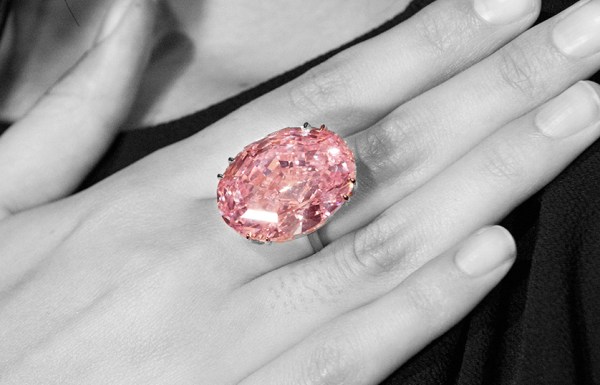
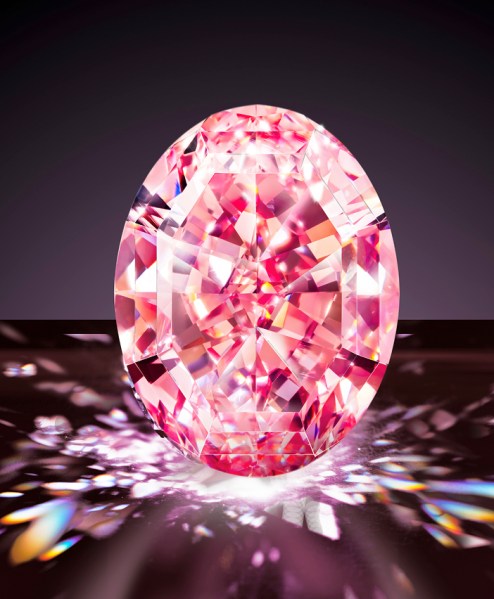
The most expensive diamond ever sold at auction was the Pink Star, a 59.60-carat, Fancy Vivid pink, internally flawless, oval-shaped diamond, which sold for $71.2 million at Sotheby’s Hong Kong in April 2017 to the leading Chinese jewellery house, Chow Tai Fook.1
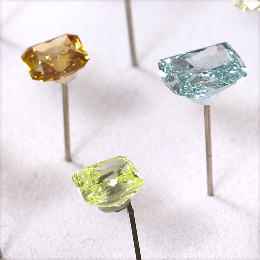
The most prized hues are
red, pinks, blues and greens. 2
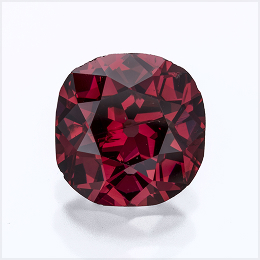
Only a handful of red
diamonds larger than 2 carats
are known to exist. 3
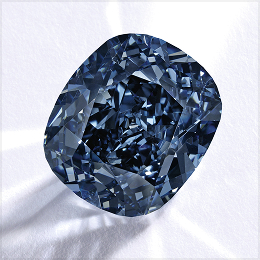
Colour diamonds are often
cut into fancy shapes to
accentuate their hues.
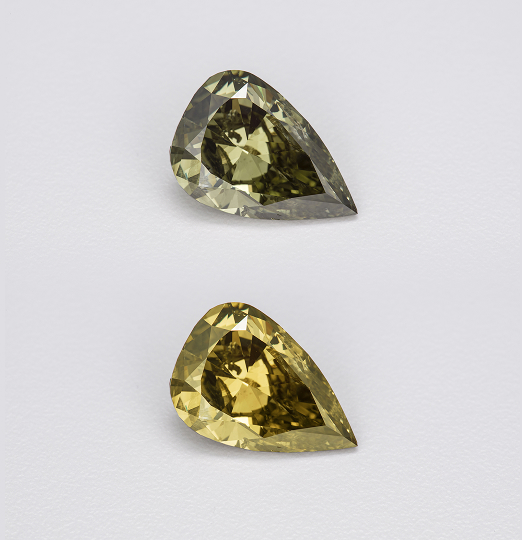
In the family of colour diamonds,
there is a phenomenon called the
chameleon effect. This is when the
colour of the diamond changes
temporarily when kept in darkness
or gently heated.
5.7%
According to the FCRF, over the past 20 years, fancy colour diamond prices have grown at a compound annual rate of 5.7%4
Public Affection
The extraordinary beauty and diversity of fancy colour diamonds are available for all to see at museums and exhibitions across the globe. The most high-profile in recent years have been the Winston Collection and the Aurora Collections, and they’re not to be missed.
The Winston Collection
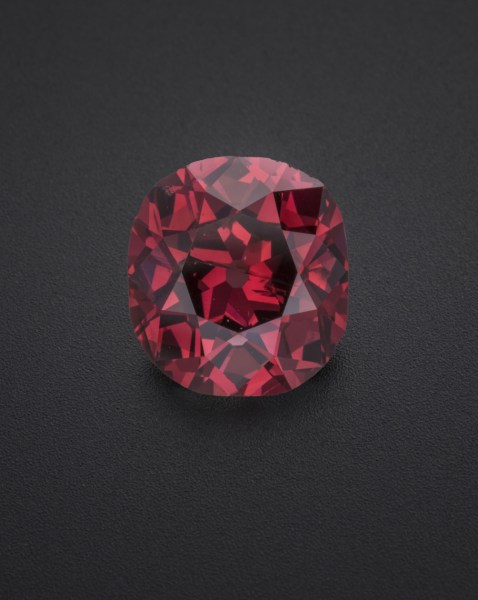
Argyle pink diamonds, Credit: Rio Tinto
The Smithsonian’s National Museum of Natural History in Washington, D.C., unveiled a dazzling new exhibit dedicated to fancy colour diamonds early in 2025. The display was made possible by a major donation from Ronald Winston, son of legendary jeweller Harry Winston.
The collection features 41 fancy colour diamonds acquired over the past 60 years. While the largest stone weighs 9.49 carats, the undisputed centrepiece is the Winston Red, a 2.33-carat gem considered one of the rarest red diamonds ever recovered.
The exhibit is housed in the Winston Gallery, also home to the iconic Hope Diamond.5
It’s as if the diamond was squeezed and now is intensely blushing.
Dr. Ulrika D’Haenens Johansson,
Senior manager of diamond research at GIA in NewYork, describing the Winston Red.6
The Aurora Collection
The Aurora Pyramid of Hope and the Aurora Butterfly of Peace collections are regarded among the most significant public displays of fancy colour diamonds.
Housed at London’s Natural History Museum7, the Pyramid of Hope features 296 natural-colour diamonds totalling 267 carats. The Butterfly of Peace on display at the American Museum of Natural History in New York8 comprises 240 diamonds weighing 167 carats.
Both collections were meticulously assembled over several decades by colour diamond specialists Alan Bronstein and Harry Rodman, showcasing the extraordinary diversity and beauty of natural colour diamonds9.
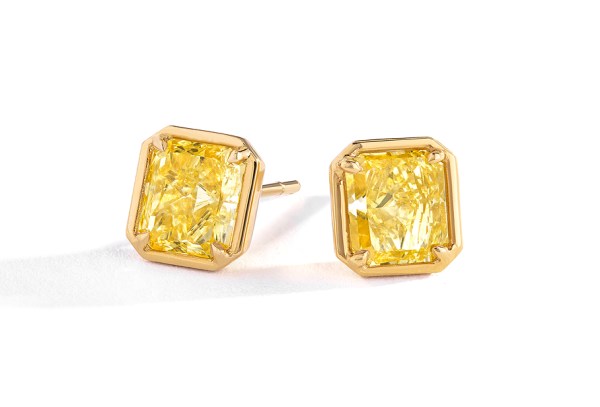
Yellow diamonds in jewelry, Credit: Hamilton Jewelers
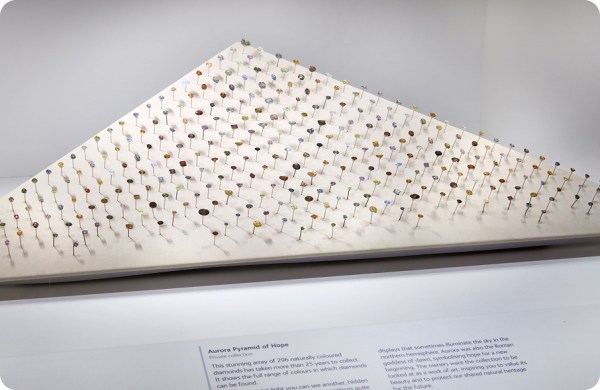
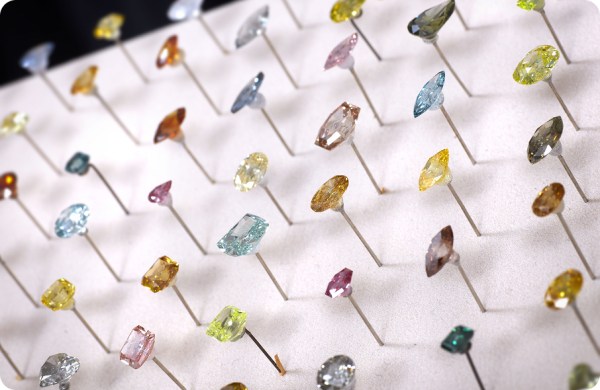
Top; Aurora Pyramid of Hope, Credit: © The Trustees of the Natural History Museum. Top:
I’ll always remember that day in 1980 when a golden yellow diamond that burned like the evening sun setting in the western sky was flashed in front of my eyes by a fellow trader. It had a hypnotic glow that kept me staring in wonder.
We patiently and deliberately selected the diamonds in the Aurora Pyramid of Hope according to a plan focused on the extensive diversity of diamond colours offered by nature. The basic premise is that all coloured diamonds are examples of nature at her geological best.
Alan Bronstein
Colour diamond dealer and curator of the Aurora collections.
The Cause of Colour
What Gives Colour Diamonds Their Beautiful Hues?
All natural diamonds were formed deep within the Earth, hundreds of millions, even billions, of years ago. At depths of over 120km beneath the surface, carbon atoms were compressed under extreme heat and pressure to form diamond crystals.
But colour diamonds have an extra twist in their origin story, one that makes each diamond even more extraordinary. During their formation, either tiny amounts of trace elements were trapped in the crystal, or the diamonds experienced additional geological stress that subtly altered their crystal lattice. These unique conditions gave rise to the stunning spectrum of colours we see today10.
Each natural colour diamond is a geological time capsule, a rare and beautiful record of the remarkable forces that shaped it beneath the Earth’s surface.
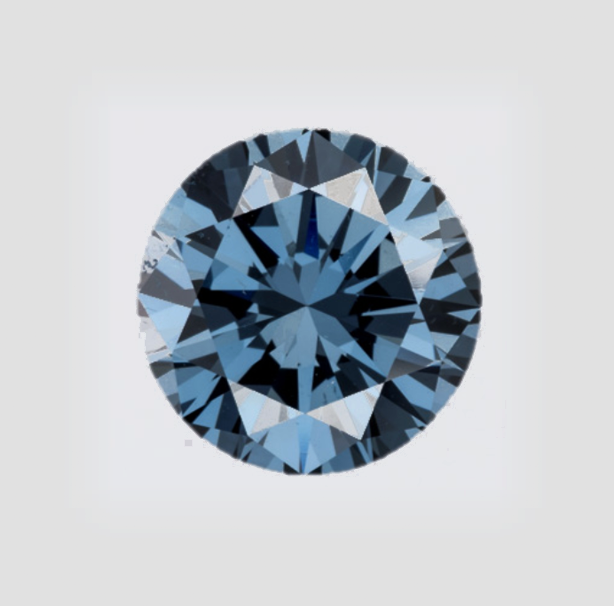
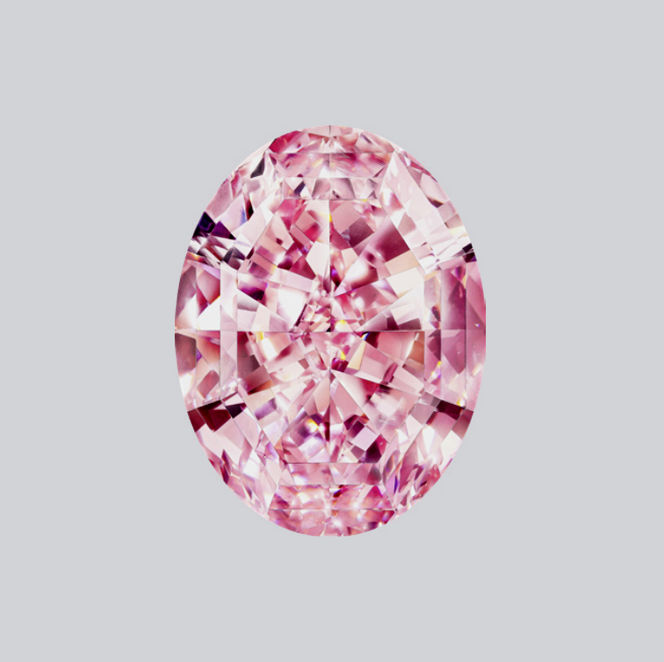
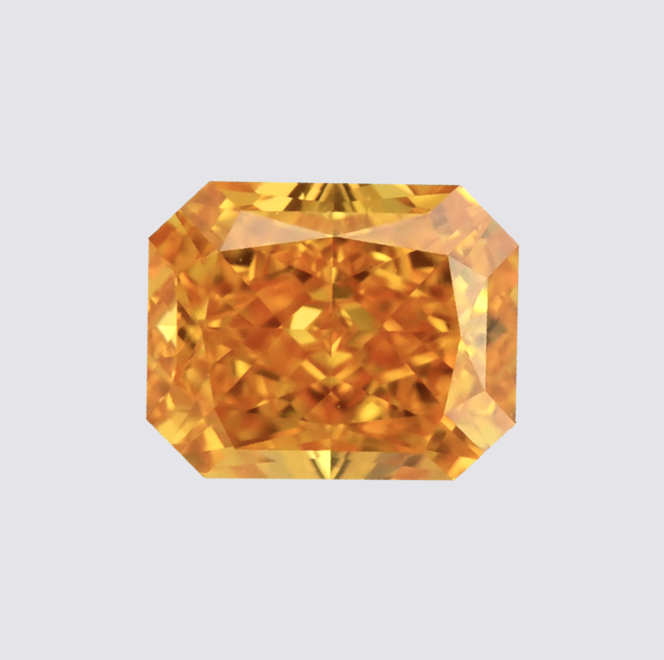
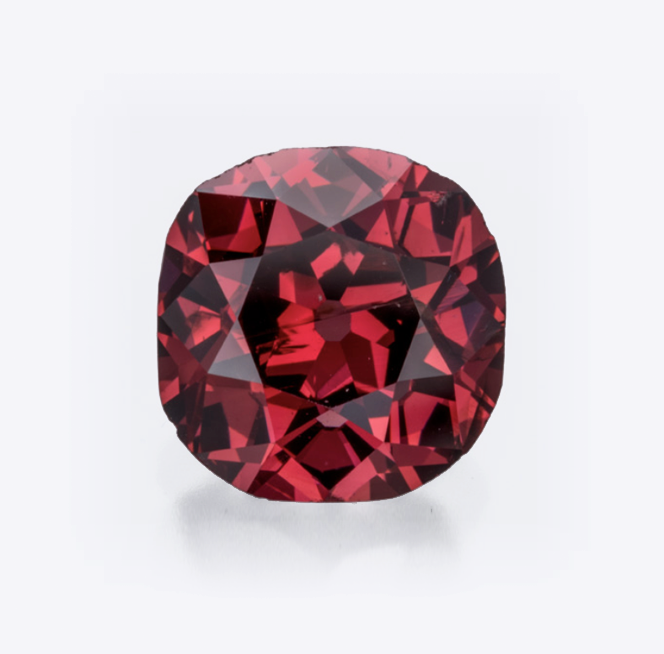
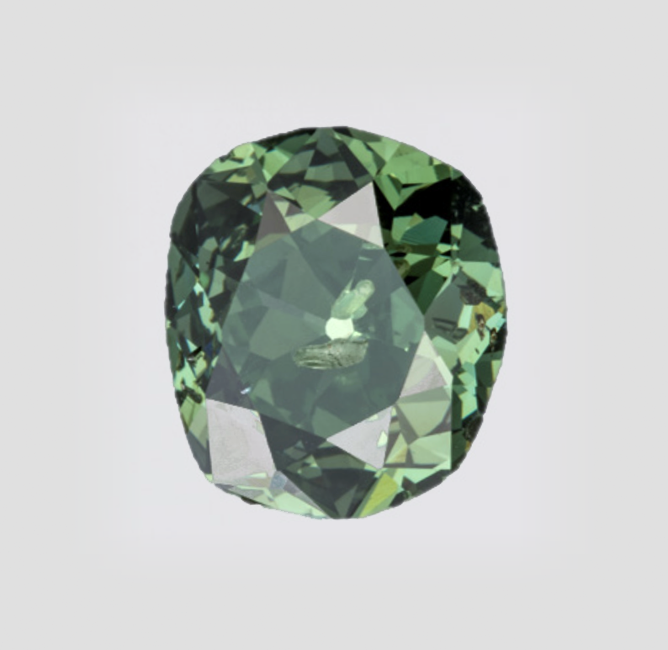
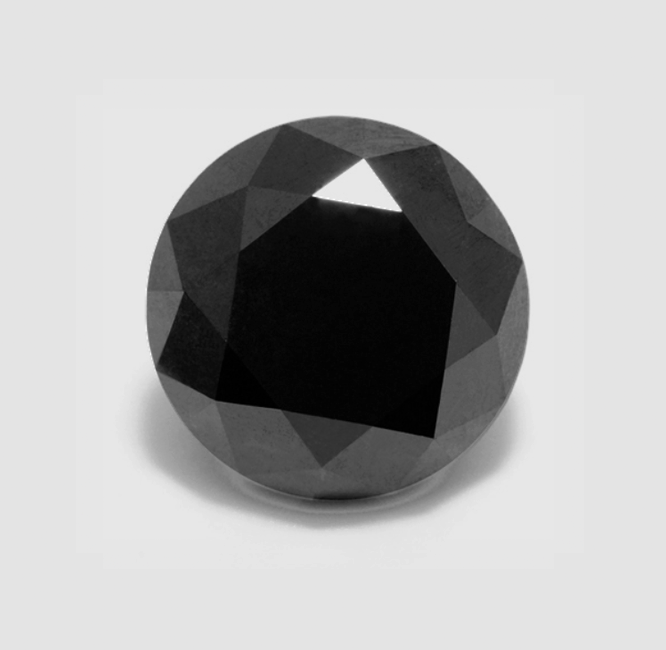
Here’s a closer look at how some of the most iconic colours occur:
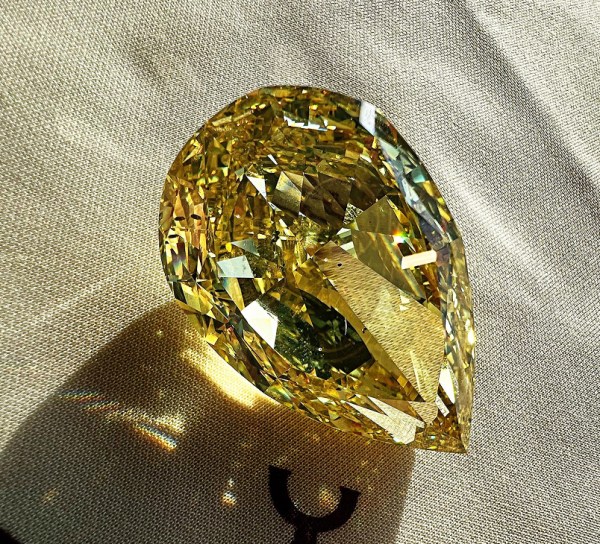
202.18 carat pear-shaped Fancy Intense Yellow diamond, known as “The Yellow Rose”. Credit: Choron Group


A Storied Legacy
The History & Sources of Fancy Colour Diamonds
Diamonds were first discovered over 2,400 years ago along the rivers of Golconda in India. Revered for their unmatched hardness, rarity, brilliance and resistance to fire, they were seen as objects of wonder, awe and power.
Some of the earliest recorded diamonds contained colour. In fact, the first known attempt to classify diamonds by colour dates to 6th-century India. Ancient Hindu tradition assigned spiritual and social significance to diamonds of various colours, often restricting ownership based on caste. Only the king was permitted to possess diamonds of all colours12.
For centuries, Golconda was the world’s only known source of diamonds, producing some of the most legendary and sought-after gems in history, including the deep blue Hope Diamond and the rare pink Daria-i-Noor. That changed in the 18th century, when rich deposits were discovered in Brazil, yielding several notable diamonds, including fancy colour diamonds in shades of yellow, black, green, red and pink. Many of Brazil’s early diamonds were acquired for the French Crown Jewels 13, 14, 15.
Over the past 150 years, new diamond discoveries have revealed additional sources of fancy colour diamonds. Yet, even today, only a small number of mines produce these exceptional gems, and they still make up just a tiny fraction of total diamond output.
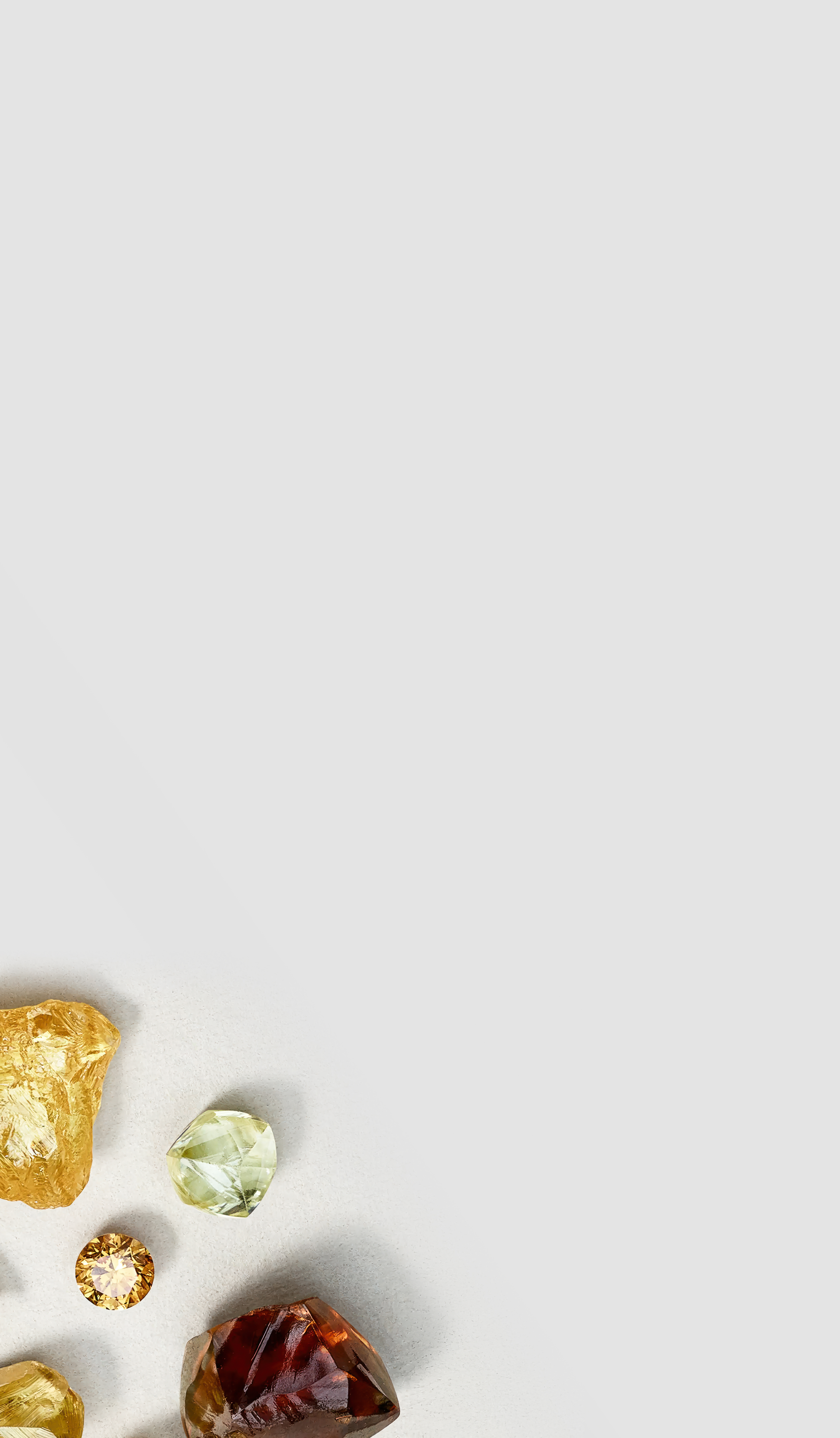
Polished and rough fancy colour diamonds Credit: Natural Diamond Council
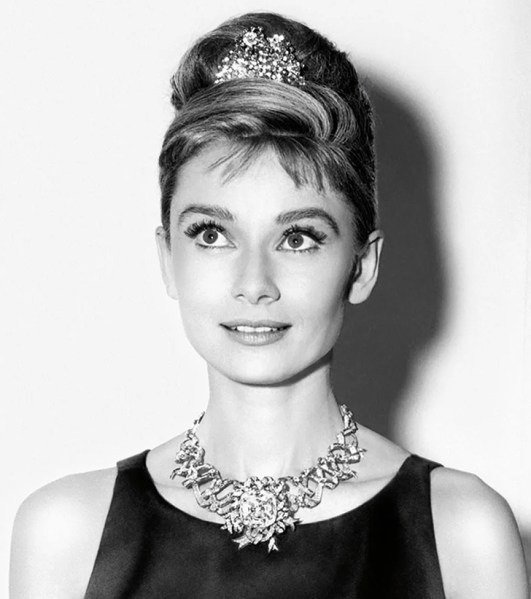
Audrey Hepburn wore the Tiffany diamond while promoting Breakfast At Tiffany’s. (Getty Images)
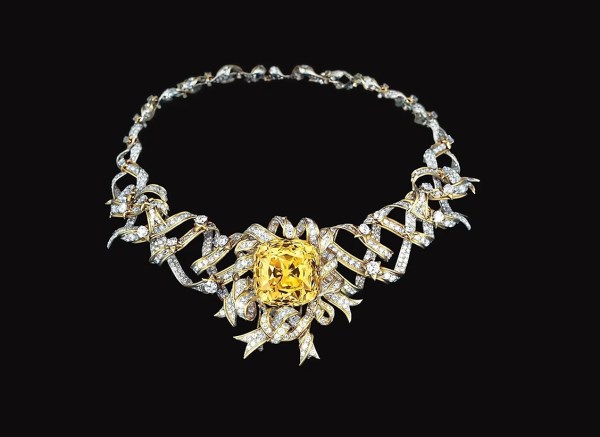
The Ribbon Rosette necklace includes the Tiffany diamond, designed by Jean Schlumberger. (Getty Images)
The Modern Rise of Fancy Colour Diamonds
Golconda diamonds have a way of capturing the imagination—representing not only physical beauty but also an enduring connection to history.
Lee Siegelson
Owner of Siegelson Jewelry.
Colour diamonds have held a place in high society throughout the centuries. Their modern popularity began to build in the mid-20th century, most famously when Audrey Hepburn wore the Tiffany Yellow Diamond in 1961 to promote the film Breakfast at Tiffany’s. From that moment, yellow diamonds entered the spotlight.
By the 1970s and ’80s, demand had surged globally, as did supply with the momentous discovery of the Argyle mine in Western Australia, which doubled world production virtually overnight. In the Middle East, royal families and leaders became major buyers, while in the West, wealthy collectors and celebrities sought out these rare diamonds.
The 1980s and ’90s also saw rising interest in pink diamonds, fuelled by headline-making sales, such as The Hancock Red in 1987. The vivid pink and red diamonds from Australia’s Argyle mine also captured the attention of collectors and soon became some of the most coveted gems in the world.
Meanwhile, Rio Tinto, owner of Argyle, began marketing the brown diamonds recovered at the mine under trade names such as “Champagne” and “Cognac”. Rio Tinto established jewellery design competitions, undertook market research and, for the first time, advertised diamonds for women who wanted to buy for themselves rather than wait for a diamond to be gifted to them. These campaigns raised awareness and increased appeal for the Argyle gems, making colour diamonds more accessible to the public.
Japanese designers and collectors added to the momentum, especially as they were drawn to rare pink diamonds. Rio Tinto’s annual Argyle Pink Diamonds Tender, showcasing the finest pink, red and blue diamonds from the Argyle mine, had rapidly become the most prestigious and anticipated diamond sale in the world. By the early 2000s, a broader range of colours began breaking price records on the auction circuit, further stimulating interest in the category. In 2010, the entry of Chinese collectors into the market helped push fancy colour diamonds to new heights — both in popularity and in price.16
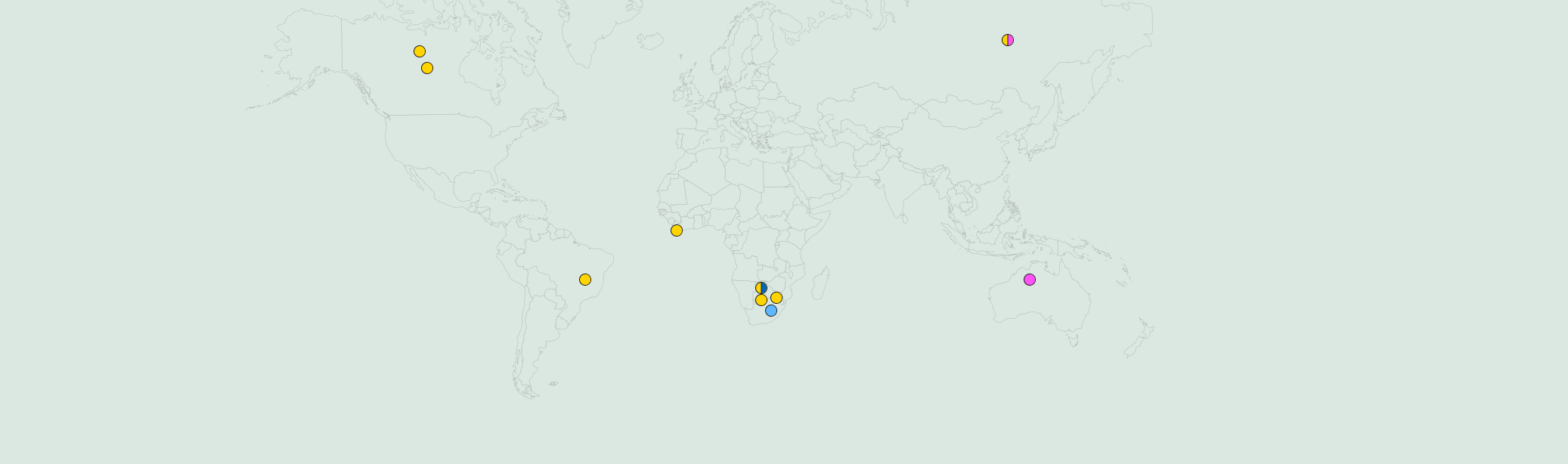
Colour Hotspots
Only a handful of diamond mines
produce fancy colour diamonds.
Yellow diamonds are some of the most prevalent of the fancy colour varieties, captivating and providing designers and luxury jewellery houses with a wonderful colour palette. Some standout yellows have been found in Canada, including a recent 158.20-carat yellow diamond from Rio Tinto’s Diavik mine, one of the largest ever found there17. Other sources include De Beers’ Venetia mine in South Africa, Debswana’s Orapa and Jwaneng mines in Botswana, as well as deposits in Brazil and Russia. Zimmi Diamonds from Sierra Leone are particularly vivid yellow gems.
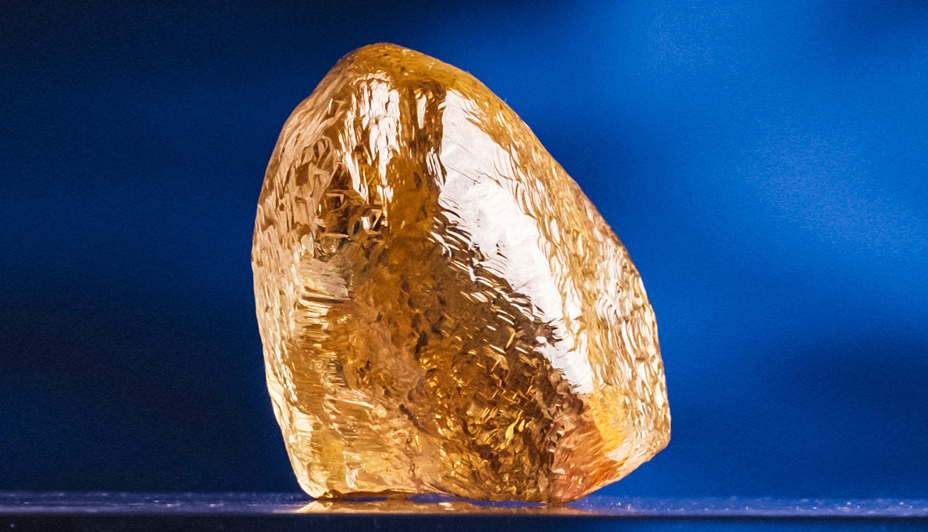
Yellow rough diamond from the Diavik mine in Canada’s Northwest Territories • Credit: Rio Tinto
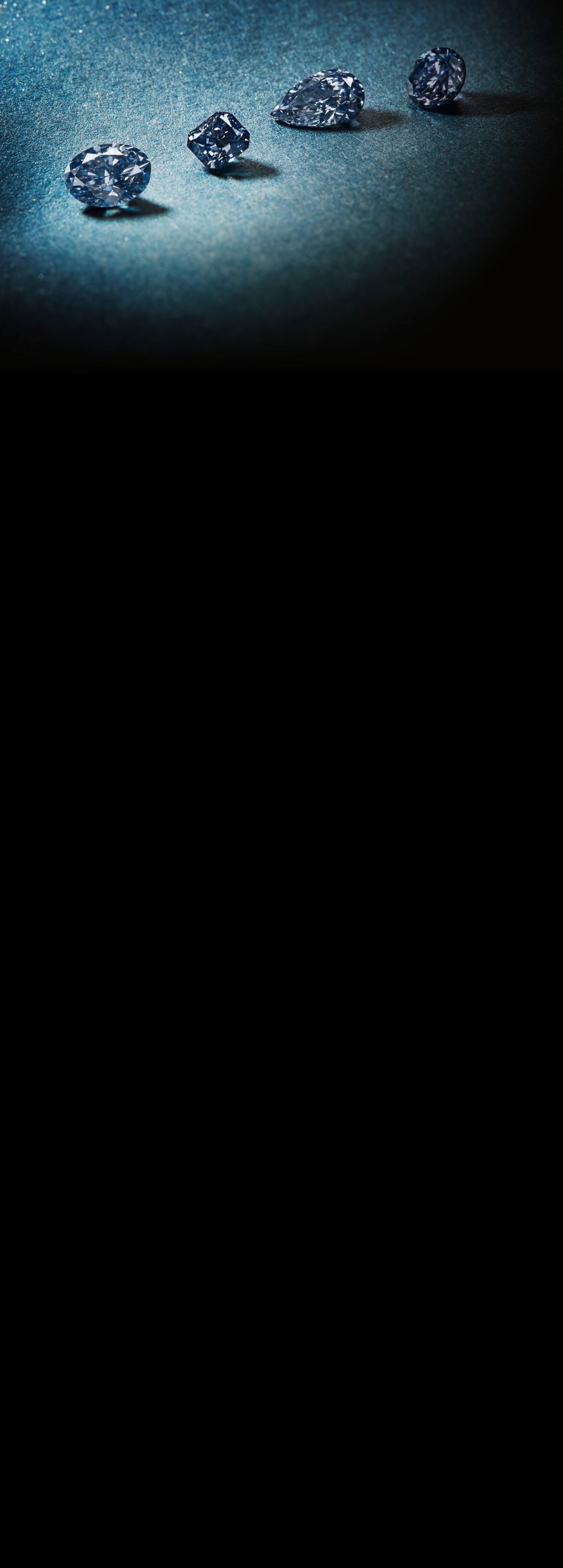
The Okavango Blue18 has become a powerful symbol of Botswana’s diamond industry. Discovered as a 41.11-carat rough stone at Debswana’s Orapa mine in mid-2018, it was masterfully polished into a 20.46-carat oval brilliant-cut diamond, graded Fancy Deep Blue with VVS2 clarity. With its exceptional size, clarity, and rich colour classification, the Okavango Blue ranks among the most important blue diamonds in history.
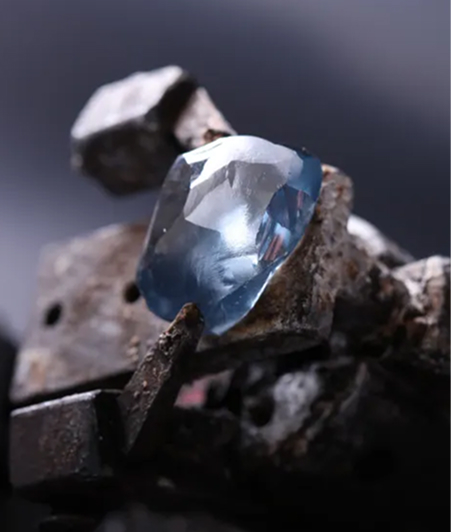
Okavango Blue (rough) • Credit: Okavango Diamond Company
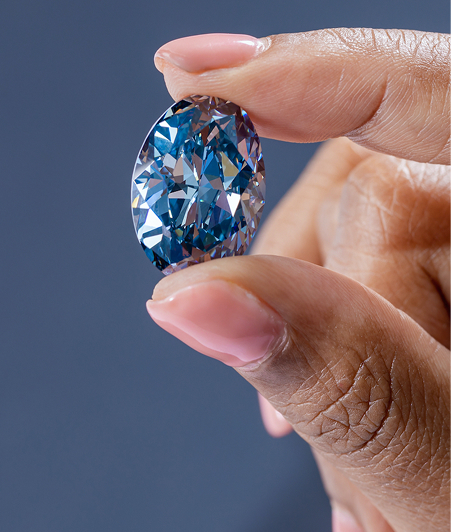
Okavango Blue (polished) • Credit: Courtesy of American Museum of Natural History
The Cullinan Mine in South Africa, owned by Petra Diamonds, is famous for producing the world’s largest rough diamond – the 3,106-carat Cullinan Diamond — but it also has a remarkable record of yielding rare and exceptional blue diamonds. Arguably the most memorable of those was the 29.62-carat Blue Moon diamond, recovered at Cullinan in January 2014 and sold to Cora International for $25.6 million. The rough diamond yielded a 12.03-carat Fancy Vivid blue, internally flawless gem, polished into a “cushion modified” brilliant — a rounded square cut with extra facets for added sparkle. It sold at Sotheby’s for 48.6 million Swiss Francs ($48.5 million), setting a record price per carat for a gem sold at auction19.
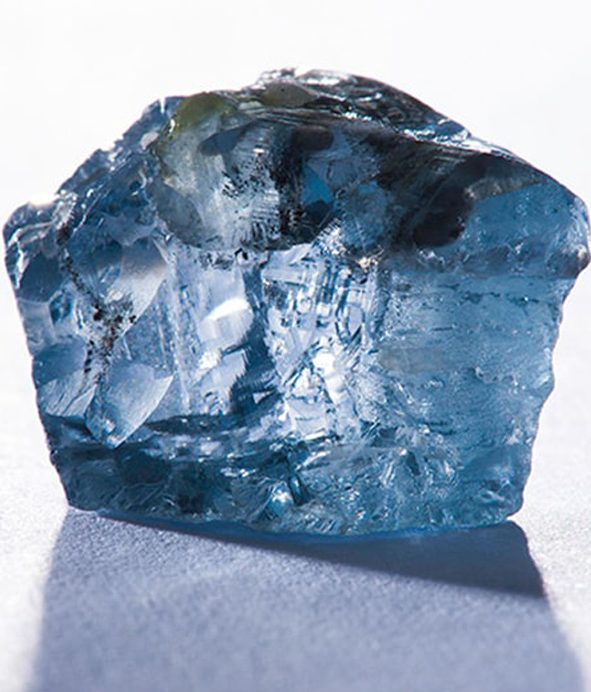
Blue Moon (rough) • Credit: Petra Diamonds
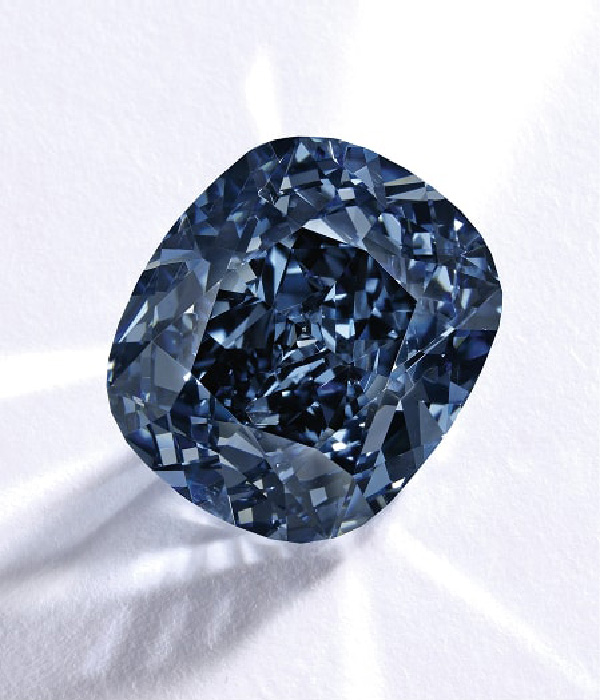
Blue Moon (polished) • Credit: Petra Diamonds
Rio Tinto’s Argyle Diamond Mine in the remote and beautiful Kimberley region of Western Australia is known for its rare and vibrant pink, red and violet diamonds20. The Argyle mine was the world’s only consistent source of rare pink and red diamonds, accounting for approximately 90% of global supply before its closure in 2020. To date, no other source has been discovered that consistently produces pink diamonds as Argyle did.
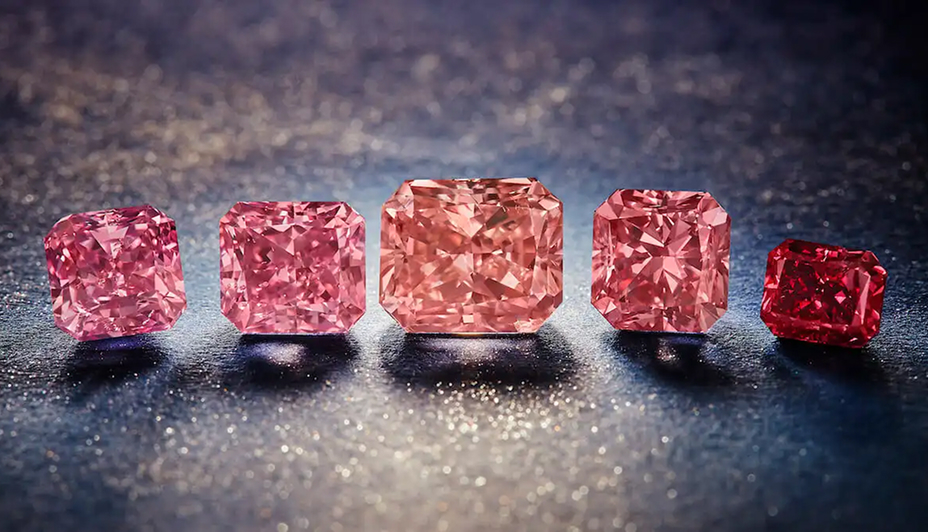
Argyle Pink Diamonds • Credit: Rio Tinto
What Sets Them Apart
Fancy Colour vs. Colourless
Beyond the 4 Cs
Unlike colourless diamonds for which the 4Cs — carat weight, colour, clarity and cut — are equally emphasised, colour is the most important factor in determining the quality and value of a fancy colour diamond. They become more valuable as their colour grows in intensity and purity.
The Gemological Institute of America (GIA) first developed the colour grading system in the 1950s to evaluate yellow diamonds falling outside the normal colourless to light yellow (D-to-Z) colour range. Over time, the Institute expanded and enhanced the system and by 1995 it was refined and included the new colour descriptions of “Fancy Deep” and “Fancy Vivid”. It is used by dealers, retailers, collectors and auction houses. This system evaluates three key elements that define what we see21:
Hue
The dominant colour of the diamond, such as pink, blue or yellow
Tone
How light or dark the colour appears
Saturation
The strength or purity of the colour
The GIA identifies 27 hues, including both pure colours and blended tones (like greenish yellow), and uses a scale of nine saturation grades — from “Faint” to “Fancy Vivid” — which combine tone and saturation to express colour intensity. In general, the more intense and vivid the colour, the rarer and more valuable the diamond. However, not all colour diamonds exhibit the same range of tone and saturation, so certain grading terms may not apply to every hue22.
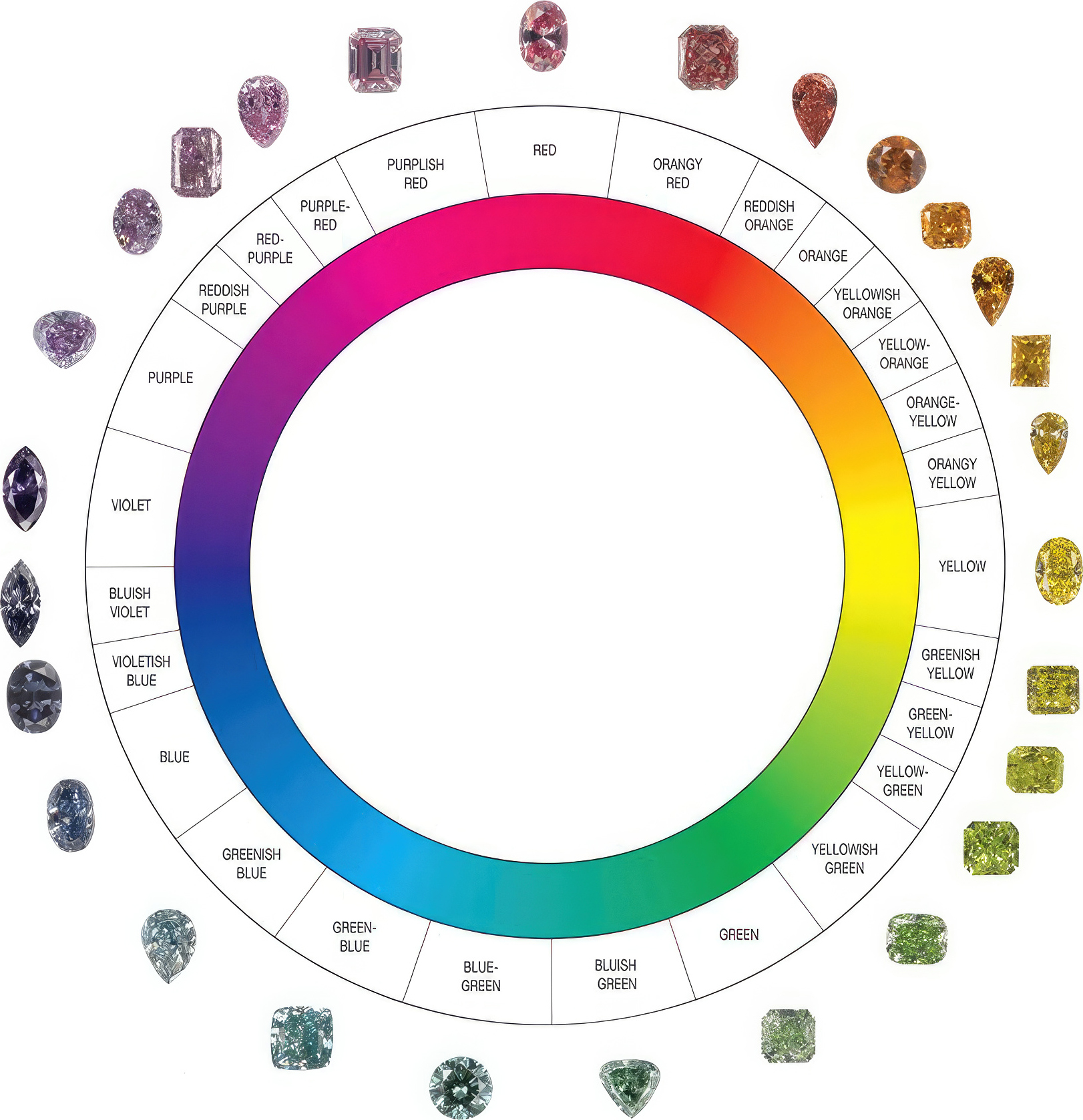
The GIA’s scale for hue and vividness (tone/saturation)
Cutting for Colour
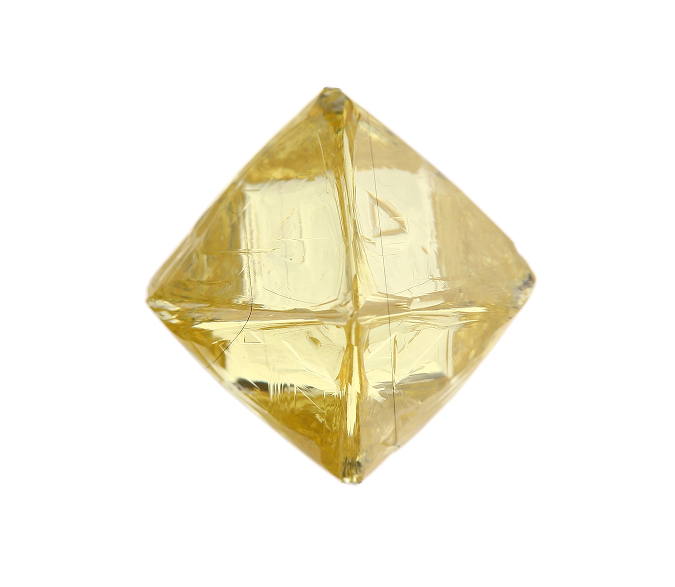
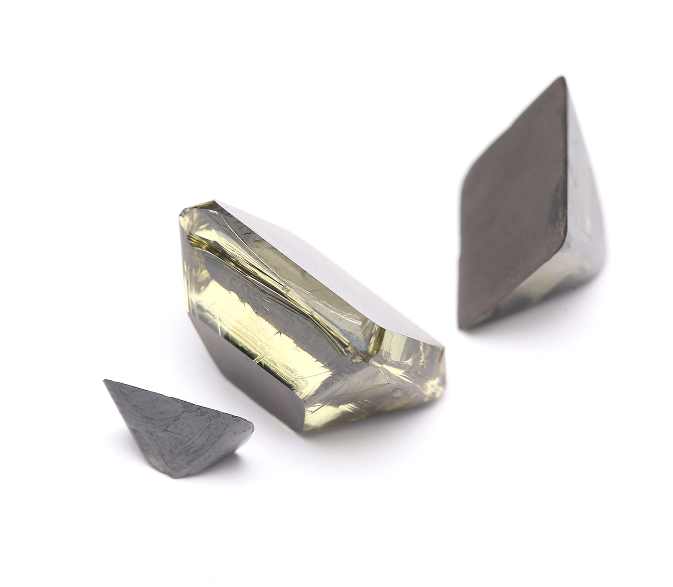
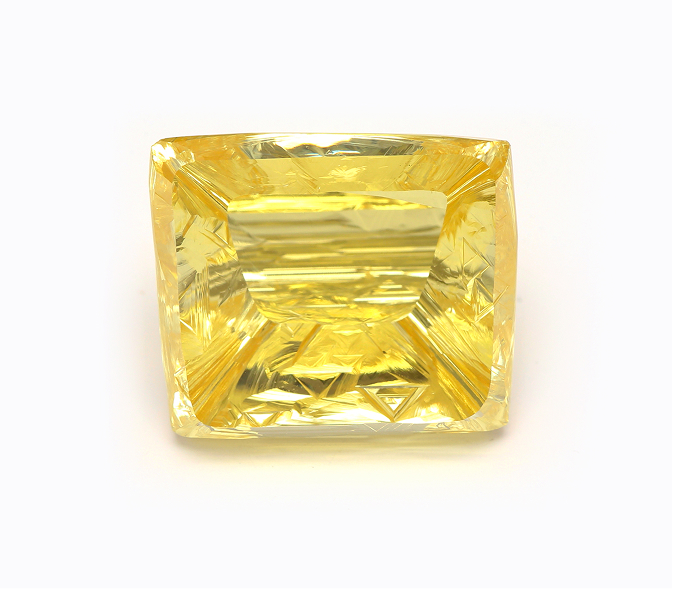
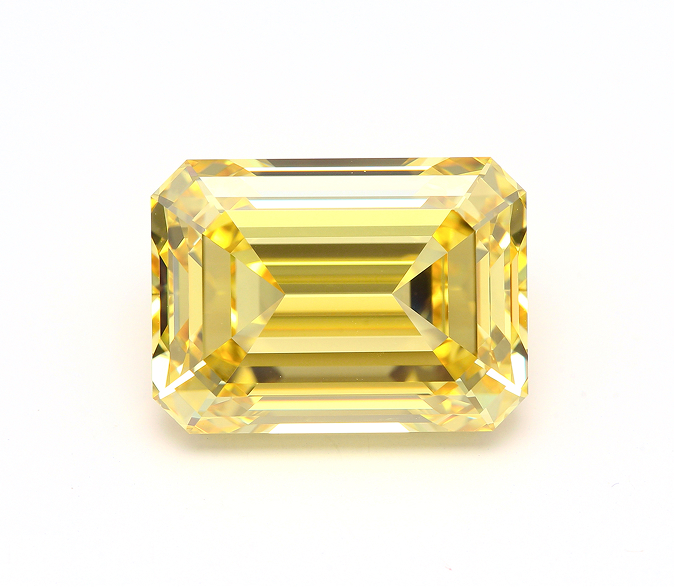
When cutters decide on how to cut a rough diamond into a polished gem, they seek to maximise appeal and value. For fancy colour diamonds, that means making the colour as bold and beautiful as possible23.
A lot of preparation goes into the cutting process, including assessing the rough diamond to determine the optimal colour, size, clarity and shape of the proposed polished gem. Then, the actual cutting and polishing involves several phases, all with one goal in mind: to maximise the diamond’s colour and beauty. It’s a job that carries significant risk, as a slight misstep can have a considerable effect on the value of the finished product.
The unique considerations used for cutting colour diamonds are a relatively recent development and have been refined over the years. In fact, fancy colour diamonds were cut much like colourless ones until the 1980s. Cutting tests undertaken on the consistent production from the Argyle mine paved the way for a new global colour grading system.
As demand grew, and the GIA introduced the “vivid” grade, cutters began experimenting with new techniques to intensify the colour by directing how light moves through the diamond.
A new cutting style emerged, designed specifically for better colour dispersion. Key modifications, like pointy corners and split bezels, help light bounce, creating more sparkle within the stone. While this style can lead to greater weight loss, it delivers what collectors value most: visible, vivid colour. It makes the colour pop.
Certain cuts were better suited for fancy colour than others. For example, the radiant cut, devised by Henry Grossbard in 1976, was recognised for holding colour better than other cuts24.
The historic 108.39-carat pink diamond recovered at the Kao mine in the Kingdom of Lesotho, has been skillfully cut and polished into a series of finished diamonds by the Choron Group.
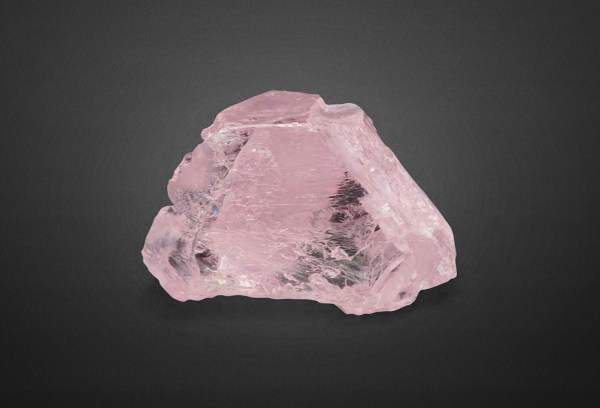
KAO Legend rough diamond. Credit: Choron Group
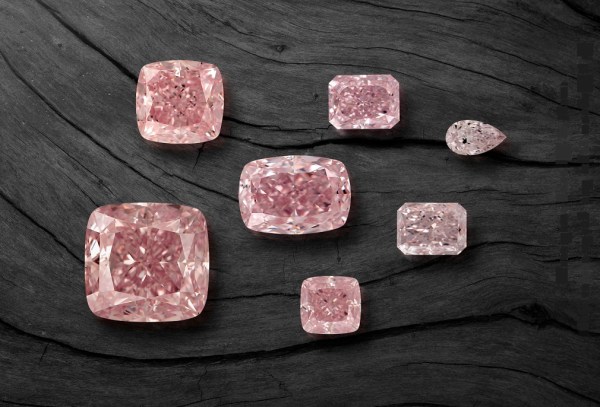
AO Legend Collection. Credit: Choron Group
Choron Group
Cutting fancy colour diamonds is carried out by prestigious experts such as the Choron Group. Driven by a vision to specialise in extraordinary diamonds, Choron has carved a distinctive niche in handling fancy colour diamonds, including pinks, purples, blues and yellows.
These diamonds are treasured not only for their rarity and natural beauty but also for the complexity involved in evaluating and cutting them to maximise colour intensity and brilliance.
The Group’s skilled artisans—based in Antwerp, Dubai, and Stellenbosch—collaborate closely to ensure each diamond meets the highest standards of quality and aesthetics.
Their in-house manufacturing facilities are equipped with cutting-edge technology and staffed by industry-leading experts who understand the delicate balance between preserving carat weight and enhancing natural colour.
Fancy colour diamonds are an ultra-rare and highly esteemed segment of the market that demands a profound understanding of craftsmanship and gemmology. With decades of technical expertise, Choron works closely with collectors, investors and luxury brands for the full spectrum of fancy colour diamonds. Backed by a global network and a strong presence in key markets, we continue to set benchmarks in the trade of fancy colour diamonds, transforming nature’s rarest creations into timeless works of art.
Anshul Gandhi
CEO Choron Group.
Value Factors
Fancy colour diamonds are more than just rare gems. They’re expressions of personal taste and financial sophistication, and their beauty often goes beyond what a grading report can reflect. GIA grading has brought greater structure to the fancy colour diamond market and remains critical to independent colour diamond grading.
Collectors, dealers and retailers are placing growing emphasis on the visual appeal and unique traits of each stone when considering pricing valuation.
Elements such as higher inner grade, dispersion and undertone (IDU) greatly add to the visual assets of the fancy colour diamond, and also contributes to its overall value, according to the FCRF25.
The FCRF refers to these key factors that influence the value of fancy colour diamonds:
Inner Grade
The richness of colour as defined by the GIA colour
Dispersion
How evenly the colour mosaic is spread across the diamond’s face up view.
Undertone
The subtle colour sensation that shapes how one perceives the diamond, which may differ from our preconceived expectations stemming from the GIA report.
Face-Up Appearance Relative to Carat Weight
How large the diamond looks compared to its actual weight, affecting perceived value.
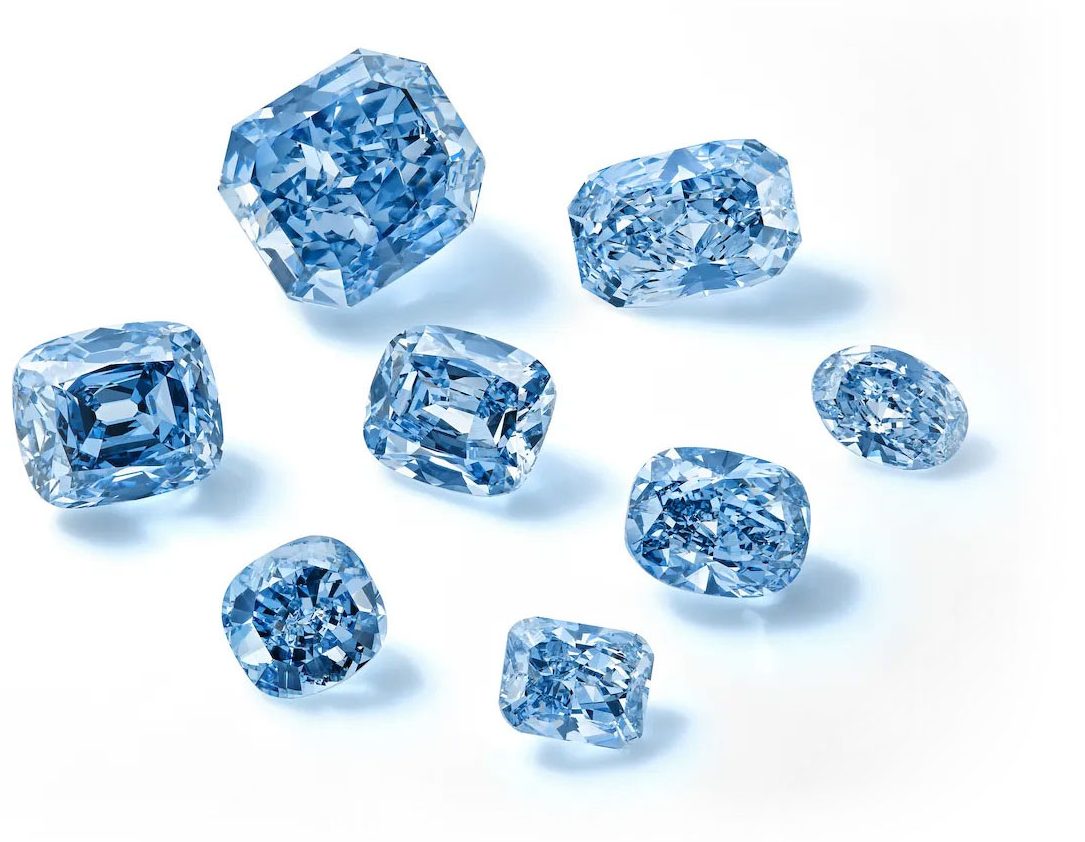
In fancy colour diamonds, visual attributes such as inner grade, dispersion and undertone make a significant contribution to a diamond’s beauty, its commercial appeal, and its potential for appreciation over time.
Roy Safit
CEO of the FCRF
Fun Facts
Fancy colour diamonds are graded face-up to assess how the colour appears in a setting — exactly how it will be seen when worn.
Colourless diamonds are graded face-down to minimise sparkle and reveal any subtle body colour.
Rarity Against the Odds
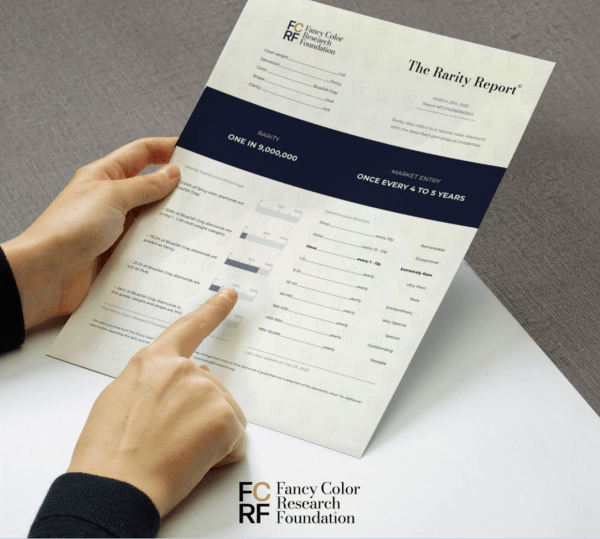
Just how rare are fancy colour diamonds?
There are varying estimates on what percentage of rough diamonds contain any fancy colour, although all agree it’s a small single-digit percentage. An even smaller fraction makes it through the polishing process with that colour intact.
Of course, the rarity is even greater for certain colours than for the broader category, as some colours only account for a small fraction of all fancy colours.
Rarity is one of the most compelling qualities that attracts collectors and jewellery buyers to fancy colour diamonds. But it is difficult to pin down. Some factors that contribute to rarity are controlled, such as the diamonds’ cut. The most significant elements are dictated by nature, such as the hue, the intensity of the tone and saturation, the size, and the presence or absence of inclusions26.
Asset Class
The value of fancy colour diamonds has been relatively resilient during periods of market volatility, highlighting their dual purpose as a luxury product and a store of value.
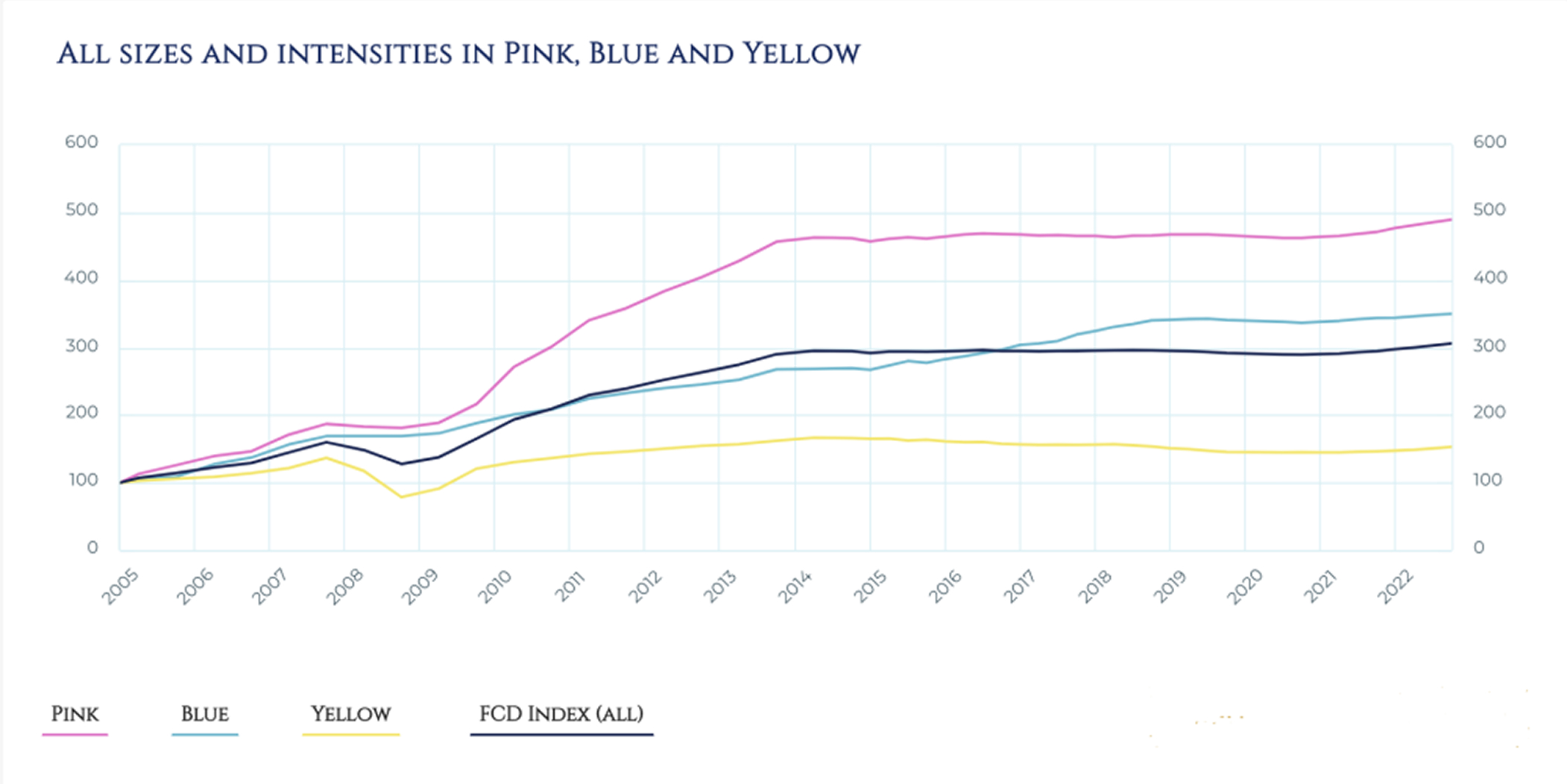
Data by the FCRF signal that pinks have been the strongest performing colour since 2005, followed by blues. As they exist in greater volumes than pinks and blues, yellows have a more commercial element to them27.
+394%
Total appreciation of pink diamonds since 2005.
+242%
Appreciation of blue diamonds in 20 years.
+49%
Rise in value of yellow diamonds over the past two decades.
$4.5 billion
Estimated wholesale value of fancy colour diamonds entering the market in 2024.
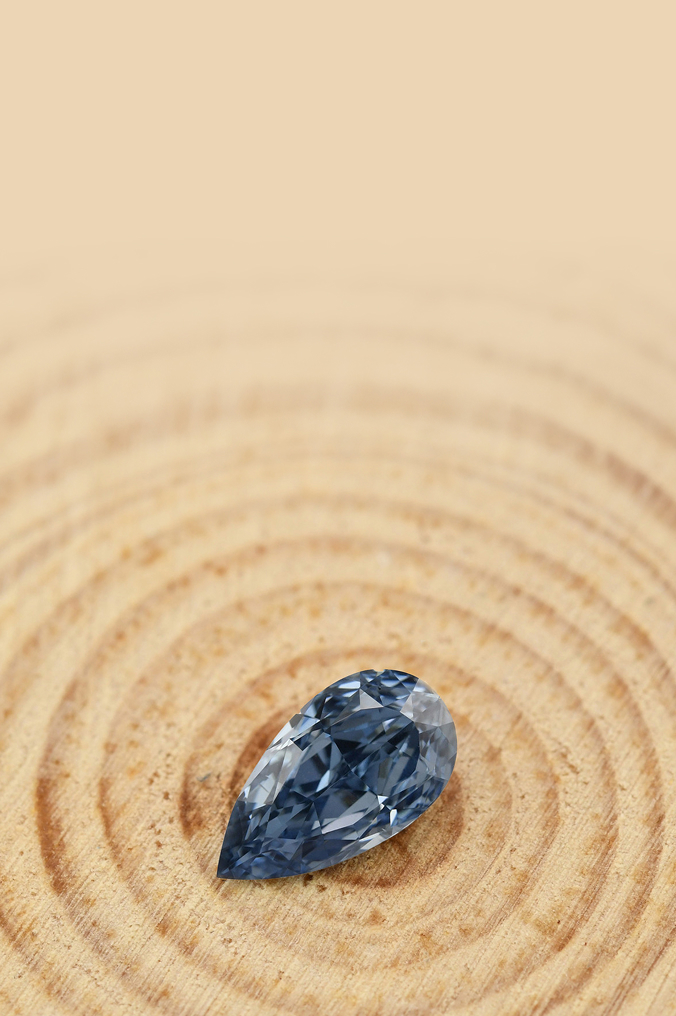
A diamond’s value is largely determined by its rarity, which includes factors like size, clarity, and especially colour. When it comes to fancy colour diamonds, colour is the most important element. Collectors seek out unique pieces with exceptional hues, as even diamonds of the same colour can evoke entirely different emotions.
Blue Diamond • Credit: Leibish & Co.
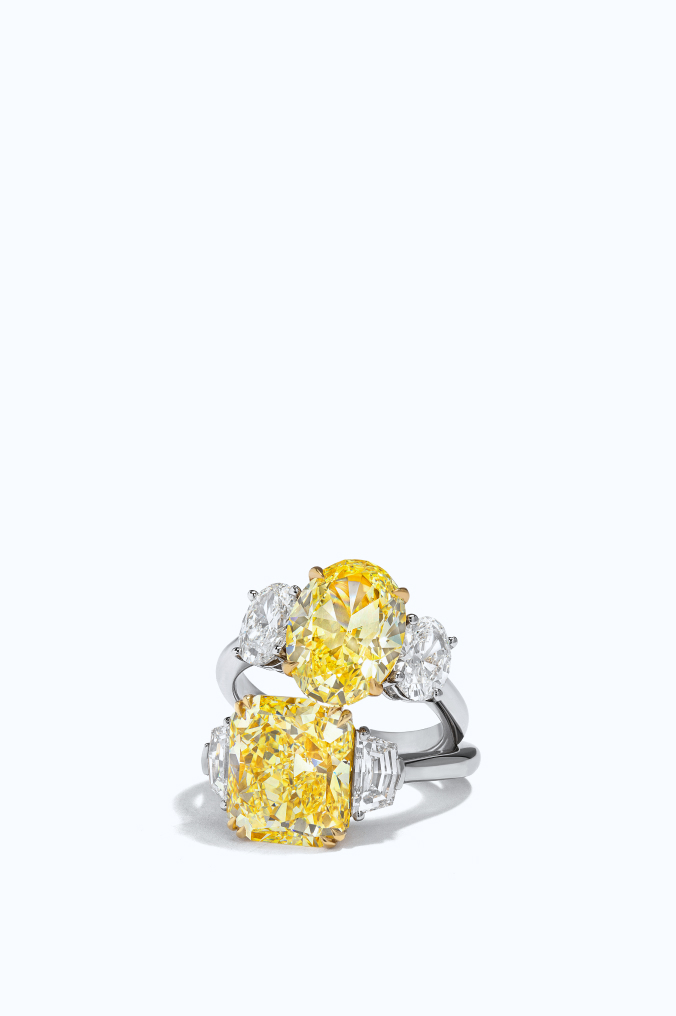
The brilliance and vibrancy of fancy colour diamonds, enhanced by the unmatched hardness of the gem, draw the eye in a way no other coloured stone can.
Yellow Diamonds Jewellery. Credit: Hamilton Jewelers
Fancy Colour Rock Stars
The Hope Diamond: From Curse to Icon
The Hope Diamond27 ranks among the world’s most famous – and mysterious — gems. Now housed at the Smithsonian Museum of Natural History, where it draws millions of visitors annually, its journey began in 17th-century India. French merchant Jean Baptiste Tavernier purchased the original 112-carat stone and sold it to King Louis XIV, who had it cut and named the “French Blue”.
The diamond vanished during the French Revolution after Louis XVI and Marie Antoinette surrendered it to the government shortly before their execution. It resurfaced in the early 1800s, recut into its current shape, and eventually entered the collection of Henry Philip Hope, whose name it still bears. The diamond remained in the Hope family until 1901 when it was sold by Pierre Cartier to American heiress Evalyn Walsh McLean, who had it set into the iconic necklace we recognise today. Later, jeweller Harry Winston acquired the diamond and donated it to the Smithsonian in 1958 — famously mailing it via the US Postal Service.
Weighing 45.52 carats, the Hope Diamond is a fancy deep greyish blue stone that glows red after exposure to ultraviolet light.
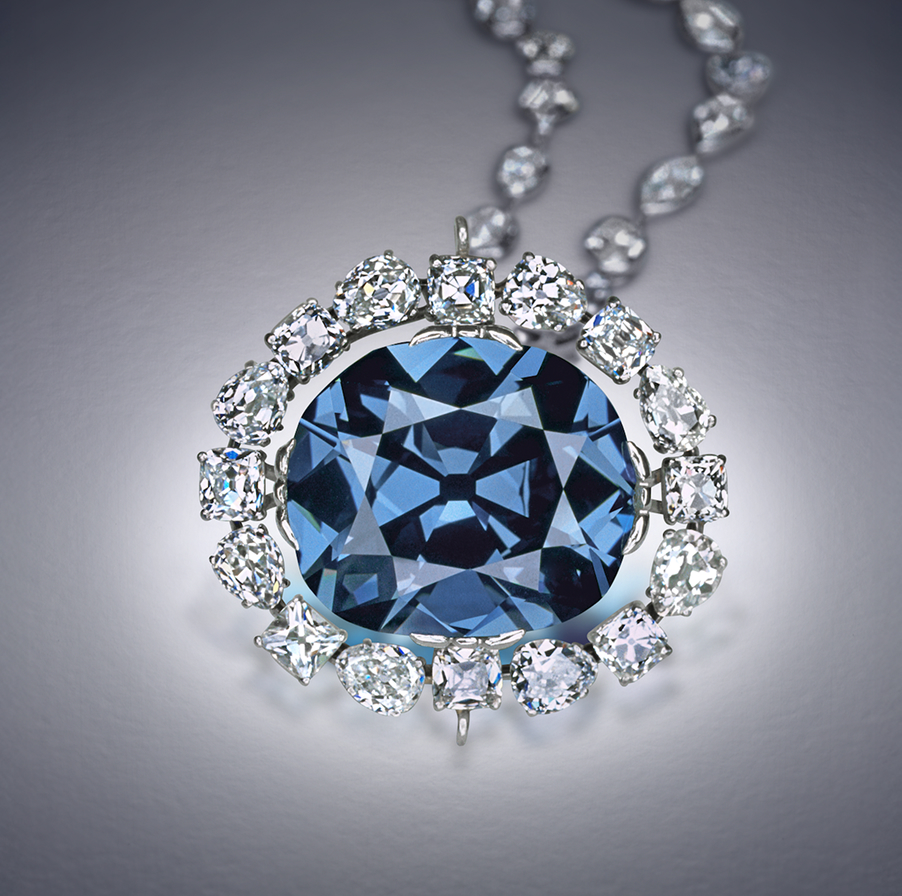
The Hope Diamond. Credit: Chip Clark, Smithsonian’s National Museum of Natural History (digitally modified by SquareMoose)
The Winston Collection
The Dresden Green is one of the most famous colour diamonds in the world, first mentioned in a London newspaper in 1722. It was acquired in 1741 by Frederick Augustus II of Saxony and added to the Green Vault, a dazzling collection of royal jewels housed in Dresden Castle and started by his father, Augustus I. Set by Viennese goldsmith Pallard into a Golden Fleece hat ornament, the diamond remarkably remains in its original 18th-century setting.
Weighing 41 carats, the stone was classified by GIA in 1988 as a fancy green, modified pear-shaped brilliant with medium tone and slightly greyish saturation. Its age and origin offered rare insight into naturally irradiated green diamonds, valuable for distinguishing natural from treated stones, though no grading report was issued due to its mounted setting.
Incredibly, the Dresden Green survived a 2019 heist at the Green Vault — one of the largest art thefts in history — because it was on temporary loan to New York’s Metropolitan Museum of Art at the time. The thieves have since been caught and many of the jewels recovered.
There is no official record of the sum paid for the Dresden Green in 1741, but a letter from the King of Prussia indicates that it could have been 400,000 thaler. At the time, according to the Metropolitan Museum the exorbitant sum would have been worth about four tonnes of gold.
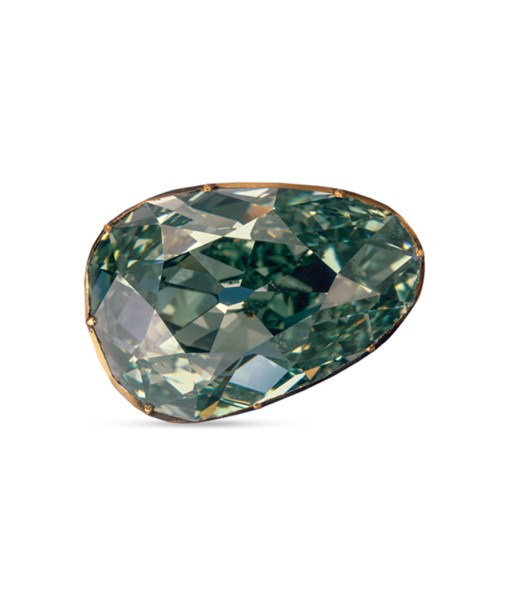
The Dresden Green30, Credit: Photo by Shane McClure/GIA, Courtesy: Grünes Gewölbe, Staatliche Kunstsammlungen Dresden
The Tiffany Diamond:
A Yellow Masterpiece
Few jewels are as famous, or as rarely worn, as the Tiffany Diamond32. Discovered in 1877 at South Africa’s Kimberley mine, the 287.42-carat rough was acquired the following year by Tiffany & Co. founder Charles Lewis Tiffany for $18,000— a hefty sum at the time. After a year of careful study, it was transformed into a stunning 128.54-carat cushion-cut brilliant, renowned for its exceptional size and beauty.
Only four women have ever had the honour of wearing this legendary yellow diamond. The first was Mary Whitehouse, who debuted it publicly in 1957 at the Tiffany Ball. It was later set in designer Jean Schlumberger’s Ribbon Rosette necklace and famously worn by Audrey Hepburn when promoting the film Breakfast at Tiffany’s. In 1995, it appeared in Schlumberger’s Bird on a Rock design for a museum exhibit, and in 2012, it was reset into a dazzling necklace with over 100 carats of additional diamonds to mark Tiffany’s 175th anniversary. That version was slightly modified for Lady Gaga’s show-stopping appearance at the 2019 Oscars.
Most recently, Beyoncé joined the exclusive club, wearing the Tiffany Diamond in a 2021 brand campaign, adding another chapter to its extraordinary legacy.
When the diamond was discovered, few had witnessed a yellow diamond so remarkable.
Today, the Tiffany Diamond remains unrivalled in scintillation and beauty. Its exceptional sparkle can be seen from far across the room
Victoria Wirth Reynolds
Chief Gemologist and Vice President of High Jewelry Diamond and Gemstone Acquisition at Tiffany & Co.
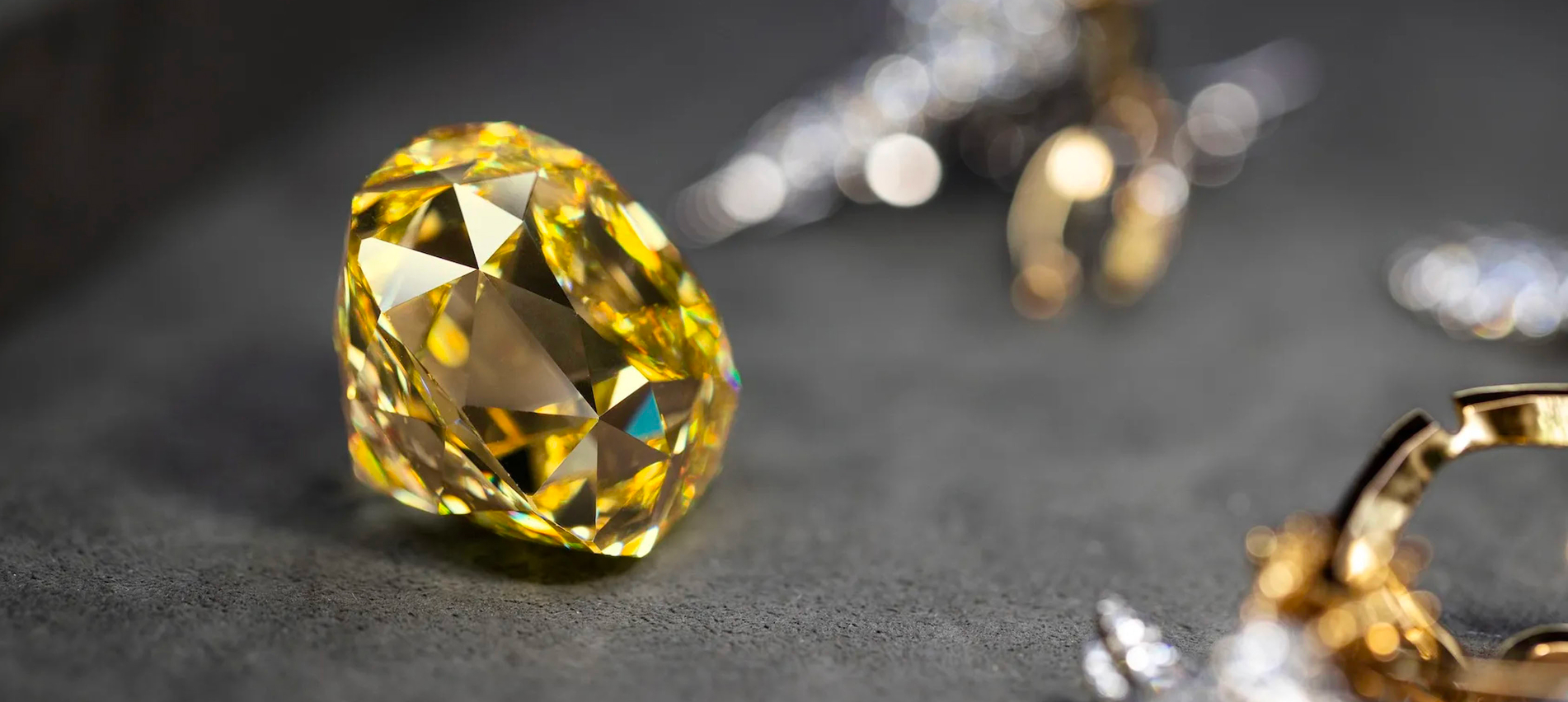
Top; Aurora Pyramid of Hope, Credit: © The Trustees of the Natural History Museum. Top:
The CTF Pink Star:
A record-breaking diamond
The 59.60-carat CTF Pink Star33 stands unrivalled as the world’s largest internally flawless, Fancy Vivid pink diamond, certified by the GIA. Discovered in 1999 as a 132.5-carat rough diamond deep within the De Beers South African mine, this breathtaking gem underwent nearly two years of meticulous planning and expert craftsmanship. The result? A stunning masterpiece of unparalleled beauty.
Like many legendary diamonds, the CTF Pink Star has journeyed across the globe, captivating audiences wherever it appears. Originally known as the ‘Steinmetz Pink’, the diamond made a spectacular debut at the Monaco Grand Prix. Months later, it became a centrepiece at the Smithsonian National Museum of Natural History in Washington, D.C., where visitors marvelled at its exquisite colour. In 2004, the Pink Star was graced by Her Royal Highness, Princess Ubolrattana, in Bangkok, Thailand. The following year, in July 2005, it once again took the centre stage at the Natural History Museum in London.
The diamond’s remarkable journey culminated in 2017 when Sotheby’s Hong Kong auctioned the gem to a record-breaking sale. Acquired by the leading Chinese jewellery house, Chow Tai Fook for an astonishing US$71.2 million — the Pink Star shattered multiple records: it became the world’s most valuable diamond ever sold at an auction and secured the highest price for any auctioned work in Asia. In honour of this milestone, the diamond was renamed the CTF Pink Star, commemorating the late Dr. Cheng Yu-Tung —the founder and grandfather of Chow Tai Fook’s current chairwoman, and celebrating the brand’s 88th anniversary.
What sets the CTF Pink Star apart is not just its size or flawless clarity, but the mysterious origin of its enchanting pink hue. Only 0.0001% of diamonds exhibit this romantic pink shade.
It is precisely this elusive beauty that will earn the CTF Pink Star a place in history books. More than just a gemstone, it is a timeless symbol of nature’s artistry and human mastery, destined to mesmerise and inspire generations to come.

There are very few important pink diamonds over 20 carats. It is less likely that we will see more important sizable pinks.
Tom Moses
Executive Vice President of the
Gemological Institute of America (GIA).
The Tiffany Diamond. Credit: Tiffany & Co.

Auction Appeal
Coloured diamonds may represent just a tiny share of global diamond production, but they command massive attention — especially on red carpets, at exhibitions, and in major auctions.
Advancements in mining, cutting, grading and marketing have brought these rare gems into the spotlight, with Christie’s and Sotheby’s driving much of the buzz. The competition to secure the rarest, most vibrant stones is fierce, often resulting in record-breaking sales of diamonds that haven’t surfaced in decades.
A turning point on the auction circuit came in 1987, when Christie’s New York sold the 0.95-carat Hancock Red — a purplish red diamond — for over $926,000 per carat. It was a record at the time and helped spark global interest in coloured diamonds.
Since then, stones graded Fancy Deep, Fancy Intense and Fancy Vivid have become the stars of the auction world, prized as both striking jewels and valuable investments.
That excitement continues to build. 2024 saw a string of standout coloured diamond sales, and 2025 is already shaping up to be another big year. Highlights include:

The auctions get people excited. Seeing the passion, desire and great lengths people go to acquire these unique pieces makes them even more special and highlight just how profound and rare they are.
Charlie Green
Director of Stores at Lux Bond & Green.
The Argyle Phoenix 34
Fancy Red
Brilliant-Cut Diamond
Auction: Phillips Geneva – 2004
CARAT
1.56
CLARITY
—
RARITY
1/50 million
PRICE REALISED
$4.3 million
PRICE/CARAT
$2.7 million
The Mediterranean Blue 35
Fancy Vivid Blue
Cushion Modified Brilliant Diamond
Auction: Sotherby’s Geneva – May 2025
CARAT
10.03
CLARITY
VS2
RARITY
1/50 million
PRICE REALISED
$21.5 million
PRICE/CARAT
$2.1 million
Diamond & Ruby Ballerina Ring by Boucheron 36
Fancy Red
Brilliant-Cut Diamond
Auction: Phillips Geneva – 2004
CARAT
6.24
CLARITY
VVS2
RARITY
1/50 million
PRICE REALISED
$12.7 million
PRICE/CARAT
$2 million
The Eden Rose 37
Fancy Intense Pink
Round Brilliant Diamond
Auction: Christie’s new York – June 2024
CARAT
10.20
CLARITY
FL
RARITY
1/20 million
PRICE REALISED
$13.3 million
PRICE/CARAT
$1.3 million
Magnificent Pink Diamond 38
Fancy Vivid Pink
Oval-Cut Diamond
Auction: Phillips Geneva – May 2004
CARAT
6.21
CLARITY
VS1
RARITY
1/19 million
PRICE REALISED
$12 million
PRICE/CARAT
$1.9 million
Download This Report
Natural Diamond Council’s Diamond Report series covers trends, origin, and other particularities of the ultimate gemstone – natural diamonds. Created in collaboration with governments, communities, and experts, these reports empower consumers, media, and industry professionals with transparent insights and engaging facts.

This report was brought to you with the kind support of
Choron Group.
Many thanks to the following contributors:
Avi Krawitz
Fancy Color Research Foundation
Gemological Institute Of America (Gia)
Rio Tinto
Smithsonian’s National Museum Of Natural History
Natural History Museum, London
Sotheby’s
Chow Tai Fook
Tiffany & Co.
Leibish & Co.
Lux Bond & Green
Hamilton Jewelers
Aurora Gems Foundation
Leading Experts:
Tom Gelb, Alan Bronstein, Leibish Polnauer and Jackie Steinitz
SOURCES
2. GIA : Fancy Color Diamond Buyers Guide
3. GIA: The Magic of Colored Diamonds
4. Fancy Color Research Foundation
5. The Smithsonian’s National Museum of Natural History
6. GIA
7. Natural History Museum, London
8. American Museum of Natural History | New York City
9. Aurora Gems Foundation
10. GIA Fancy Color Diamond Quality Factors
11. Natural Diamond Council
12. GIA: Fancy Color Diamond History and Lore
13. Natural Diamond Council: Golconda Diamonds
14. GIA: Brazilian Diamonds: A Historical & Recent Perspective
15. Christie’s: The Golconda Blue
17. Rio Tinto
19. Sotheby’s
20. Rio Tinto
21. GIA: Fancy Color Diamond Quality Factors
22. GIA: GIA Color Diamonds Color Reference Charts
24. JCK Online
25. 26. 27. FCRF: Market Review
28. Rapaport
30. GIA
31. Steadfast and Pure: The Metropolitan Museum of Art
32. GIA
34. Phillips
35. Sotheby’s
36. 37. Christie’s
38. Phillips


