Diamond Report Series
Diamonds of Botswana

Discover how Botswana’s diamonds have transformed the nation from one of the world’s poorest countries to a thriving middle-income economy, powering education, healthcare, infrastructure, and sustainable prosperity.
Published: March 17, 2025



Table of Contents

Diamonds of Botswana
Overview
Economy & Infrastructure
80%
Diamonds represent 80%of Botswana’s exports, make up a third of its fiscal revenue and account for a quarter of the country’s GDP.1
De Beers was responsible for $1,159M in taxes and other contributions to Botswana in 2023.2
80% of Debswana’s (a 50:50 venture between the Government of the Republic of Botswana and De Beers Group) diamond-related revenue is reinvested into the country.
Okavango Diamond Company (ODC) is 100% state-owned enterprise, contributing significantly to Botswana’s economy with an annual sales turnover of approximately $1 billion.
ODC operates under a clear mandate to provide the Government of the Republic of Botswana with a direct route to market for the country’s rough natural diamonds.
11,276 jobs outside of diamond mining have been supported through the De Beers Group-backed Tokafala programme.
Per capita income has increased massively, from just $80 per year in 19673 to $7,238 in 2021.
Contribution from diamond revenues has helped the development of transport, energy and water infrastructure.4
Paved road coverage has increased from 12km5 in 1966 to close to 20,000km in 2023.6
EDUCATION
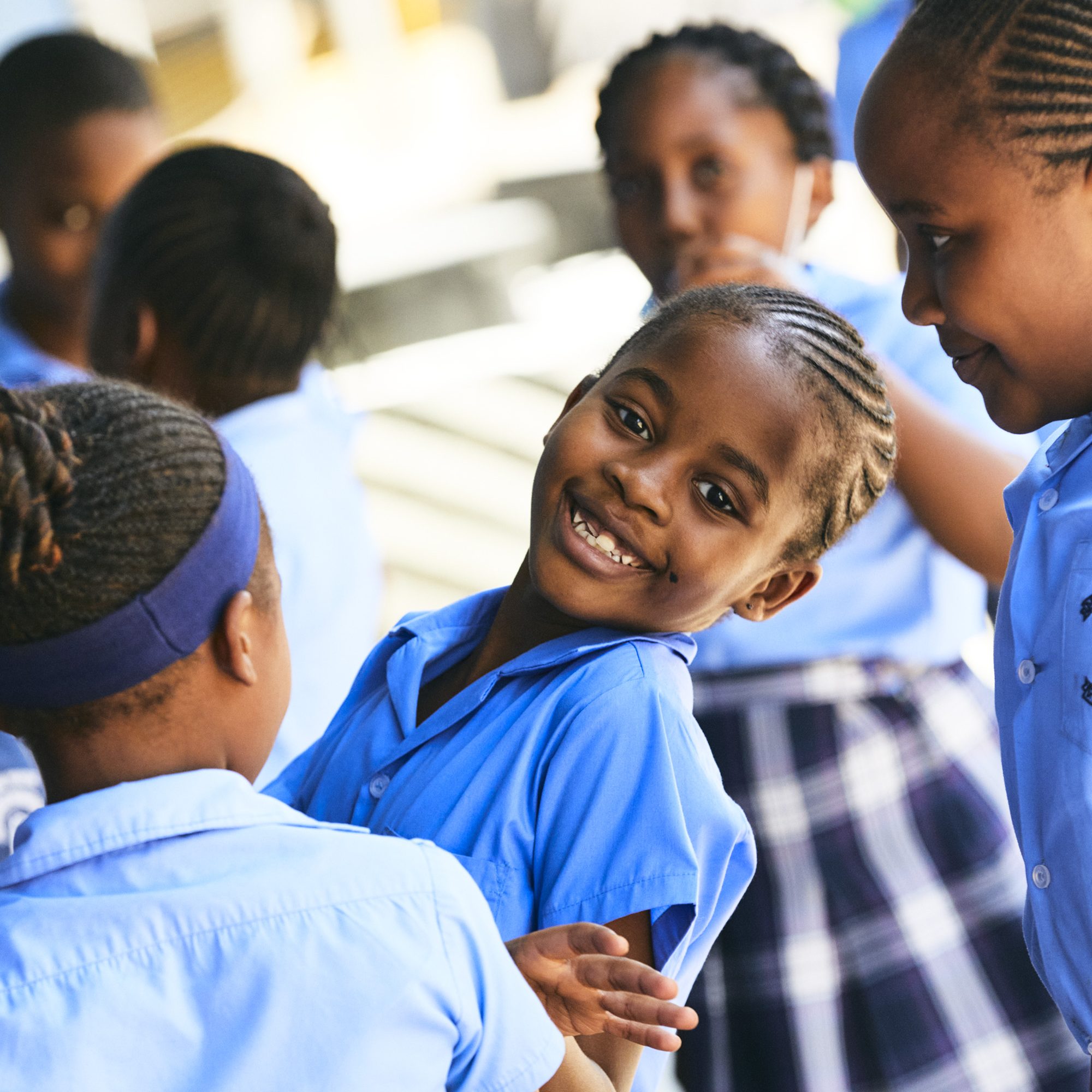
100% of primary-age children are now entitled to free, state-provided education

Credit: Debbswana Primary School
89,856
89,856 pupils were in secondary education in 20227, compared to just 100 in 19668
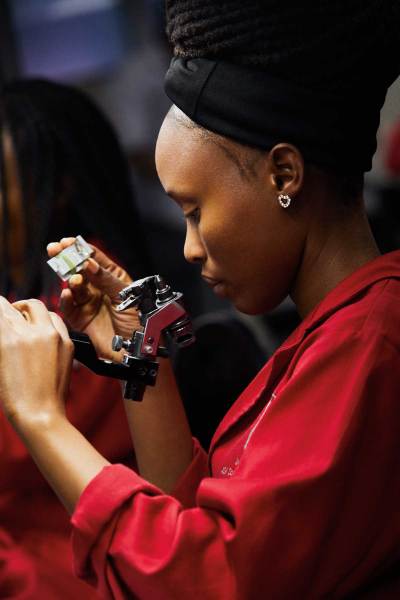
Just 40 people had completed higher education in 19669 – compared to 16,305 in 2021.10
67%
67% of tertiary education students in 2023 had their fees paid by the government.11
Empowering women and girls
Lucara Botswana has supported school going girls around Botswana with over 50,000 sanitary pads to ensure that they do not miss out on school.
Over 2,000 girls have participated in the Debswana STEM Girls Programme.
Over 1,000 Batswana women have participated in the UN Women and De Beers Group micro-entrepreneur initiative AWOME since the programme lauched.
66.67% of ODC’s Executive Officers are women.
Healthcare in 2001
De Beers Group’s Debswana rolled out the first free corporate HIV test and treatment programme in the world.
Debswana built, and continues to run, two hospitals in mining communities.
In 2024, De Beers Group celebrated 15 years of no HIV-positive babies born to De Beers employees in its workforce.12
sustainability
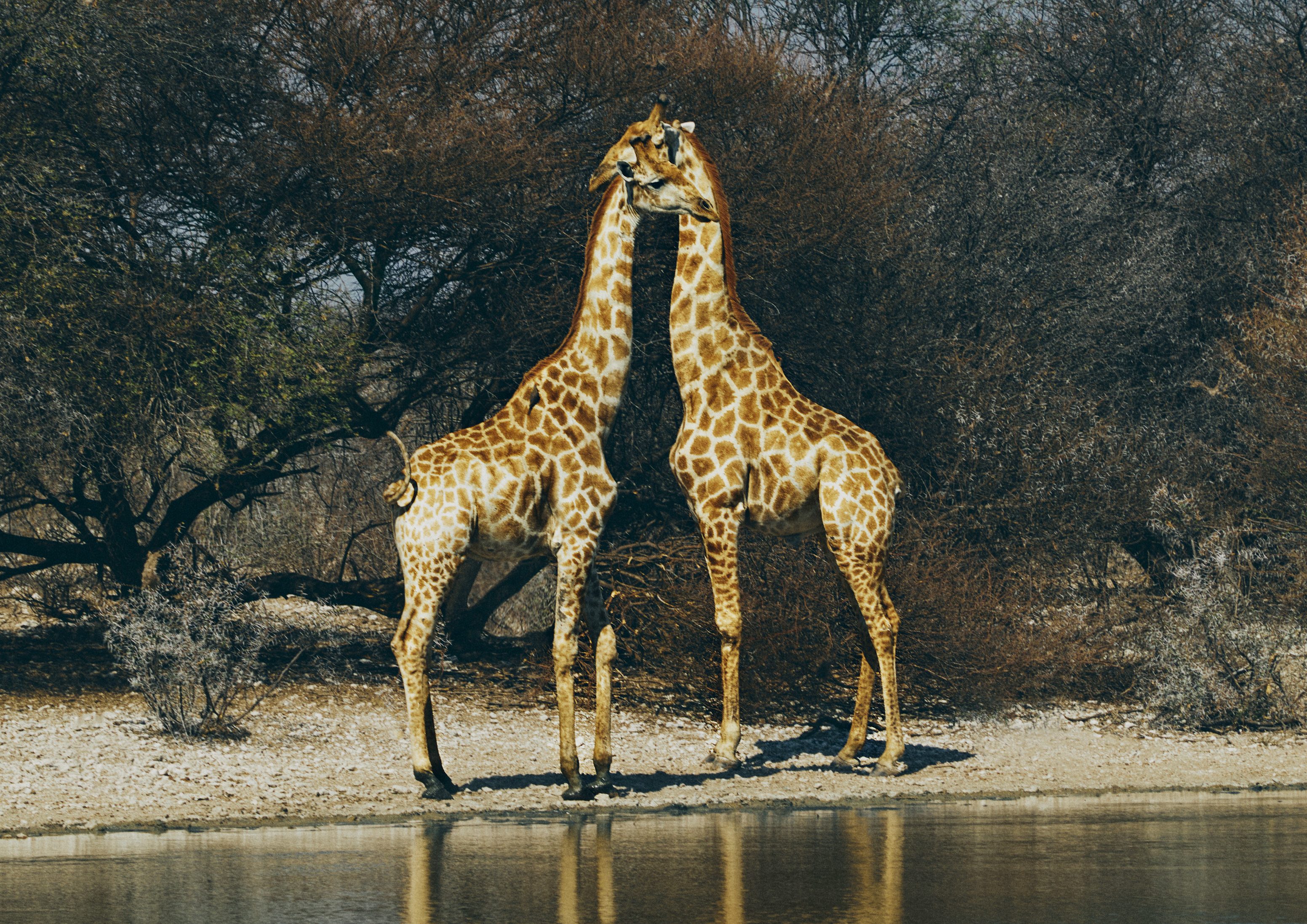
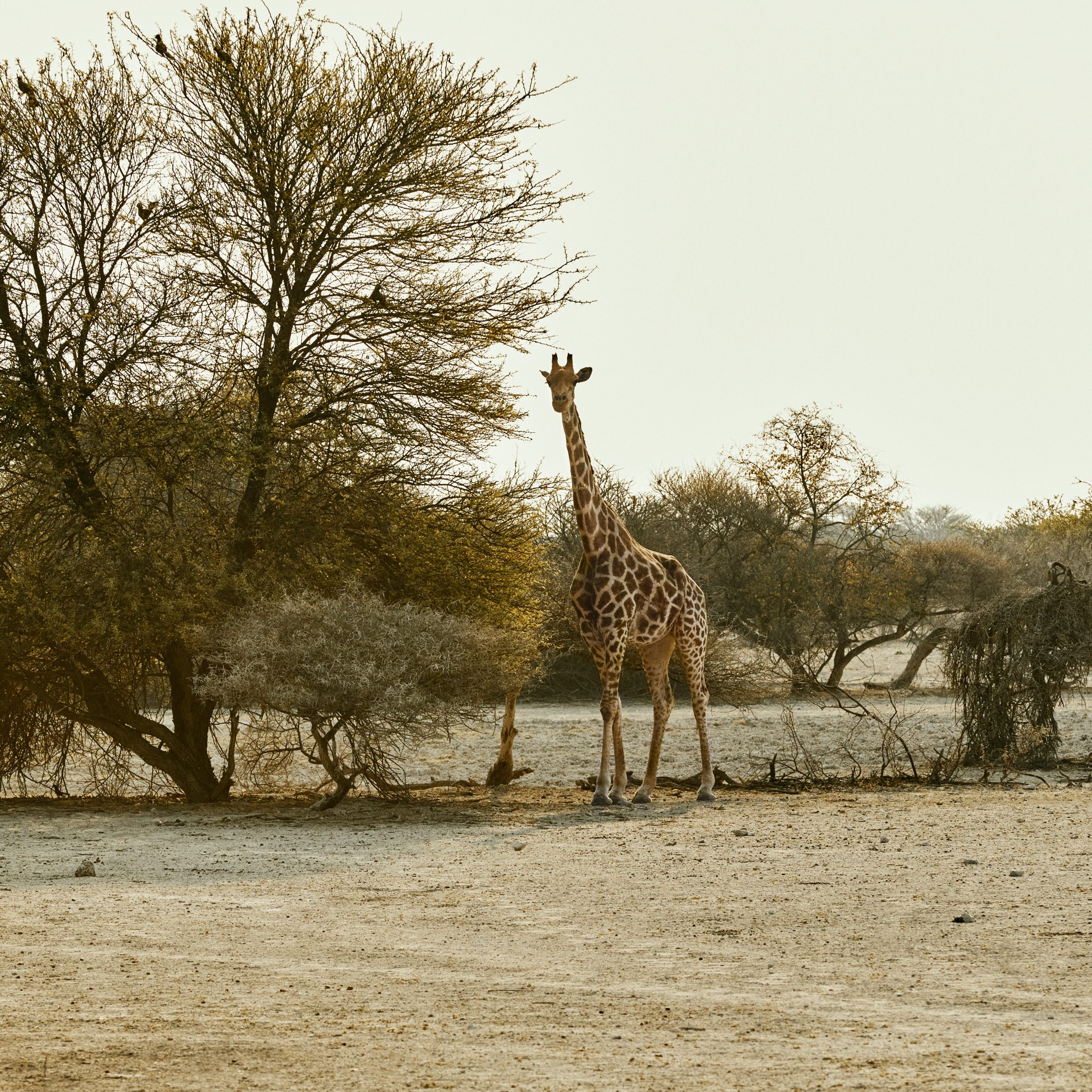
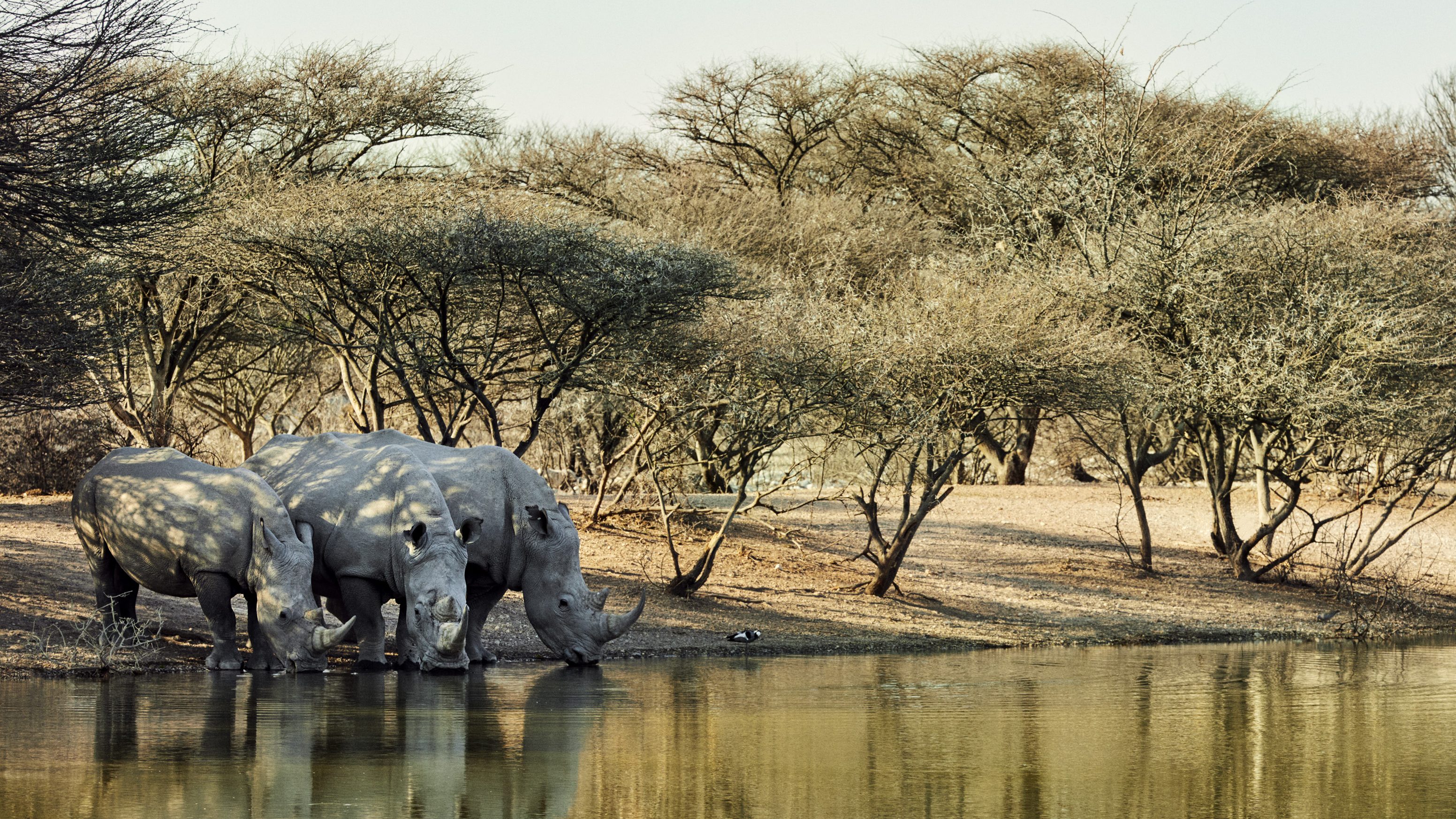
Over 300 species of bird thrive at Orapa Park – a dedicated game park near Orapa mine
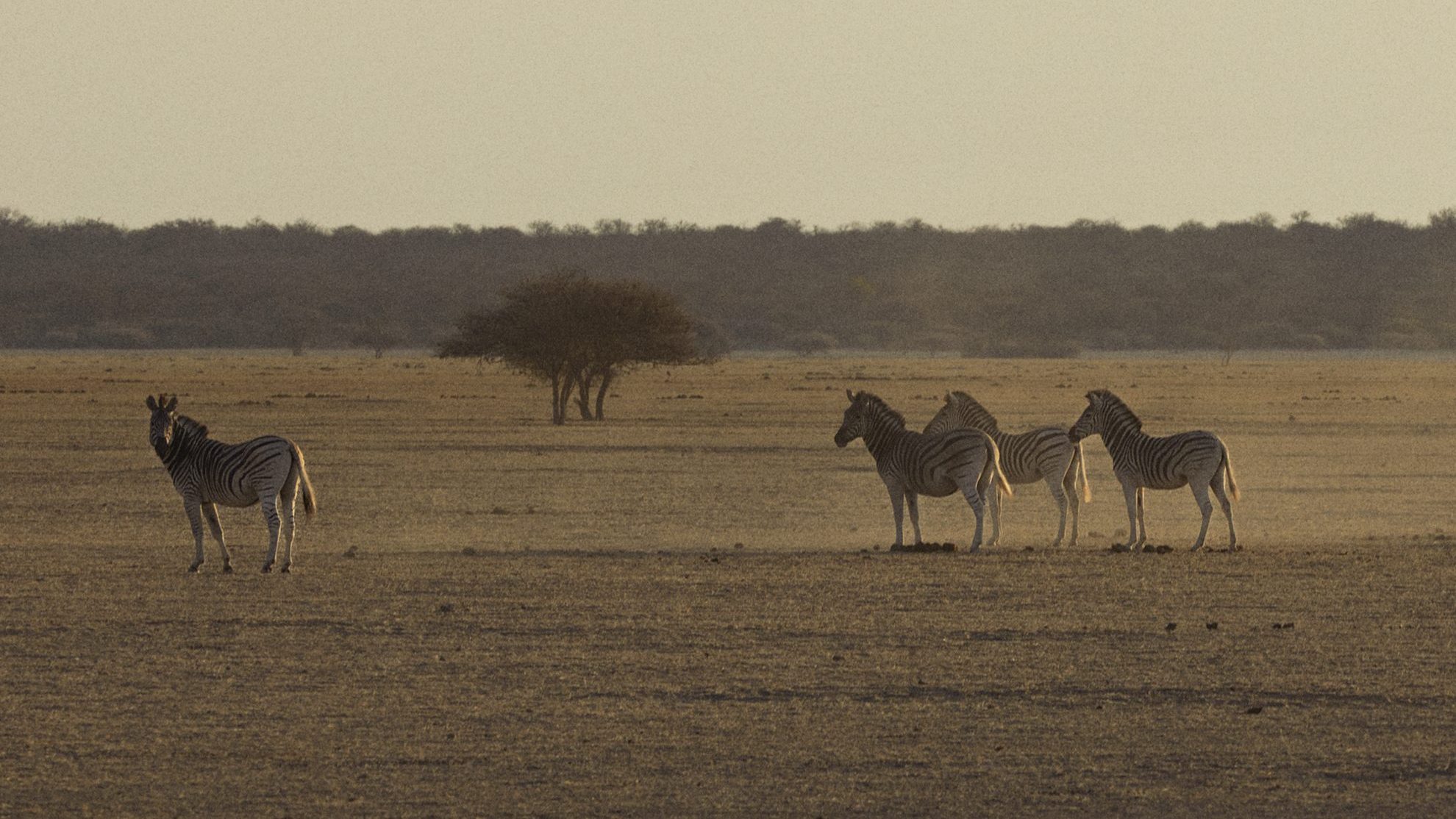
Debswana has two protected game sites:
Jwana Park and Orapa Park
Over 23 mammal species and 117 varieties of bird live at Jwana Park.
58 types of mammal and 86 types of reptile call Orapa Park home.13

Introduction
Diamonds of Botswana
The future for the people of Botswana, sparkles with possibility and prosperity thanks to diamonds. The ground is 70% covered by the Kalahari’s shimmering but unforgiving sands. Brave the terrain and you’ll find that, just below, lie some of the planet’s richest reserves of natural diamonds.
Botswana is the second-largest diamond producer in the world, producing roughly 25.1 million carats of diamonds in 2023.14 Since mining began in 1971, Botswana has produced around 14% of all diamonds ever found.15
In Botswana culture, leaders consult and seek consensus among people before acting. It’s a philosophy that’s been strongly embodied throughout Botswana’s diamond story. The industry has been set up to deliver long-term, sustainable prosperity, facilitated by fair governments and collaborative, community-minded mining partners. That’s why diamonds remain a force for good in Botswana.

Today’s consumers demand more than just exquisite and luxurious diamonds; they seek to uncover the human rights narrative woven into each stone [….]. Botswana is committed to pioneering traceability and responsible mining practices, ensuring that our diamonds not only shine in beauty but also embody integrity and ethical stewardship […]. By choosing Botswana diamonds, you are not just selecting a product; you are becoming a part of a movement towards ethical and sustainable development. You are choosing gems that reflect your values and a commitment to making a lasting positive impact […]. Together, we can ensure that diamonds remain not just symbols of timeless beauty but also catalysts for sustainable development and shared prosperity.”
Gideon Duma Boko
President of Botswana, in his address at the Facets 2024 conference in Antwerp, Belgium
Diamonds’ impact on Botswana
Botswana’s
diamond mines
There are currently five operational mines in Botswana. Jwaneng sits on the edge of the Kalahari Desert in southern Botswana, while the others are clustered in the country’s north east. Communities have sprung up around the mines, too, allowing Batswana from all over to build prosperous lives near mine sites.
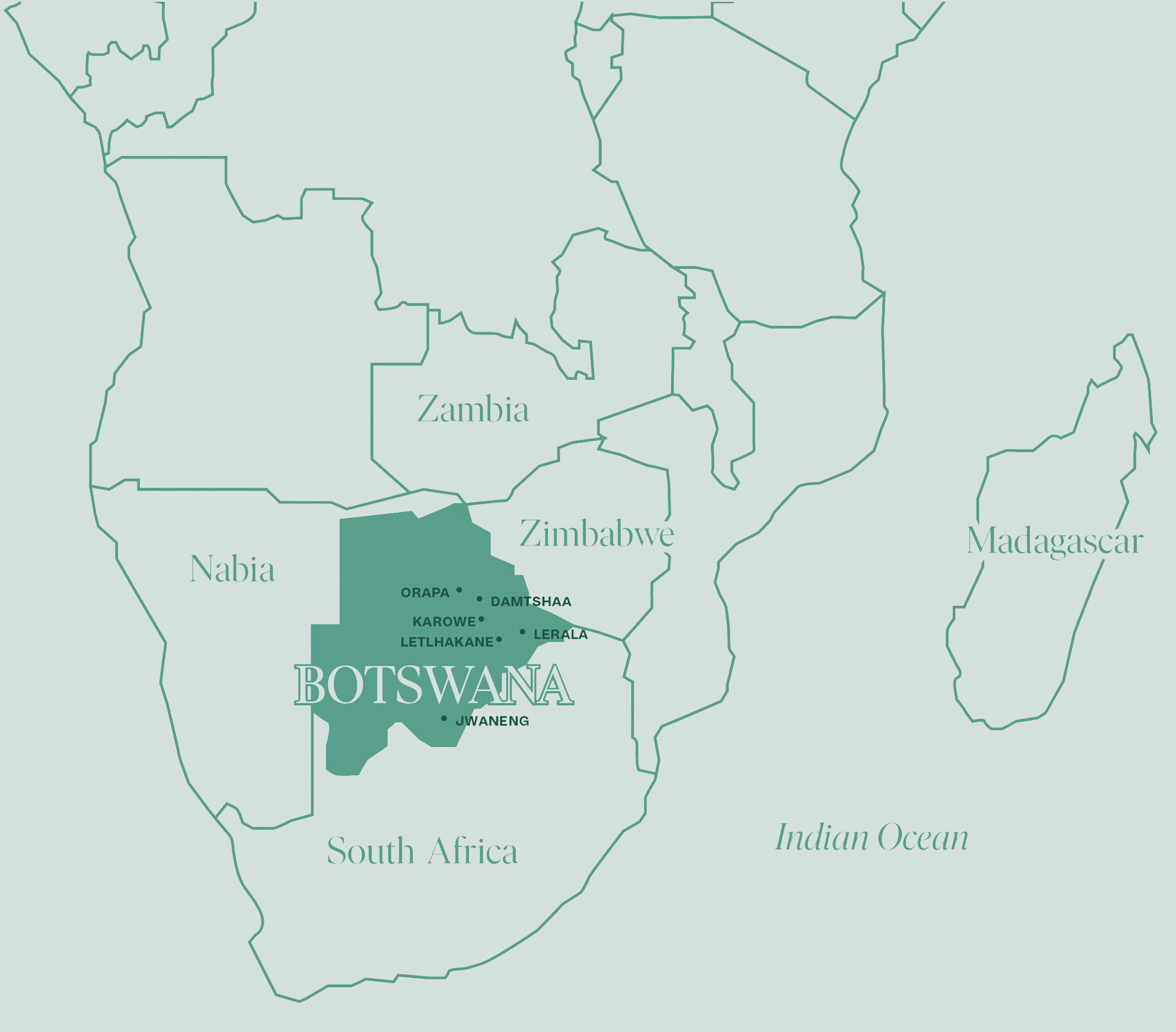
Current Diamond Mines
1.Jwaneng 23
Owner: Debswana. Opened in 1982, estimated lifeto 2035
- Jwaneng means ‘a place of small stones’ in Setswana
- 13.3 million carats were recovered at Jwaneng in 202324
- It is the richest diamond mine in the world by gemstone value
- Jwaneng’s high-grade stones make up 60-70% of Debswana’s revenue
- Its grounds are also home to the Jwana Game Park, home to around 1,700 animals including cheetahs and endangered white rhino
2.Orapa
Owner: Debswana. Opened in 1971, estimated lifeto 2050.
- The first diamond mine in Botswana, which has been operating since 1971
- The largest mine in the OLDM (Orapa, Letlhakane and Damtshaa Mines) cluster
- 11.3 million carats were recovered at Orapa in 202325
3.Karowe26
Owner: Lucara Botswana. Opened in 2012, estimated life to 2026, with potential for extended life through underground mining.
- Discovered in 1969, though production didn’t begin unti 2012
- Known for producing exceptionally large diamonds, with 6 diamonds over 1,000 carats – of the 10 largest diamonds discovered to date, eight came from Karowe mine27
- Focused on lower-volume, higher value production
- Produced around 395,134 caratsin 2023
4.Letlhakane
Owner: Debswana. Opened in 1975, estimated life
- The second-oldest open pit mine in Botswana
- Transitioning to tailings recovery in 2017, where diamonds are recovered from leftover mining materials
- Has produced 31 million carats to date
5.Damtshaa
Owner: Debswana. Opened in 2003, estimated life
- Damtshaa is the youngest Debswana mine, with a name that means ‘water for tortoises’ in the local Sesarwa dialect
- It’s a satellite mine of Orapa, located 20km east of the larger mine
- Produces an average of 250,000 carats per annum
6.Lerala Mine, Lerala
Owner: Formerly DiamonEx (2008 – 2009, Kimberly Diamonds (2014 – 2017). Now: Maroon Capital (since 2020).
- Currently non-operational mine. Received government approval in 2024 to restart mining
Diamonds have underpinned Botswana’s rise from the third-poorest country in the world to a vibrant, middle-income country. It was once an agriculture-based economy heavily reliant on beef exports, where people lived with poor infrastructure and limited access to healthcare and education.
Now, Botswana is home to many skilled workers whose families benefit from largely free education, universal healthcare and paved roads. The change has happened in just two generations, with the country’s average life expectancy rising a staggering 61% (from 37 years to 6116) in that time.
Building structures for long-term prosperity
To ensure Botswana sees the economic benefits of its natural resources, Debswana (a 50/50 joint venture between De Beers Group and the Government of Botswana) was formed in 1969. It continues to operate across four active mines, generating significant, regular income for the country’s people.
Overall, this structure allows the government to retain 80% of profit generated by Debswana, according to the World Bank17, and is used to support and grow the country’s economy. Agreements like this are a major factor in Botswana’s impressive per capita income increase, which has risen from just $80 per year in 196718 to $7,238 in 2021.19
The Okavango Diamond Company (ODC), which was set up in 2012 and commenced operations in 2013, marked another pivotal moment in the intertwined history of Botswana and natural diamonds. Named after the lush delta and UNESCO World Heritage site, ODC is wholly owned by the Botswana government with a direct route to market for the country’s rough natural diamonds. ODC is the largest source of guaranteed Botswana production in the market. It sells 25% of the full range of Debswana’s production, from rare and exceptional high value single stones through to lower quality industrial goods. ODC employs around 61 people and typically sells between 3-6 million carats per annum.20
Supporting the entire diamond value chain
In addition to diamond mining, a vital secondary sector has emerged that has a huge economic impact on Botswana – diamond beneficiation, which includes cutting, polishing and any other work that takes diamonds from raw to retail ready. Diamond miners like De Beers Group are helping to support this secondary industry to thrive, with commitments to working with local beneficiation providers, offering mentoring programmes and providing financial support to help more Batswana get involved. In 2023, 86% of rough diamonds allocated by De Beers Group were beneficiated or utilised locally.21
Botswana is also reinvesting and conserving the fruits of the inherently finite diamond trade. In 2011, the government ruled that 40% of mineral revenue22 must be saved as financial assets for future generations. The rest is being invested in infrastructure, education, healthcare and skills development.
Responsible sourcing and traceability has been an integral part of the diamond industry in Botswana. This allows us to turn one of our country’s most important natural resources into sustainability and long-term growth for our economy and society.
Mmetla Masire
Managing Director, Okavango Diamond Company.
The story
The story of Botswana’s diamonds to date
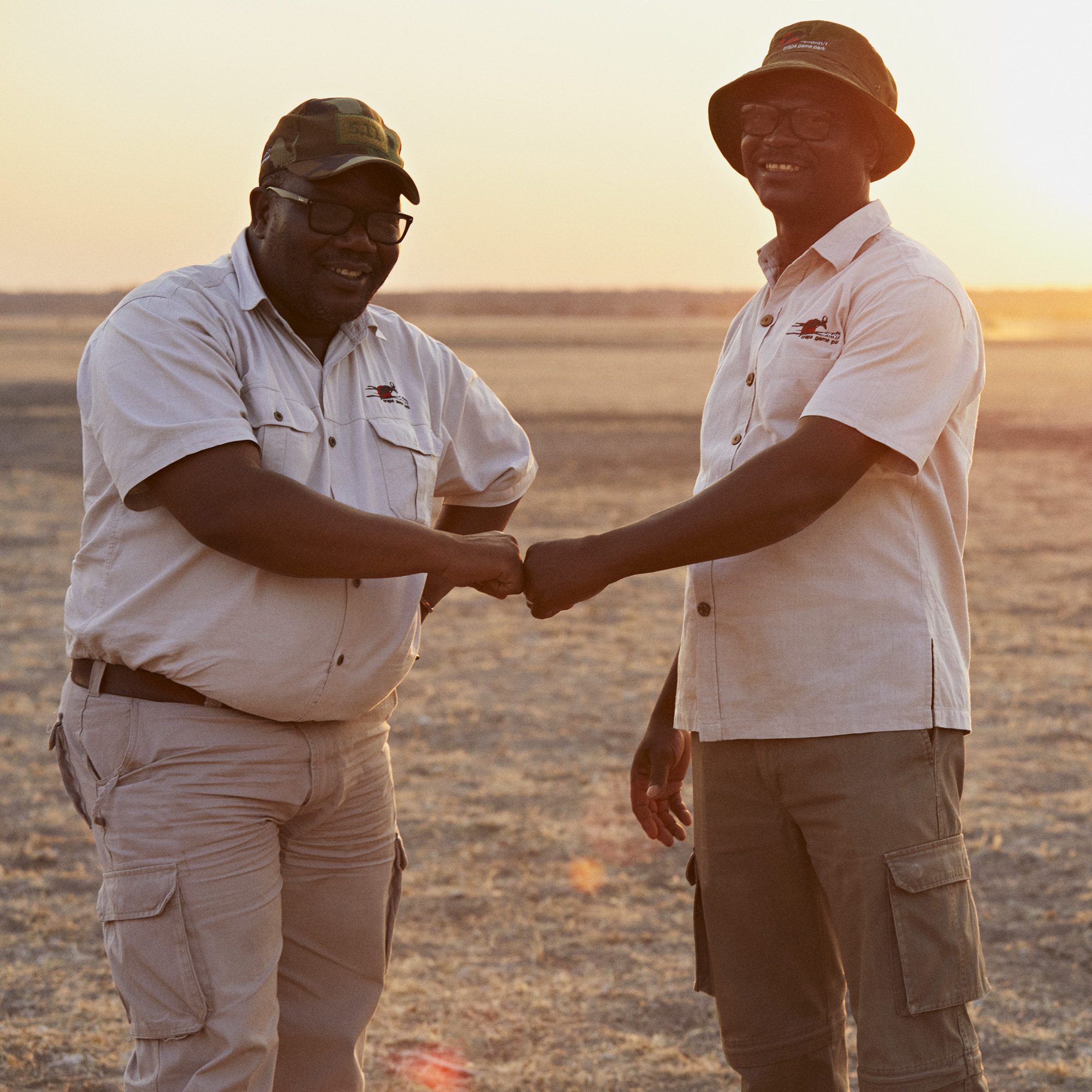
[At Orapa], an entire community that thrives — not just exists — looking after their treasure because they all understand that it is for the people; it’s theirs. From an economic standpoint, the significance of natural diamonds here cannot be overstated. In Orapa Mine’s General Manager, Mogakolodi ‘Mogs’ Maoketsa’s, own words: ‘The mine is God’s greatest gift to Botswana.’ As an African, this filled me with so much pride. Not only because of the gift that was buried in the earth but because it’s taken some really inspirational leadership to make this natural resource a gift to every Motswana. This is a time when it is finally becoming possible to get a precious gem that is not only magnificent but has also contributed positively to the community that has found it.”30
Thelma West,
Celebrated jewellery designer
In 1966, Botswana realised its dream of becoming an autonomous democracy and declared full independence after decades of British rule. Sadly, life did not immediately become prosperous for Batswana. Droughts and crop failure plagued Botswana in the mid-1960s. Many of its people were starving, with a fifth of the population relying on emergency aid and just one doctor per 47,652 people. Looking back, second president His Excellency Sir Ketumile Masire said, “When we asked for independence, people thought we were either very brave or very foolish.”.28
But in a brilliant twist of fate, just one year after formally becoming an independent nation, Botswana discovered the key to its sparkling future.
Botswana’s first president, His Excellency Sir Seretse Khama, acted quickly to capitalise on diamonds’ potential. To prevent a power struggle or wealth hoarding among the area’s tribes, he met with the Dikgosi (Council of Chiefs). They agreed to let diamonds be owned by the Republic, rather than a single tribe, so all Batswana could prosper.
Botswana’s government has also worked hard to ensure much of its precious natural resources’ economic power is retained by its people. Knowing it didn’t have the funds or expertise to begin state-run diamond mining, the government established a mutually beneficial agreement with De Beers Group. The strong working relationship has helped Botswana avoid the ‘resource curse’, meaning diamonds benefit the people who inhabit its lands.
By early 1967, De Beers had been consistently prospecting in Botswana for 13 years with little luck. The closest anyone had come to finding diamonds was its competitor, the Central African Selection Trust (CAST), which found three small diamonds in the gravel of the Motloutse River. Lead geologist Dr Gavin Lamont asked for one more season. Two months before his deadline, he found kimberlite pipes below the arid ground in the remote Orapa region. EDUCATION
Exploration and innovation
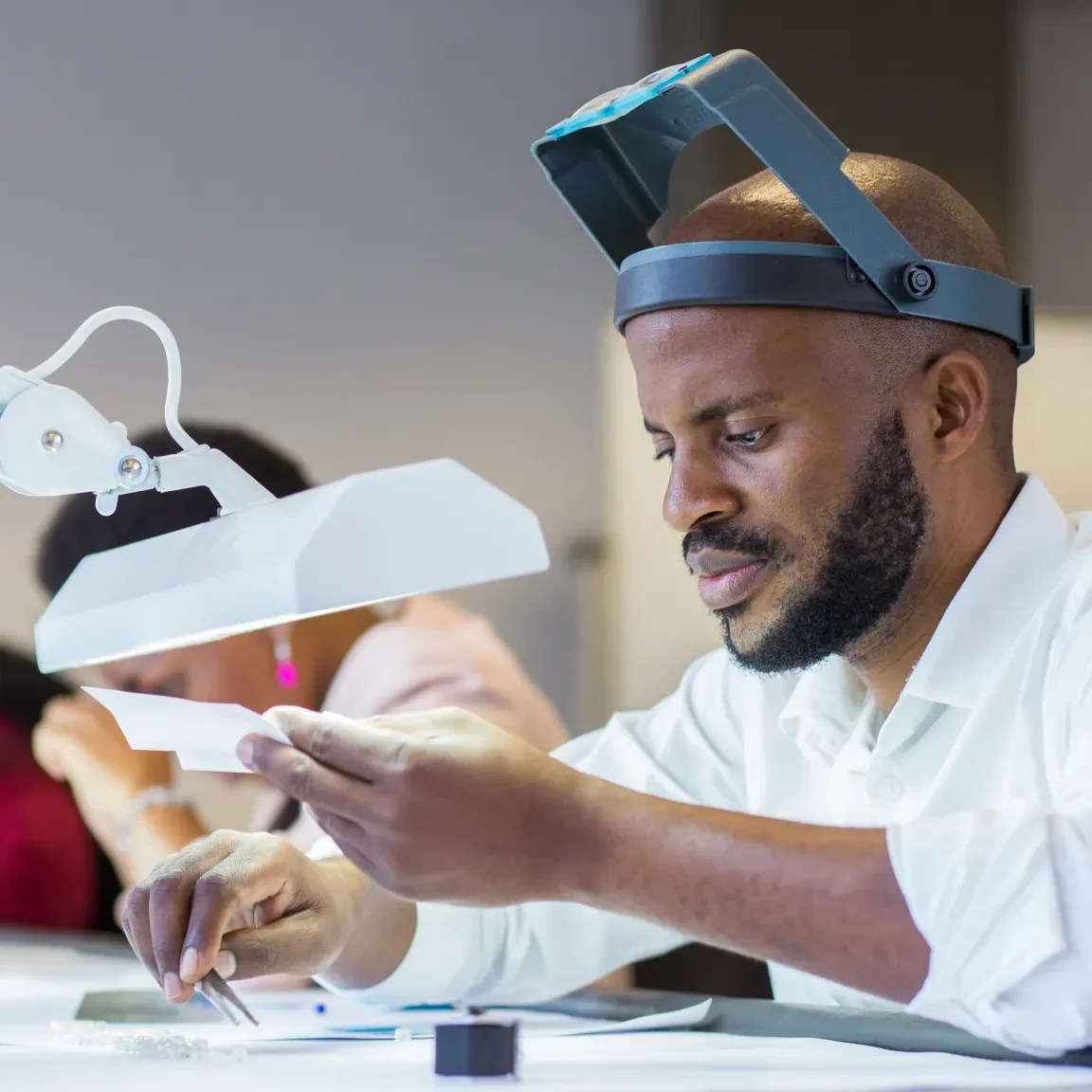
Today, just one junior mining company, Botswana Diamonds, is continuing to prospect for a new mine site. Instead, efforts are focused on extracting the full potential of currently operational mines. At Lucara’s Karowe mine, its Mega Diamond Recovery X-ray Transmission (MDR XRT) technology is helping to recover some of the world’s largest, most valuable diamonds.29 Since it was implemented in 2017, incredible gemstones, including the second-largest ever discovered, have been found and extracted intact.
Beauty
The beauty of
Botswanan diamonds
The land’s geological stability and rich, cratonic regions are responsible for Botswana’s diamond rich soil. Some of its kimberlite pipes are so massive and visible that they were once used as a navigation landmark for pilots flying from South Africa to Europe.
Botswana’s mines don’t just produce a high volume of gem-quality diamonds. As a region with relatively low seismic activity, enormous, highly covetable diamonds have remained intact, which can now be recovered without damage thanks to pioneering technology.
Lesedi La Rona
– 1,109 carats
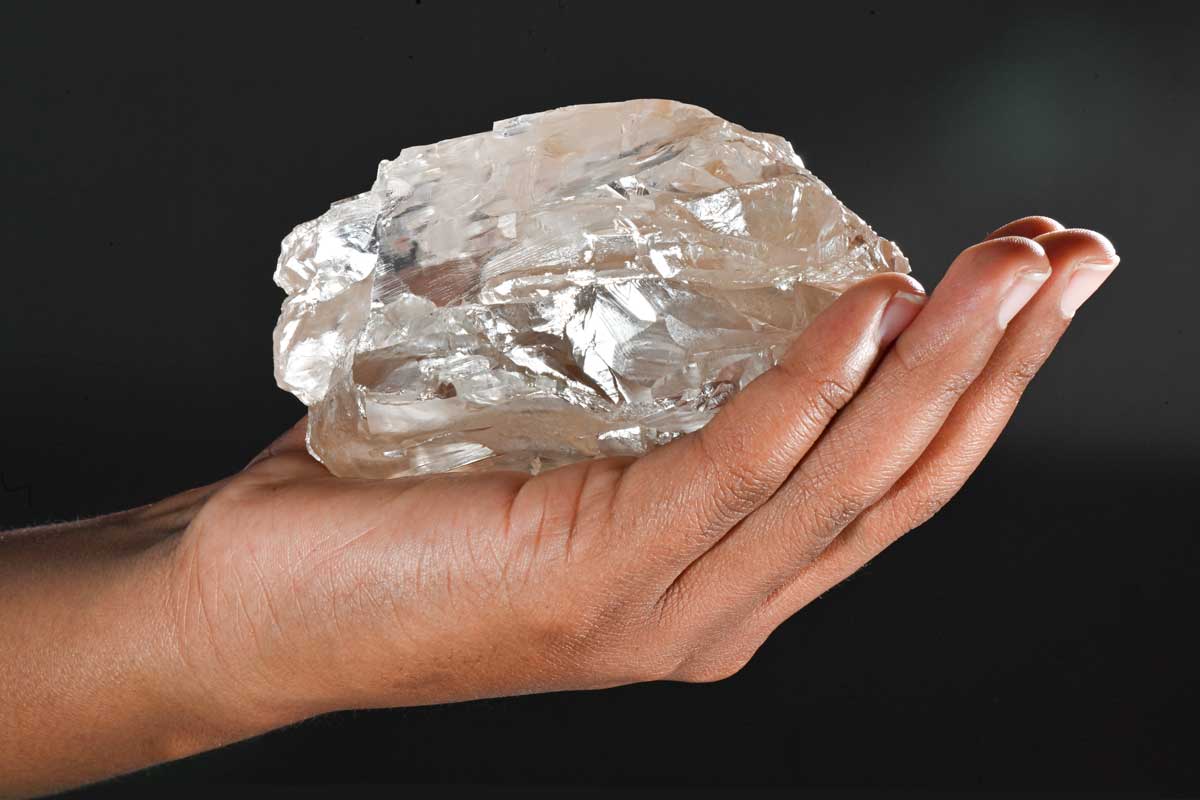
Discovered in Lucara Botswana’s Karowe Diamond Mine in 2015, this massive diamond was at one point the second-largest diamond ever discovered. It is estimated to be 2.5 billion years old and its name, Lesedi la Rona means ‘Our Light’ in Setswana. This moniker was chosen through a public competition which received 12,000 entries. The winner stated that he picked this name as “this diamond is the pride, light and hope of Botswana”.
Sewelô Diamond
– 1,758 carats
Lucara Botswana recovered the roughly 2 billion year old Sewelo Diamond in April 2019. Lucara Botswana received 22,000 submissions for a potential name for the diamond through a competition and the name Sewelo which translates as ‘Rare Find’ was chosen. At the size of a tennis ball but six times heavier, Sewelo remains the third-largest diamond ever discovered. In 2020 this huge gemestone was purchased by luxury fashion house Louis Vuitton.
MOTSWEDI
– 2,488 CARATS
In true Lucara Botswana tradition, the mine broke its own record once again with the palm-sized 2,488 carat diamond found in August 2024. The 2,488 carat diamond, which was unearthed at Lucara Botswana’s Karowe diamond mine, is the second-largest diamond ever found. The diamond was named ‘Motswedi’ through a naming competition. In Setswana, Motswedi means ‘a water spring’, the flow of underground water that emerges to the surface offering life and vitality. Water in Botswana is not merely a resource; it is the very essence of life, survival, and new beginnings.
Okavango Blue
– 41,11 carats
Discovered in 2018 at Debswana’s Orapa mine, this fancy deep blue diamonds is one of the largest blue diamonds ever found in Botswana. Its rich colour comes from boron, which is only found in a few places in Earth’s mantle. It has VVS1 clarity with one of the highest polished colour classifications of any blue diamond. The diamond was cut into a 20.46 carat oval, brilliant-cut stone. To allow more people to appreciate this rare beauty, it was loaned by the Okavango Diamond Company to take centre stage in the American Museum of Natural History’s Bostswanan Diamond exhibit.31
Botwsana’s diamond industry
Botswana’s thriving secondary diamond industry
Weaving Innovation and Sustainability to Shape Botswana’s Natural Diamond Legacy
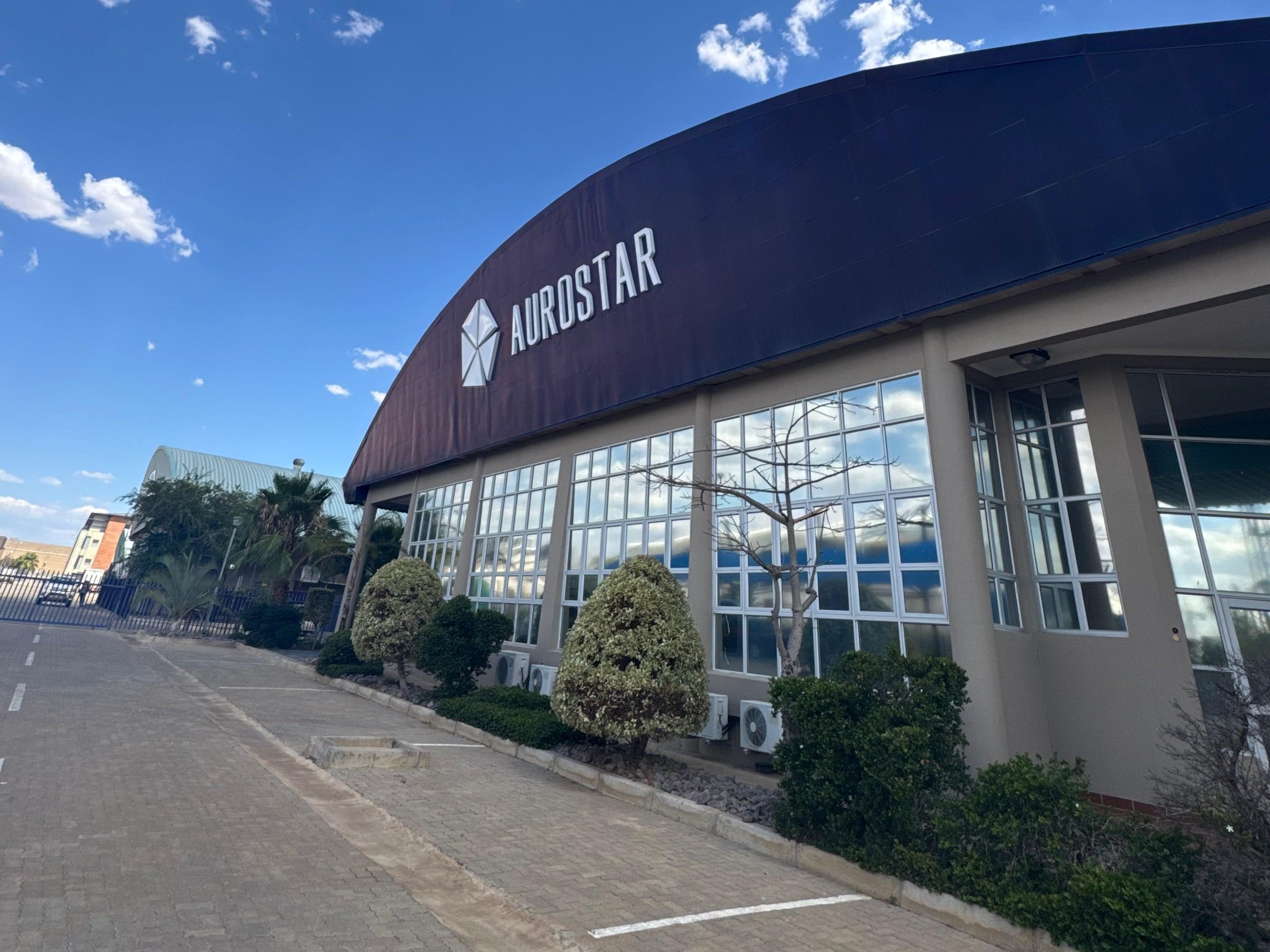
Founded by third generation diamantaires with a legacy in the diamond industry since 1966, Dubai-based Aurostar’s decision to establish a scalable manufacturing operation in Botswana’s Gaborone in 2012 marked a pivotal chapter in the company’s history. Today, as Botswana’s largest manufacturer of fancy shapes, Aurostar proves that true luxury is more than just beauty—it is about the positive impact on communities and the planet.
The company specialises in crafting bespoke, high-value natural diamonds, including precision-cut fancy shapes, for luxury houses and top retailers worldwide. However, what truly sets Aurostar apart is its commitment to workforce development.
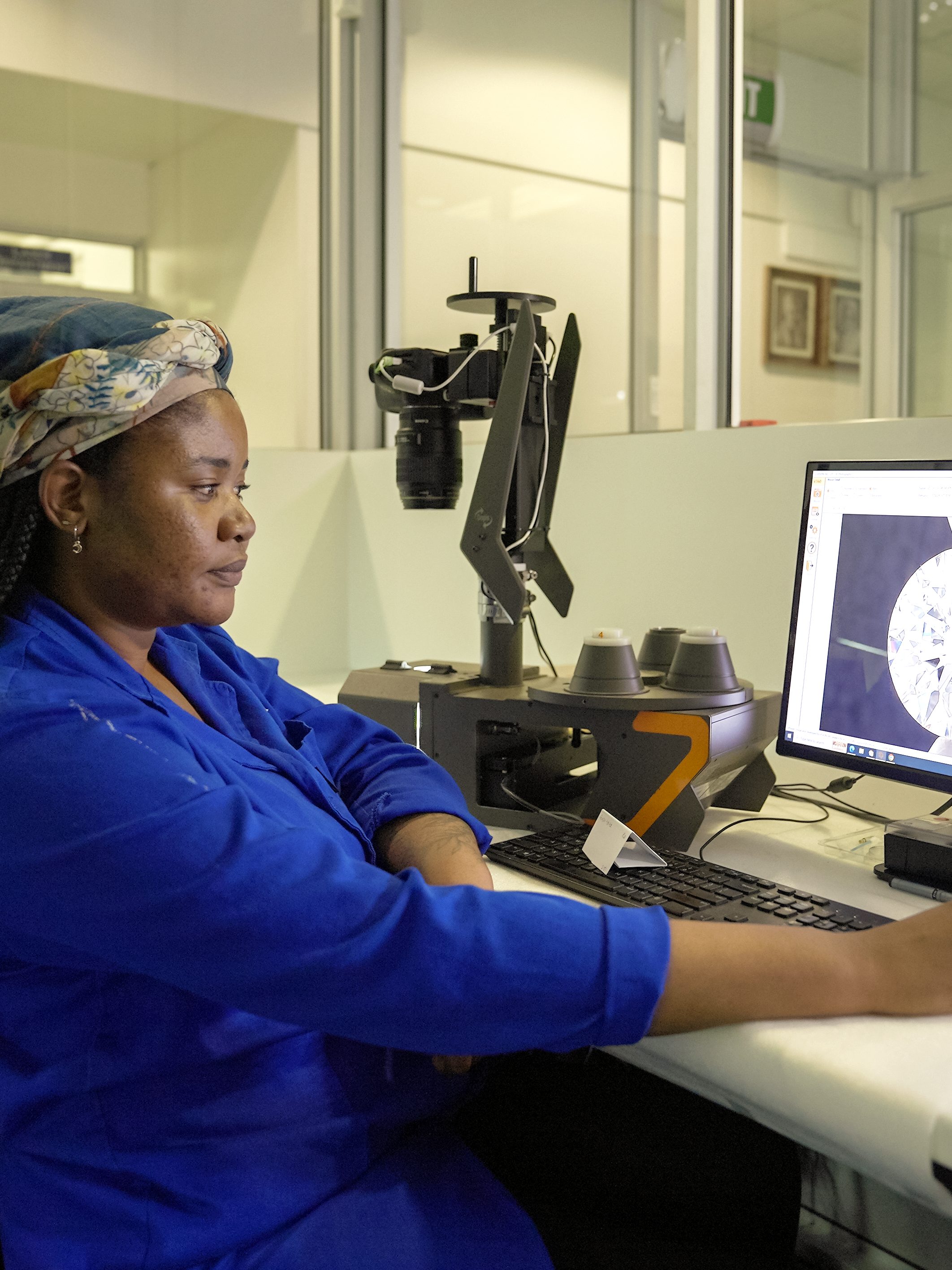
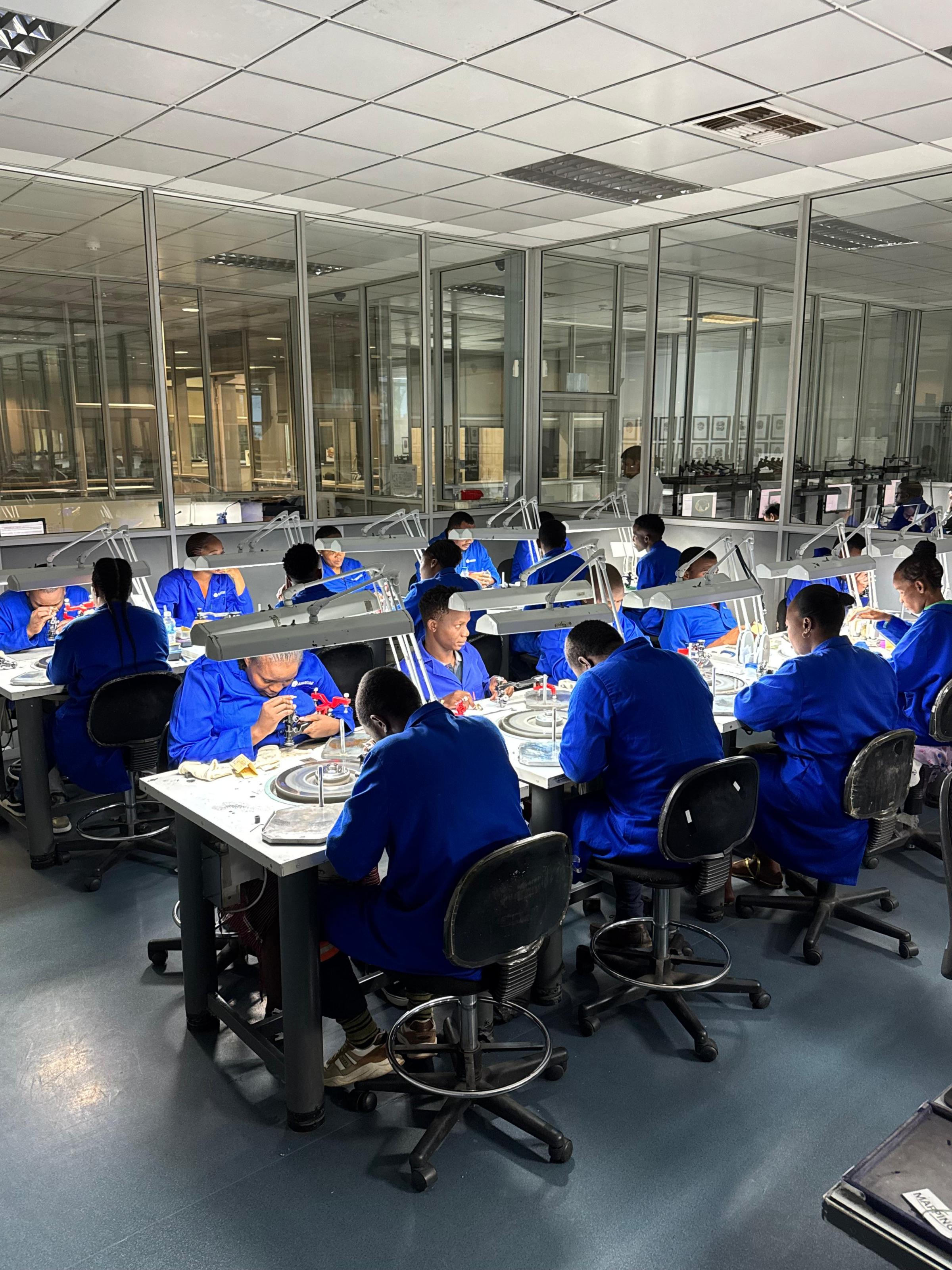
Aurostar’s training ensures employees learn to polish entire diamonds from start to finish, gaining expertise at every stage. This comprehensive skill set is imparted through a Botswana Qualifications Authority (BQA), a certified programme, which combines proprietary training with hands-on sessions to develop skills.
With 84% of its 151 employees comprising locals, Aurostar remains committed to empowering Botswana’s talent. Many employees, who join as young as early-to-mid-20s, have gained financial independence, with 80% owning homes and cars. Notably, 70% of the 1,250-plus employees trained by Aurostar remain in the diamond industry.
Stories of transformation
The company’s commitment to skill development is evident from the stories of its employees, like Lebobang who turned from a complete novice to an expert in diamond cutting and polishing, courtesy of the company’s on-the-job training. Lebobang can now polish a complete stone (round) and is one of the senior polishers in the organisation to date. Her expertise extends to polishing exquisite 10 carat diamonds and mastering diamond polishing techniques that rival the finest polishers globally. The skill development opportunity has also provided Lebobang with vast experience and a stable income, enabling her to care for her two children.
Similarly, Cedric, a man in his early 40s from a rural area, joined Aurostar without any background in the diamond industry. Thanks to the company’s state-of-the-art training facilities, Cedric honed his skills to polish round stones across all processes, eventually rising to a supervisory role. In his current position, Cedric not only contributes to the company’s vision but also mentors new trainees, creating a cycle of growth and learning. His journey from novice to leader has enabled him to support his family and elevate their quality of life, showcasing the transformative potential of Aurostar’s initiatives.
Aurostar is now taking its commitment to skill development further with plans to establish a formal training school in Botswana. This ambitious initiative will enhance the impact of its BQA-certified programme and set new benchmarks for education in diamond-producing countries
Aurostar redefines diamond craftsmanship, blending innovation with a deep commitment to sustainability and community empowerment. Each diamond it creates symbolises not just natural brilliance but the progress and opportunities it fosters in Botswana. By transforming lives and uplifting local talent, Aurostar stands as a beacon of responsible luxury, proving that true excellence lies in the lasting impact it leaves behind.
Botswana is the world’s diamond powerhouse, turning its natural wealth into prosperity and stability. We are proud to play a role in this success by upskilling local talent, creating sustainable jobs, and adding value to the nation’s most treasured resource.
Arpan Mehta,
Managing Director, Aurostar Diamonds
Diamond beneficiation and
jewellery manufacturing
A truly successful diamond industry encompasses more than the mining process. Beneficiation is about increasing diamonds’ value through cutting and polishing before they’re sold to manufacturers and retailers. For Botswana, beneficiation presented yet another chance to bring opportunity and economic buoyancy to its people. The majority of De Beers Group’s sorting and sales now takes place in the country, with diamonds from every one of its mines transported to Botswana. The Group is also supporting small enterprises, which can struggle to meet due diligence and compliance requirements, to help local businesses enjoy the prosperous diamond sector. By the end of 2024, it had 41 long-term-contract customers that employ 3,200 people – 80% of whom are Batswana.32
Gaborone’s Diamond Technology Park is the beating heart of the country’s beneficiation operations. Located next to De Beers Group’s offices and close to the airport, it’s home to a growing community of businesses such as diamond manufacturers, including authorised De Beers Group Sightholders and gemstone labs. The Park is also where the Botswana Digital & Innovation Hub33 is located. It is a national centre for entrepreneurship, which will expand to house businesses in the IT, cleantech and biotech sectors to help the economy diversify beyond diamonds.
More broadly, diamond beneficiation and jewellery manufacturing continue to be a huge source of opportunity and potential for Botswana. According to a report from the Botswana Diamond Manufacturers Association (BDMA), the number of roles within beneficiation is projected to double by 2030 to over 8,000 from its already impressive 4,000+. Local jewellery manufacturing has even more exciting growth prospects, with projections showing that the number of job opportunities could increase stratospherically – going from just 46 in 2024 to 1,380 by 2030.34
Within KP Sanghvi, a key diamond and jewellery manufacturing organisation, local residents account for 70% of its employees in Botswana, with 55% of their workforce being women. Globally they employ over 12,000 people, with women making up 35% of their workforce.
If there can be so many diamond-related opportunities in a country like India, which mines a tiny number of diamonds, we can achieve the same in Botswana. Realistically, the local diamond cutting and polishing industry is only around 15 years old, meaning there will be many new opportunities as this sector continues to develop, particularly with effective government support. It’s an industry that supports everyone, graduate or school dropout, to start or advance their careers.
Arpan Mehta,
Managing Director, Aurostar Diamonds
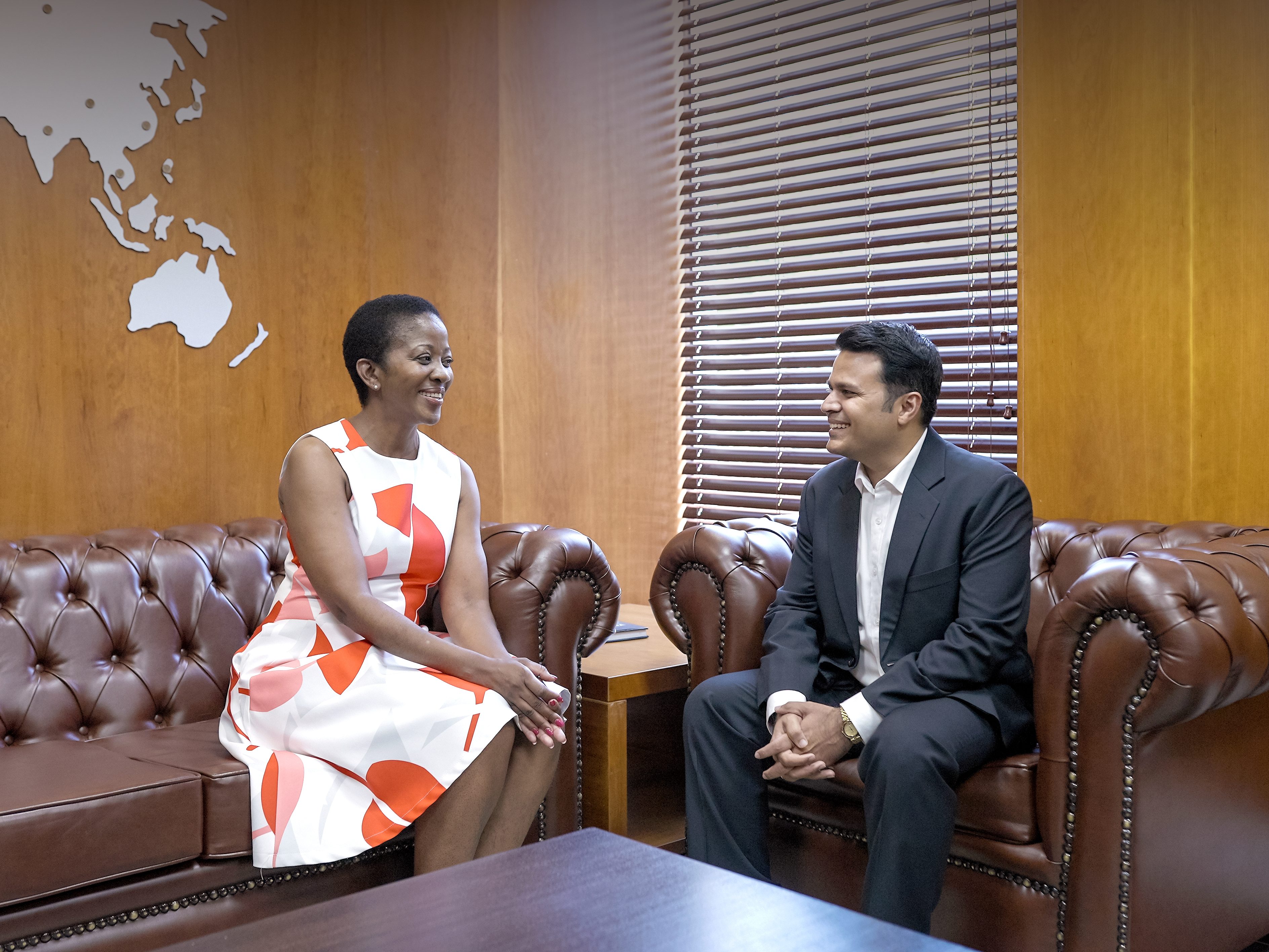
Left: Lesego Matsheka, Managing Director of Venus Jewel Botswana.
Right: Siddarth Gothi, Business Development Manager at KGK Botswana
KGK Diamonds opens Botswana’s first jewellery manufacturing site
In 2023, KGK Diamonds opened the country’s largest and first dedicated jewellery manufacturing plant.35 It runs a training programme for young adults, prioritising those from disadvantaged backgrounds and with disabilities that make it harder to find work. More than 100 trained in 2023, learning skills like diamond polishing, and many secured full-time work once qualified.
Outside of its training scheme, the factory has an inclusive recruitment policy. It’s proud to have a 50/50 gender-balanced workforce, a free on-site nursery to support working mothers, and a targeted recruitment initiative with the Botswana Society for the Deaf. To date, KGK Diamonds has supported over 50 hearing-impaired employees. Fitted with solar panels, water recycling technology and a vegetable garden, KGK’s facility was also designed with sustainability in mind.
Powering Botswana’s economy
The natural diamond industry in Botswana stands as a shining example of a cosmopolitan ecosystem where diverse cultures collaborate to drive innovation, foster growth and give back to the community. BDMA itself brings together Indian, Israeli, Belgian, Sri Lankan, and other international experts. This unique industry has become a cornerstone of Botswana’s development, creating opportunities for individuals while celebrating inclusivity and global cooperation.
Lesego Matsheka, the Managing Director of Venus Jewel and sole woman representative and Motswana on BDMA committee, is a testament to this inclusive ethos. Her journey reflects the industry’s transformative impact, not just on the nation but also on her personal growth.
The diamond industry has not only given me a platform to contribute meaningfully to Botswana’s economic progress but also embraced me with open arms, allowing me to learn, grow, and thrive in a truly global environment.
Lesego Matsheka
Managing Director of Venus Jewel Botswana
Tokafala
Tokafala, a programme operated in partnership with the Government of the Republic of Botswana, De Beers Group and Anglo American Plc, was launched in 2014. Its goal was to help local entrepreneurs build successful businesses by improving their skills, ultimately creating jobs and supporting local economies, with mentoring and strong market opportunities.
Tokafala also supports STRYDE – an initiative that helps young people develop personal and professional skills that strengthen their opportunity to thrive as employees or business owners.
Now in its third phase, Tokafala has helped to support 11,276 jobs and is currently focused on:
• The Textile Accelerator Programme, which is helping SMEs produce apparel, such as PPE and uniforms, in collaboration with Debswana, the Botswana Bureau of Standards (BOBS) and the Local Enterprise Authority (LEA)
• The Tourism Initiative, which uses experts from the Hospitality and Tourism Association of Botswana (HATAB) and the Botswana Tourism Organization (BTO) to help sustainably revive tourism in Maun and Kasane
• Helping to improve agricultural practices through the GLOBALG.A.P. farm-assurance programme
• Offering youth enterprise development and professional skills development via its hubs in Gaborone, Letlhakane, Maun and Selebi Phikwe
To say diamonds are a key part of Botswana’s economy would be a gross understatement. Diamonds represent 80% of Botswana’s exports, make up a third of its fiscal revenue and account for a quarter of the country’s GDP.36 It’s hardly surprising, considering 2.47 million carats were recovered from Debswana’s four mines37 and 395,134 carats from Lucara Diamond’s Karowe mine in 2023 alone.38
A thriving hub of opportunity
Close to 10,000 people are employed across Botswana’s five diamond mines, but there are plenty of opportunities outside them too. In 2013, De Beers Group moved its Global Sightholder Sales facility from London to Gaborone as part of its ongoing commitment to beneficiation. Now, all rough diamonds from its mines in Canada, Namibia, South Africa and Botswana are processed there. It’s also where De Beers hosts local Global Sightholder Sales events, which take place 10 times a year, where customers from across the globe inspect and purchase diamonds.
More broadly, beneficiation is a huge source of opportunity for Botswana’s skilled people. Debswana’s Citizen Economic Empowerment Fund (CEEP) has allocated BWP 20 billion ($1.5 billion) to develop and support jobs in the Debswana diamond value chain. By the end of 2023, it had supported 12,714 jobs. The Diamonds for Development fund takes the support one step further. Established as part of Debswana’s 202v mining license extension, the fund will help Botswana develop a broader knowledge-based economy to secure the country’s future beyond mining.
Diamonds’ fiscal impact
Lucara Diamond Corp paid $24.11 million in taxes ($6.76 million), royalties ($16.95 million) and fees ($400,000) in 2023.39 Anglo American PLC, which owns 85% of De Beers Group, paid $1.159 billion in taxes and other economic contributions in 2023. This included $197 million in wages, $5 million in community and social initiative investments, $357 million for local procurement and $234 million in profit share to the government.40
For our people, every diamond purchased represents food on the table, better living conditions, better healthcare, potable and safe drinking water, more roads to connect our remote communities, and much more.
Festus Mogae
Former president and current member of the Diamond Empowerment Fund’s Advisory Board41
Empowerment
Empowering women and girls
Female leadership powers the Karowe mine, with Managing Director of Lucara Botswana, Naseem Lahri, at the helm. Lahri believes having a strong female workforce is inspiring other women to pursue a career in the natural diamond world. She said, “They’re seeing females in the forefront and more women are actually coming to apply for jobs here because they know it can happen”.
Providing opportunites for all women
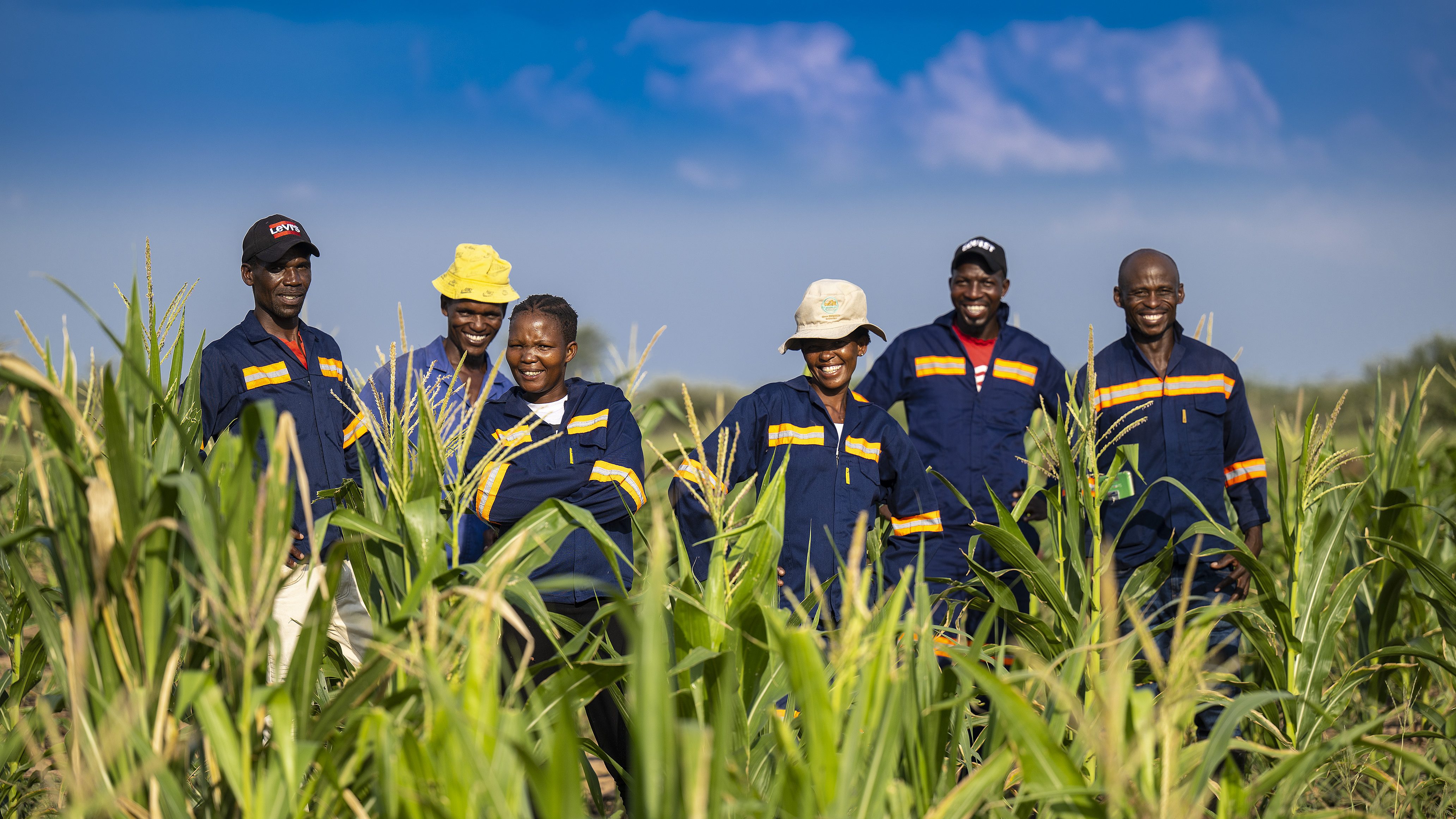
Lucara Botswana continues to support 19 villages in the mine’s vicinity in an attempt to empower them with various life skills that will ensure they are able to thrive and create generational wealth. in 2019 Lucara Botswana set up a horticultural farm in Mokubilo village to bring a solution to the hunger and malnourishment in the area. Today, the farm is lead by a woman with a 90% female workforce and supplies neighbouring villages and supermarkets with a variety of vegetables and eggs.
Local teachers also noticed that school-going girls were regularly missing school and discovered that it was because they didn’t have access to sanitary towels. Lucara Botswana has supported school going girls around Botswana with over 50 000 sanitary pads to ensure that they do not miss out on school.
Lighting the path for women and girls in STEM
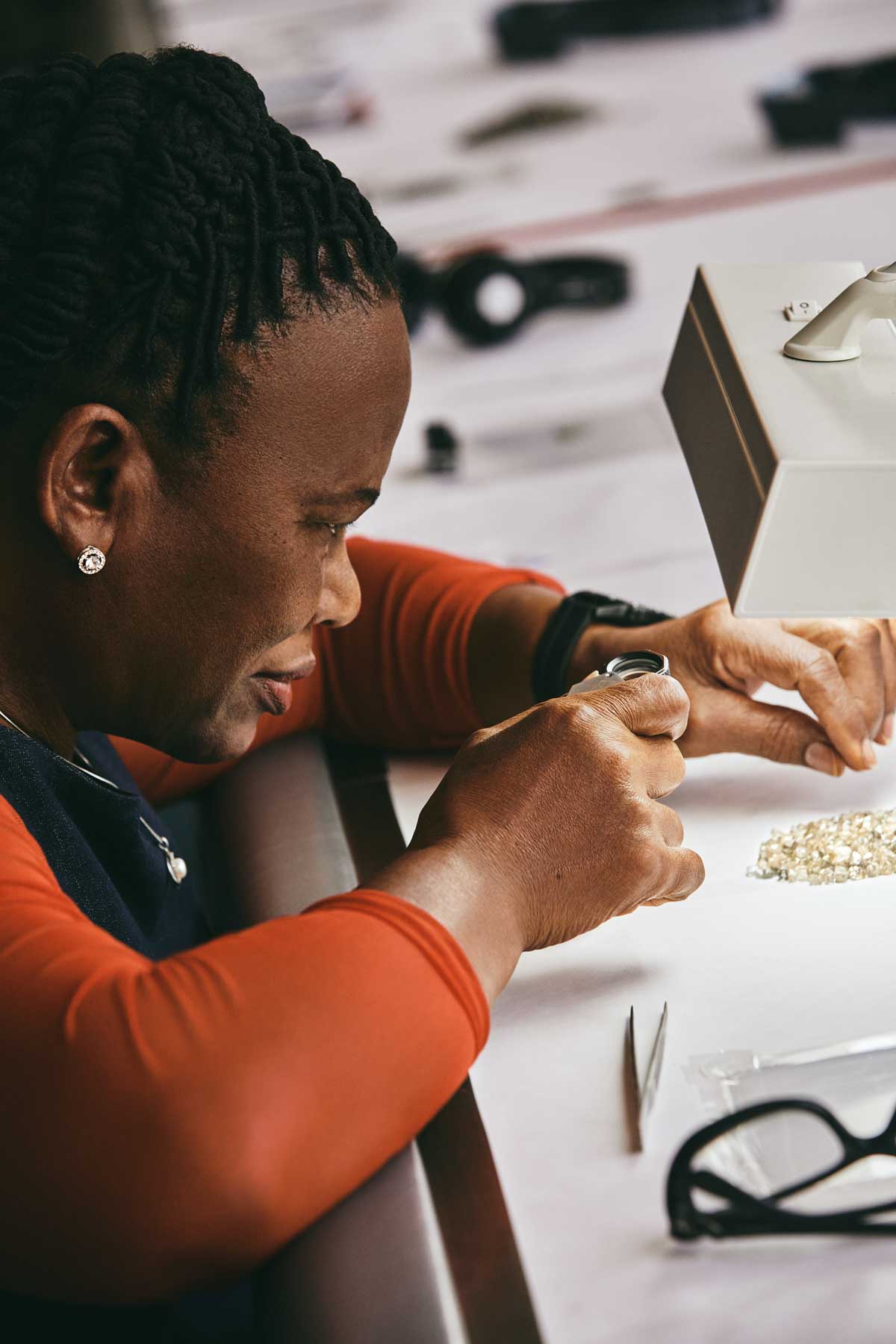
Debswana runs an on-the-ground STEM Girls Programme, which uses outreach to show young women what a future in STEM could look like. It hosts annual workshops in the Boteti and Jwaneng-Mabutsane areas and connects young women with female Debswana engineers to build mentoring relationships. Through the Maranyane Bokamoso project, high-achieving girls can also attend camp at Jwaneng mine, shadowing inspiring female operatives and leaders. Since 2020, the programme has reached 2,265 girls of secondary school age.
Building STEM-focused communities for women
De Beers Group runs its WomEng programme to empower female students on STEM courses. Students take part in sessions to help them build new skills, stay well and boost their confidence. Many of these sessions are run by trailblazing women. WomEng’s goal is to help the students become highly employable future leaders.
To help engage school-age girls in STEM, De Beers Group also runs GirlEng across all diamond producing countries they operate in, including Bostwana. To date, 4,788 girls have been supported by its educational sessions and mentorship opportunities. In 2023, for the first time since Covid-19, De Beers hosted a large-scale, in-person workshop in Gaborone that focused on robotics.47
Supporting women-owned businesses in Botswana
De Beers Group is dedicating time and resources to helping more women in southern Africa establish successful businesses. In partnership with UN Women and local governments in southern Africa, De Beers set up the AWOME programme in 2017 – designed to help female micro-entrepreneurs access funding, business training, networking and mentoring support, and to learn essential skills in areas such as accounting. The partnership with UN Women was extended for a further three years in January 2024, and the programme was renamed EntreprenHER.
Since its inception, De Beers Group has contributed $8 million and helped over 3,000 women across southern Africa access transformative business support. Since the programme lauched, together with the Ministry of Youth, Gender, Sport and Culture, it has supported over 1,000 women across some of Botswana’s poorest regions.
In 2023, De Beers launched a new programme – Trailblazer Accelerator – in partnership with WomHub. This dedicated leadership and development programme was set up to help women running sustainability and technology-focused businesses level up their businesses. It will run alongside EntreprenHer, focusing on more established businesses and helping them access training and tenders for work with large, local businesses.48
Education
Transforming education
Education has gone from a rare, costly privilege to something most Batswana have reliable access to. At the time of its independence, Botswana had produced just 40 university graduates and 100 secondary school leavers from its entire 595,000 population. Now, much of its population has transitioned from low-reward agriculture to working across the diamond value chain. Mining companies have been instrumental in facilitating consistent access to quality education, and not just for their employees either.
People say diamonds aren’t essential minerals. But in Botswana, they are essential. Diamonds provide a lifeforce.43
Otsile Mabeo
Vice President Corporate Affairs and Government Relations, DeBeers Group
Delivering foundational and vocational education
Debswana has contributed to Bostwana’s education sector42 in a number of ways, including:
Orapa Technical Training College – Opening as the Orapa Training Centre in 1974, this Debswana-backed college now has two sites at Orapa and Jwaneng. It trains staff from Debswana, as well as from mining equipment providers Komatsu and Barloworld. The college has trained 1,200 skilled workers since it opened, including qualified riggers, electricians, boilermakers and instrument technicians who are ready to thrive beyond the diamond industry. Its curriculum and artisan training model has proven so successful that it is being piloted outside of Debswana-operated centres.
Botswana Accountancy College (BAC) – Though it was set up in the 1980s to train Debswana’s accountants, BAC quickly attracted the attention of the government. It’s now a recognised national training centre where public servants study, with the Government as a shareholder.
Debswana-sponsored schools – To improve access to education for children of mine workers, and those from surrounding remote communities, Debswana runs four private schools close to its mines. Its schools deliver a curriculum that blends local knowledge with international topics, equipping students for success beyond Botswana. They also have cutting-edge facilities including swimming pools, sports courts and instrument centres.
Dare To Dream Foundation – A social enterprise dedicated to advancing youth, women and girls in the fields of STEAME. The initiative set out to empower adolescents aged 15 to 18 with essential entrepreneurship skills and a passion for innovation. The program is designed to cultivate entrepreneurial mindsets and practical business skills.
Okavango Diamond Company (ODC) Youth Entrepreneurship Programme (YEP) – ODC YEP is an accredited annual programme launched in August 2016, designed to expose Batswana aged 18 to 35 years to the diamond value chain and provide formal entrepreneurship training to support their entrepreneurial ambitions. It is a seven month, part-time educational programme that gives participants an understanding of entrepreneurship and the fundamentals of the diamond industry. The individuals develop a business plan to support their entrepreneurial aspirations. The initiative was developed in partnership with the University of Stellenbosch and Worldwide Diamond Manufacturers Botswana.
Okavango Diamond Company Youth Entrepreneurship Programme Junior – A strategic initiative operated in collaboration with Dare To Dream Foundation and the University of Botswana, designed to empower young minds to become entrepreneurs. Senebale, a charity founded by Prince Harry, the Duke of Sussex, and Prince Seeiso of Lesotho, reaches out to vulnerable youth in both Lesotho and Botswana affected by challenges such as HIV, mental health issues, abuse and neglect.
Teemane Dealers Association – A non-profit that advocates and provides a platform for Precious Stones Dealer’s Licenses (PSDL) comprised of 22 companies. In 2020 ODC sponsored ten companies from the association to attend the Diamond Foundation Course and Rough Diamond Sorting Course. In 2021, ODC sponsored eight companies from the association to attend the Rough to Polished Fundamentals Course.
Education
Facilitating quality healthcare
Botswana was at the centre of the HIV/AIDS epidemic in the 1980s and continues to experience some of the world’s highest rates of HIV prevalence (currently 20.3%44). That means many people need to take costly antiretroviral medication or seek support as the disease progresses.
Delivering foundational and vocational education
Despite persistently high rates of infection, Botswana is making progress towards the UN’s 95-95-95 HIV goal – where 95% of people are aware of their status and, if 95% are positive, receiving antiretroviral therapy and successfully suppressing the virus. The diamond industry has been instrumental in supporting Botswana’s government to reduce the infection rate and protecting the health of those living with the virus.
In 2001, De Beers Group unveiled one of the first corporate HIV and AIDS policies, and HIV disease management programmes offered in the world. It offered free anti retroviral treatment to employees and their spouses, extending to their children in 2008. The programme continues to date, built around four pillars of prevention, treatment, care and support that are designed to continue reducing infection rates. It’s making good progress towards the UN goal (despite the negative impact of Covid-19) with:
• 81% of employees aware of their HIV status
• 83% of HIV-positive people receiving antiretroviral therapy
• 84% in treatment successfully suppressing the virus45
Supporting communities during Covid-19
With a high number of vulnerable, immunocompromised people across Botswana, it was necessary to take extra precautions during the Covid-19 pandemic. The nature of diamond mining also meant few people could work from home. To help keep people across Botswana safe, De Beers Group provided:
• PPE for 24 clinics
• Accommodation for medical personnel
• Food parcels for vulnerable households and fresh water for communities
• 250,000 face masks, sourced from local small businesses, for communities
• 20,000 litres of hand sanitiser
• A PCR testing machine for a local hospital
• $50,000 to tackle worsening gender-based violence during lockdowns
Lucara Botswana also contributed to the government’s Covid-19 Relief Fund, supported local initiatives and ran a robust testing programme at its sites.
The Government of Botswana secured half a million doses of Moderna vaccine with funding support from De Beers Group, Debswana and DTC Botswana.
Facilitating healthy lives
Lucara Botswana offers its permanent workers a host of benefits to protect their mental and physical wellbeing. Employees receive a housing allowance, subsidised medical aid and, during maternity leave, staff receive 100% of their wages for up to three children, compared to the government-mandated 25%.46
To help workers at its mines access healthcare, Debswana worked with the Ministry of Health to build and run hospitals near Jwaneng and Orapa. They now offer quality treatment and preventative care to all local residents.
Botswana Diamond Manufacturers Association also organised a blood donation drive in early 2024, which saw 163 individuals selflessly make a donation. The BDMA hosts regular events to raise awareness of the ongoing need for blood donations. It also carries out community work to dispel myths and highlight the ease of the process to support the work done by the National Blood Transfusion Service.
When I think of Orapa in the 80s versus what we have currently, it’s one of those things that you need to live here to believe it. We used to have bumpy roads and now, of course, paved roads. We used to have a clinic the size of a three-bedroom house and now it is a hospital. We had no secondary school in my day, now we have two junior secondary schools and a senior secondary school.”
Emily Mompe
Teacher at Debswana-run Livingstone
House Primary School
From accountant to education entrepreneur
How Goane Mabalane Built An Academy Through Adversity
When Gaone Mabalane from Botswana started a business in the education sector, she didn’t anticipate the challenges that lay ahead. With the right support from EntreprenHER she now runs a successful business.
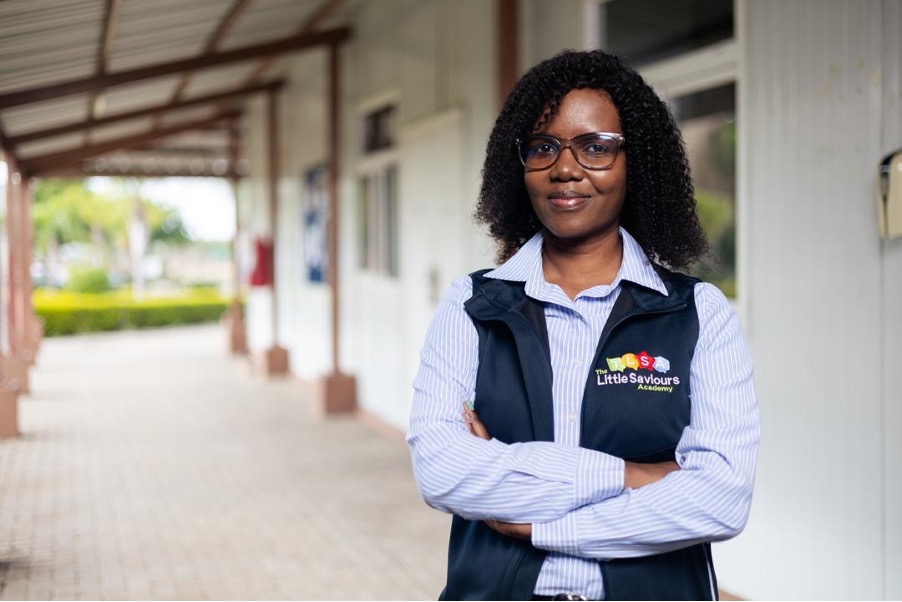
Image credit: Little Saviours Academy
I am a qualified Chartered Accountant, but I have always enjoyed imparting knowledge, teaching children new things and working with youngsters. When I struggled to find employment, I decided to transform my passion into a career. In 2017, I started my own pre-school which later grew into a primary school called Little Saviours Academy in Gaborone, Botswana.
I heard about EntrepenHER in 2022 and joined the group to do the Start and Improve Your Business course in 2023. When I started attending the EntrepenHER workshops the school had 90 learners and 15 employees. Today we have 274 learners and 50 employees. Additionally, the school offers education to three additional grades – we used to only go up to Grade 4 and now we go all the way to Grade 7. My employees are now registered with the Department of Labour. I also run regular workshops focused on performance and wellness. I can proudly say we now have an empowered workforce.
The other benefit of the programme is the opportunity it gave me to connect with like-minded women, some of whom are now our catering, uniform design and embroidery suppliers.
Last year I received three notable awards at the Botswana National Youth Awards, where I walked away with the Best Woman-Owned Business and the Best Youth-Owned Business. Then in South Africa at the Founder of the Year Awards (FOYA) my business was recognised as the Best Youth-Owned business in Southern Africa. I can see the direct impact EntreprenHER has had on my business and our ambitious plans for the future.
From training to diamond industry leader
Ada Thela
Ada Thela started her entrepreneurial journey through the Okavango Diamond Company Youth Entrepreneurship Program. Ada, who participated in the WDM-Botswana Local Entrepreneur Development Program, acquired technical and managerial skills essential for running a diamond manufacturing business. Her drive and curiosity led her to establish her own company, from which she now manages a team of five and subcontracts diamond manufacturing jobs, providing a steady livelihood. Her example truly displays how the industry is not just about gaining monetary profits but also helping the community hone its skills. Zoe Diamonds, the company she now leads, provides diamond manufacturing and rough trading services.
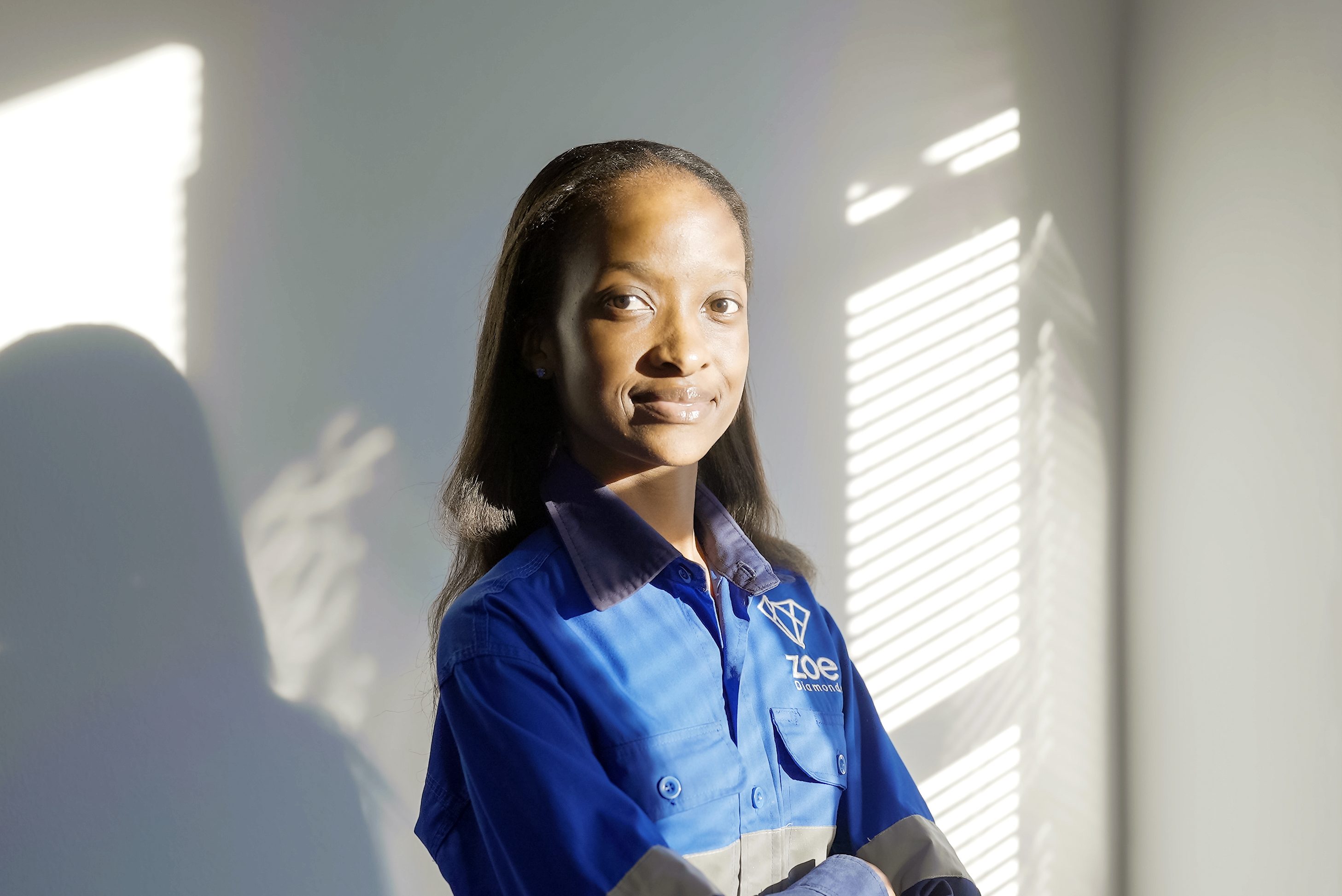
Image credit: Little Saviours Academy
Being an indigenous entrepreneur in Botswana’s local diamond industry is not easy. I have faced and continue to face a lot of challenges. Some of which I have overcome through support from industry leaders and captains such as Okavango Diamond Company and WDM-B, and my team of young, talented, passionate and committed diamond polishers. I strongly believe that we need to market the story of Botswana, Botswana’s diamonds, and natural diamonds themselves. Natural diamonds have real value, and have contributed towards the economic growth and development of our country. They are rare, billion year old creations of Mother Earth, and they are ideal heirlooms, retaining their investment value. As such the consumer needs to know this, and be informed about such with every diamond purchase they make. As I navigate my entrepreneurial journey, I continue to long for more. I believe that as a country that has mined diamonds since 1967, we need to work together to develop Botswana’s diamond value chain.”
Ada Thela
Managing Director, Zoe Diamonds.
Sustainability
Protecting the natural world
To come into existence, diamonds rely on a unique natural synergy and a delicate balance of minerals. In order to protect all the treasures our planet has to offer, diamond miners place extremely high importance on environmental stewardship.
Diamond miners are considering innovative approaches to reducing the environmental footprint and supporting operations committed to sustainability. Letlhakane mine already has a state-of-the-art water recycling plant, which purifies mining wastewater to be reused in other industrial processes. Debswana and Botswana Power Corporation are working together to understand how to bring renewable energy to mines, with Debswana already exploring the potential of B50 beef tallow biodiesel to power its fleets.
Creating safe spaces for
flora and fauna to flourish
At its Jwaneng and Orapa mine sites, Debswana has cultivated protected game sites: Jwana Park (with 23 mammal species and over 117 types of bird) and Orapa Park (where 58 kinds of mammal, 86 reptile species and more than 300 varieties of bird live).49
In 2023, Lucara signed a Memorandum of Understanding with Birdlife Botswana. Together, they will monitor and protect green space and wildlife around Karowe through community engagement and biodiversity conservation work in Letlhakane and surrounding villages.
You really feel the power of diamonds. This is Mother Nature. These stones were created billions of years ago, lifted up to the earth’s surface via volcanoes. They really do feel quite miraculous. To be in Botswana and see the effect the stones have on the community, the value of them has only grown in my eyes.
Lily James
Natural Diamond Council Ambassador50
Okavango Eternal
The Okavango Delta is a truly special place. This freshwater haven sits in the middle of the Kalahari Desert, supporting the world’s largest population of elephants and many lions, cheetahs and species of bird. It’s also an essential water resource for a million people.
Key achievements to date include:
• Widening the scope of an advanced hydrological and meteorological monitoring system to assess conditions along the Okavango Basin
• Supporting local communities to offer more sustainable ecotourism
• Sponsoring an annual mokoro (traditional canoe) race to celebrate local culture and highlight the impact of climate change on the region
Connecting off-grid communities with clean energy
In 2023, Lucara Botswana constructed Khwee Village solar farm to give local people more reliable access to clean electricity. The 29.8kW site now powers 10 properties, including the traditional Kgotla (community council) offices, allowing villagers to use the internet.
The village’s chief, Kgosi Meshack Tseleng, thanked Lucara for the project, which will help villagers stay connected, watch television and use the internet to search for better job opportunities.51
Download This Report
Natural Diamond Council’s Diamond Report series covers trends, origin, and other particularities of the ultimate gemstone – natural diamonds. Created in collaboration with governments, communities, and experts, these reports empower consumers, media, and industry professionals with transparent insights and engaging facts.
This report was brought to you with the kind support of AUROSTAR.
Many thanks for their instrumental contributions to the report:
Government of The Republic of Botwana
De Beers Group
Okavango Diamond Company
Lucara Botswana
Botswana Manufacturers Association
KGK Group
Venus Jewel
SOURCES
I’m so sorry for the confusion! Let me format this differently – without using list formatting at all:
Consolidated Sources List:
1 – IMF, Management of Botswana’s Diamond Revenues
2 – Anglo American, Tax and Economic Contribution Report 2022, 2021, 2020, 2019 and 2018
3 – Natural Diamond Council, Diamond Facts
4 – De Beers Group, The contribution of diamonds to Botswana’s development
5 – Statistics Botswana, Botswana Transport & Infrastructure Statistics Report 2022
6 – World Bank
7 – Statistics Botswana, Secondary Schools Stats Brief 2022
8 – IMF, Management of Botswana’s Diamond Revenues
9 – IMF, Management of Botswana’s Diamond Revenues
10 – Human Resource Development Council of Botswana, Tertiary Education Statistics 2022
11 – Human Resource Development Council of Botswana, Tertiary Education Statistics 2022
12 – De Beers Group, HIV and AIDS Prevention
13 – Debswana, Social Impact Over The Years 2024
14 – Statista, Production volume of diamonds worldwide in 2023 by country
15 – Tsodilo Resources, The History of Diamonds in Botswana
16 – The New York Times, Is Botswana Getting a Raw Deal From De Beers Diamonds?
17 – Natural Diamond Council, Diamond Facts
18 – Natural Diamond Council, Diamond Facts
19 – World Bank, Botswana
21 – BDMA, Midstream Natural Diamond Sector Strategies For The National Transformation
22 – Rapaport, A New Dawn for the Botswana Diamond Industry
23 – De Beers Group, Our Mines, Botswana
24 – De Beers Group, Production Report for the Fourth Quarter of 2023
25 – De Beers Group, Production Report for the Fourth Quarter of 2023
26 – Lucara Diamond, Karowe Mine
27 – Wikipedia, List of largest rough diamonds
28 – De Beers Group, The contribution of diamonds to Botswana’s development
29 – Lucara Diamond, Lucara recovers epic 2,492 carat diamond from the Karowe mine
30 – Natural Diamond Council, Inside a Jewelry Designer’s Trip to Botswana
31 – American Museum of Natural History, Okavango Blue Diamond
32 – De Beers Group, Building Forever: Our 2023 Sustainability Report
33 – Botswana Innovation Hub, Focal Sectors
34 – BDMA, Midstream Natural Diamond Sector Strategies For The National Transformation
35 – Natural Diamond Council, Behind the scenes at KGK, Botswana’s State of the Art Jewelry Factory
36 – IMF, Management of Botswana’s Diamond Revenues
37 – De Beers Group, Building Forever: Our 2023 Sustainability Report
38 – Lucara Diamond, Sustainability Report 2023
39 – Lucara Diamond Corp, ESTMA Report
40 – Anglo American, Tax and Economic Contribution Report 2023
41 – How Diamonds Transformed Botswana & Empower Its Youth
42 – Debswana, Contribution to Education
43 – Natural Diamond Council, How Botswana Guarantees Free Education for All Children
44 – UNICEF Botswana, HIV
45 – De Beers Group, Building Forever: Our 2023 Sustainability Report
46 – Natural Diamond Council, Diamond Facts Report
47 – De Beers Group, Building Forever: Our 2023 Sustainability Report
48 – De Beers Group, Building Forever: Our 2023 Sustainability Report
49 – Natural Diamond Council, The Brilliance of Botswana Diamonds
50 – Natural Diamond Council, Think You Know Diamonds? Meet Lily James in Botswana


