How María Félix Pushed the Boundaries of Jewelry Design
Described as both eccentric and extravagant, Mexican actress and singer María Félix commissioned some of the most awe-inspiring natural diamond jewels in the world.
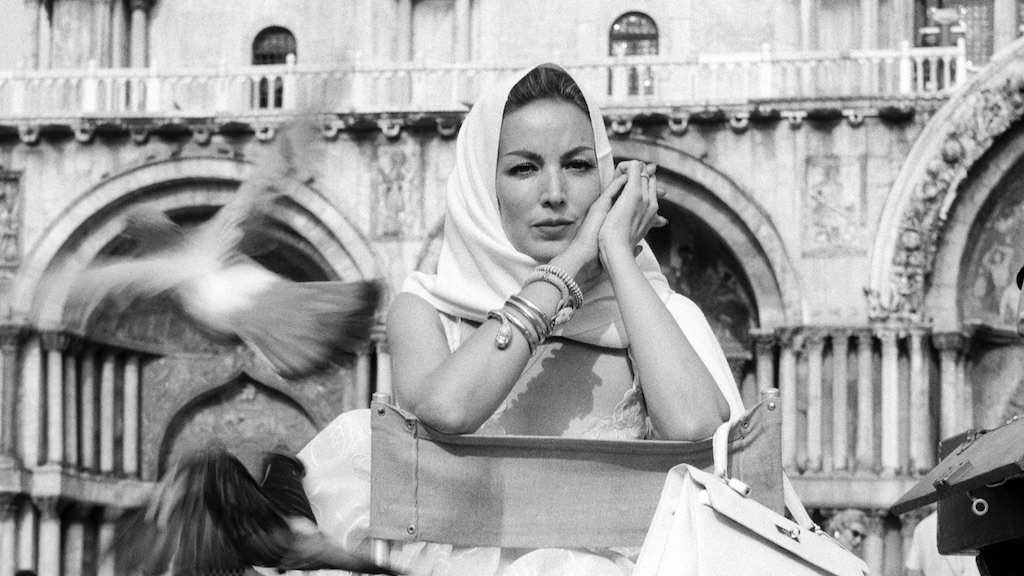
Mexican actress Maria Félix in Piazza San Marco during the Venice Film Festival in August 1959. (Getty Images)
Known for playing otherworldly femme fatales, Mexican actress and singer María Félix was a bold and audacious woman who wore her ferocity on her sleeve – or should we say around her neck, on her wrist, fingers, and lapels. Her incredible collection of custom jewelry often signified her independence; she was fond of wearing three-dimensional diamond panthers, crocodiles, and snakes to represent her freedom.
Beginning her career in the 1940s, Félix appeared in 47 films but remained steadfast in rejecting work in Hollywood to avoid being typecast as a Latin spitfire. Not only was she a legend on the screen, but Félix remains a star in the jewelry world for her incomparable collection. The larger-than-life star was renowned for her love of bold, attention-grabbing jewels. “She loved big animal jewelry,” says jewelry historian Helen Molesworth. “She has the best, most spectacular, voluminous, and articulated animal jewels in the world.”
Meet the Expert

Helen Molesworth is a renowned jewelry historian, gemmologist, and best-selling author. Her 25-year career has spanned the global gem and jewelry industry from auction houses to academic posts. She acted as a jewelry specialist for Sotheby’s and Christie’s, where she researched and managed iconic jewelry collections. As the Senior Curator of Jewelry at the Victoria and Albert Museum in London, she acted as Lead Curator of the blockbuster exhibition, Cartier, and released a book on the subject, also titled Cartier, with V&A Publishing in 2025.
Many credit the close relationship between Cartier and María Félix with creating new opportunities to explore cutting-edge jewelry design. Her Cartier Snake necklace and the Crocodile necklace exemplify how the maison pushed creative boundaries, inspired by Félix’s boundless imagination.“Those two pieces alone are both spectacular examples of world-class jewels,” says Molesworth.
In 2023, Cartier announced a new exhibition, Cartier Design: A Living Legacy, which took place at the Museo Jumex in Mexico City. Exploring the rich history of Cartier design, nearly 160 pieces were showcased, ranging from 1847 to the present day. However, what set this exhibition apart was its deeply researched focus on the House’s creative partnership with María Félix.
Her 1968 articulated natural diamond snake necklace and her famed Crocodile necklace perfectly illustrate her commitment to expressing pride in her native country through an extravagant, diamond-embellished lens.
Here, learn more about María Félix’s awe-inspiring natural diamond jewelry collection.
María Félix and the Ashoka Diamond: A Star-Studded Journey

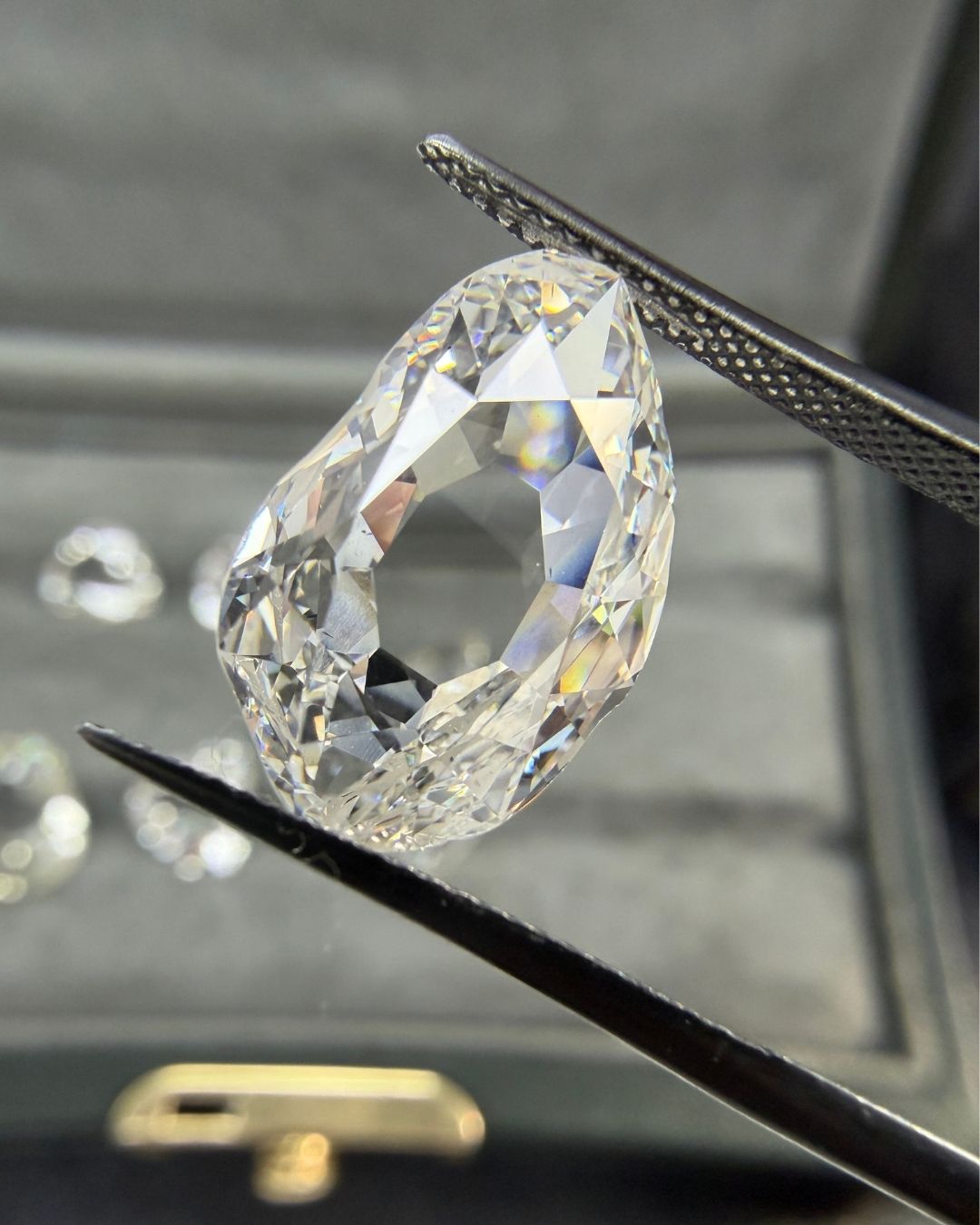
One magnificent jewel among María Félix’s impressive jewelry collection is the groundbreaking Ashoka diamond. The first known appearance of the Ashoka diamond was in 1947, when legendary jeweler Harry Winston acquired a remarkable 41.37-carat D-flawless diamond from an Indian dealer. Originating from the fabled Golconda region of India, the stone was named after Emperor Ashoka the Great, one of the most influential and complex rulers in Indian history.
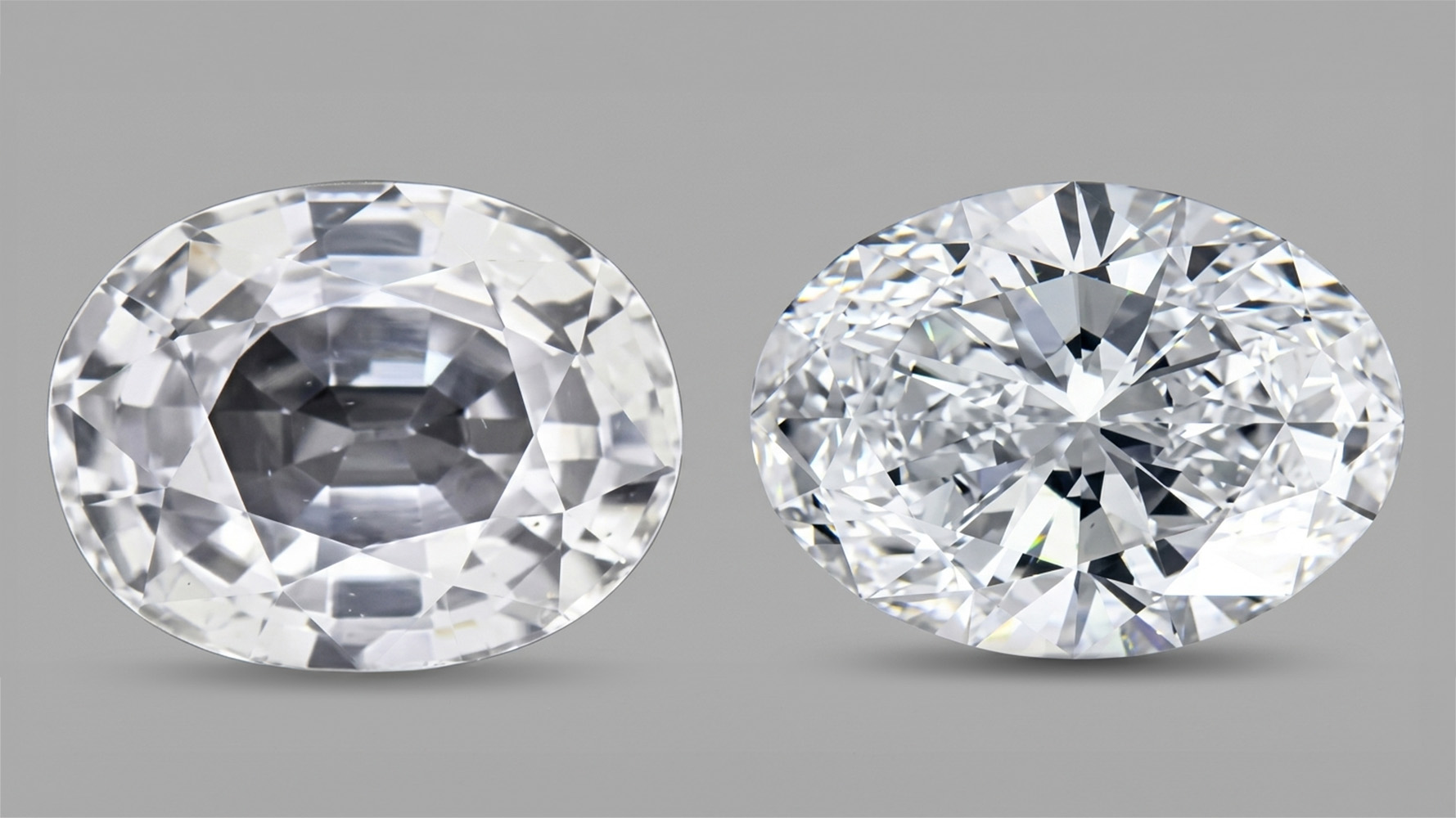
Cut by an unknown but masterful artist, the diamond’s unique Ashoka cut is known for its distinctive elongated shape with softly rounded corners, featuring 62 facets that produce exceptional brilliance, and make it appear larger than many traditional cuts of the same carat weight.
Over a decade after acquiring the stone, Harry Winston sold it to María Félix, who wore it to red carpet events and private, lavish galas before she eventually decided to sell it to the now-controversial art dealer Roberto Polo, who gifted it to his wife, Rosa.
The Cartier Panther That Began María Félix’s Diamond Menagerie
Before her obsession with diamond-embellished reptile jewels became apparent, María Félix had amassed a large collection of Cartier panthers.
The iconic Panther was reimagined by Cartier in 1948 for the Duchess of Windsor. Cartier’s storied Director of Fine Jewelry, Jeanne Toussaint, is even said to have asked designers to spend time at the Paris Zoo for design cues.
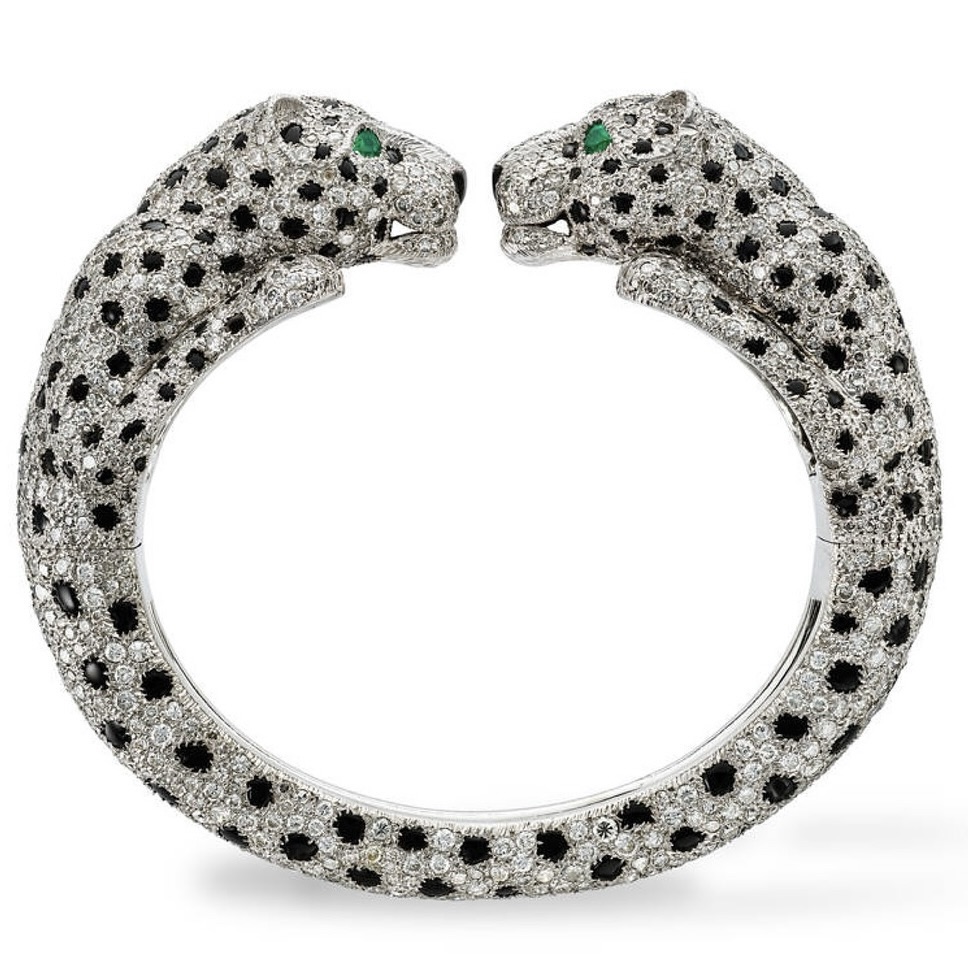
Meant to represent a ferocious freedom, Félix was the perfect ambassador for the Panthère de Cartier motif. She acquired many of the iconoclastic pieces and even commissioned a platinum and diamond brooch, as well as a two-headed panther bangle.
The Story Behind María Félix’s Legendary Cartier Snake Necklace
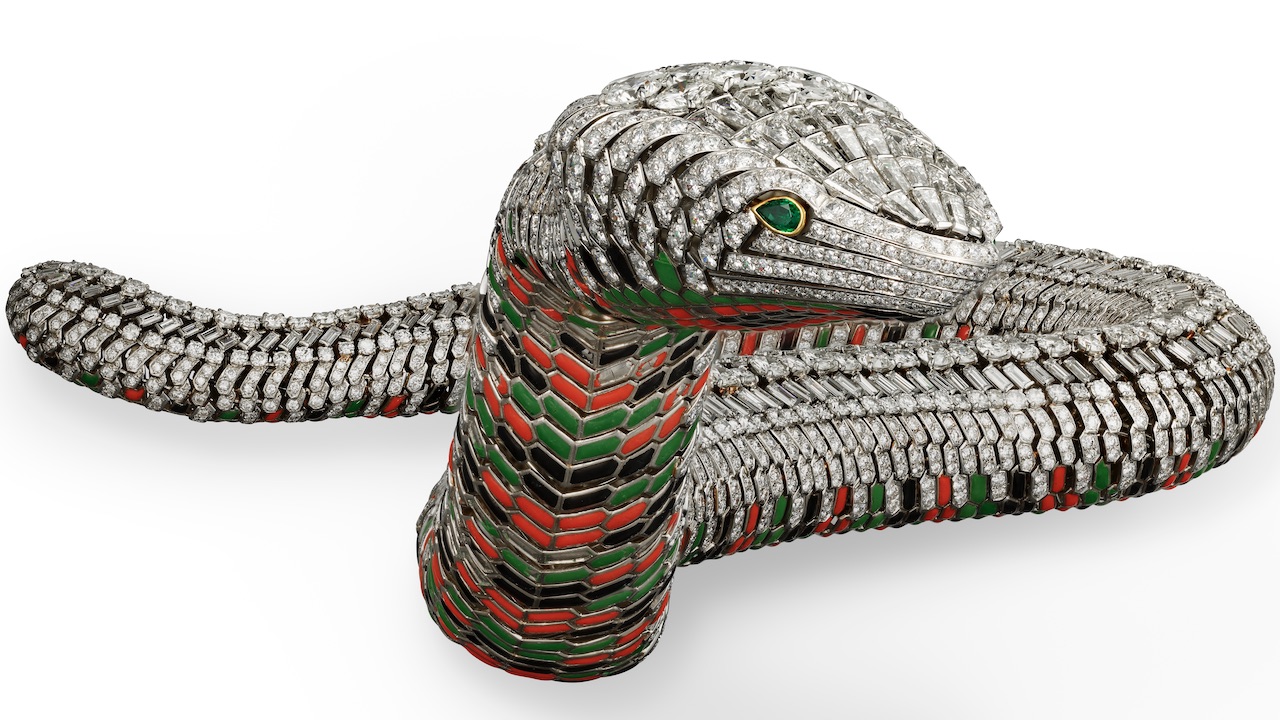
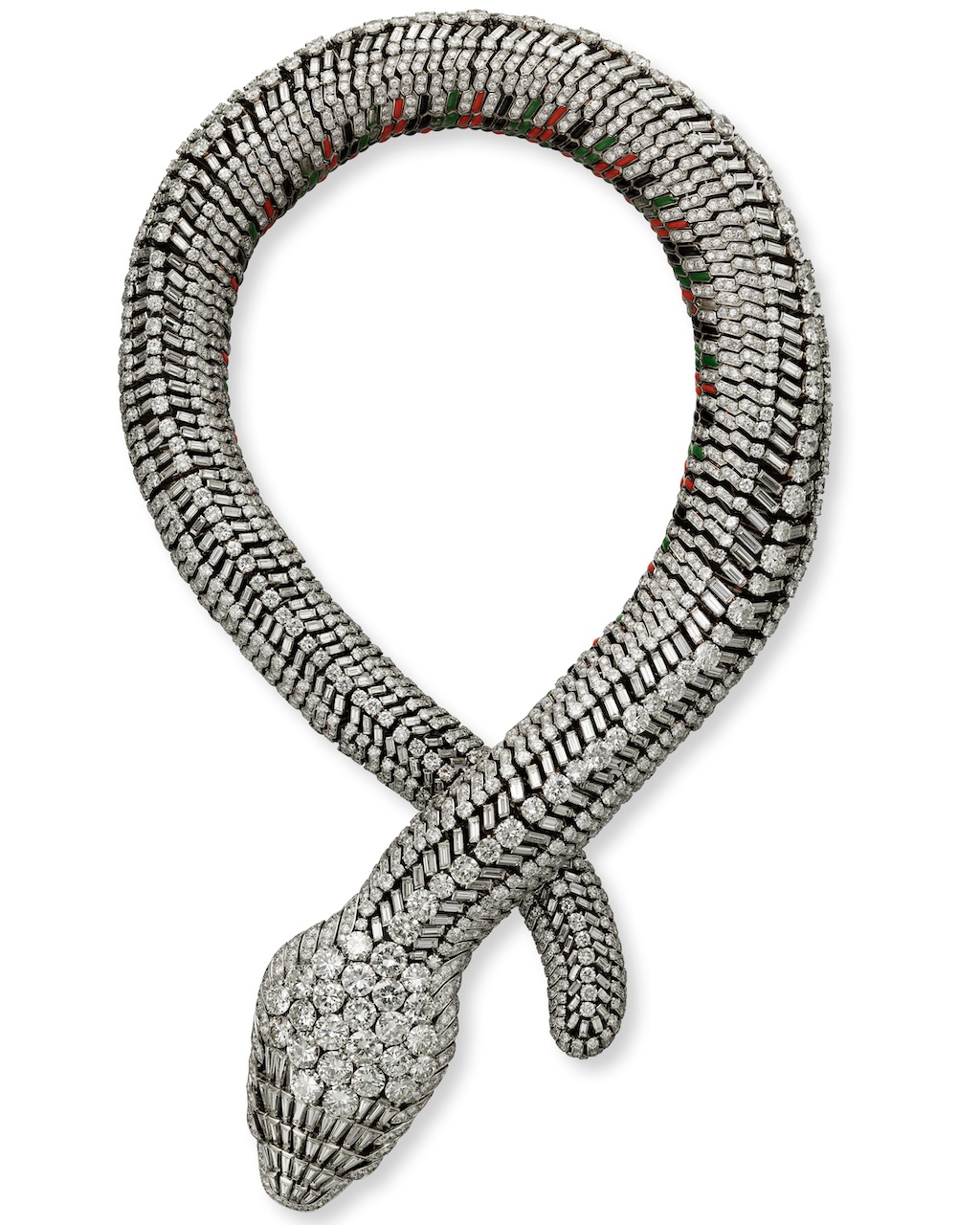
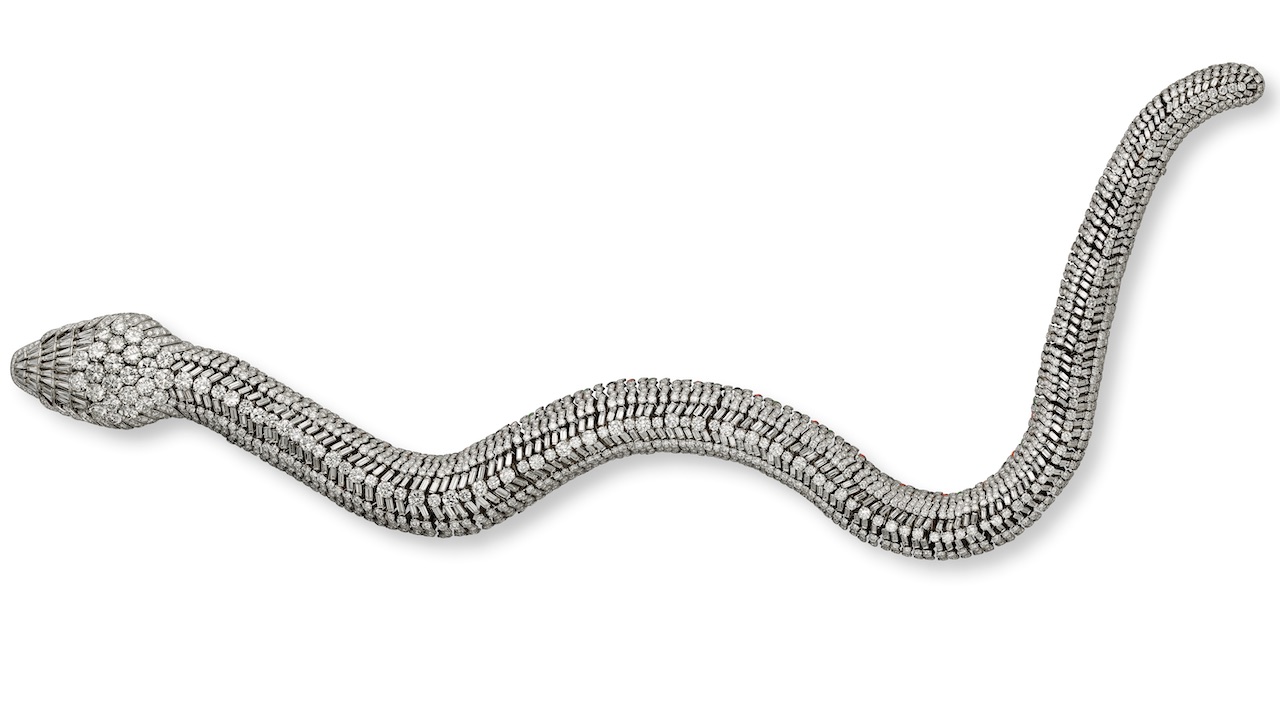
In 1968, María Félix requested that Cartier make her an extraordinarily flexible life-size natural diamond-encrusted snake necklace. The ingenuity of the design makes the snake stand out as a pillar of innovative craftsmanship in the history of jewelry. With thousands of hours of work and unmatched expertise, it took Cartier’s artisans two years to create this 57-centimeter-long reptile, with a completely articulated platinum, white gold, and yellow gold structure, embellished with 2,473 brilliant and baguette-cut diamonds (totaling 178.21 carats) and two pear-shaped emeralds for its eyes. On its belly, coordinating enamel plates in red, green, and black represent the flag of Félix’s native Mexico
While acting as the Lead Curator of the V&A’s blockbuster Cartier exhibition, Molesworth recalls, “I spent quite a lot of time handling the snake.” The team was working with designers at Cartier to create an audiovisual animation of the snake moving in a life-like motion.
“We had to measure and judge every single articulation and all the angles in which it moves,” she says. “It moves from side to side, with one side slightly more flexible than the other because it curves around the neck, ultimately.” But it also has a mechanism to move up and down, she explains, “like an actual python rearing its head up. It flows. You can run it through your hands like a ribbon.”

You can run it through your hands like a ribbon.
Molesworth muses, “It’s extraordinary to think of that mechanism – the innovation, the skeleton they created to set the diamonds onto that flexible spine is extraordinary. You want to just touch it. You want to just pick it up.”
She continues, “That’s one thing I found incredible – how tactile it was. I didn’t want to put it down. You want to just keep holding on to this extraordinary object.”
The Lore Behind María Félix’s Cartier Crocodile Necklace
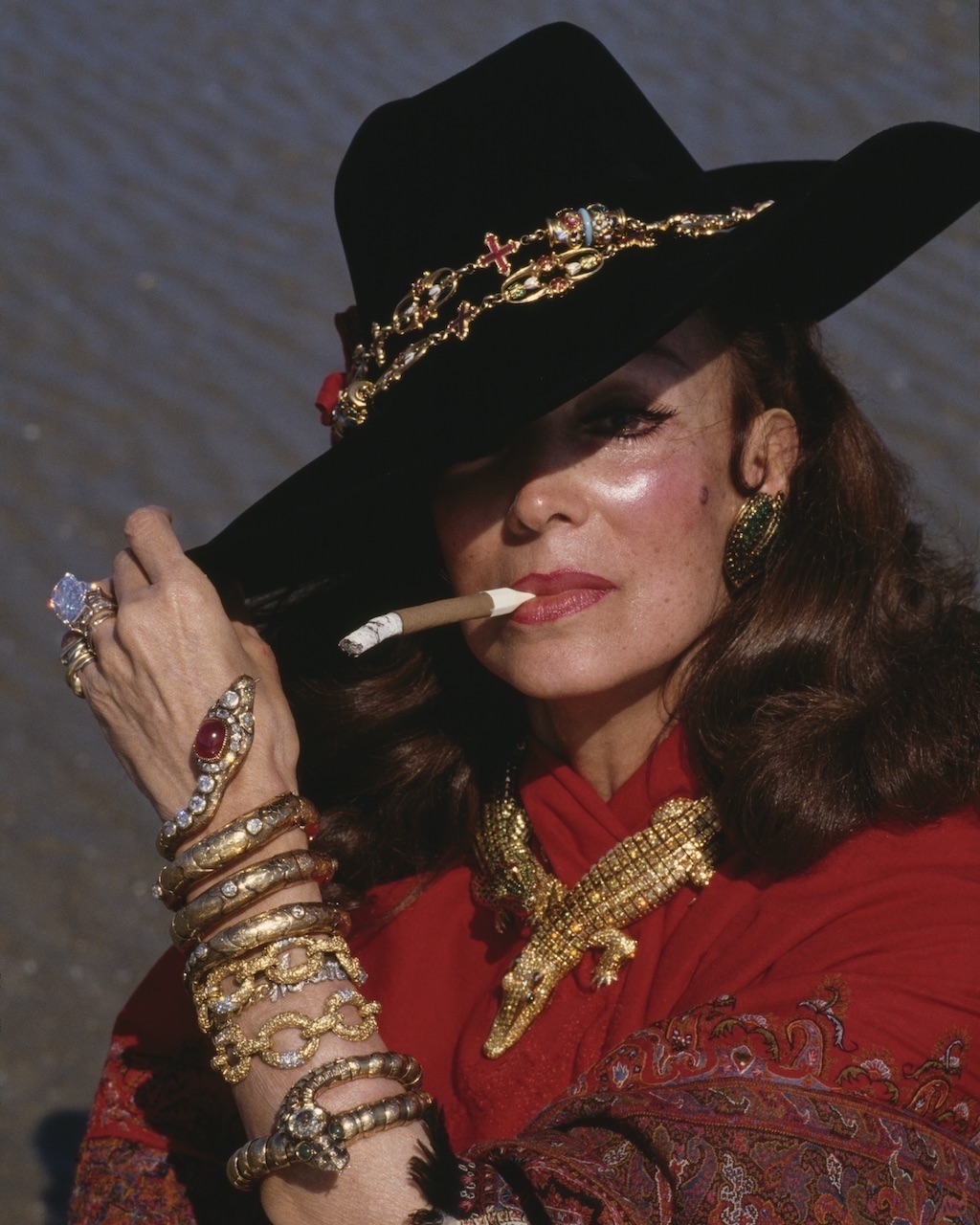
In 1975, María Félix strolled into the Cartier boutique at 13 Rue de la Paix in Paris to request a special order. As the legend goes, the Mexican actress was accompanied by a real baby crocodile to use as inspiration. She wanted Cartier’s expert jewelers to replicate the crocodile’s features as accurately as possible.
“She obviously loved very bold jewelry and decided that she wanted Cartier to make her this Crocodile necklace,” says Cartier author Helen Molesworth. “She turned up to Cartier Rue de la Paix in Paris with a baby crocodile and said, ‘Make it like this.’”
While some claim she carried a live baby crocodile in a jar, others have described the enclosure as an aquarium. As the Lead Curator of the V&A’s Cartier exhibition and author of its accompanying tome, Molesworth has heard yet another rendition of the incredible tale. Though simply speculation, it’s also rumored that Félix may have turned up with two stuffed crocodiles to provide as a design reference.
Pierre Rainero, Cartier’s director of image, style, and heritage, told Artnet he personally asked Félix about the grandiose story back in 1999, and she confirmed. However, he notes she had a reputation for embellishing.
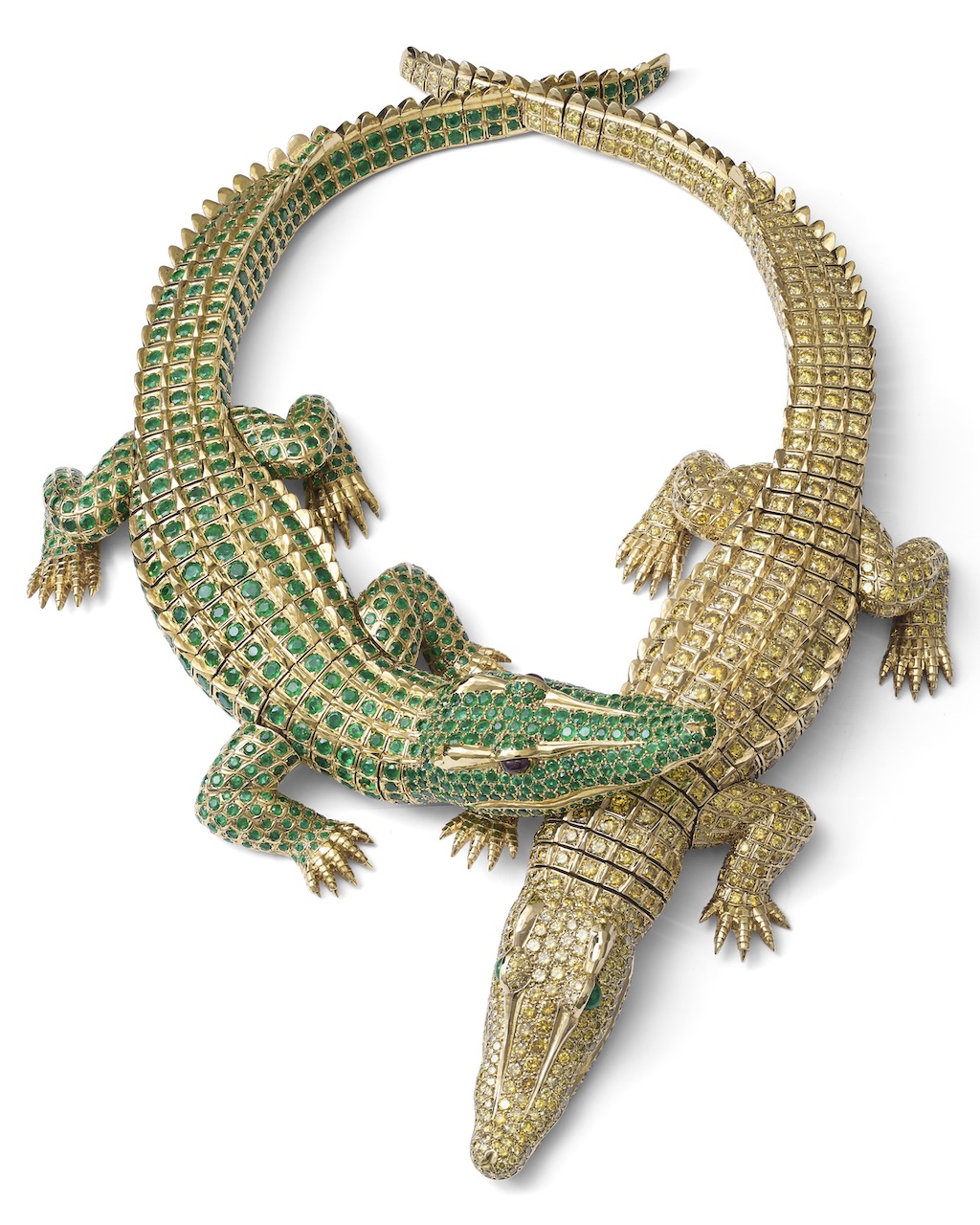
After meticulous study and endless hours of sketching, Cartier’s revered artisans masterfully executed a necklace featuring two gold articulated crocodiles, hugging around the neck. One consists of 1,060 emeralds, while its twin is paved with 1,023 yellow diamonds.
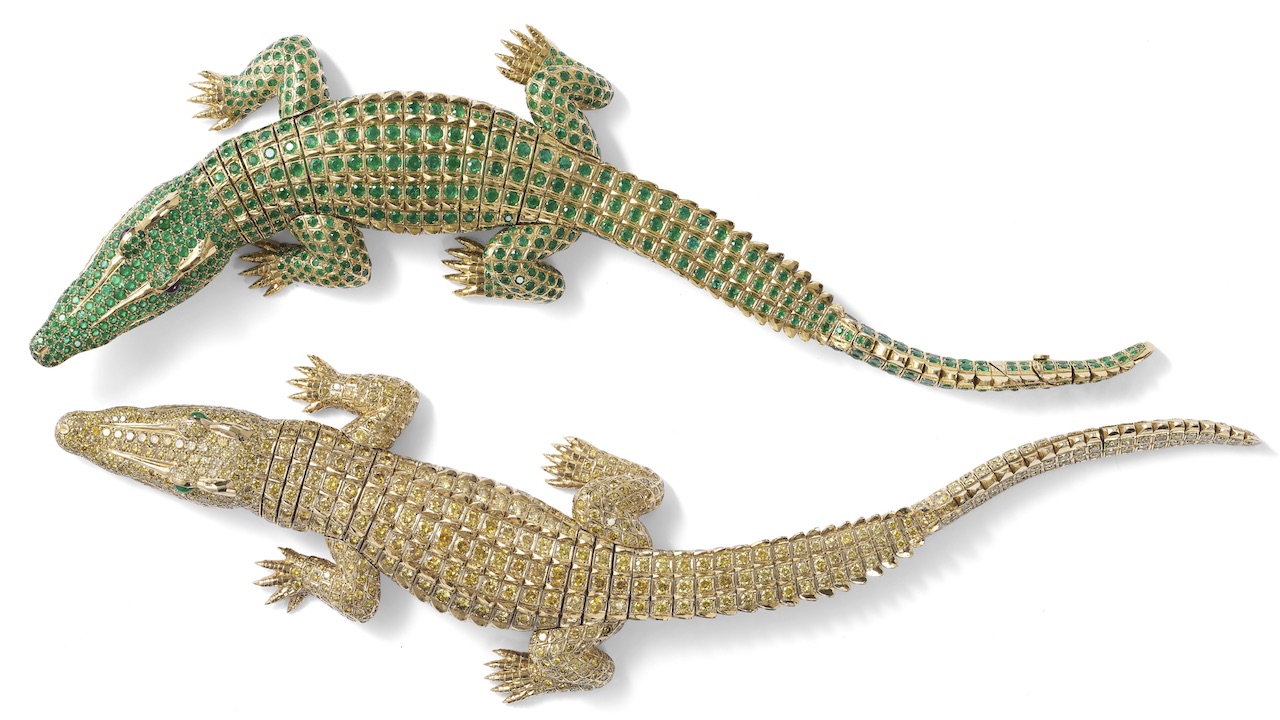
“It’s magnificent,” shares Molesworth. “When you look at the crocodiles, you can see that they must have been modeled very close to real-life examples,” she explains. “There’s just something in their faces that is so realistic.”
Many credit Cartier and Félix’s close relationship with providing new and exciting opportunities to explore cutting-edge jewelry design. Throughout her famed jewelry collection, Félix was dedicated to representing her native Mexico, where Morelet’s crocodiles and the American crocodile freely roam. The commission went on to become the most extravagant and emblematic jewel of her collection.
Molesworth says, “The snout of one of them reaches up ever so slightly more than the other. They’ve got this lovely curve to the snout, they’ve got this crown over the eyes, and the movement in the tail, with the fatness of the body. The way they’ve been built, it’s very lifelike. You look at their faces, and you can genuinely imagine a real crocodile in the water. She continues, “It feels like they’re actually going to raise their head and bite you. They look very realistic.”
Each half of the necklace can even be removed and worn separately as two three-dimensional brooches. The perfect example of jewelry as art, the impeccably constructed jewel doubles as a stunning sculpture. Félix reportedly even used them as captivating table ornaments to display as décor during dinner parties.
María Félix’s extraordinary collection remains one of the most daring in the history of high jewelry. Through her collaborations with Cartier, she transformed natural diamonds into living sculptures inspired by the wild creatures she admired, often infusing the designs with tributes to her native Mexico. Decades later, her legendary jewels—crafted with extraordinary natural diamonds and fearless imagination—continue to inspire historians and jewelry lovers alike.