Natural Diamonds: The Artist’s Muse
Seen through the eyes of illustrators who study every facet with precision, natural diamonds take on new depth. An exploration of beauty shaped slowly—by nature and by hand.
The early modernist artist Marc Chagall once said, “Great art picks up where nature ends.” The sentiment feels especially resonant in the work of artists who turn their gaze toward natural diamonds. When artists pause long enough to observe their facets, histories, and quiet, what emerges is less about spectacle and more about time—about pressure, patience, and the invisible processes that create beauty.
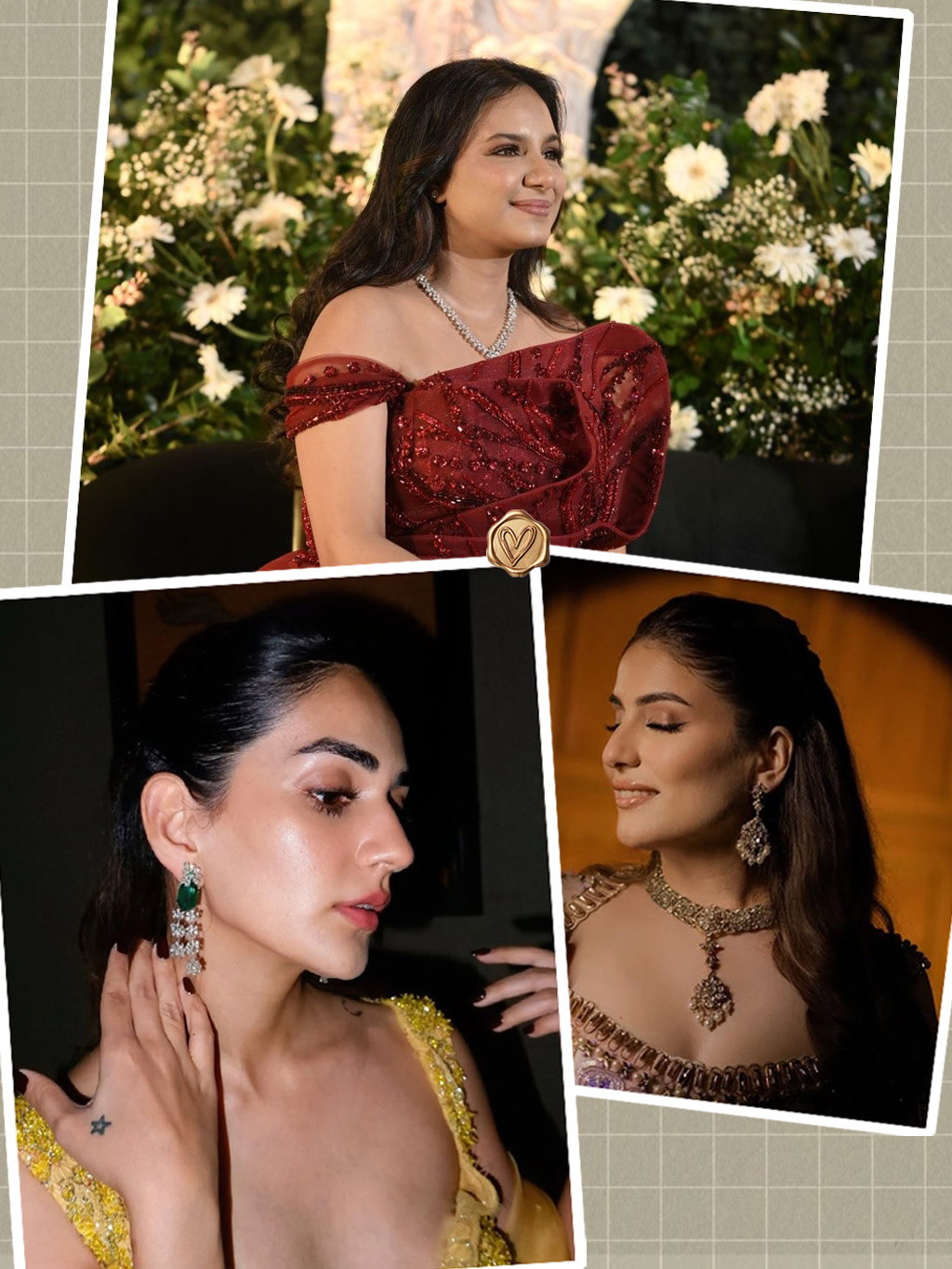
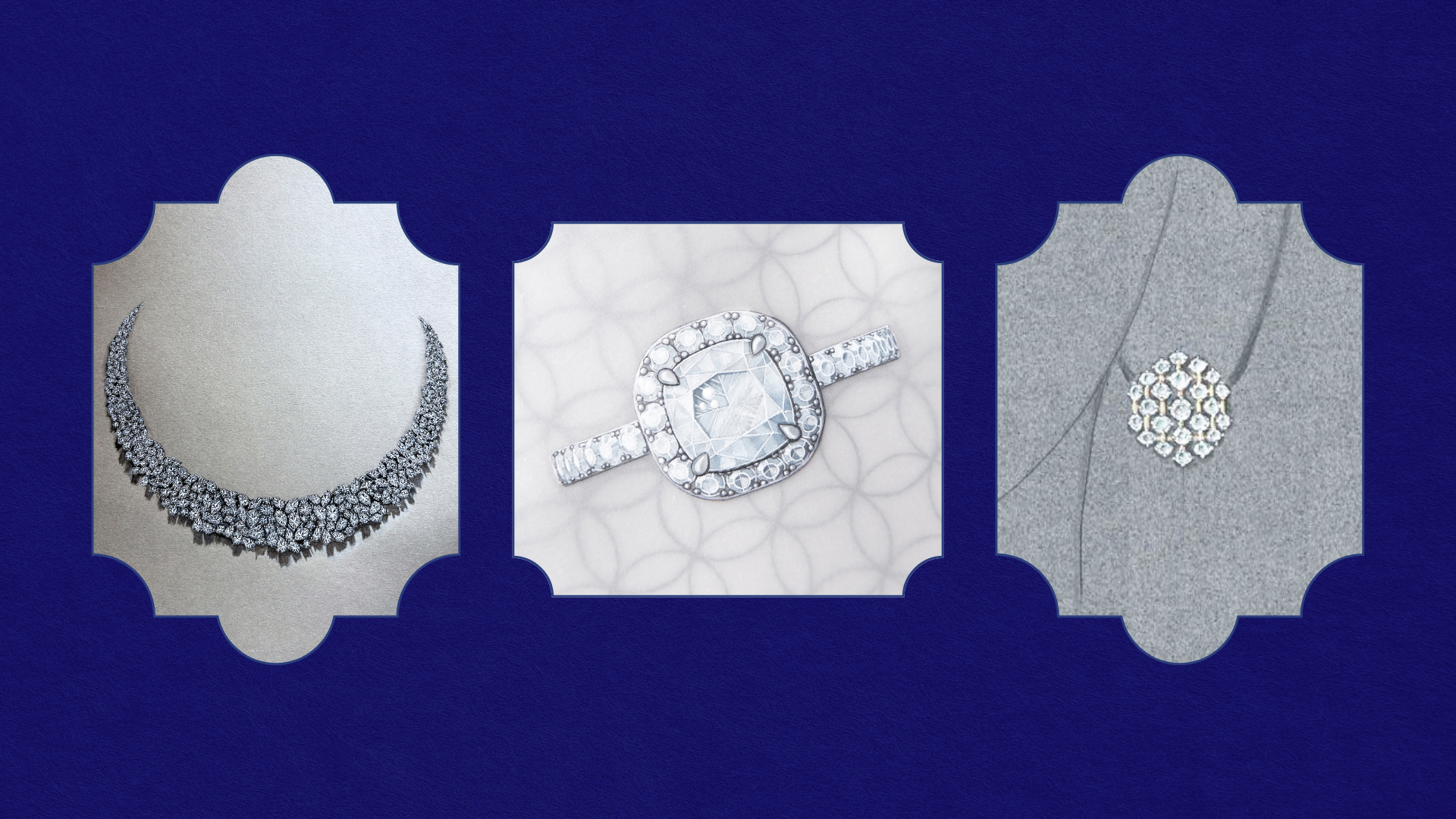
In the hands of these four contemporary illustrators—Ayano Ueshima, Riya Gupta, Alexine Huet, and Kriti Jain—natural diamonds become something more intimate: translated through pigment, line, and light into objects of feeling.
Ayano Ueshima
Ayano’s work moves across continents and centuries. A Japanese artist raised in India, she was profoundly shaped by the subcontinent’s diamond heritage. “Growing up in India shaped both my sensibility and my path,” Ayano says. She was drawn especially to polki, table, and rose cuts, softer forms that honour the original rough drawn from the earth. Before machine precision standardised symmetry, stones retained the trace of the hand: asymmetries, inclusions, tonal variation. “They carry a distinct presence,” she notes, one that resists modern grading systems and feels alive.
In painting historic jewels, Ayano slows down to study every curve and setting, she reflects, “Through the brush, I feel as though I am tracing time itself, moving between earth, artisans, wearers and history through my own craft.”That same reverence for time carries into her recently evolved contemporary practice. Designing bespoke engagement rings is one of the most meaningful parts of her work. Natural diamonds are often chosen for their symbolism, timeless beauty, and enduring strength. Over months—sometimes up to a year—she works closely with a couple to shape a ring that reflects their heritage, values, and shared story. Each piece is entirely unique, created once and never replicated. “To be entrusted with such an intimate chapter of someone’s life is a true privilege, and it continually reminds me why I began creating jewellery.”

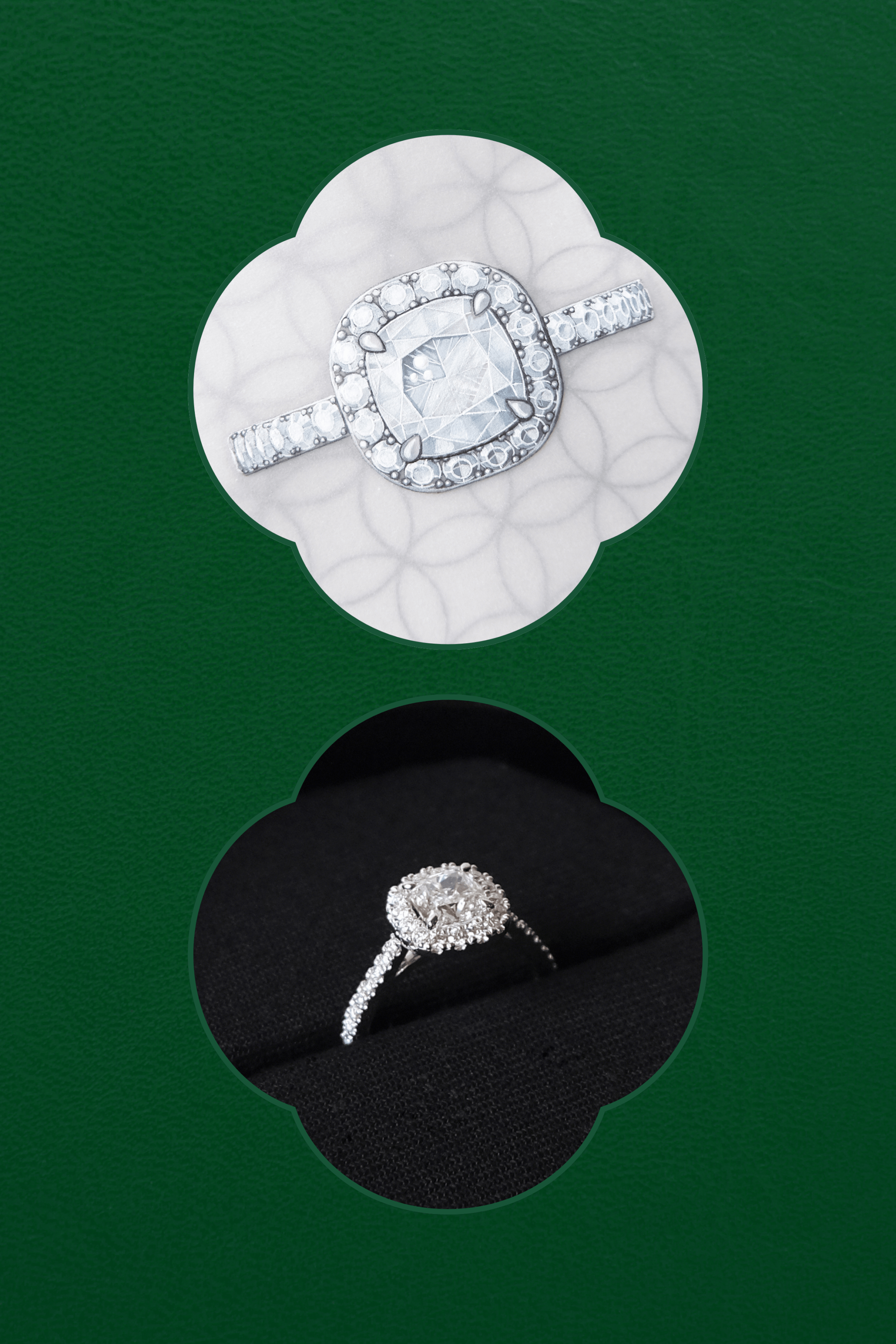
Ayano’s hand-painted gouache depicts an early 18th-century diamond Deccan kalgi, a royal turban plume from the Treasury of the Nizams of Hyderabad. The jewel becomes, in her brushstrokes, a meditation on lineage. Also featured a bespoke engagement ring by Ayano, set with a natural cushion modified brilliant diamond with diamond pavé, white gold.
Riya Gupta
For Riya, what first began as fascination—watching how diamonds refract light— gradually became a lifelong pursuit. “Natural diamonds inspire me because they are created through time, pressure, and patience,” she says. “Their journey feels very close to my own as an artist, where growth comes slowly through dedication and continuous practice.”
Capturing that brilliance, however, is never simple. A real diamond is never flat; it shifts with light, revealing depth and clarity from every angle. Translating that into drawing demands sharp observation, patience, and precise control. “When I sit down to draw a diamond, I feel calm and focused at the same time,” she reflects. The process is technical, yet deeply meditative, slowly bringing light to life on paper.
Through this discipline, diamonds have taught her something beyond craft. Every facet matters, and every detail requires care. In illustrating their sparkle and strength, she has learned to slow down, to observe more deeply, and to value precision—not only in her work, but in her life. In her hands, the gemstone becomes a quiet testament to perseverance, proof that true brilliance is shaped over time. “Illustrating natural diamond jewellery allows me to express elegance, resilience, and timeless beauty in a way that feels honest and deeply personal.”
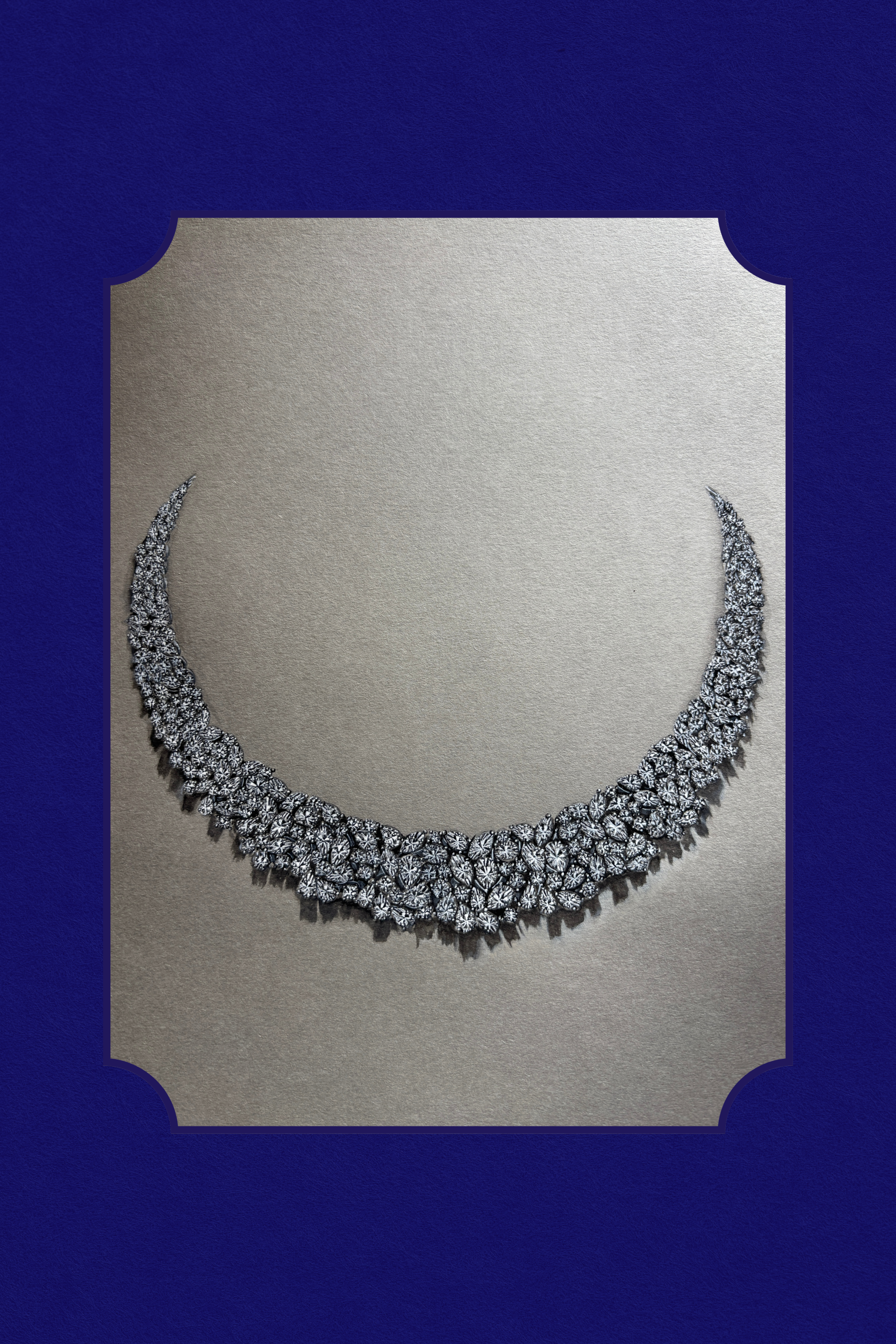
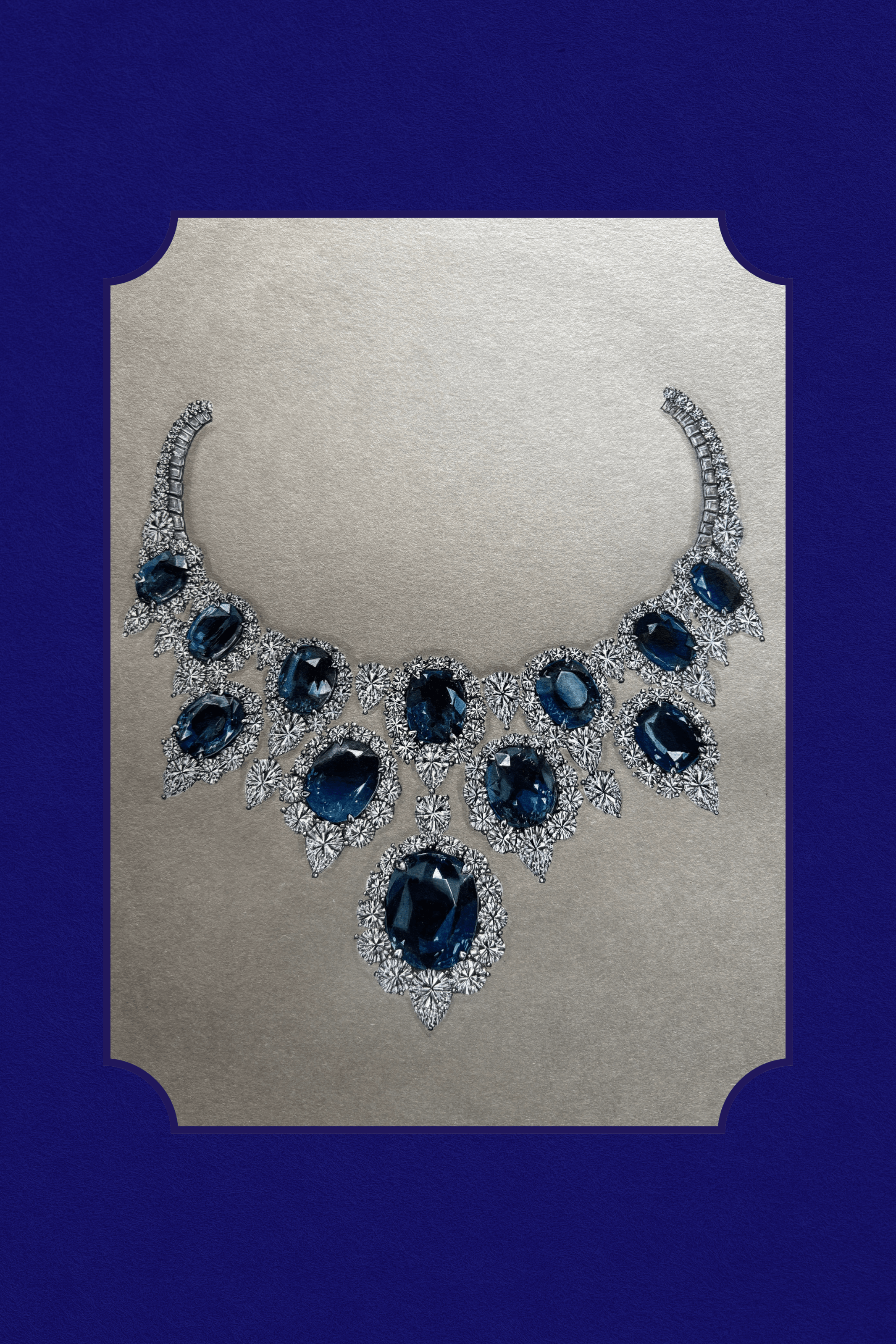
Riya’s illustrations often reinterpret existing jewellery pieces, reimagined through her own lens. For her, just as no two natural diamonds are identical, no two artworks carry the same emotion.
Alexine Huet
Across continents, Alexine, a Parisian illustrator approaches natural diamonds from a different, almost philosophical vantage. What fascinates her is their fundamental simplicity. “They are made entirely of carbon,” she notes, “an extremely common element transformed under exceptional conditions.” That paradox—the ordinary becoming extraordinary—feels quietly radical. Formed far beneath the earth’s surface in a transformation invisible on a human scale, diamonds strike her as “a silent feat of nature.”
Transformation and revelation echo through her own artistic process. Alexine describes long observation of materials and light, assembling compositions with patience akin to a jeweler designing a setting. Inspiration, she believes, emerges under specific conditions—much like diamond formation itself. In one illustration, Mellerio’s Vérone Green Fields ring, she juxtaposed a natural diamond ring with cut pears, creating tension between fragile, ephemeral fruit and the gemstone’s permanence. “I was interested in creating tension between two temporalities,” she explains, “that of living matter, fragile and temporary, and that of an immutable material that will endure.”
For Alexine, rendering a diamond demands meditation. It cannot be sketched hurriedly; it must be understood structurally, patiently coaxed into visibility through repetition and attentive gesture. In doing so, she feels she is revealing something hidden—light brought gradually into view. She believes, whether it is material shaped by nature or image constructed over months, careful, patient work gives rise to something lasting.
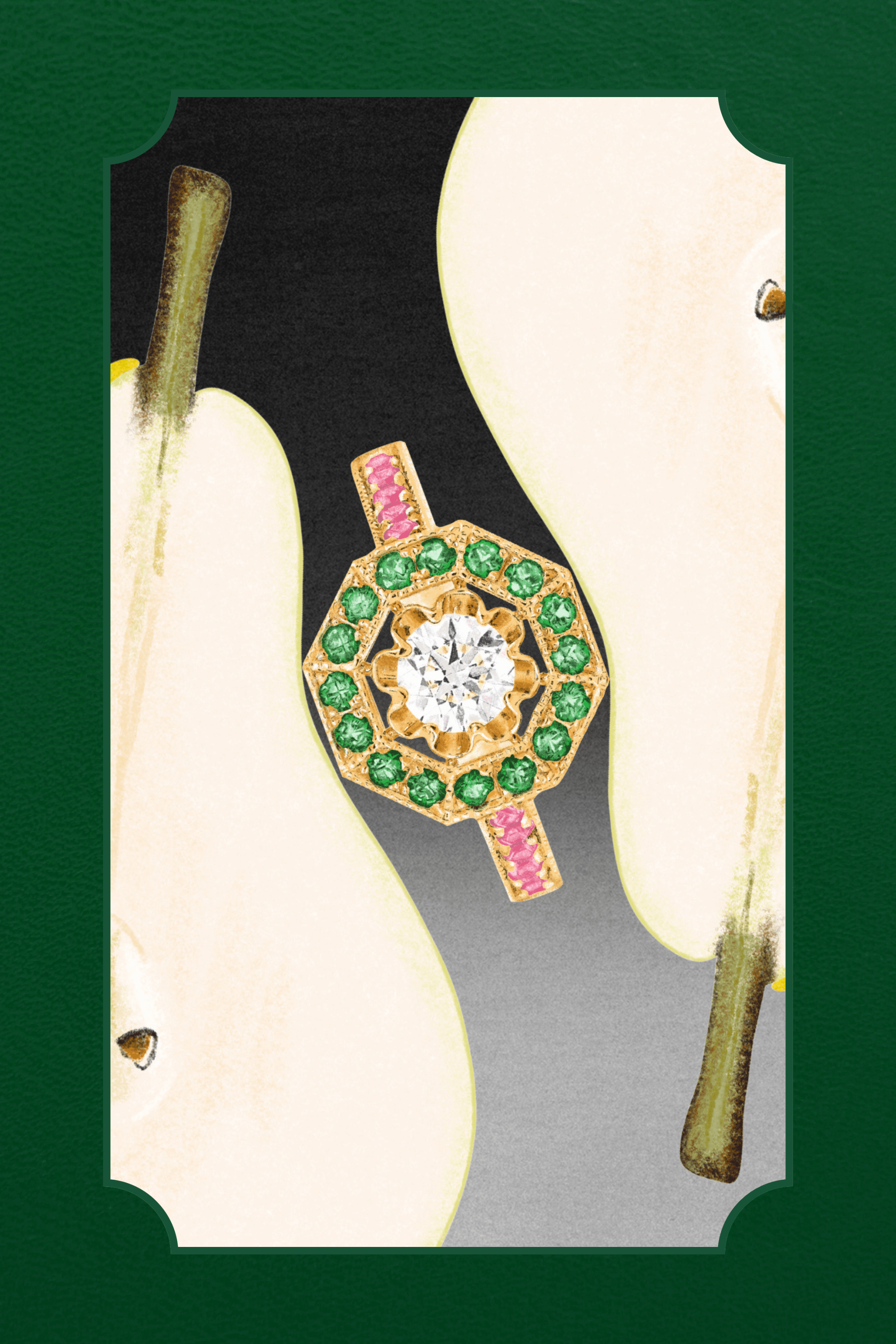
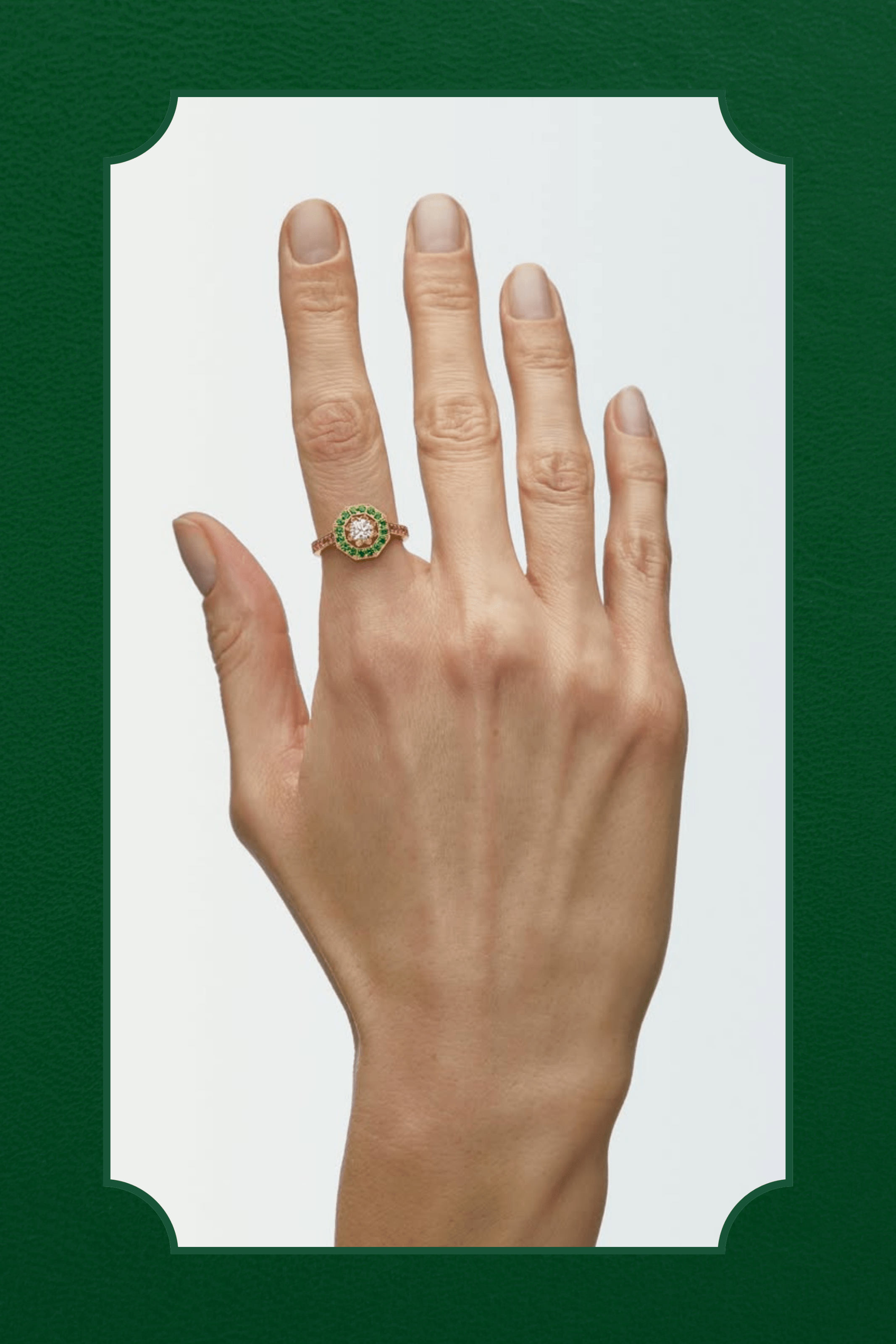
Alexine’s illustration of the Vérone Green Fields ring by Mellerio—where tsavorites and pink sapphires create a vibrant frame, guiding the eye toward the central diamond.
Kriti Jain
Kriti’s perspective bridges geology and craftsmanship. “What we hold in our hands is not merely a natural diamond stone or an ornament, but a fragment of geological history.” she believes, “I find myself in constant awe of the journey a natural diamond undertakes.” Before it reaches a jeweler’s bench, the diamond has already lived through millennia beneath immense geological pressure.
Yet for Kriti, the story continues in the workshop—in the choreography of cutters, setters, and designers whose techniques have evolved across generations. “Every precise facet, every secure setting, every polished surface is the result of centuries of learning, patience, and devotion to craft.” Her own practice that emerged from her illustrations mirrors this reverence. Specializing in fine jewellery and bespoke engagement rings, she creates jewels anchored in individual narratives rather than mass-produced templates.
The beauty we witness today is never accidental, it is the outcome of an enduring dialogue between nature’s force and humanity’s persistence, and is, always, a long and layered process of the past.
Kriti, based in Jaipur—India’s gemstone capital—is surrounded by some of the finest natural stones, an environment that has deeply shaped her aesthetic. Colour remains her greatest source of inspiration, and she believes only natural diamonds truly complement natural gemstones in their purest essence—enhancing one another without overpowering the story.
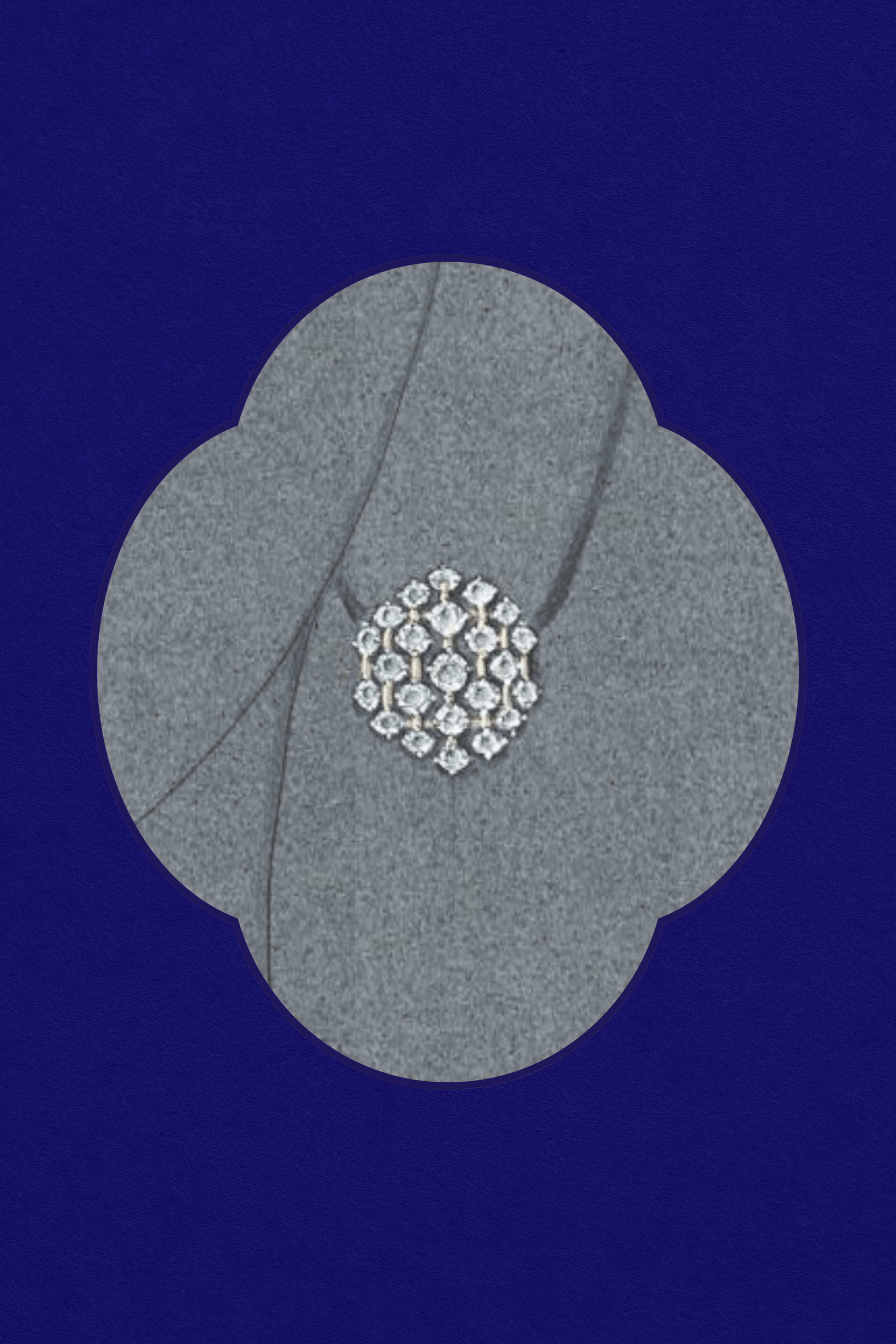
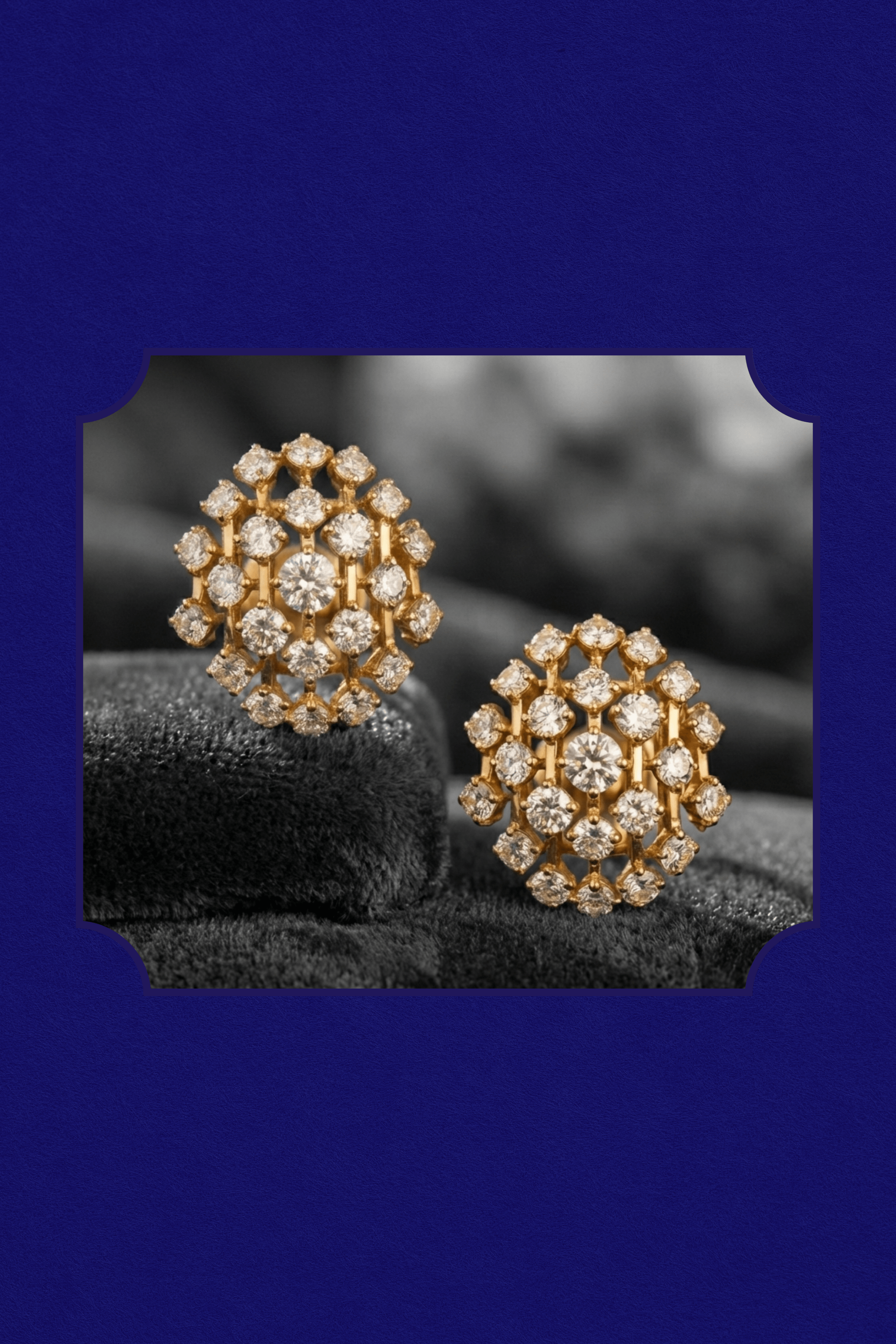
Kriti’s creation, a pair of hydrangea-inspired earrings in 14kt gold, set with 5.3 carats of natural diamonds—each stone forming an individual bloom within a brilliant cluster.
What unites these four voices is not a fixation on sparkle but an appreciation of process. In contrast to the age of speed, natural diamonds have their own pace. They remind us that formation cannot be rushed—that pressure, repetition, and time are not obstacles but prerequisites to brilliance. Through the eyes and hands of illustrators, real diamonds speak to heritage and handwork, to geology and memory, and to quiet endurance beneath the surface.