Why Diamonds Pass the Girl Math Test Every Time
From milestones to everyday wear, natural diamonds are proving to be the smartest luxury buy.
I’ll admit it: I’ve done Girl Math more times than I care to count. The shoes were on sale, so technically I saved money. The holiday didn’t count because it was a birthday. Airport tax cashback is essentially free money. And if adding a few extra items to my cart gets me free delivery, then really, I’ve spent less, not more.
Girl Math, for the uninitiated, is the internet’s favourite way of justifying a purchase using logic that is — at best — generous. If you’ll wear it often enough, the cost per wear becomes acceptable, sometimes even microscopic. If you paid for it with account credit from a return, then surely it doesn’t count at all. In short, Girl Math is economic gymnastics. I’m not talking about impulse buys destined for the back of the wardrobe — the trend pieces that feel thrilling in the moment and forgettable a season later. I’m talking about timeless purchases that earn their place over time. Specifically, diamonds and fine jewellery.
For decades, natural diamonds were boxed into a single narrative: the engagement ring. But that perception has evolved. Today, diamonds are chosen to mark a far broader spectrum of moments — promotions, anniversaries, personal milestones, and quiet wins worth acknowledging — and, as diamonds are increasingly bought for oneself, Girl Math comes into play. In fact, when viewed through the lens of Girl Math, real diamonds need very little justification. They’re worn again and again, year after year, moving seamlessly through different chapters of life — often as heirlooms passed down to the next generation. Their cost-per-wear doesn’t simply decrease; it dissolves.
And unlike so many things we buy, diamonds are designed to last — not just physically, though that helps, but emotionally. They don’t expire with trends or lose relevance with time. They don’t need explaining five years down the line. What you’re left with instead is something far more compelling: a cost-per-joy value that quietly outperforms almost everything else in your wardrobe.
There’s also something quietly refreshing about the way Girl Math reframes luxury, bringing the idea of slow fashion back into focus – buying fewer things, choosing better, and allowing certain pieces to earn their place in your life. In that sense, diamonds stand in contrast to everything fast. They ask you to slow down. And in a luxury landscape where it’s increasingly difficult to find a handbag for under INR2 lakh, and shoes are edging towards INR1 lakh, the appeal of investing in a diamond that doesn’t need upgrading next year becomes even clearer.
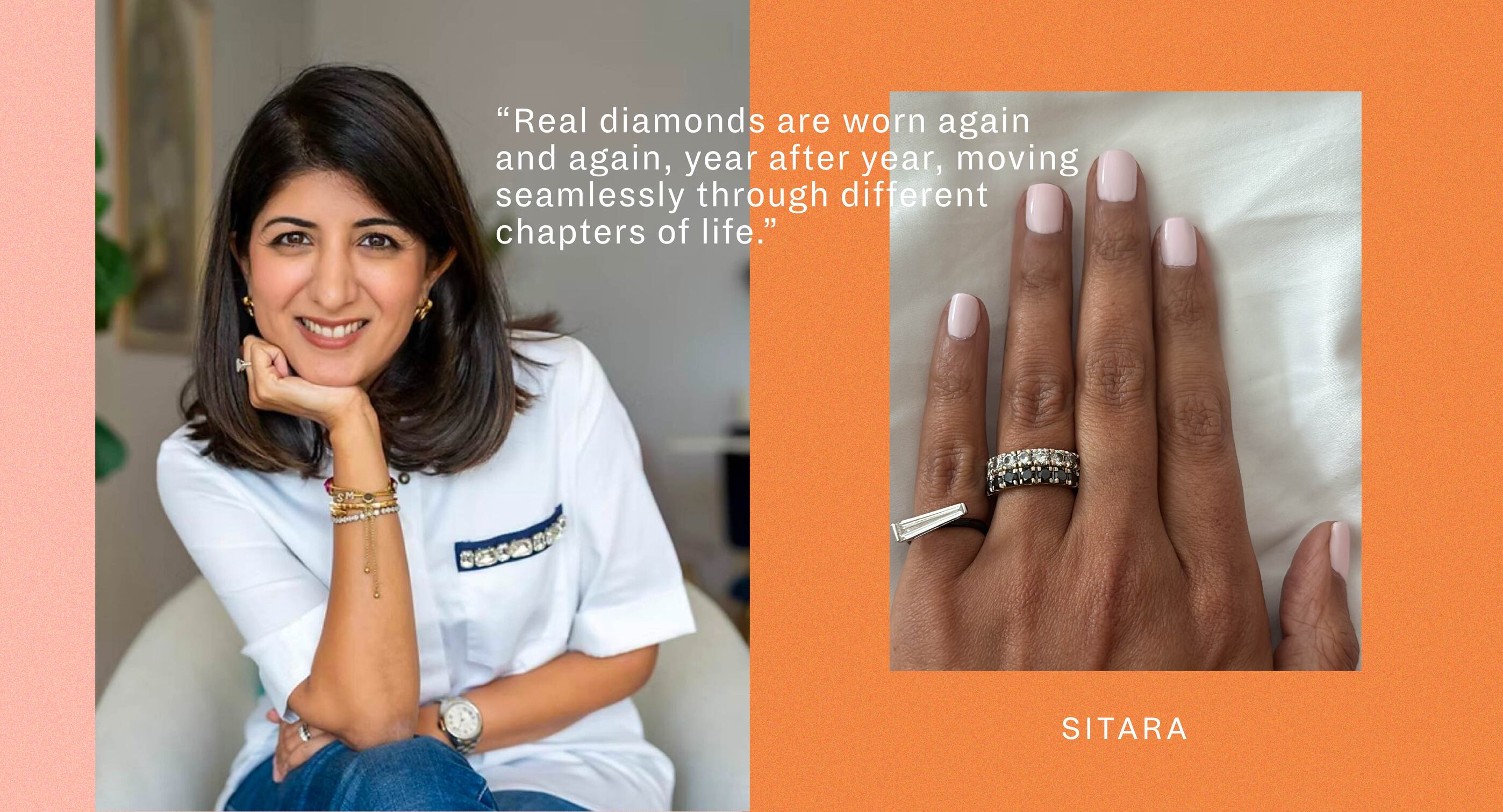
Journalist and author Sujata Assomull agrees. “Today, you can’t buy a decent handbag for less than USD5,000,” she says. “If I’m spending that kind of money, I’d much rather buy natural diamonds. Brands keep insisting these bags are ‘forever’, but with creative directors changing constantly, there really is no such thing as a forever bag. Trends shift — even with Birkins. A diamond, on the other hand, truly is forever.”
I know this to be true on a personal level. When I turned 40, I marked the moment not with a handbag, but with a striking kite-diamond pinky ring from Kamyen — a piece chosen not to signal anything in particular, but simply because it felt right. Indulgent? Perhaps. But given how much I smile every time I put it on, it was worth every Dirham. And it turns out, I’m far from alone in thinking this way.
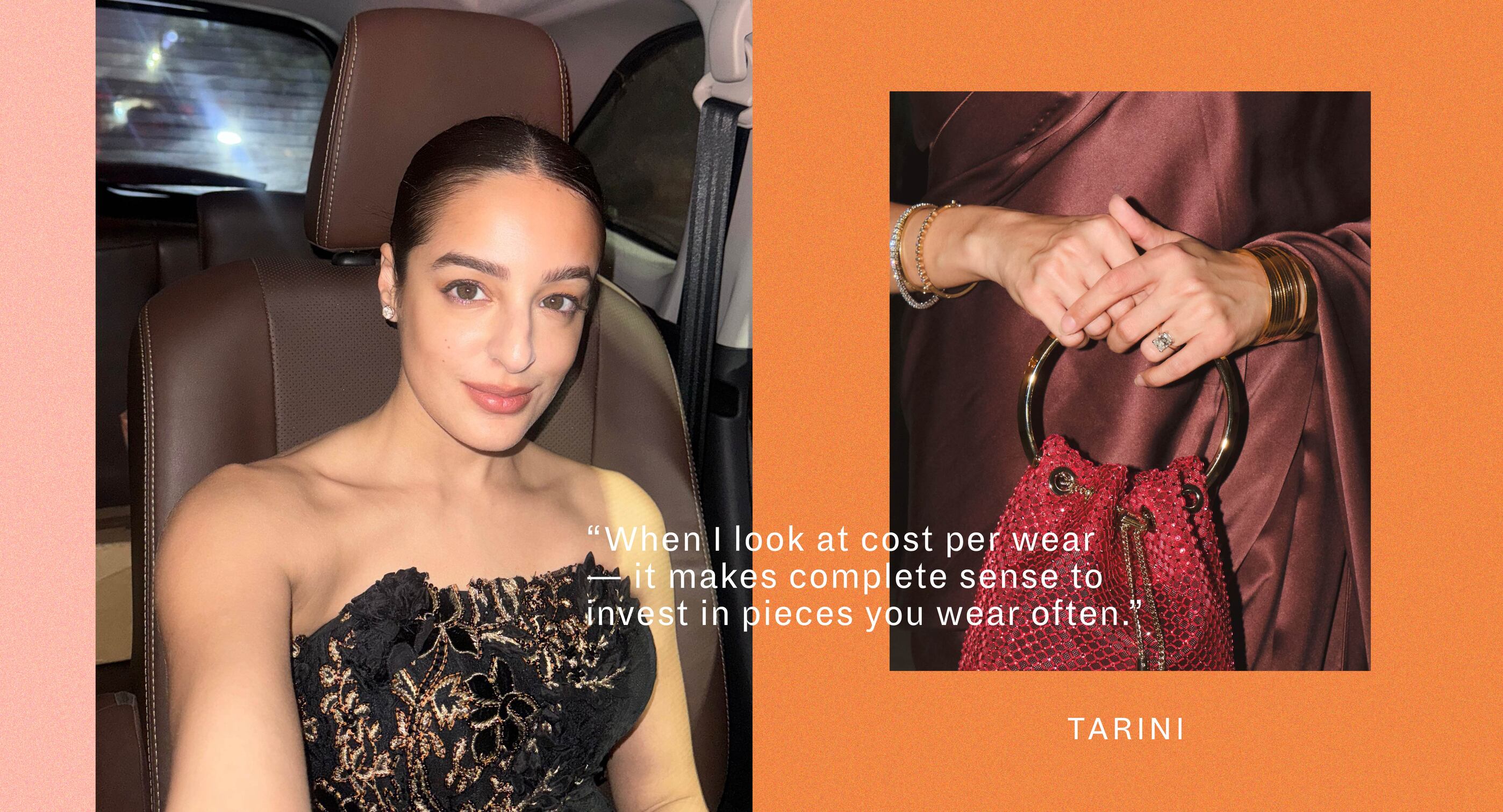
Tarini Manchanda Chenoy, content strategist, echoes the sentiment: “When I look at cost per wear — which isn’t really Girl Math, it’s just maths — it makes complete sense to invest in pieces you wear often. Especially if you plan to pass them on one day. Diamonds are forever, and the cost per wear always checks out.”
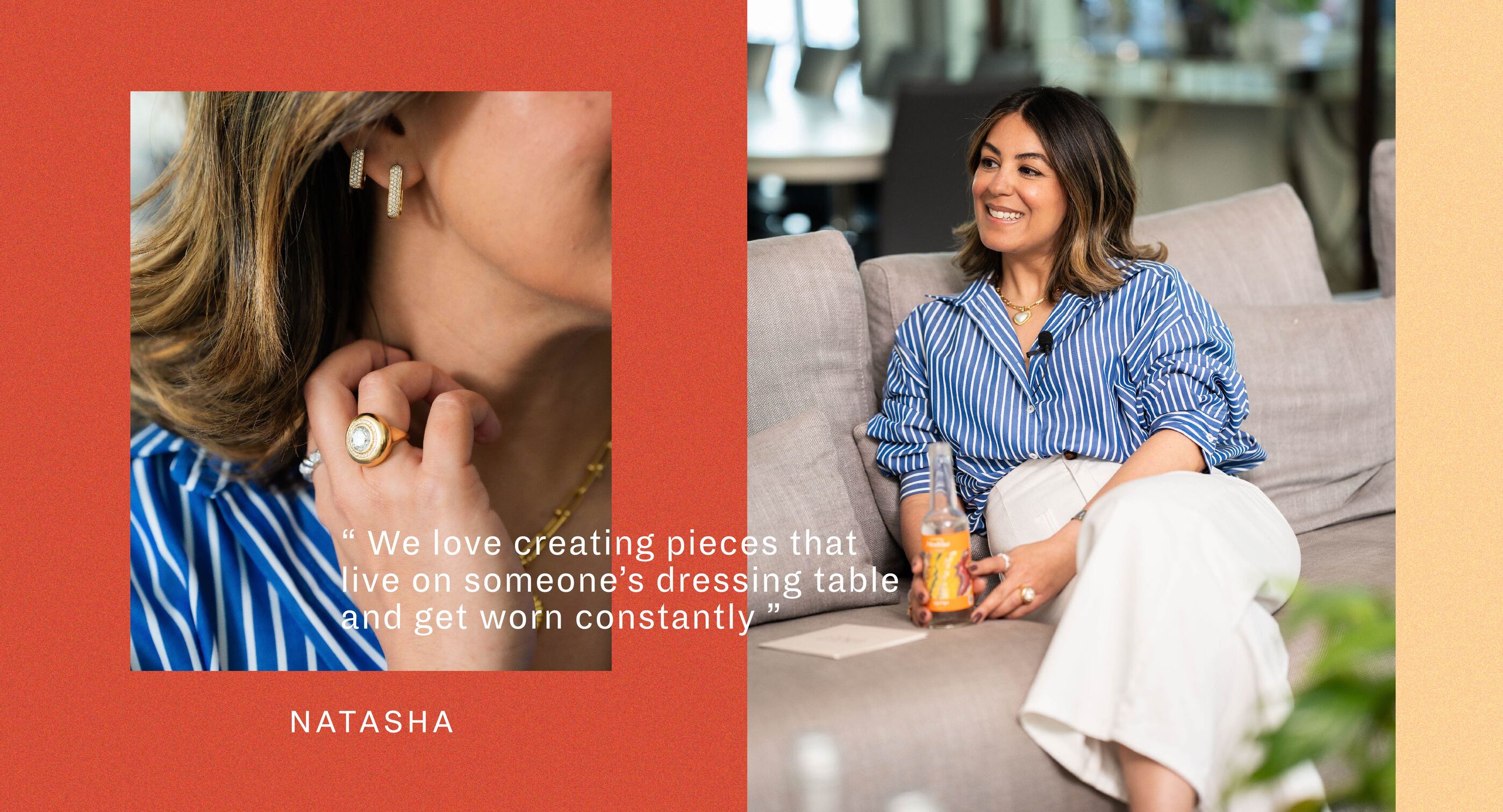
This idea of jewellery earning its place through wear, rather than occasion, is something designers are increasingly leaning into. As Natasha Jethwani of VIKJET Fine Jewelry explains, “Everyday fine jewellery is very much our niche. We love creating pieces that live on someone’s dressing table and get worn constantly — because that’s when you know you’re getting real value. When one piece can move effortlessly from lunch to a girls’ night, from travel to a wedding, you know it’s truly earned its keep.”
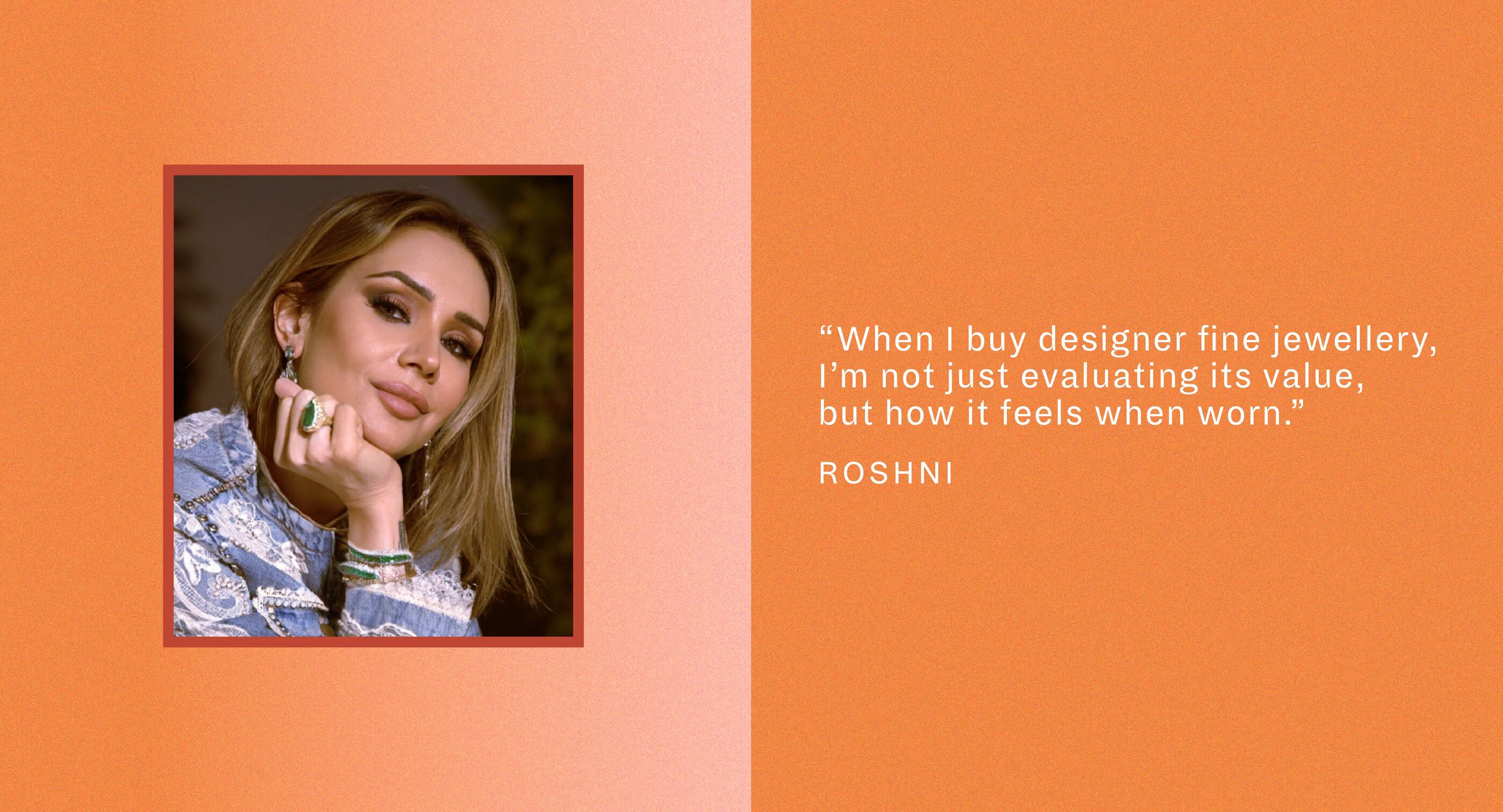
That same logic resonates with style curator and co-founder of The Goddess Project, Roshni Shewakramani, “Every purchase comes down to price per wear. When I buy designer fine jewellery, I’m not just evaluating its value, but how it feels when worn.” One piece in particular — a rubellite ring set with natural diamonds — has become a favourite. “My friend Farah Khan had it on, and I took it straight off her finger and bought it. Pure impulse, driven by passion.”
And perhaps that’s the point. Girl Math removes the need for apology. There are no mental gymnastics or long explanations required. You didn’t buy it by accident or practicality — you chose it because it mattered. While many men (ahem, my husband) may roll their eyes at these explanations, I often wonder what’s so wrong. Because beneath the humour, Girl Math is really about how women assign value — not in rupees and paisa, but in feeling, meaning and longevity. It’s emotional accounting, and frankly, it’s more thoughtful than it gets credit for.
So if we’re doing the sums properly, Girl Math lands not in the checkout queue or the returns policy, but in the long view. In choosing pieces that accumulate meaning rather than clutter. And when you look at it that way, diamonds don’t just add up. They make perfect sense.