Diamond Certification Guide: Everything You Need to Know
Diamond certification is a vitally important but lesser-known step in buying a quality natural diamond. Learn the ABCs of certification with this easy guide
We’ve all heard that a diamond is forever. But what if we told you that your sparkler could have an official document to prove it? In this introduction to diamond certification, you can learn how natural stones are certified, who issues the document and what it contains. And most importantly, why getting a certified diamond should be a priority.
What is a Diamond Certificate?
Think of diamond certification as a passport or identity document of your diamond’s exact quality and characteristics. To get a certificate, individual natural diamonds are evaluated by third-party laboratories such as the Gemological Institute of America (GIA) and International Gemological Institute (IGI) and various aspects of the stone’s properties are recorded in its certificate. The process of getting diamonds, gemstones and fine jewellery examined and graded for its merit is referred to as diamond certification, or coloured stone/fine jewellery certification.
“Objective, third-party grading reports are very important for consumers and to help safeguard integrity across the diamond industry. By clearly and transparently distinguishing natural diamonds from laboratory-grown diamonds, independent assessments protect consumer choice, strengthen trust, and uphold long-term confidence in gems and jewellery.”
–Rajesh Kothari, GIA Vice President of Laboratory Operations, EMEA
Why Do Diamonds Need a Certificate?
Most major purchases and assets come with some sort of guarantee, proof of purchase or promise of quality. Diamonds should be no different. “Houses have deeds. Vehicles have titles and registration. It only makes sense that you have similar documentation for something as precious as your diamond purchase. A diamond grading reportis the assurance of your diamond’s quality, with disclosure of any treatment to enhance colour or clarity. The report provides the kind of clear evidence that is vital to a confident purchase,” says Natarajan.
With the emergence of lab-grown diamonds, a certificate helps a consumer differentiate between the two and prevents lab-grown diamonds from being passed off as natural diamonds – offering transparency.
What Information Does a Certificate Contain?
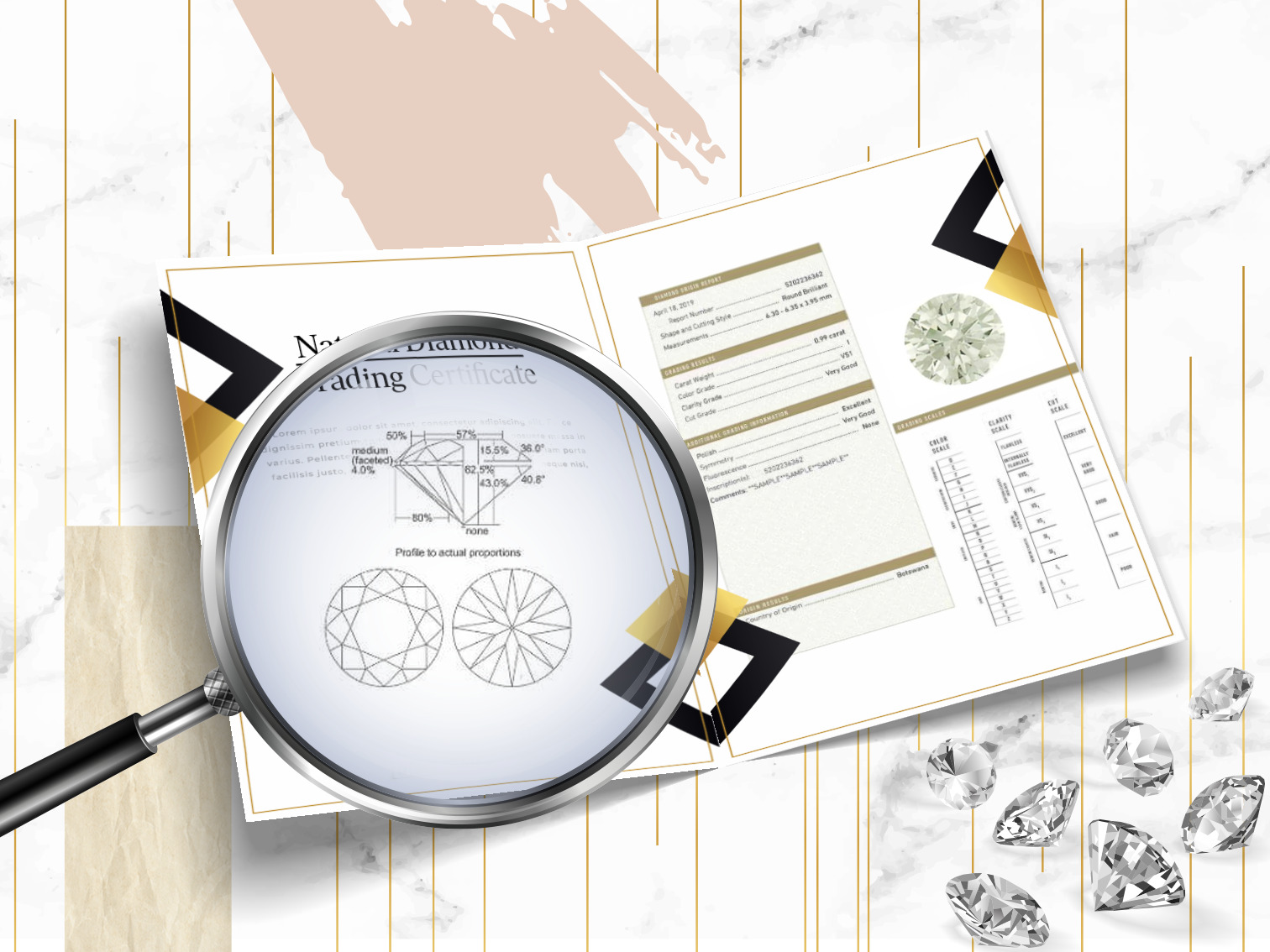
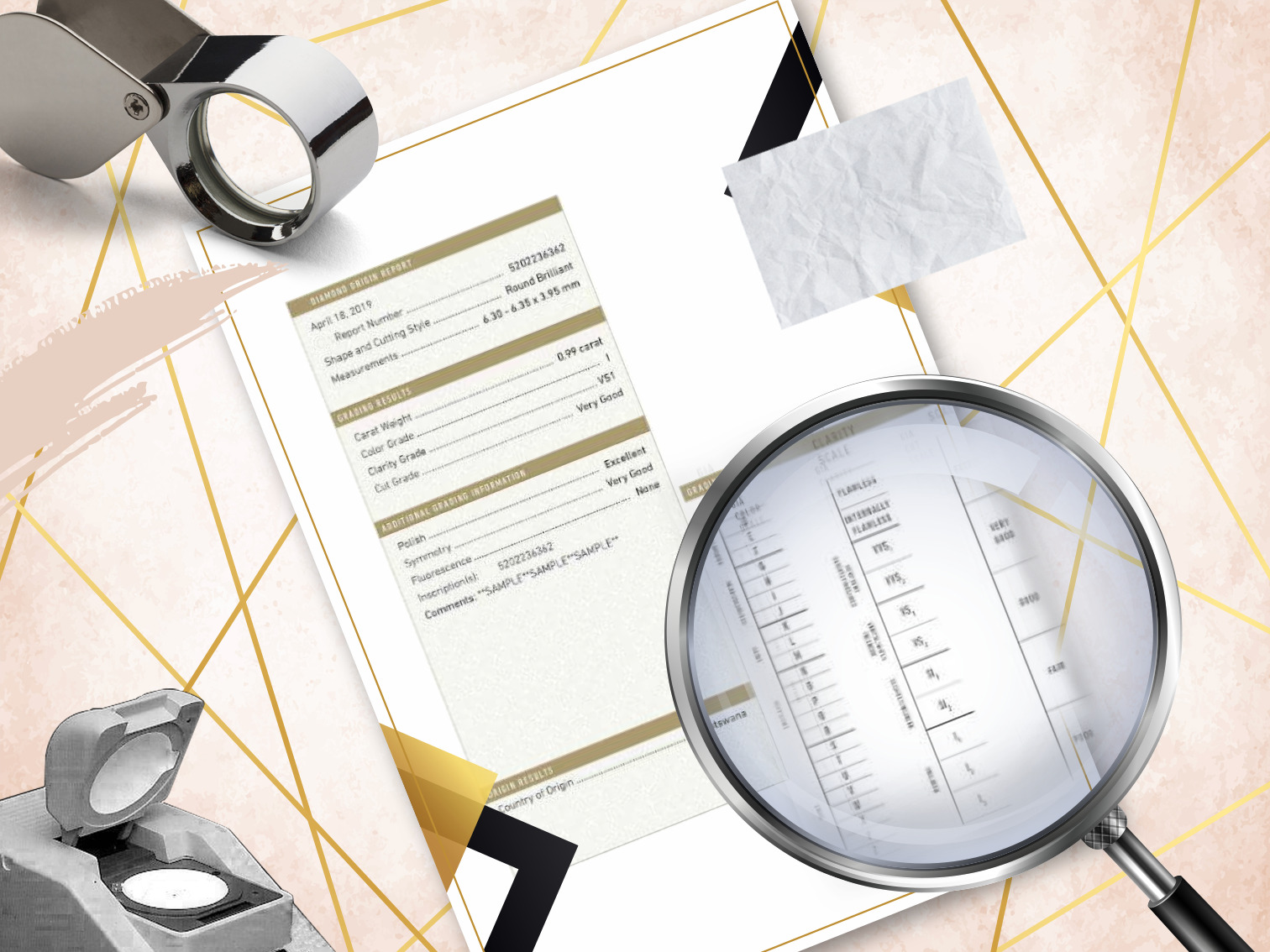
Each certificate paints an intricate picture of the diamond for the buyer. Of prime importance, is the expert analysis on each of the four Cs. “The main focus for a consumer is to look up a diamond’s carats, clarity, colour and cut grade as the major pricing is based on these,” says Tehmasp Printer, president and managing director, IGI India. It also contains a diamond’s inclusions and clarity characteristics.
In the industry, besides cutting and polishing a raw stone, other treatments are carried out to improve the diamond’s marketability. Stones with small inclusions or cracks are treated to remove or minimize those flaws, and a variety of processes are applied to natural diamonds to change or enhance their colour. A diamond report will note if the stone has been treated or enhanced or if its color or clarity has been altered.
In addition, buyers will also learn the diamond’s country of origin and each diamond is assigned a unique identification number.
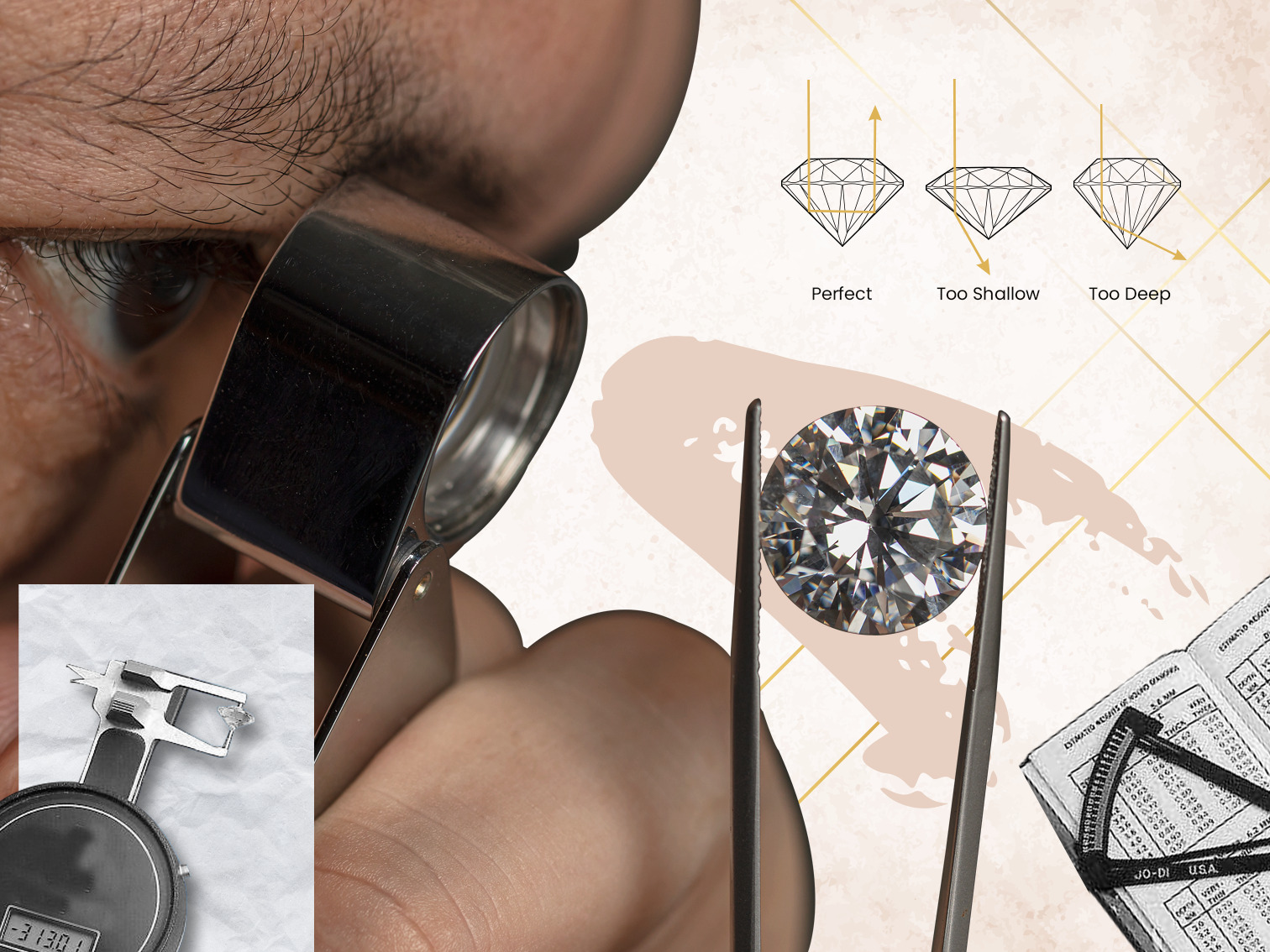
“The stone is checked by three people and an in-depth study is conducted through microscopes with 30-40 times magnification.”
-Shirin Bandukwala, Director of SGL Labs.
Who Creates and Authorizes a Diamond Certificate?
To evaluate a natural structure as complex and varied as a natural diamond requires enormous expertise and trust earned from all quarters of the gemological world. “There are various laboratories that certify diamonds but the science behind it is complex, says Printer.
“It’s important to trust the technology and expertise of an authorized laboratory that conducts unbiased analysis so as to avoid a conflict of interest.”
-Tehmasp Printer, President and Managing Director, IGI India
Institutions like the GIA and IGI are most highly regarded and provide rigorous independent third-party testing. GIA is a research and educational institute and acts as an independent, impartial entity for assessing and delivering comprehensive gem information.
Printer says the research department at the IGI is equipped with state-of-the-art technology and instruments which enable accurate analysis of these precious stones.
What Diamonds Do I Need a Certificate For?
Different institutes have minimum carat starting sizes in order to award a certificate: The GIA issues grading reports for natural diamonds that weigh 0.15 carats or more and IGI certifies from a minimum of 0.50 cents upward. The cost of certifying a diamond depends on its size, and generally starts at about Rs. 2000.
Do I Need a certificate Even if I have a Trusted Jeweller From Whom I Buy Diamonds?
Yes, and in fact, those two things—having a trusted jeweller and getting a certified diamond—are not in opposition, but work in synchrony to ensure diamond buyers are getting exactly what they bargained for.
Natarajan advises choosing a jeweller as carefully as you would a doctor, because the jeweller can be your guide and route to making a confident purchase. The most convenient way to obtain certificates is through local fine jewellery retailers. As your personal diamond-buying guide, an educated jeweller will not only explain the four Cs, but will also be able to demonstrate the differences between apparently similar stones. They will encourage you to compare a number of diamonds that fall in your budget. In fact, most jewellers get stones certified themselves as they want to ensure that they’ve purchased quality gems from manufacturers, says Bandukwala.
For most people, diamond purchases often are a significant financial and emotional investment. It only makes sense to secure and protect that investment, and a certificate can help you do that. Taking a few extra steps to ensure the stone is exactly what you paid for, will ensure it’s secure and sound for life.
Global grading bodies sharpen the distinction between natural diamond and laboratory-grown diamonds
The Gemological Institute of America (GIA) has announced that from 2025 onwards, it will no longer grade laboratory-grown diamonds using the traditional 4Cs—cut, colour, clarity and carat. Instead, most laboratory-grown stones will receive simplified descriptors such as “premium” or “standard,” reflecting the fact that over 95% fall within a narrow quality range of colour and clarity. The move aims to create clearer differentiation between laboratory-grown and natural diamonds, whose rarity and geological formation produce greater variation.
In addition, HRD Antwerp has stated that it will stop issuing quality certificates for loose laboratory-grown diamonds from 2026, choosing to focus exclusively on certifying natural diamonds and reinforcing grading distinctions.
“With the rise of synthetic diamonds, the diamond industry stands at an important crossroads. The need for absolute clarity and trust has never been greater. By explicitly choosing to certify only loose natural diamonds, HRD Antwerp is taking a clear leadership stance to protect and inform consumers through transparent, easy-to-understand certificates that unmistakably distinguish natural from synthetic diamonds. This decision reflects Antwerp’s DNA, as a natural diamond hub — not just in words, but in action. It is a concrete step that strengthens confidence across the entire natural diamond ecosystem, from producing countries to retailers and end consumers.”
– Paul De Wachter, CEO, HRD Antwerp