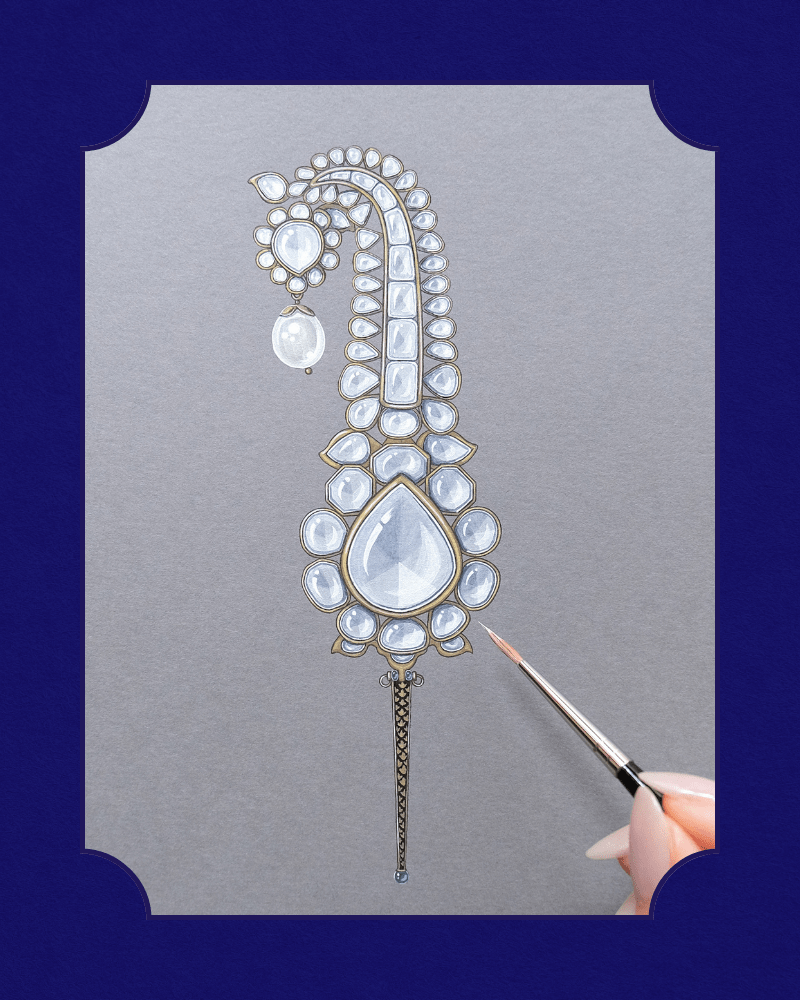
Natural Diamond Heirlooms Beyond Borders
Natural diamond heirlooms have long travelled across borders. Three women from the Indian diaspora speak to us about their inheritances, everyday wear, and the role of jewellery in their lives.
For Karina, Rasmit, and Komal, natural diamond heirlooms are part of daily life—worn across years and places.
Long before travel became a gesture of leisure or self-discovery, it was an act of attrition. Movement was shaped by risk and uncertainty, and survival depended on what could be carried.
Travellers arriving in the Indian subcontinent, whether as pilgrims, traders, or scholars, carried objects that could endure distance and uncertainty. In such conditions, jewels functioned as talismans—compact, and legible across cultures. They could be hidden close to the body, dismantled from their settings, offered as passage, or preserved as proof of origin. What mattered was not beauty alone, but portability and trust. Centuries later, as people crossed borders for work, refuge, or the promise of another life, similar calculations persisted. Lives were compressed into suitcases; histories were folded into objects that could survive the journey. Among them, real diamonds travelled easily, even when other possessions could not. In movement, they gathered new meanings, carrying memory, and the weight of home.
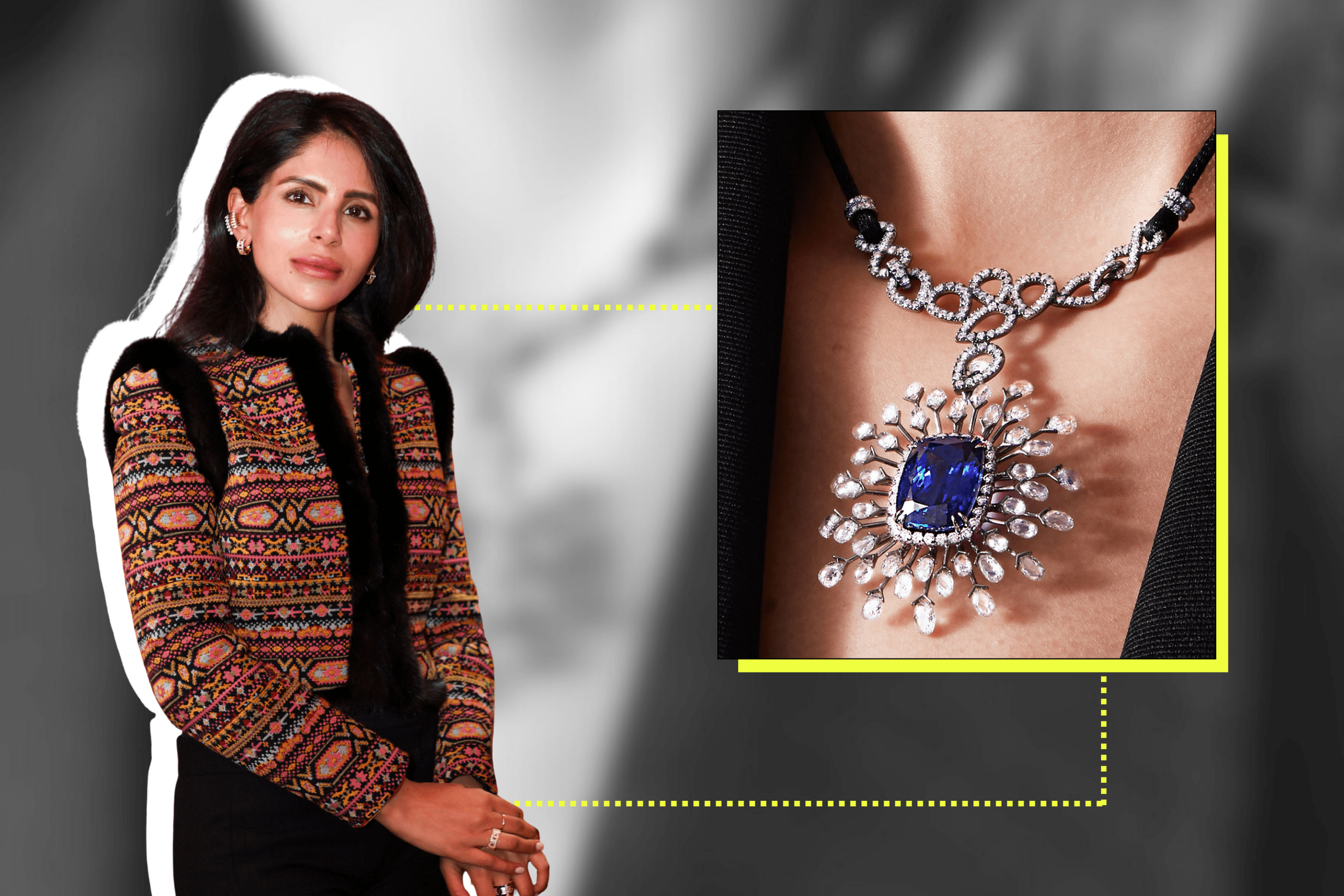
For Karina Choudhrie, a jewellery designer based in London, the earliest memory of a diamond is inseparable from movement. She grew up between places, returning to India every summer. It was there that she remembers her maternal grandfather carrying loose natural diamonds and other stones in small folded papers, taking them out at home and speaking about them. Her mother would choose one and bring it back, leaving it unset for a while. There was a ritual to this waiting. The stone was placed under her pillow and slept with. If the nights passed easily, it would be set.
Self-expression arrived later. She remembers being around twelve when she used money she had saved over years to buy a diamond ring for herself. Natural diamonds, for her, hold private time, moments that sit just before stepping out into the world.
A sudden shift in the political landscape led to a hasty departure. Her parents were living in Iran when the revolution broke in 1979, sharpening the meaning of what could be carried. Her mother filled a chipped milk tin with jewellery and left with that, including a long Rani Haar that travelled with the family. Years later, it remained an heirloom. Karina did not take the original, a traditional gold Rani Haar. She made her own version of it in white gold, set with diamonds and pearls. “I would never part with that,” she said. “For me, home is India.”
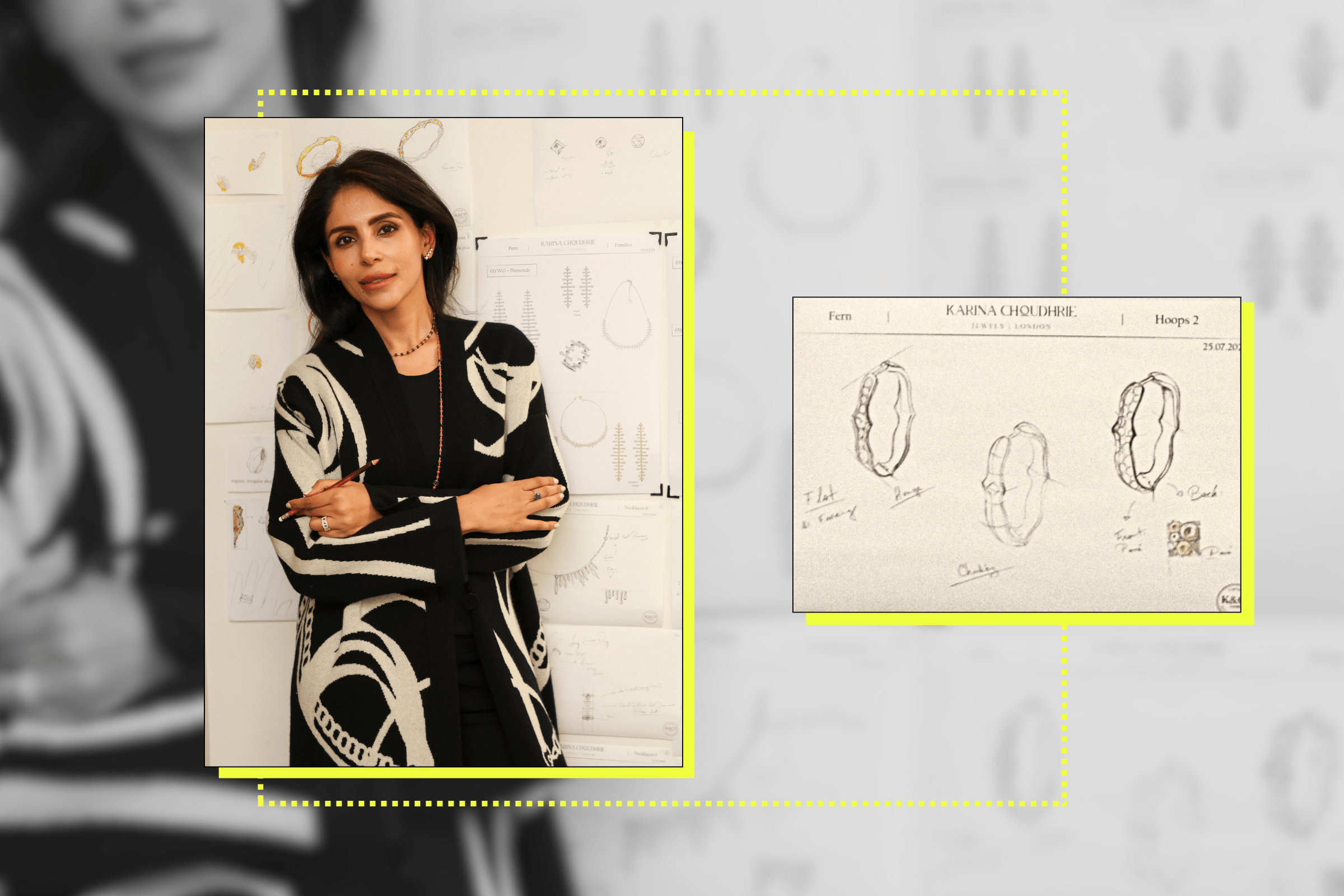
This approach carries into a later piece she calls Message in a Bottle, a locket made using rose-cut diamonds from her mother’s jewellery. The piece opens and closes, holding a handwritten message inside.
Her understanding of luxury grows from these moments. It is not about display or certification. “True luxury,” she said, “comes from working with material from the earth.” What matters is time — the time it takes for a natural diamonds to form, and the time it takes to work with it carefully. Geological time meets human craft. Something that cannot be rushed or replaced.

Rasmit Kaur, a stylist and creative consultant based in Los Angeles, describes her approach as “untucked glamour.” It’s a way of wearing things fully, without ceremony. Diamonds, for her, are part of that vocabulary. She wears a natural diamond tennis bracelet every day and has not taken it off in over twelve years. It goes with everything. “These are my neutrals,” she said. She layers it with gold bangles from her wedding, styles it across work and life. Without it, she says, her wrist feels bare.
The habit is inherited. Her mother wore natural diamond every day for decades, cooking in them, living in them, never reserving them for special occasions. That example shaped how Rasmit thinks about value and use. Diamonds are what she reaches for every day, pieces that hold their place.
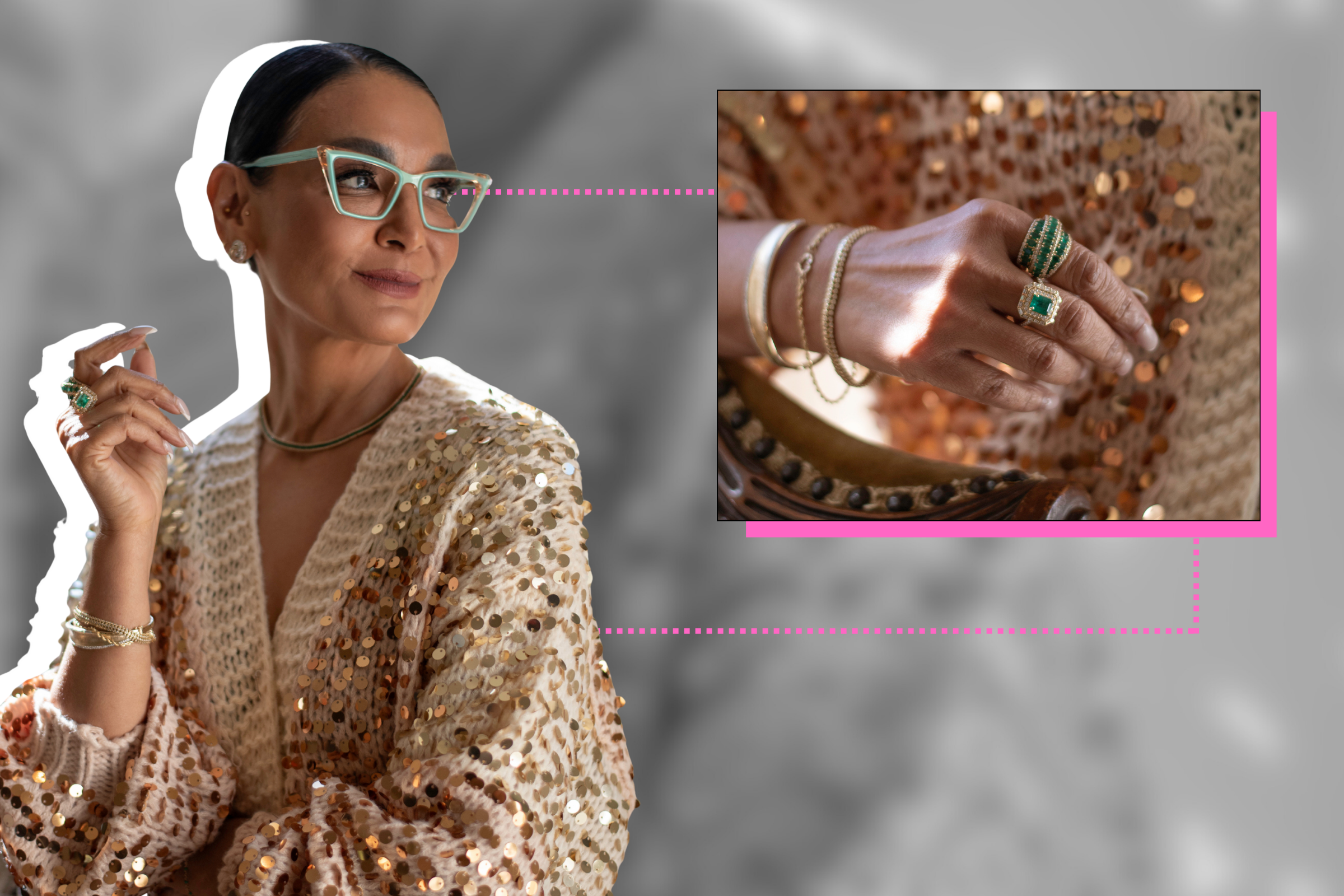
As a stylist, she believes jewellery works best when it carries familiarity. Tennis bracelets, signet rings, diamond studs become part of the body, worn without thought. “Every piece is a conversation,” she said. If her daughter were to inherit one of her everyday diamonds, she hopes it would carry a simple impression. “I want her to remember me as someone cool and glamorous. That’s the Indian in me. I want to grow old with my solitaires.”
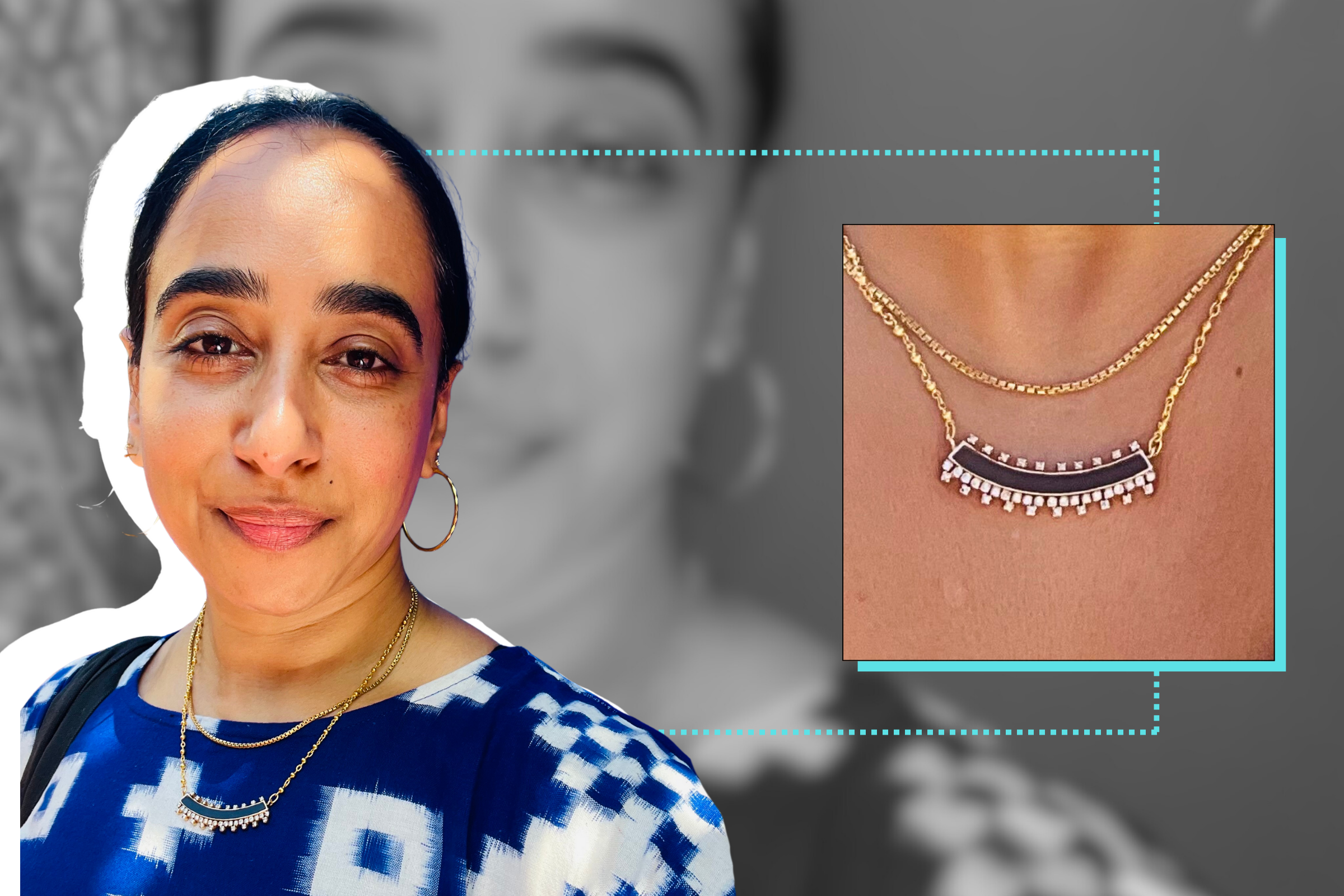
Jewellery also enters people’s lives through the materials they grow up wearing. Komal Kehar, an architect and founder of Common Things in New York, grew up wearing gold that made her feel out of place. The chains were high-karat and deeply yellow, unmistakably Indian in a way that drew attention she did not know how to engage. As a child, she remembers feeling self-conscious about them, aware of how different they looked from what others wore. It took time to understand what those pieces meant.
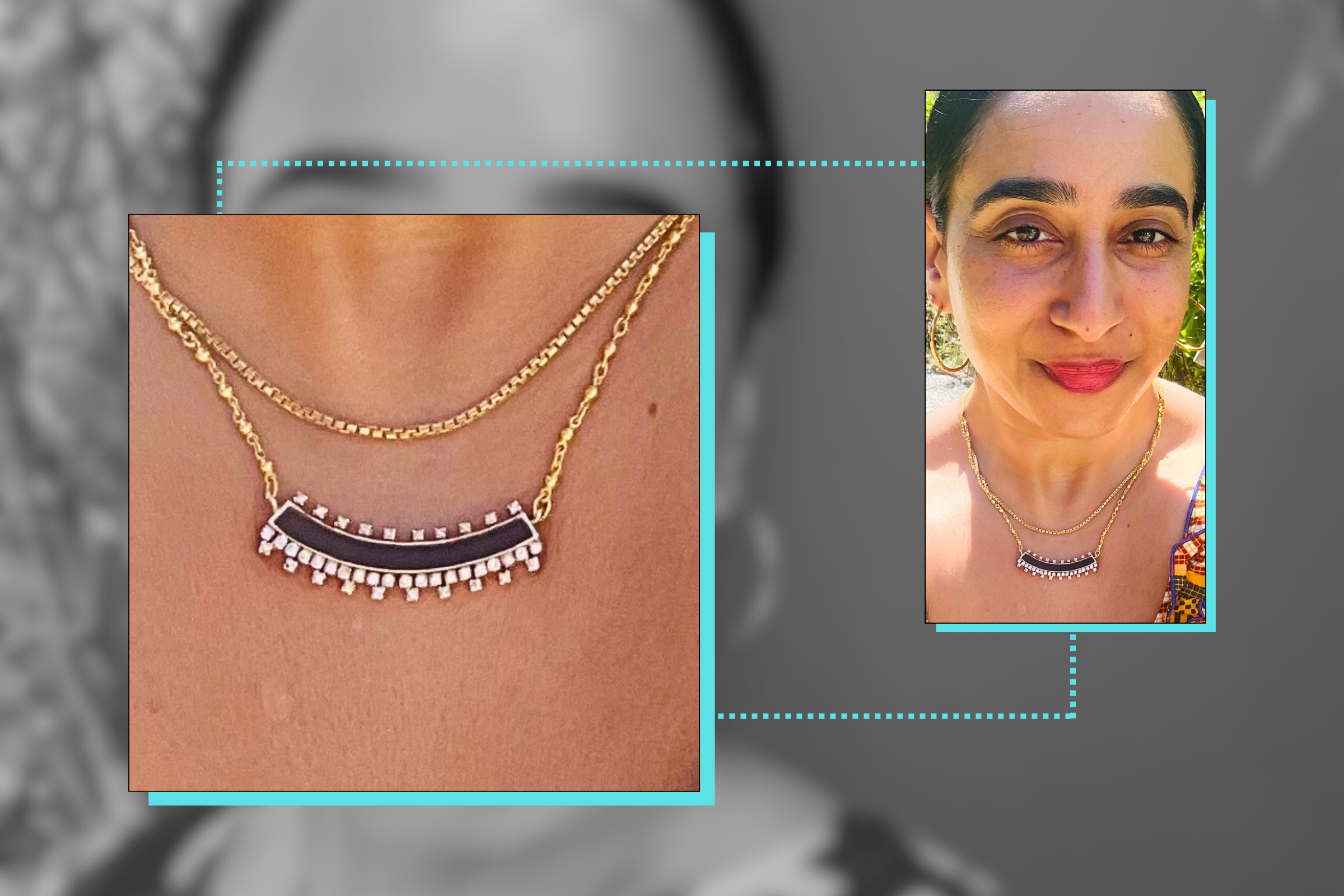
That understanding changed how she lives with jewellery. Most of what she wears has come through inheritance. There are her grandmother’s ruby earrings, a natural diamond solitaire gifted by her mother, and a diamond-and-obsidian gold piece passed down through her family. Chosen over a more conventional gold-and-pearl form, the obsidian piece references a mangal sutra without adhering to it outright. She wears her pieces constantly, keeping them on for years at a stretch. “I wear my jewellery all the time,” she said. “It gives me a sense of security.” Jewellery, for her, is something lived with rather than rotated. Meaning, she says, arrives through the act of giving. “The act of gifting carries energy. It’s a blessing.”
Her affinity for natural diamonds follows the same logic. “Natural diamonds carry the force of time.” That geological duration — formed under pressure and over millennia — is what gives them their weight and presence.
That sense of time does not sit apart from life. For Karina, Rasmit and Komal, natural diamond heirlooms belong to daily life. They are worn across years and places, holding history alongside choice, and bringing glamour into the ordinary.